If you’ve been told that walking every day is plenty of exercise once you hit your 70s, you’ve been given incomplete advice. Walking is genuinely wonderful, and you should keep doing it. But somewhere around your mid-70s, your body starts losing muscle and bone density at a faster rate, and walking alone doesn’t put enough demand on your muscles to slow that process down. The answer isn’t to panic or overhaul everything. It’s to understand what each type of exercise actually does for your body, and how to combine them smartly.
This article breaks down what strength training and walking each bring to the table for muscle, bone, balance, and heart health, and shows you exactly how to fit both into a realistic weekly routine.
What Walking Actually Does For You

Walking gets a lot of credit, and it deserves most of it. A consistent walking habit lowers blood pressure, improves circulation, supports blood sugar regulation, and does real things for your mood and mental sharpness. For cardiovascular health especially, brisk walking is one of the most well-researched and effective tools available to older adults.
Walking also contributes to balance, at least passively. Every time you take a step, your body is making small balance adjustments. Over time, that adds up. If you enjoy activities like disc golf or pickleball, you’re already layering movement variety on top of basic walking, which is even better.
Where walking falls short is in its effect on muscle mass and bone density. It’s a low-load activity, which means your muscles and bones don’t receive enough mechanical stress to stimulate meaningful growth or remodeling. For someone in their 50s or early 60s, that’s less urgent. After 75, the gap matters more.
What Strength Training Does That Walking Can’t
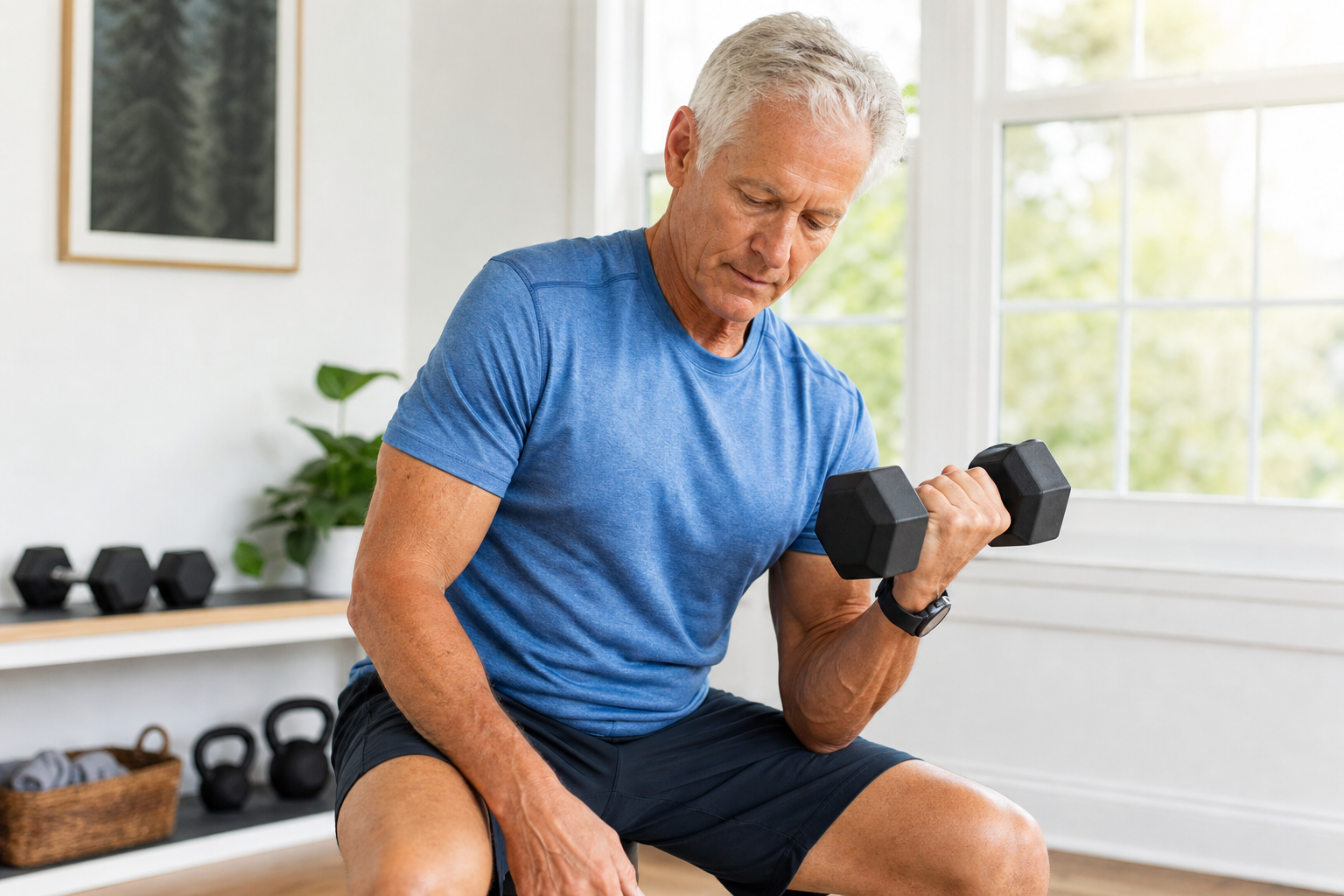
Strength training, whether you’re using dumbbells, resistance bands, machines, or your own bodyweight, applies enough force to your muscles and bones to trigger adaptation. That’s the key word: adaptation. Your body responds to that stress by building more muscle fiber and laying down new bone tissue.
Muscle Mass and Metabolism
Adults lose somewhere between 3 and 8 percent of their muscle mass per decade after 30, and the rate accelerates after 60. This process is called sarcopenia, and it’s directly linked to falls, loss of independence, and slower recovery from illness. Strength training is the most effective tool available for slowing or partially reversing it. Even two sessions per week can make a measurable difference.
Maintaining muscle also keeps your metabolism from dropping too sharply, which matters for weight management and energy levels. If you’re working on losing fat without losing muscle, strength training isn’t optional. It’s central to the whole strategy.
Bone Density
Bones respond to mechanical loading. When your muscles pull on them during resistance exercise, your bones respond by becoming denser. Walking provides some of this through impact, but not enough to significantly offset bone loss after menopause or in older men with declining testosterone. If you’ve been diagnosed with osteoporosis or are at risk, a dedicated osteoporosis exercise plan that includes resistance work is worth taking seriously.
Pairing your training with good nutrition helps too. Getting enough calcium from non-dairy sources and maintaining adequate vitamin D levels both support what your workouts are trying to accomplish in your bones.
Balance and Fall Prevention
Strong legs, hips, and core muscles are what actually catch you when you stumble. Balance is partly a neurological skill, but it depends heavily on the muscular strength to act on what your nervous system detects. Strength training builds that foundation. For anyone dealing with specific balance challenges, it’s worth pairing strength work with targeted balance exercises as well.

Adjustable Dumbbells for Seniors
A quality set of adjustable dumbbells lets you progress gradually without cluttering your home with multiple sets.
Recommended Equipment to Get Started at Home
You don’t need a gym membership to get meaningful strength work in. A modest home setup covers most of what you need. Adjustable dumbbells are worth the investment because they let you increase weight gradually as you get stronger without buying a dozen separate pairs.
Resistance bands are another excellent option, especially if you’re just starting out or dealing with joint sensitivity. They’re easy on the wrists and shoulders, allow smooth movement through a full range of motion, and work surprisingly well for lower-body exercises too.

Resistance Bands Set for Seniors
Lightweight, joint-friendly, and versatile enough for upper body, lower body, and core work from a chair or standing.
A non-slip exercise mat rounds out the basics. It makes floor work safer and more comfortable, and it gives you a defined space that can actually help you stay consistent. If you want to think more broadly about setting up a space at home, this budget-friendly home gym guide has good ideas that won’t require gutting your living room.
How to Combine Both Into a Weekly Routine
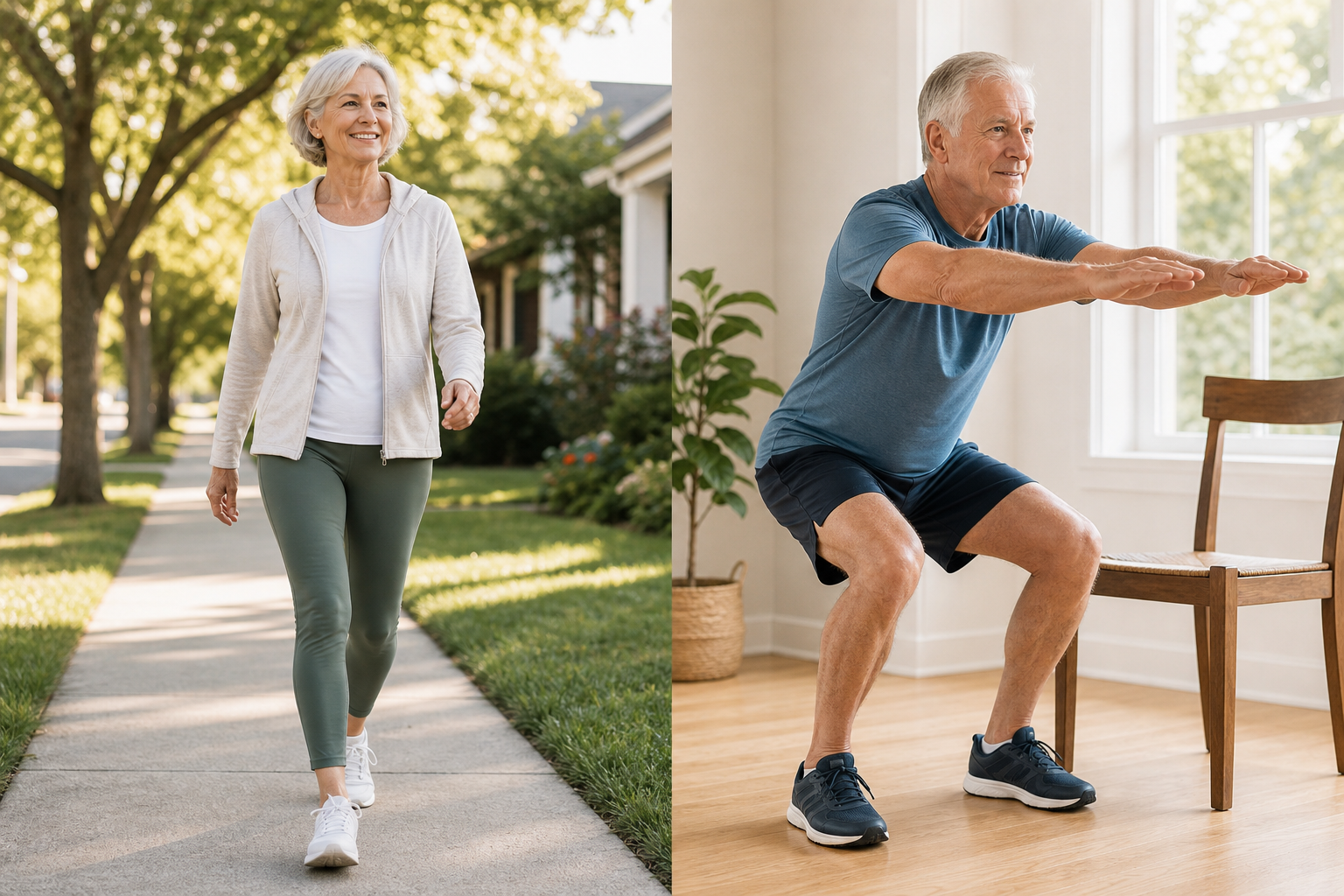
You don’t have to choose between walking and strength training. They complement each other well, and the weekly structure doesn’t need to be complicated.
A practical starting point for most adults over 70:
- Monday, Wednesday, Friday: 20 to 30 minutes of strength training. Focus on legs, hips, core, and upper body in rotation.
- Tuesday, Thursday, Saturday: 20 to 40 minutes of brisk walking.
- Sunday: Rest or gentle stretching.
If that feels like too much to start, scale back to two strength sessions and three walking days. What matters most is consistency over weeks and months, not perfection in any given week. For those following a more structured progression, this 12-week progressive resistance training program is a useful roadmap.
Pay attention to what you eat around your workouts. Getting enough protein after a session supports muscle repair and growth, and many older adults are consistently under-eating protein without realizing it. A quick look at post-workout recovery meals can help you make the most of your training time.
Frequently Asked Questions
Is walking enough exercise if I’m over 75?
Walking is a valuable part of staying healthy at any age, but it’s generally not enough on its own after 75. The main gap is that walking doesn’t provide sufficient load to slow muscle loss or meaningfully build bone density. Adding even two short strength sessions per week fills in what walking leaves out, without requiring you to give anything up.
Can I do strength training if I have arthritis or joint pain?
Most people with arthritis can do some form of strength training safely. The key is starting with low resistance and focusing on smooth, controlled movements rather than heavy loads. Resistance bands and light dumbbells are often more comfortable than machines for people with joint sensitivity. Check out this guide on arthritis-friendly exercises for specific options that work well for common problem areas like knees and hips.
How long before I notice results from adding strength training?
Most people notice improvements in energy and how their body feels within two to four weeks. Measurable strength gains typically show up within six to eight weeks of consistent training. Bone density changes take longer, often six months or more, but the functional benefits like better balance and easier daily movement come much faster than that.
The Bottom Line
Walking and strength training aren’t competing priorities. They target different parts of your health, and you need both. Walking keeps your heart healthy, supports your mood, and keeps you moving through the world. Strength training preserves the muscle and bone you need to keep doing all of that safely and independently as the years go on.
Start with what you can manage. Add one strength session per week if two feels like too much. Use bands if dumbbells feel awkward at first. The goal isn’t to train like an athlete. It’s to stay capable, confident, and active for as long as possible, and that’s completely within reach for most people, starting right now.
This article contains affiliate links. We may earn a small commission at no extra cost to you.