Starting exercise after 60, especially if you’ve been sedentary for years, is the most impactful health decision you can make. It’s also the most intimidating. You’re unsure what’s safe, worried about injury, embarrassed about your starting fitness level, and overwhelmed by the volume of contradictory advice.
This guide cuts through the noise with a specific, week-by-week home program that starts where you actually are, not where a fitness magazine thinks you should be.
Before You Start

Medical Clearance
See your doctor before starting this program if you have any of the following: uncontrolled high blood pressure, chest pain or shortness of breath at rest, a heart condition or history of heart attack, uncontrolled diabetes, a recent surgery (within the last 6 months), or joint pain that limits daily activities.
This isn’t overcautious medical hedging. These conditions require professional guidance on exercise intensity, duration, and specific movements that might need modification or avoidance.
For most sedentary older adults without these conditions, light-to-moderate home exercise (walking, chair exercises, gentle stretching) is generally safe to start without a doctor’s visit. If you haven’t exercised in years and have any doubts about your readiness, a quick conversation with your physician can give you confidence and catch potential issues before they become problems. If you have high blood pressure, consider monitoring your blood pressure regularly as you begin exercising to ensure your numbers stay within safe ranges.
Your Starting Assessment
Before you begin, test yourself on three simple measures. Write down the numbers in a notebook or on your phone. These aren’t pass-fail tests. They’re your personal baseline, and they’ll tell you whether this program is working for your body.
Walking endurance: How many minutes can you walk continuously at a moderate pace? A moderate pace means you can talk in short sentences but you’re breathing noticeably. If you can only manage 2 minutes before needing to stop, that’s your baseline. If you can do 10 minutes, that’s your baseline. There’s no wrong answer.
Chair stands: How many times can you stand from a chair in 30 seconds with your arms crossed over your chest? Use a sturdy chair without arms. Stand fully upright, then sit back down until your bottom touches the seat. Count each complete stand. If you need to use your hands to push up, that’s fine, but note it so you can track when you progress to hands-free stands.
Single-leg balance: How many seconds can you stand on one foot near a counter for safety? Stand close enough to grab the counter if you lose balance, but don’t hold on unless you need to. Time how long you can hold the position before your raised foot touches down or you grab the counter. Test both legs. Use the lower number as your baseline.
These three measures cover the fundamentals: cardiovascular endurance, lower-body strength, and balance. They’re also the areas where you’ll see the most dramatic improvement over the first two months.
The 8-Week Beginner Program
This program assumes you’re starting from a genuinely sedentary baseline. If you’re already somewhat active, you can skip ahead to week 3 or 4. But most people starting exercise after years of inactivity should start at week 1, even if it feels absurdly easy.
The early weeks build movement patterns and joint tolerance as much as they build fitness.
Weeks 1-2: Building the Habit
Goal: Move your body for 10-15 minutes, 4 days per week. The focus is establishing a routine, not achieving fitness.
Daily session:
- Walk in place or around your home: 5 minutes at an easy pace. Easy means you can carry on a full conversation without breathing hard. If you have a hallway or can walk around your furniture, use it. Walking in place works fine if space is limited.
- Chair exercises: 5 seated marches per leg (lift knee toward chest while seated), 5 seated leg extensions per leg (straighten leg in front of you while seated), 5 seated arm raises (lift both arms overhead while seated). Rest as needed between exercises.
- Stretching: 3 gentle stretches held 15 seconds each. Try a seated neck tilt (ear toward shoulder), seated shoulder rolls (forward and back), and seated calf stretch (extend leg and flex foot toward you). Stretch to mild tension, not discomfort.
This is your minimum. If it feels easy, that’s perfect. You’re building the habit of daily movement, not testing your limits. The mistake most people make at this stage is doing too much because they feel capable, then waking up sore and discouraged the next day.
Schedule your sessions at the same time each day if possible. Morning works well for many people because there’s less chance of something derailing the plan. But if evening fits your routine better, do that. Consistency matters more than timing.
Week 1-2 modifications if needed: If 5 minutes of walking is too much, do 3 minutes. If seated marches cause hip discomfort, do smaller knee lifts or skip them and add extra leg extensions. If raising both arms overhead feels unstable, raise one arm at a time. The program works only if you can actually do it, so modify without guilt. If you experience hip discomfort during these movements, you might benefit from more targeted approaches to managing hip pain.
Weeks 3-4: Building Duration and Variety
Goal: 15-20 minutes, 4-5 days per week.
Daily session:
- Walking: 8-10 minutes at a moderate pace (inside or outside). Moderate means you’re breathing noticeably but can still speak in short sentences. If you have access to a safe outdoor route, use it. Fresh air and changing scenery make the time pass faster. If weather or mobility limits outdoor walking, laps around your home or walking in place both work.
- Strength: 2 sets of 8 reps each of chair squats, wall push-ups, and standing calf raises. Rest 30-60 seconds between sets.
- Chair squats: Stand in front of a sturdy chair. Lower yourself until your bottom lightly touches the seat, then stand back up. Keep your weight in your heels. Don’t plop down onto the chair.
- Wall push-ups: Stand arm’s length from a wall. Place hands flat on the wall at shoulder height. Bend elbows to bring your chest toward the wall, then push back. Keep your body straight from head to heels.
- Standing calf raises: Stand behind a chair for balance. Rise up onto your toes, pause briefly, then lower back down. Keep the movement controlled.
- Balance: Single-leg holds near a counter, 15 seconds per leg, 3 attempts per leg. Stand close enough to the counter to catch yourself if needed, but try not to touch it unless you lose balance. Rest between attempts.
- Stretching: 5 minutes of gentle stretches. Add hamstring stretches (seated, reach toward toes without rounding your back), quadriceps stretches (standing, pull heel toward bottom while holding counter for balance), and chest stretches (clasp hands behind back and gently lift).
By week 3, you might notice that movements that felt awkward in week 1 now feel natural. That’s your nervous system learning motor patterns. Strength gains in the first month are mostly neuromuscular, your brain getting better at recruiting muscle fibers, not actual muscle growth yet. Muscle growth comes later. If you want more structured guidance for indoor walking, consider following a dedicated indoor walking program to keep things interesting.
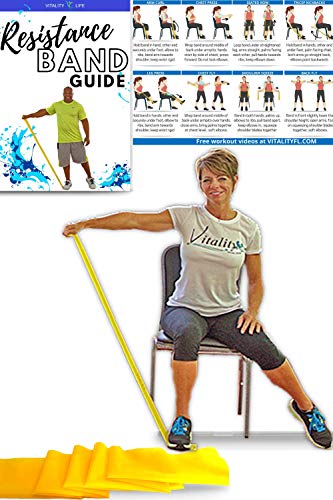
Resistance Bands for Seniors
Light resistance bands add variety to your routine with seated rows and bicep curls without requiring heavy weights
Add a light resistance band for seated rows and bicep curls if you want variety. Light means a band you can comfortably pull 10-15 times without straining. Seated rows: Loop band around a table leg or sturdy post, sit facing it, and pull band toward your ribs with elbows close to your sides. Bicep curls: Step on the center of the band and curl handles toward shoulders. Bands are optional at this stage. Body-weight exercises are enough to drive adaptation.
Weeks 5-6: Building Intensity
Goal: 20-25 minutes, 5 days per week.
Daily session:
- Walking: 12-15 minutes with 2-3 one-minute brisk intervals mixed in. Walk at your usual moderate pace, then pick up the pace for 60 seconds (not a jog, just a faster walk), then return to moderate pace for 2-3 minutes to recover. Repeat 2-3 times. These intervals build cardiovascular capacity faster than steady-pace walking alone.
- Strength: 3 sets of 10 reps of chair squats, wall push-ups, band rows (if you have a band), calf raises, and standing hip abduction. Rest 30-60 seconds between sets.
- Standing hip abduction: Stand behind a chair for balance. Lift one leg out to the side, keeping your body upright and toes pointing forward. Lower with control. This strengthens the hip stabilizers that prevent falls.
- Balance: Single-leg holds (20 seconds per leg), heel-to-toe walking (10 steps forward, turn around, 10 steps back), weight shifts (stand with feet hip-width apart, shift weight fully onto one leg for 5 seconds, then shift to the other leg; repeat 10 times per side). These balance drills get progressively harder. If heel-to-toe walking feels too difficult, walk along a straight line on the floor without requiring heel-to-toe contact.
- Stretching: 5 minutes. Focus on the muscles you just worked.
At this stage, you might start feeling genuinely stronger. Chair squats that felt hard in week 1 now feel manageable. You might naturally stand up from chairs throughout the day without thinking about it, where before you had to brace yourself. That’s functional carryover. The strength you’re building in this program transfers to daily activities. If you have concerns about blood sugar management, the seated strength exercises can be particularly beneficial, as chair-based movements help regulate blood sugar levels in older adults.
Intensity check: You should feel like you worked during the strength and walking portions, but you shouldn’t feel wiped out. If you’re exhausted for the rest of the day after a session, you’re doing too much. Scale back reps, sets, or duration until you find a level that challenges you during the workout but doesn’t drain you afterward.
Weeks 7-8: Approaching a Full Routine
Goal: 25-30 minutes, 5 days per week.
Weekly schedule:
- Monday/Wednesday/Friday: 15-minute walk + 10-minute strength circuit (3 sets of 10-12 reps of chair squats, wall push-ups, rows, calf raises, hip abduction, and standing marches with high knees)
- Tuesday/Thursday: 20-minute walk (include 3-4 one-minute brisk intervals) + 5-minute balance training (single-leg holds, heel-to-toe walking, standing on one leg with eyes closed for 5-10 seconds if you can do 30+ seconds with eyes open) + 5-minute stretching
This split gives you dedicated strength days and dedicated cardio-plus-balance days. It’s more structured than the earlier weeks, which is appropriate after you’ve built the base fitness to handle it.
Standing marches with high knees: Stand tall, hold the back of a chair lightly for balance if needed. March in place, lifting knees as high as comfortable toward chest. Do 20-30 total steps (10-15 per leg). This combines cardio, balance, and hip flexor strength.
Retest your baseline measures at the end of week 8. Compare to your starting numbers. Most people see a 20-40% improvement in walking endurance, a 30-50% improvement in chair stands, and a doubling or tripling of single-leg balance time after 8 weeks of consistent training. If your improvements are smaller, that’s still progress. And if your improvements are larger, that tells you that you were significantly