Vertigo can turn simple activities like getting out of bed or walking to the bathroom into frightening experiences. That spinning sensation and loss of balance affects millions of seniors each year, but the right exercises can make a real difference in managing symptoms and regaining confidence in your movements.
The exercises you’ll learn here aren’t complicated gym routines. They’re specific movements designed to retrain your vestibular system, the part of your inner ear responsible for balance. Many people see improvement within a few weeks of consistent practice.
Understanding Different Types of Vertigo

Before starting any exercises, you need to know what type of vertigo you’re dealing with. Benign Paroxysmal Positional Vertigo (BPPV) is the most common form in seniors. It happens when tiny calcium crystals in your inner ear get dislodged and float into the wrong area, sending confused signals to your brain about your position.
Meniere’s disease causes vertigo along with hearing loss and ringing in the ears. Vestibular neuritis involves inflammation of the inner ear nerve, usually after a viral infection. Each type responds differently to treatment, which is why proper diagnosis matters.
BPPV typically causes brief spinning episodes triggered by specific head movements like rolling over in bed or looking up. The other types often involve longer-lasting symptoms that aren’t as tied to position changes.
The Epley Maneuver for BPPV Relief
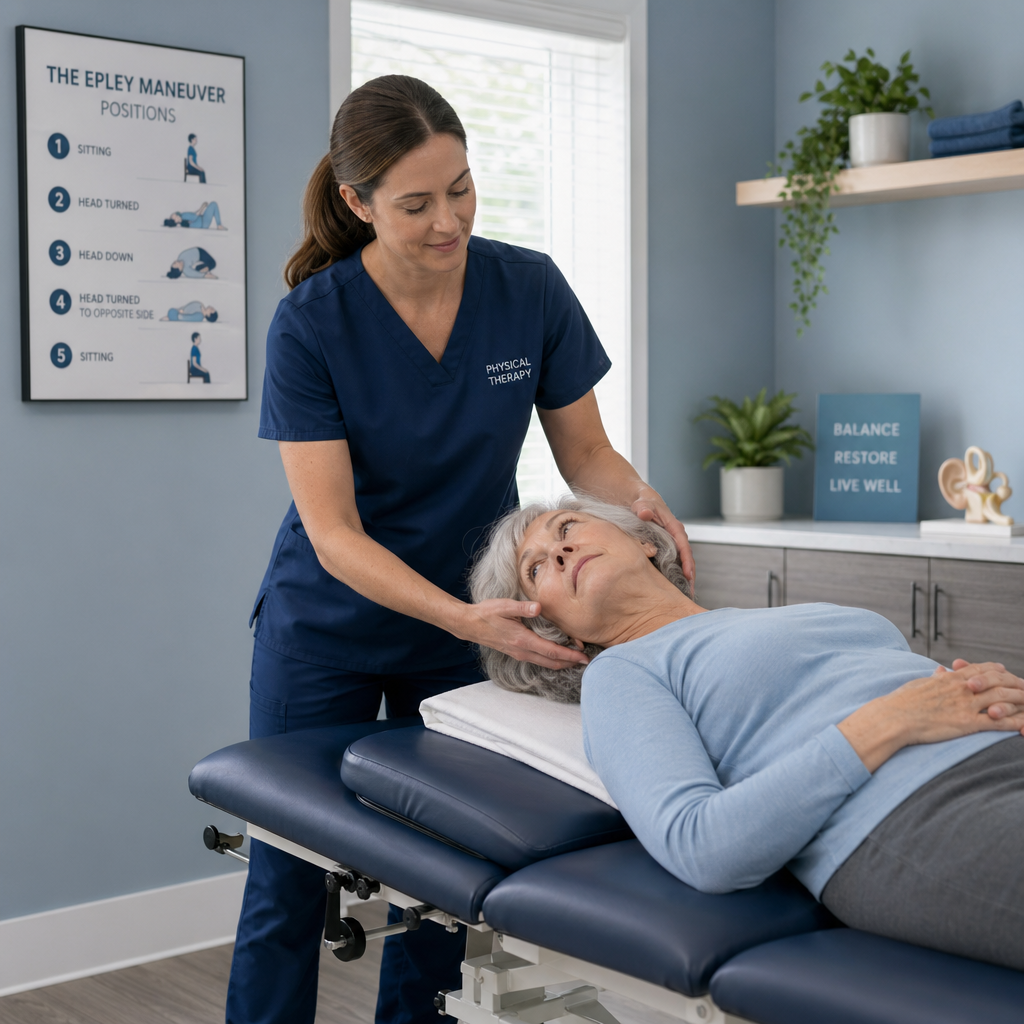
The Epley maneuver is specifically designed to move those displaced calcium crystals back where they belong. A physical therapist or ENT specialist should guide you through it first, but once you learn it, you can do it at home.
You start by sitting on your bed, then quickly lie back with your head turned 45 degrees to the affected side. Hold that position for about 30 seconds or until the vertigo stops. Then turn your head 90 degrees to the opposite side and hold again. Finally, roll onto your side in the direction you’re facing.
The movements might trigger temporary dizziness, which actually indicates the crystals are moving. Studies show the Epley maneuver works for about 80% of BPPV cases, often after just one or two sessions.
Gaze Stabilization and Balance Exercises
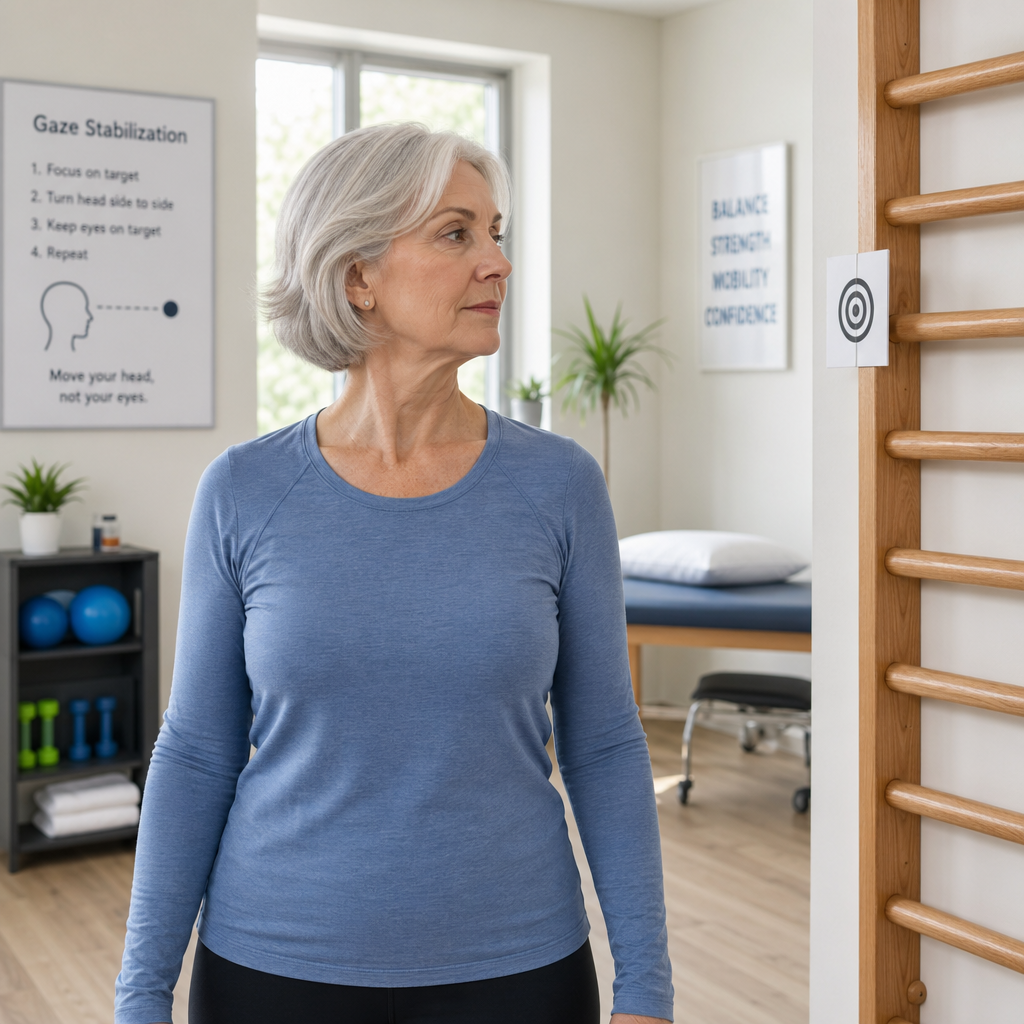
Gaze stabilization exercises help your brain compensate for vestibular problems. A simple starting exercise involves holding a card with a letter at arm’s length while moving your head side to side. Keep the letter in focus as you move. Start slowly for 30 seconds, gradually increasing speed as you improve.
Another effective exercise: stand near a wall for support and practice standing on one foot for 30 seconds at a time. As you get steadier, try it with your eyes closed or while turning your head slowly.
The single-leg stance with head turns combines balance and vestibular training. Stand on one leg and slowly turn your head left and right. This trains your system to maintain balance even when your visual input changes.
Walking heel-to-toe in a straight line, like a field sobriety test, challenges your balance system in a functional way. Do this along a hallway where you can touch the wall if needed. These movements help develop the stability you need for everyday activities and are similar to exercises that can help prevent falls.
What to Avoid During Vertigo Episodes
During active vertigo episodes, skip the exercises and focus on safety. Keep your environment well-lit and remove tripping hazards like loose rugs. Sit or lie down until the spinning passes.
Don’t attempt driving or operating machinery when you’re experiencing symptoms. Avoid sudden head movements and bright, flashing lights that can worsen dizziness. Stay hydrated, as dehydration can intensify vertigo.
Some exercises that seem helpful might actually make certain types of vertigo worse. Rapid head movements and exercises that involve quick position changes should be avoided until you’ve been properly evaluated. This is why your balance performance might vary between controlled settings and real-world situations.
When to Seek Professional Help
You should consult a physical therapist who specializes in vestibular rehabilitation if your vertigo persists for more than a week or keeps returning. They can identify which specific exercises will help your particular condition and make sure you’re doing them correctly.
See an ENT specialist if you experience vertigo along with hearing loss, severe headaches, double vision, or numbness. These symptoms could indicate something more serious that needs medical attention.
A proper diagnosis makes all the difference in treatment success. What works for BPPV won’t help Meniere’s disease, and doing the wrong exercises can waste time or even worsen symptoms. Once you have a diagnosis and start feeling steadier, you might want to explore beginner-friendly workouts that build both strength and balance.
Frequently Asked Questions
How long does it take for vestibular exercises to work?
Most people notice improvement within two to four weeks of consistent daily practice. BPPV often responds faster, sometimes within a few days of doing the Epley maneuver. More complex vestibular problems might take six to eight weeks of regular exercises. Consistency matters more than intensity. Doing exercises correctly for 10 minutes daily beats sporadic longer sessions.
Can I do these exercises if I’ve had a fall due to vertigo?
Yes, but start with seated exercises and always practice near stable furniture or walls you can grab for support. Consider having someone with you during the first few sessions. Work with a physical therapist to progress safely from seated to standing exercises. They can assess your fall risk and modify exercises accordingly. Don’t let fear of falling prevent you from doing rehabilitation, as the exercises actually reduce future fall risk when done properly. Activities like step workouts can also provide balance benefits once you’ve progressed in your recovery.
Related Articles
- 7 Balance Exercises to Prevent Falls After 60 (With Video Guide)
- Why Your Balance is Perfect in Class But Fails at Home
- 12 Health Benefits of Step Workouts: Learn Before You Ignore It
- Top 10 Beginner-Friendly Workouts for Seniors: Achieve Strength, Balance & Wellness