Cycling is one of the best exercises for seniors. It’s low-impact (your body weight is supported by the seat, not your joints), it builds leg strength and cardiovascular fitness, and it covers more ground than walking, which keeps things interesting.
But if you haven’t been on a bike in decades, the prospect of swinging a leg over the saddle and trusting two narrow wheels can feel intimidating. Balance, confidence, and physical preparation all factor into a successful return.
Before starting any new exercise program, especially one that involves balance and coordination like cycling, talk to your doctor. This is particularly important if you have joint issues, heart conditions, balance disorders, or if you’ve experienced falls recently. Your physician can help identify any medical concerns that might affect your cycling plan and may suggest modifications or supervision.
Addressing the Fear Factor
Fear of falling is the number one barrier for seniors returning to cycling, and it’s legitimate. A bicycle fall on pavement can cause wrist fractures, hip fractures, and head injuries. Acknowledging this risk and taking specific steps to mitigate it is smarter than pretending it doesn’t exist.
- Start on a stationary bike. Spend 2-4 weeks on an indoor bike rebuilding your leg strength and pedaling coordination before attempting a road bike. This eliminates balance risk while you build the physical foundation.
- Consider a three-wheeled bike (trike). Adult tricycles eliminate the balance requirement entirely while providing the same cardiovascular and leg-strengthening benefits. There’s no shame in a trike. Many active seniors ride them for years and cover impressive distances.
- Practice in a parking lot. Before hitting the road or bike path, find an empty parking lot (early morning on a weekday, or a church lot on a weekday) and practice starting, stopping, turning, and braking in a safe, open space.

Adult Tricycle for Seniors
Perfect for riders who want stability without sacrificing exercise benefits
If you’re particularly concerned about balance, consider working with a physical therapist for a few sessions. They can assess your balance capability, identify specific weaknesses, and provide exercises to address them before you get on a bike. Some physical therapy clinics have adaptive cycling programs where you can practice in a supervised environment.
Choosing the Right Bike
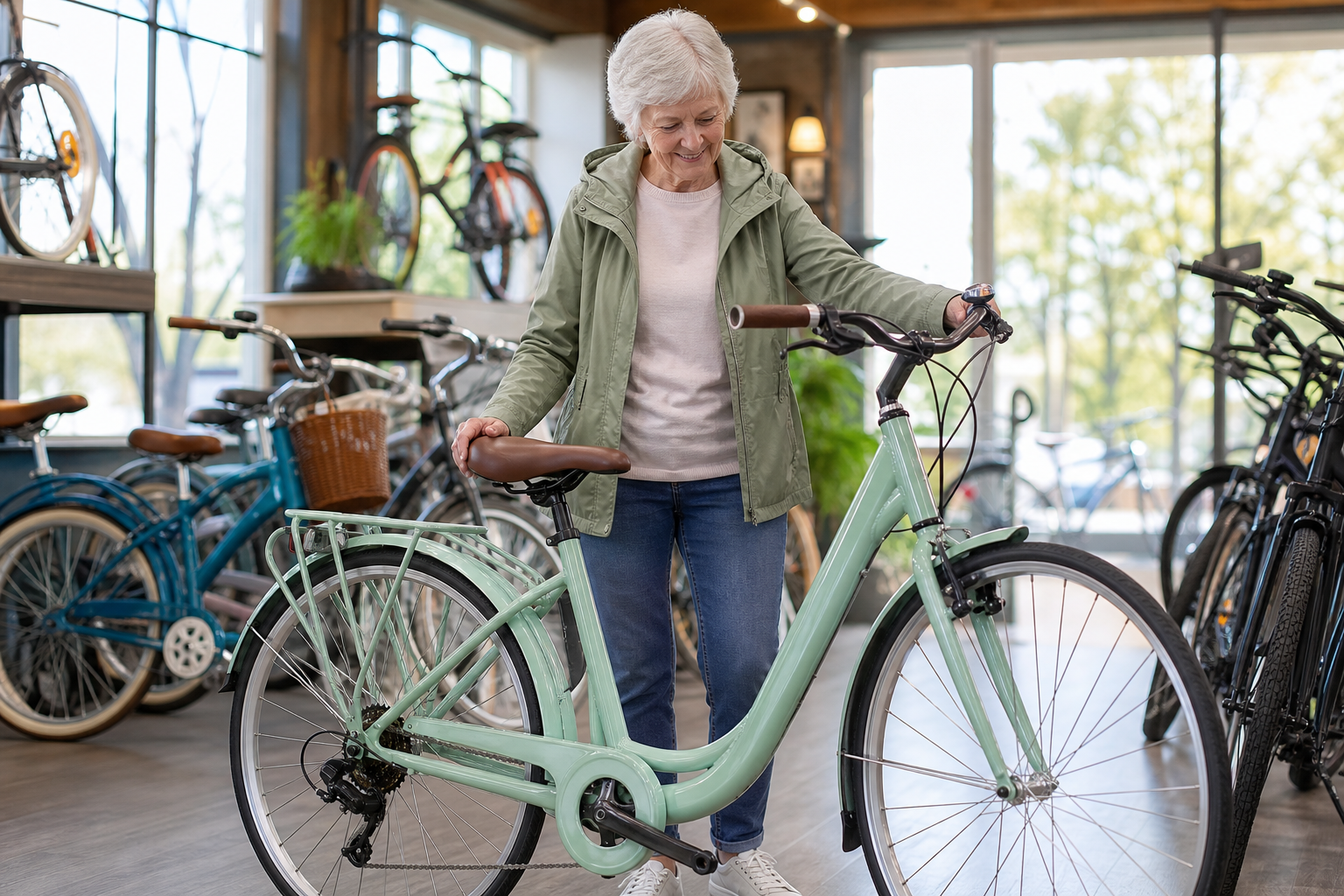
Getting the right bike makes the difference between a frustrating, uncomfortable experience and an enjoyable one. Don’t assume you need the same type of bike you rode 30 or 40 years ago. Your body and needs have changed.
Step-Through Frame
A step-through (low crossbar) frame lets you mount and dismount without swinging your leg high over a top tube. This is the single most important feature for seniors. High crossbar frames require hip flexibility and balance during mounting that many adults over 60 don’t have.
The step-through design also makes emergency dismounts safer. If you need to get off quickly, you can simply step forward and plant both feet without clearing a high bar. This reduces fall risk when stopping suddenly.
Upright Riding Position
Road bikes and many hybrid bikes put you in a forward-leaning position that stresses the lower back, neck, and wrists. Look for bikes with swept-back handlebars that allow you to sit upright. This is more comfortable, lets you see traffic and obstacles clearly, and reduces back strain during longer rides.
Upright positioning also improves breathing. A hunched-over posture compresses the diaphragm and limits lung capacity, which matters when you’re working to rebuild cardiovascular fitness.
Comfortable Seat
The narrow, hard saddles on most bikes are designed for young, padded backsides. A wide, cushioned saddle with springs or gel padding makes a dramatic difference for seniors. Comfort bike seats are an inexpensive upgrade that can be installed on almost any bike.
Test the saddle before committing to a bike purchase. Some bike shops allow test rides or have demo saddles you can try. What feels comfortable for 10 minutes in the parking lot might not work for a 30-minute ride, so if possible, borrow or rent before buying.
Electric Assist (E-Bike)
An electric-assist bike (e-bike) uses a motor to supplement your pedaling. You still pedal and get exercise, but the motor helps on hills, into headwinds, and when you’re tired. E-bikes let seniors ride further and tackle terrain that would be impossible on a standard bike. They’re the fastest-growing category of bicycle sales for adults over 60.
E-bikes are heavier than standard bikes (often 50-70 pounds versus 25-35 pounds), which provides stability but makes them harder to lift or maneuver when not riding. If you need to load your bike onto a car rack or carry it up steps, consider this weight difference.
The assist feature also helps you keep up with faster riding companions, like grandchildren or younger friends. You can choose the level of assistance, from minimal (mostly your own power) to high (the motor doing most of the work). This flexibility lets you adjust based on your energy and the terrain.

Electric Bike with Step-Through Frame
Ideal for tackling hills and longer distances without overexertion
Where to Buy
Local bike shops offer professional fitting, test rides, and ongoing service. They’ll adjust the seat height, handlebar position, and other settings to match your body dimensions and flexibility. This matters more than you might think. A poorly fitted bike causes neck pain, wrist numbness, knee strain, and saddle discomfort.
Big-box stores sell cheaper bikes, but they arrive partially assembled and rarely fit properly. The staff typically can’t perform detailed fitting adjustments. You may save money upfront but spend it later on discomfort-related modifications or injuries.
Used bikes are a viable option if you know what to look for or bring along someone who does. Check frame condition (no cracks or deep dents), wheel trueness (spin them and watch for wobbles), brake function, and gear shifting smoothness. Budget for a tune-up and safety check at a bike shop after buying used.
Physical Preparation
Even if you’re starting on a trike or stationary bike, building strength and stability before your first ride makes the experience more enjoyable and safer.
Leg Strength
Cycling demands quadriceps, hamstring, and calf endurance. Prepare with chair squats (3 sets of 10), calf raises (3 sets of 15), and seated leg extensions (3 sets of 12) for 2-4 weeks before your first ride. If you can comfortably stand from a low chair 10 times without hand assistance, your legs are ready.
Don’t skip the preparation phase. Underprepared leg muscles fatigue quickly, which compromises your pedaling form and can lead to knee pain. Weak legs also reduce your ability to catch yourself or stabilize the bike when needed.
Core Stability
Your core stabilizes your pelvis on the saddle. Weak core muscles lead to excessive rocking, back pain, and reduced pedaling efficiency. Bird dogs, dead bugs, and seated trunk rotations (3 sets of 10 each, 3 times per week) build the core stability needed for comfortable riding.
A strong core also protects your lower back when riding over bumps or uneven surfaces. Your spine absorbs shock with every pedal stroke and terrain variation. Core muscles act as shock absorbers that reduce the stress transferred to spinal discs and vertebrae.
Grip and Wrist Strength
Gripping handlebars and operating brake levers requires hand and wrist endurance. Squeeze a tennis ball (3 sets of 15 per hand) and perform wrist curls (2 sets of 12, palm up and palm down) to prepare.
Arthritis in the hands or reduced grip strength can make braking difficult, which is a safety issue. If you have significant hand weakness, look for bikes with ergonomic grips and easy-pull brake levers designed for reduced hand strength. Some e-bikes also have electronic braking that requires less grip force.
For more exercises to improve hand function, check out our grip strength exercises guide.
Balance Training
If you’re planning to ride a two-wheeled bike (not a trike), balance training helps. Stand on one foot for 30 seconds, then switch (3 sets per foot). Progress to standing on one foot with eyes closed (much harder). Practice heel-to-toe walking in a straight line. These exercises build the neural pathways and muscle coordination needed to maintain upright stability on a bike.
Consider using a balance board or wobble cushion while watching TV. Even 5-10 minutes a day can improve your stability response.
Your First Rides
Start slow. Many returning cyclists overestimate their readiness and attempt too much on the first ride. This leads to exhaustion, soreness, and sometimes injury that derails the entire return plan.
- Ride 1-3: 10-15 minutes on flat, traffic-free paths. Focus on smooth pedaling, comfortable braking, and getting used to the bike’s feel.
- Ride 4-6: Extend to 20 minutes. Add gentle turns and practice signaling stops.
- Ride 7-10: Build to 30 minutes with some gentle inclines. Practice shifting gears to maintain comfortable pedaling cadence on hills.
- Beyond ride 10: Increase distance and variety as confidence grows. Always ride with traffic (not against it), wear a helmet, and carry a phone and identification.
Aim for 60-80 pedal revolutions per minute (rpm). This is a comfortable, sustainable cadence for most seniors. Higher cadences reduce knee stress by spreading the work over more pedal strokes. Lower cadences force each stroke to do more work, which can strain knee joints. If your bike doesn’t have a cadence meter, count pedal strokes for 15 seconds and multiply by four.
Ride every other day rather than daily, at least for the first few weeks. Your muscles, connective tissues, and cardiovascular system need recovery time between sessions. Rest days prevent overuse injuries and allow your body to adapt and strengthen.
Essential Safety Gear
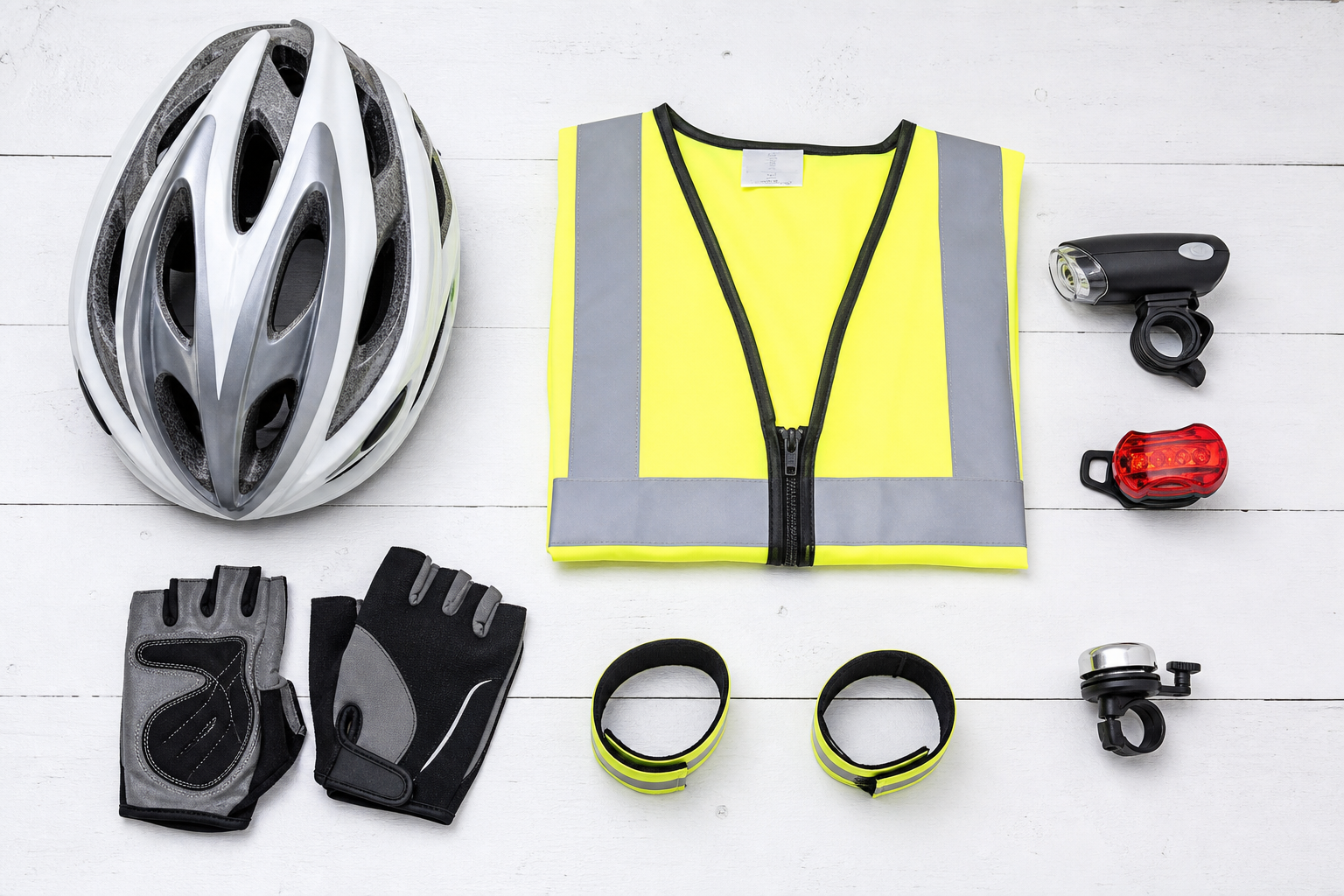
- Helmet: Non-negotiable. A properly fitted cycling helmet reduces head injury risk by 50-70%. Replace it after any impact or every 5 years.
- Mirrors: A handlebar or helmet-mounted mirror lets you see traffic behind you without turning your head (which can throw off your balance).
- Lights: Front white light and rear red light, even during daytime. Visibility is your primary defense against motorists.
- Gloves: Padded cycling gloves protect your palms in a fall and reduce hand numbness during rides.
Add a bell or horn. You’ll need to alert pedestrians and other cyclists when passing. A friendly bell ring is less startling than shouting “on your left” and works better when people are wearing earbuds.
Wear bright or reflective clothing. Motorists often fail to see cyclists, especially older, slower-moving ones. Neon yellow, orange, or lime green makes you more visible. Reflective strips or vests help in low-light conditions.
Consider padded cycling shorts or a gel seat cover for the first few weeks. Your sit bones (the bony parts of your pelvis that contact the saddle) need time to adapt. Padding reduces the initial discomfort during this adaptation period.
Route Selection
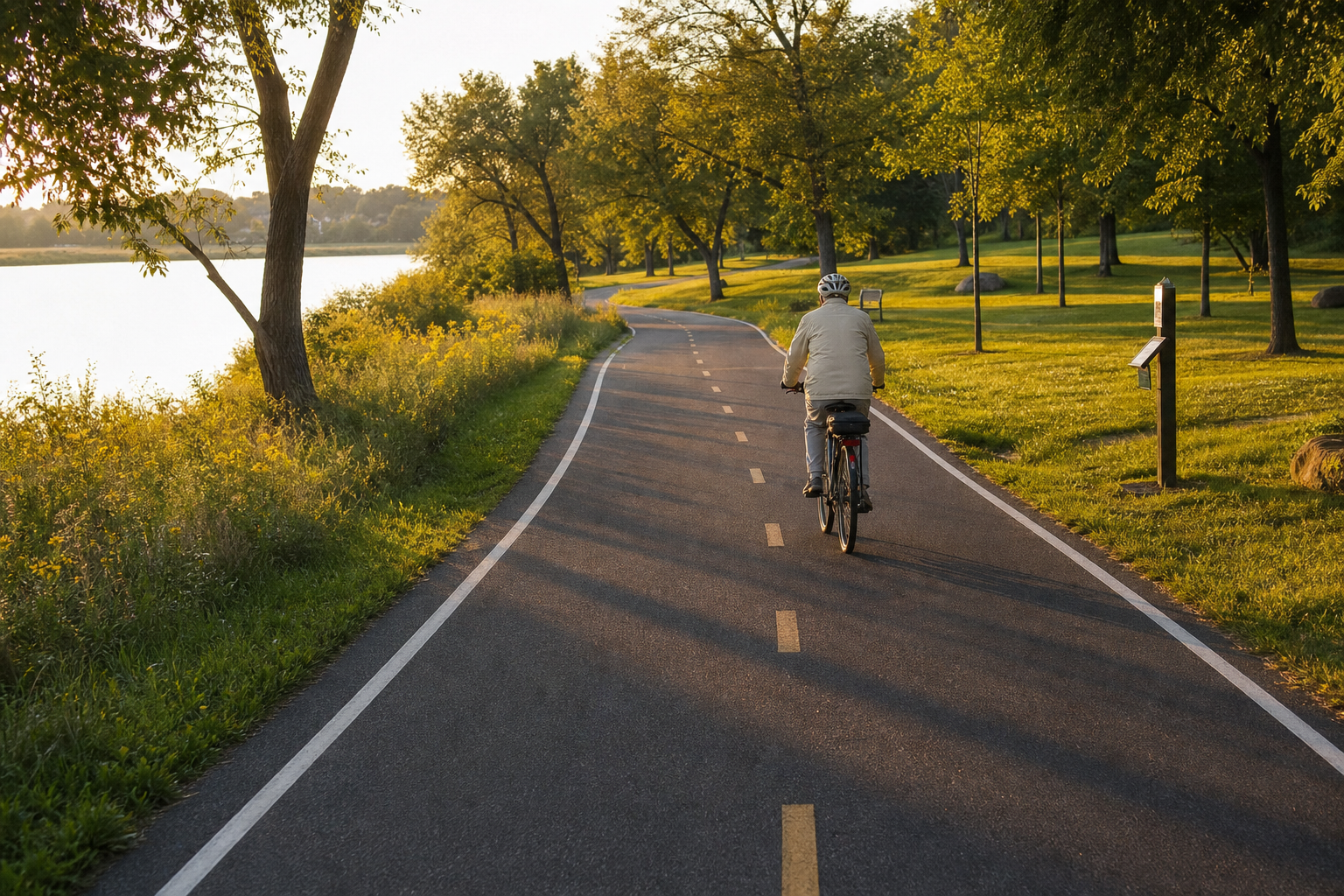
Choose bike paths and low-traffic roads for your first month. High-speed traffic, complex intersections, and roads without bike lanes or shoulders create hazards you don’t need while rebuilding skills and confidence.
Many communities have rail-trails (former railroad corridors converted to paths) that offer flat, car-free riding. These are ideal for returning cyclists. Search for “rail trails near me” or check TrailLink.com for options.
Parks with paved loop roads often restrict car access or have very low speed limits. These work well for practice rides where you’re building endurance and comfort without worrying about traffic.
Avoid gravel or dirt paths until you’ve mastered pavement. Loose surfaces require more balance and bike-handling skill. Potholes, rocks, and uneven terrain increase fall risk significantly.
When cycling in warmer months, apply the same precautions you’d use for any outdoor activity. Our hot weather workout safety guide covers hydration and heat management strategies. For cooler seasons, review our cold weather exercise tips to stay comfortable and safe.
Dealing with Common Issues
Knee Pain
Knee pain during or after cycling usually signals one of three problems: seat too low (forces excessive knee bend), seat too high (overextends the knee), or pushing too hard in high gears (overloads the joint). Adjust seat height so your knee has a slight bend (about 25-30 degrees) when the pedal is at the bottom of the stroke. Shift to easier gears that let you pedal faster with less resistance.
If knee pain persists despite proper bike fit and easy gearing, see a physical therapist. You may have underlying issues that need specific exercises or modifications. For those recovering from knee surgery, our post-knee replacement exercises guide offers helpful context.
Hand Numbness
Gripping too tightly, wrist angle issues, or too much weight on your hands causes numbness. Relax your grip. Your hands should rest on the bars, not clench them. Adjust handlebar height to reduce forward lean and shift more weight to the saddle. Padded gloves help but don’t solve underlying fit problems.
Change hand position frequently during rides. Move your hands to different spots on the bars every few minutes to vary pressure points and wrist angles.
Neck Stiffness
Looking up and forward while riding can strain neck muscles, especially if you’re leaning forward. Raise your handlebars to create a more upright position. Take breaks during longer rides to roll your shoulders and gently stretch your neck. Strengthening exercises for the upper back and neck (rows, reverse flys, chin tucks) can help build endurance for sustained head position.
Poor posture can contribute to neck discomfort both on and off the bike. Our posture correction exercises can help address these issues.
Frequently Asked Questions
Am I too old to start cycling?