If you’ve been diagnosed with osteoporosis or osteopenia, exercise can feel like a minefield. You want to protect your bones, but you’ve probably heard conflicting advice about what’s safe and what could make things worse. The truth is that the right exercise is one of the most powerful tools you have for managing bone loss, and the wrong kind can raise your fracture risk significantly.
This guide breaks down exactly which movements support bone density, which ones you need to avoid, and how to build a safe routine you can actually stick with. Before you start any new exercise program, please get clearance from your doctor or a physical therapist who understands your bone density scores and overall health picture.
Why Exercise Matters for Bone Health
Bone is living tissue. When you load it with weight and resistance, it responds by building more density. This process, called bone remodeling, slows with age, but it doesn’t stop. Research published in the Journal of Bone and Mineral Research consistently shows that weight-bearing and resistance exercise can slow bone loss and, in some cases, modestly improve density, even in older adults.
The key is mechanical stress. Your bones need to feel a challenge to adapt. Low-impact activities like swimming and cycling are great for cardiovascular fitness, but they don’t provide enough skeletal loading to drive bone remodeling. You need gravity and muscle pull working together.
Nutrition supports this process too. Make sure you’re getting enough calcium from food sources, and check out our guide to calcium sources beyond dairy for seniors if you’re lactose intolerant or just want more variety. Pairing that with adequate vitamin D for bone and muscle health helps your body actually absorb and use that calcium.
Exercises That Support Bone Density
Weight-Bearing Cardio
Walking is the most accessible bone-friendly exercise you can do. It’s low enough in impact to be safe for most people with osteoporosis, and adding inclines or light hand weights increases the load. Aim for at least 30 minutes most days of the week.
Dancing, low-impact aerobics, and hiking also qualify as weight-bearing cardio. The defining factor is that your feet are hitting the ground and your skeleton is supporting your body weight against gravity.
Resistance Training
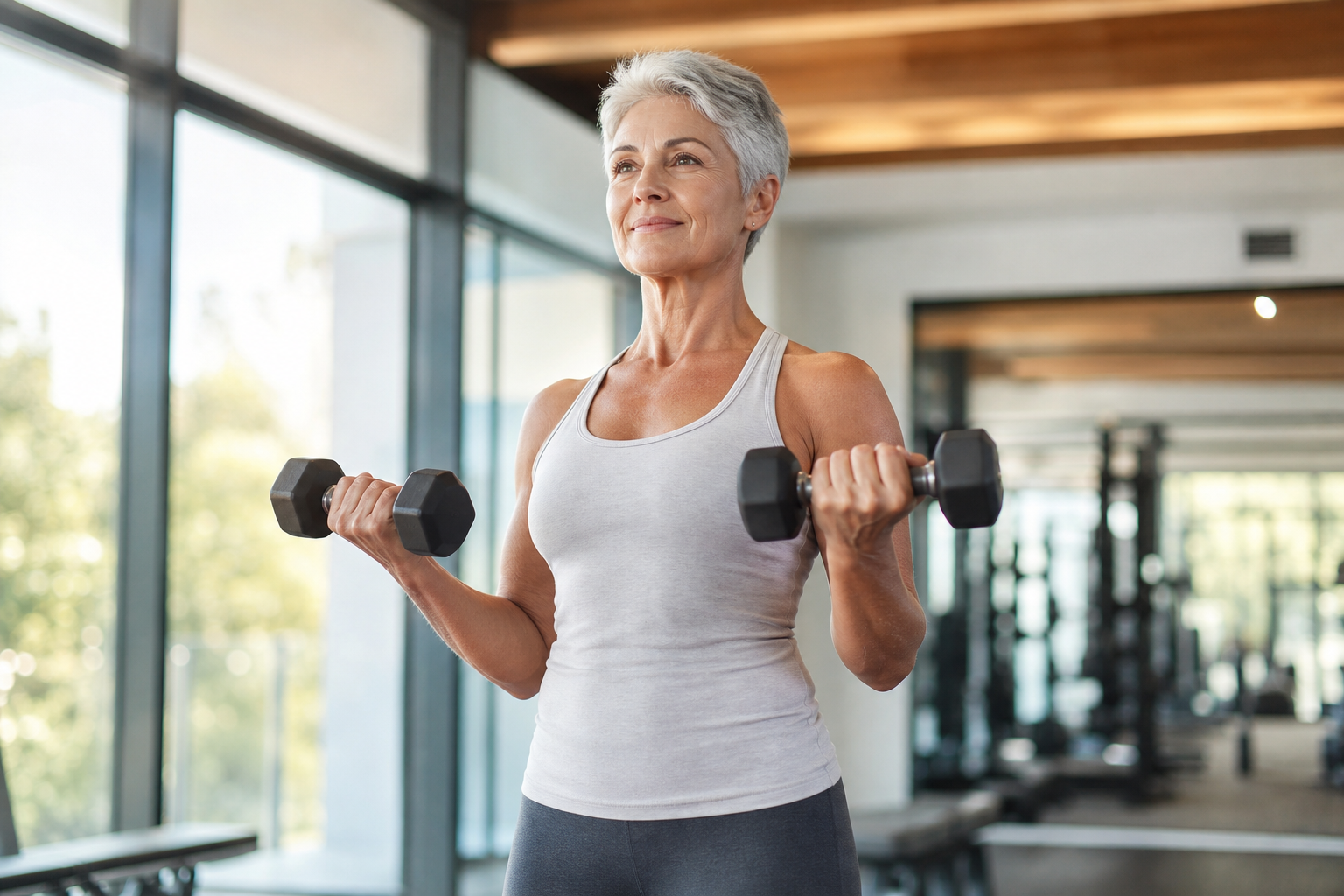
This is where bone-building really accelerates. Resistance training, whether with machines, free weights, resistance bands, or your own bodyweight, creates muscle pull on bone. That pull is one of the strongest signals telling your body to maintain or build density.
Good moves to include:
- Squats and modified squats (holding a chair for support)
- Leg press machine
- Hip abduction and adduction exercises
- Standing rows with resistance bands
- Overhead press (with light to moderate weight, keeping the spine neutral)
- Bicep curls and tricep extensions
- Wall push-ups or modified push-ups
Adding adjustable ankle weights to leg lifts and hip exercises is an easy way to increase bone stimulus without putting your spine at risk. Look for sets that let you add or remove weight in small increments as you progress.

Adjustable Ankle Weights
Adjustable ankle weights let you gradually increase resistance on leg and hip exercises, directly targeting the bones most vulnerable to fracture.
Resistance bands are another excellent tool, especially for home workouts. They create constant tension through the full range of motion, which is highly effective for muscle and bone loading without heavy equipment. If you’re building out a home setup, see our budget-friendly home gym guide for seniors for ideas.

Resistance Bands for Seniors
A quality resistance band set with handles gives you the versatility to do dozens of bone-building exercises from home with minimal joint stress.
Balance Training
Balance work doesn’t build bone directly, but it dramatically reduces your fall risk, which is the real danger with osteoporosis. Single-leg stands, heel-to-toe walking, and tai chi are all excellent options. For a detailed breakdown of balance-focused exercises, our guide to vertigo and balance exercises for seniors covers many of the same principles.
Movements to Avoid or Modify
Heavy Spinal Flexion
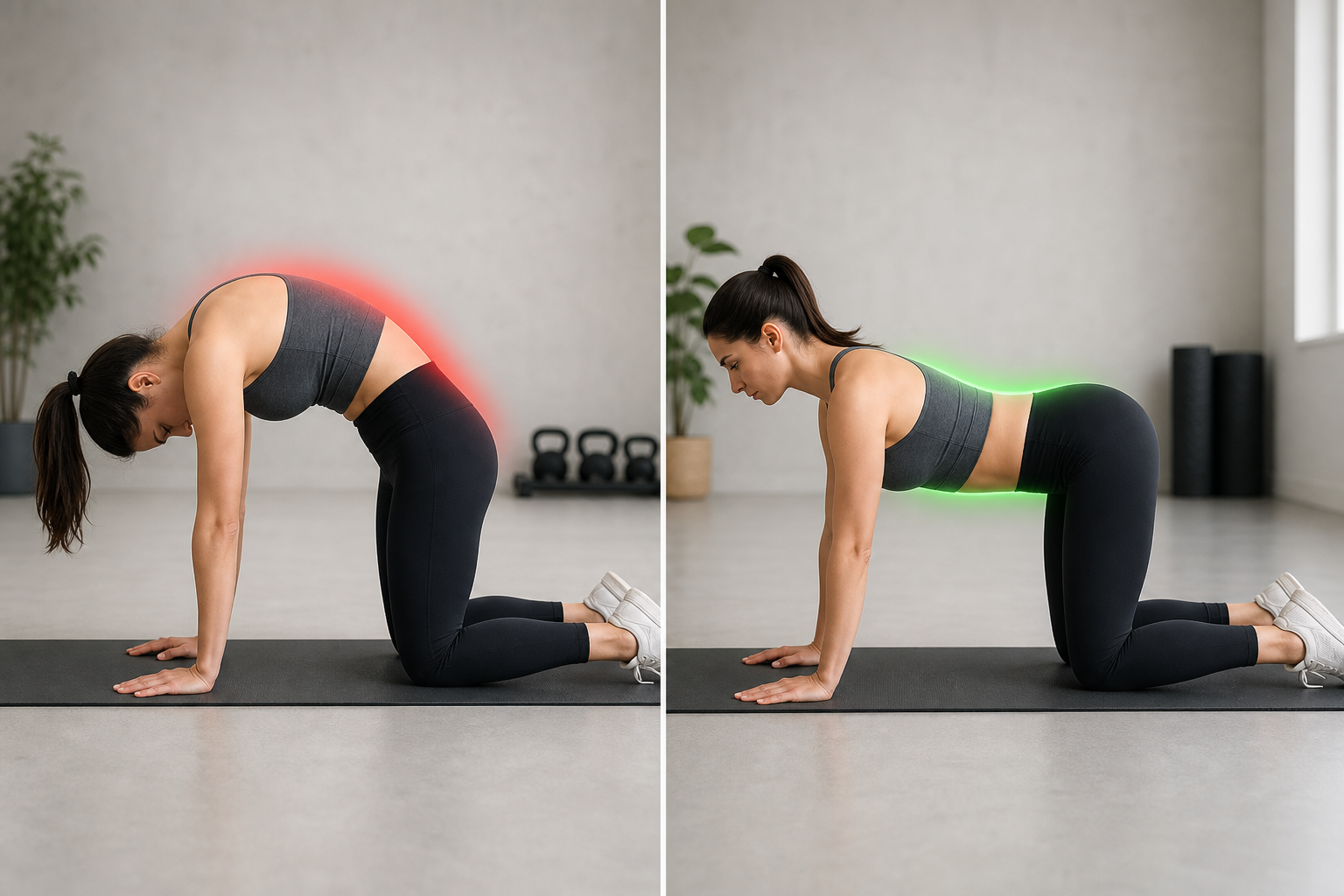
This is the big one. Forward bending of the spine under load places enormous compressive force on the front edges of your vertebrae, which are already the most vulnerable part of the bone in people with osteoporosis. Vertebral compression fractures from this type of movement are common and painful.
Avoid or modify these specifically:
- Crunches and sit-ups
- Toe touches with a rounded back
- Many yoga poses that involve deep forward folds (like seated forward bend)
- Pilates moves that curl the spine off the mat repeatedly
- Rowing machines, which encourage repetitive spinal flexion under resistance
You can still strengthen your core, but focus on neutral-spine exercises like planks, bird-dogs, and dead bugs instead. Also take a look at our posture correction exercises for seniors, which help counteract the forward rounding that often accompanies bone loss in the spine.
High-Impact and High-Fall-Risk Activities
Running, jumping, and plyometrics can actually be beneficial for bone density in healthy people, but for someone with osteoporosis, a fall during these activities poses a serious fracture risk. Downhill skiing, aggressive tennis, and contact sports fall into the same category. Talk with your doctor about your specific T-score before adding any jumping or high-speed movement.
Heavy Loading Through the Spine
Barbell back squats and heavy deadlifts load the spine directly. These aren’t necessarily off-limits for everyone with osteoporosis, but they require good technique, medical clearance, and ideally supervision from a trainer who understands bone health. Machine-based alternatives and goblet squats are usually safer starting points.
Building Your Routine
A well-rounded osteoporosis exercise plan typically includes weight-bearing cardio on most days and resistance training two to three times per week. Balance training can be woven in daily since it’s low effort and requires no equipment.
Start conservatively. Two sets of eight to ten reps with a weight that feels manageable is a solid starting point. Gradually increase resistance over weeks rather than jumping ahead. Your bones adapt slowly, and patience here pays off. For a structured progression approach, our 12-week progressive resistance training program gives you a practical framework to follow.
Post-workout nutrition matters too. Protein supports muscle repair, which in turn supports bone. Our guide to post-workout recovery meals for seniors has practical ideas for what to eat after your sessions.
Frequently Asked Questions
Can I do yoga if I have osteoporosis?
Yes, with modifications. Many yoga poses are safe and beneficial, particularly those that involve extension, balance, and gentle hip opening. Avoid deep forward folds, aggressive spinal twisting, and any pose that rounds the lower back under load. Some yoga instructors specialize in osteoporosis-safe modifications, and that’s worth seeking out.
How long before I see results in bone density?
Bone remodeling is a slow process. Most research studies track changes over six months to a year, and improvements are often modest, measured in one to two percent density gains. The more immediate benefit is reduced fall risk and improved muscle strength, both of which lower your fracture risk well before a DEXA scan shows changes.
Is swimming or water aerobics worth doing if it doesn’t build bone?
Absolutely. Swimming and water aerobics don’t provide the skeletal loading needed to build bone, but they’re excellent for cardiovascular fitness, flexibility, and muscle strength without joint stress. Think of them as a complement to your weight-bearing work rather than a replacement. They’re especially useful on recovery days or if you’re managing joint pain alongside osteoporosis.
This article contains affiliate links. We may earn a small commission at no extra cost to you.