Walking is the most accessible cardiovascular exercise on the planet, and for seniors, it’s one of the most effective. Regular walking reduces the risk of heart attack by 30-40%, lowers blood pressure, improves cholesterol ratios, and reduces resting heart rate. You don’t need special equipment, a gym membership, or athletic ability. You need shoes, a safe path, and a plan that starts where you are and builds gradually.
Cardiovascular Benefits of Walking for Seniors
Research from the American Heart Association shows that moderate-pace walking for 150 minutes per week (about 30 minutes, 5 days a week) provides cardiovascular benefits nearly as large as running for the same duration. A Harvard study tracking over 72,000 women found that walking briskly for 3+ hours per week reduced heart disease risk by 35%. Walking also reduces chronic inflammation, improves blood vessel elasticity, and helps regulate blood sugar, all of which protect against cardiovascular disease.
The cardiovascular adaptations from walking happen at multiple levels. Your heart becomes more efficient at pumping blood, requiring fewer beats per minute to deliver oxygen throughout your body. Blood vessels become more elastic and responsive, improving circulation to your extremities and organs. Walking stimulates production of nitric oxide, a molecule that helps blood vessels dilate and reduces arterial stiffness. This matters because stiff arteries are a major driver of high blood pressure and heart disease in older adults.
Walking also affects your blood chemistry in measurable ways. LDL (bad cholesterol) drops by 5-10 points with consistent walking, while HDL (good cholesterol) increases by 3-5 points. Triglycerides drop by 10-15%. These changes reduce plaque formation in arteries and lower your risk of blockages that cause heart attacks. Blood sugar regulation improves because walking muscles pull glucose out of your bloodstream without requiring insulin. This protects against diabetes, which doubles heart disease risk.
Getting Started: The 8-Week Progressive Plan
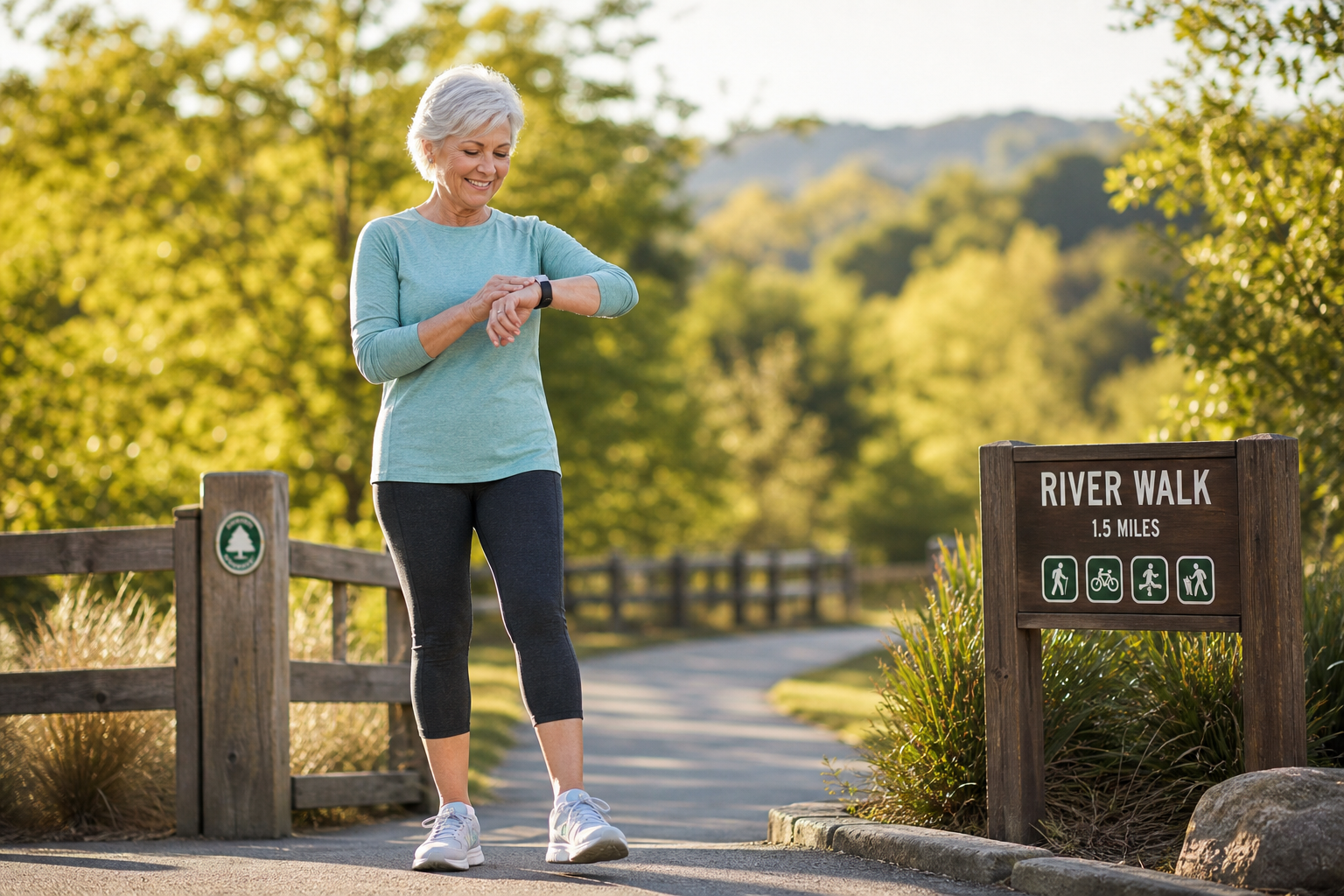
Before You Begin
If you have a heart condition, are on cardiac medications, haven’t exercised in more than a year, or have any symptoms during light activity (chest discomfort, unusual shortness of breath, dizziness), get medical clearance before starting. A simple conversation with your doctor or a brief treadmill test can confirm you’re safe to begin. This isn’t paranoid over-caution. It’s practical risk management that lets you walk with confidence rather than worry.
Your doctor may want to adjust medications before you start. Blood pressure and diabetes medications sometimes need dose reductions as activity increases. A beta-blocker prescription might affect how you monitor intensity. These are solvable issues, but they’re easier to manage when your doctor knows your plan. If you plan to monitor your blood pressure during exercise, discuss appropriate target ranges with your physician.
Week 1-2: Foundation
Walk at a comfortable, easy pace for 10-15 minutes, 3-4 days per week. The pace should feel like a casual stroll, not a power walk. Your breathing should be completely normal. You should be able to sing a song while walking. Flat, even surfaces only. This baseline phase lets your heart, muscles, and joints adapt to regular activity.
During these first two weeks, focus on consistency over performance. Same time of day if possible. Same route works fine. You’re building a habit, not chasing a fitness milestone. Many people skip this foundation phase and jump straight to 30-minute moderate walks because 10-15 minutes feels too easy. That approach leads to sore joints, fatigue, and dropout within a month. Two weeks at an easy pace is an investment in long-term success.
Pay attention to your shoes during these foundation walks. Worn-out sneakers or unsupportive casual shoes create foot, ankle, and knee problems that derail walking programs. Your shoes should have cushioning under the heel, arch support, and a flexible toe area. If your current shoes are more than a year old or have visible wear on the sole, replace them now before ramping up your walking time.

Walking Shoes for Seniors
Proper footwear with arch support and cushioning is essential for joint protection and preventing foot pain during your walking program
Week 3-4: Building Duration
Increase to 15-20 minutes per walk, 4 days per week. Maintain the same easy pace. Add a fifth walking day if you feel good. The goal is extending your comfortable walking time, not speeding up. Your cardiovascular system adapts to duration first, then intensity.
You may notice that 15-20 minutes feels easier at the end of week 4 than 10 minutes felt in week 1. That’s your cardiovascular system adapting. Your heart is pumping more blood per beat, so it doesn’t have to work as hard to deliver oxygen. Small blood vessels (capillaries) are growing in your leg muscles, improving oxygen delivery. Your body is becoming more efficient at the basic work of moving.
If 20 minutes straight feels like too big a jump, split it into two 10-minute walks (morning and afternoon). The cardiovascular benefit is nearly identical to one continuous walk. The only minor difference is that continuous walks improve endurance slightly more than split walks, but both reduce heart disease risk equally.
Week 5-6: Adding Pace
Continue walking 20-25 minutes, 4-5 days per week. Increase your pace to a moderate level where you can talk in full sentences but can’t sing comfortably. This is the “talk test” threshold that corresponds to about 50-60% of your maximum heart rate. A heart rate monitor can help you find and maintain this zone.
Moderate intensity is where walking shifts from pleasant recreation to cardiovascular medicine. At this effort level, your heart is working hard enough to trigger beneficial adaptations but not so hard that you can’t sustain the pace. Your breathing rate increases noticeably. You’ll warm up and may start sweating lightly after 10 minutes. Your legs feel like they’re working, but not straining. Combining steady walking with controlled breathing techniques can help manage any anxiety about increasing your exertion level.
This is also the phase where technique starts to matter. Keep your posture upright, shoulders relaxed, arms swinging naturally at your sides. Don’t lean forward or look down at the ground, which compresses your chest and makes breathing harder. Pick your feet up rather than shuffling. A shuffling gait reduces cardiovascular intensity and increases tripping risk on uneven surfaces.
Week 7-8: Target Duration
Build to 30 minutes of moderate-pace walking, 5 days per week. This is the dose that captures most of the cardiovascular benefits. You’ve gone from zero to the American Heart Association’s recommended weekly target in just 8 weeks. If 30 continuous minutes is too much, split it into two 15-minute walks (morning and evening) for the same total benefit.
Thirty minutes is a milestone worth acknowledging. You’re now in a category (regular moderate-intensity exercisers) that has 30-40% lower all-cause mortality than sedentary peers. Your heart is measurably stronger and more efficient than it was 8 weeks ago. Blood pressure, cholesterol, and blood sugar are all moving in positive directions. These aren’t minor changes. They’re life-extending adaptations.
If weather or schedule makes outdoor walking difficult on some days, indoor alternatives maintain your momentum. Mall walking before stores open. Laps around a large grocery store. A treadmill at a senior center or gym. The surface and scenery matter less than maintaining your 30-minute habit five days a week. For a comprehensive indoor walking program you can follow at home, we offer detailed guidance on safe alternatives when outdoor conditions aren’t ideal.
Beyond Week 8: Adding Intervals
Once 30 minutes of moderate walking feels comfortable, intervals add cardiovascular challenge without extending your session time. Walk at your moderate pace for 3 minutes, then increase to a brisk pace (where talking becomes slightly difficult) for 1 minute. Repeat this cycle throughout your walk. Intervals improve cardiovascular fitness 20-30% more than steady-state walking at the same total time.
The 1-minute brisk intervals push your heart rate up to 70-80% of maximum, which is the zone where stroke volume (blood pumped per beat) increases most rapidly. You’re training your heart to pump more blood with each contraction. The 3-minute moderate recoveries let your heart rate drop back down while still maintaining activity. This up-and-down pattern creates a stronger training stimulus than walking at one steady pace.
Start with 4-5 intervals per walk (4 minutes brisk total out of 30 minutes). Over several weeks, build to 6-8 intervals. Don’t add more than that. If you want more challenge after reaching 8 intervals, increase the intensity of the brisk sections slightly rather than adding more intervals. At some point, adding more intensity means you’re no longer walking; you’re jogging. That’s fine if your joints tolerate it, but it’s not necessary for heart health.
Heart Rate Targets for Seniors
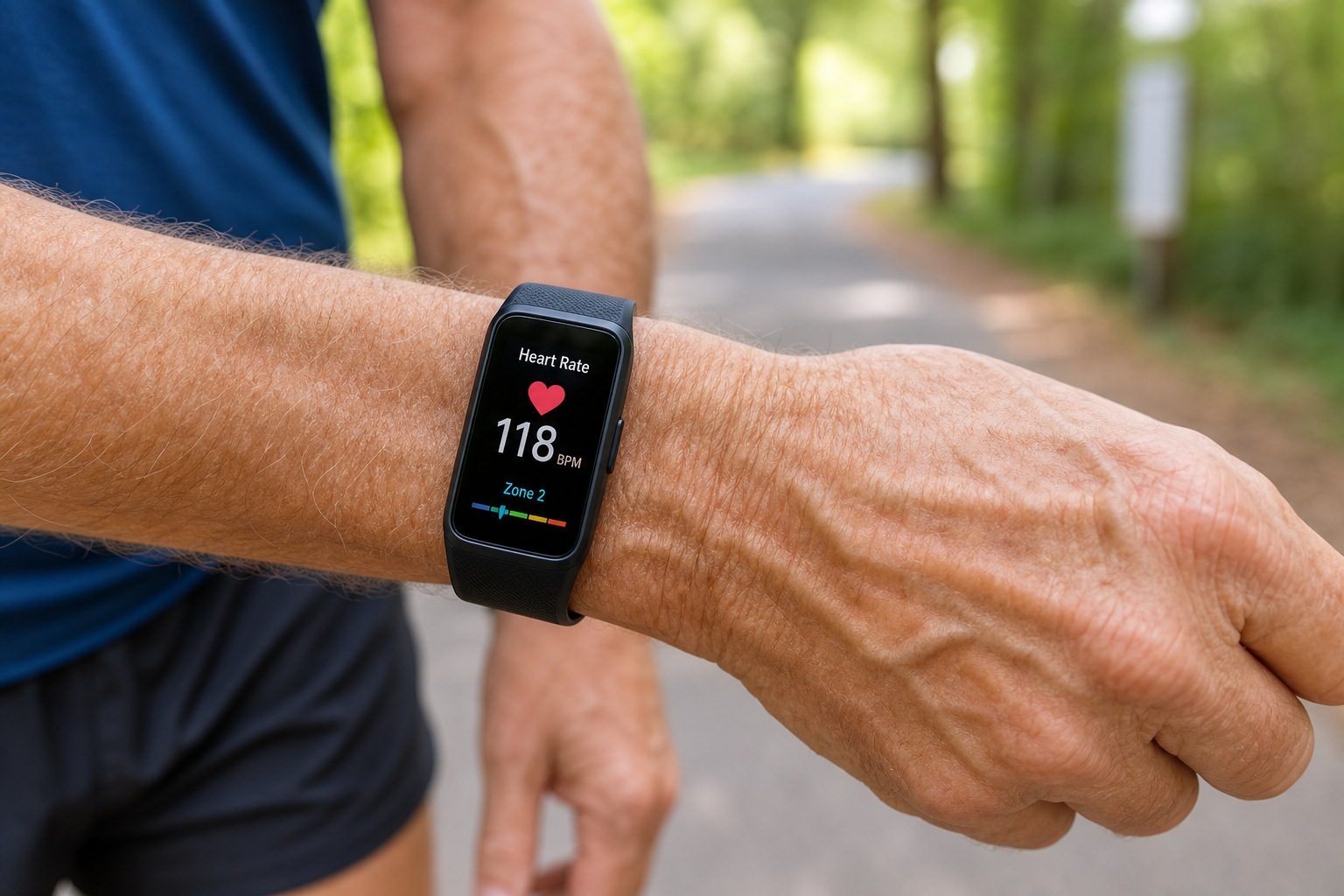
A rough maximum heart rate estimate is 220 minus your age. Your target zone for moderate cardiovascular benefit is 50-70% of that number.
- Age 60: Max ~160, target zone 80-112 bpm
- Age 65: Max ~155, target zone 78-109 bpm
- Age 70: Max ~150, target zone 75-105 bpm
- Age 75: Max ~145, target zone 73-102 bpm
If you take a beta-blocker (metoprolol, atenolol), these numbers don’t apply because the medication limits your heart rate. Use the talk test instead: moderate effort means you can talk in sentences but not sing.
Heart rate monitors range from basic chest straps to wrist-based smartwatches. Chest straps are more accurate but less convenient. Wrist monitors are accurate enough for walking if the watch band is snug. You don’t need GPS tracking, calorie counters, or smartphone connectivity. You need a display that’s large enough to read while walking and shows your current heart rate in real time. Models designed for seniors typically have simpler interfaces and larger numbers.
Some people find that checking heart rate constantly makes walking feel like a medical procedure rather than an enjoyable activity. If that’s you, check your heart rate twice per walk (at 10 minutes and 20 minutes) just to confirm you’re in the right zone, then ignore the monitor the rest of the time. The talk test is reliable for daily walks. The monitor is a teaching tool that helps you learn what moderate effort feels like, not a device you need to watch every minute.

Heart Rate Monitor for Seniors
Look for models with large, easy-to-read displays and simple interfaces to track your heart rate during walks
Walking for Specific Heart Conditions
High Blood Pressure
Walking produces an acute blood pressure reduction of 5-7 mmHg that lasts 12-16 hours after each session. Over weeks of consistent walking, resting blood pressure drops by 5-10 mmHg, which is comparable to the effect of a single blood pressure medication. Walk at moderate intensity for the greatest blood pressure benefit.
The blood pressure drop from walking happens through multiple mechanisms. Blood vessels dilate during activity and stay more relaxed afterward. Stress hormones (cortisol, norepinephrine) decrease with regular walking, reducing the constant low-grade arterial constriction that drives high blood pressure. Sodium excretion through urine increases slightly with regular activity, reducing fluid retention that elevates pressure.
If you’re on blood pressure medication and start a consistent walking program, your doctor may need to reduce your dose after 4-6 weeks. Suddenly dropping your pressure too low (by combining medication with the blood pressure benefit of walking) causes dizziness and fall risk. Monitor your blood pressure at home if possible, and report any readings consistently below 110/70 or any new dizziness