If climbing a flight of stairs feels harder than it used to, or if your hips feel stiff and weak after a long day of sitting, your glutes are probably not doing their job anymore. This isn’t just a fitness problem. Weak glutes affect how you walk, how well you balance, and whether your knees and lower back stay pain-free as you get older.
The good part is that glute weakness is almost always reversible. With a few targeted exercises and some understanding of why this happens, you can rebuild meaningful hip strength at any age.
Why Your Glutes Get Weaker as You Age
There are two things working against your glutes as you get older: biology and behavior. The biology part is real but manageable. After 50, you naturally lose muscle mass at a rate of roughly 1 to 2 percent per year. This process, called sarcopenia, hits the large muscles of the hips and thighs particularly hard.
The behavior part is often the bigger issue. Most people in their 60s and 70s spend a lot more time sitting than they did decades ago. When you sit for hours, your hip flexors stay shortened and tight, while your glutes essentially go dormant. Over time, your nervous system stops recruiting the glute muscles effectively. This is sometimes called “gluteal amnesia,” and it’s exactly what it sounds like: your body forgets how to use those muscles properly.
The result is a pattern where other muscles, like your lower back, hamstrings, and hip flexors, try to compensate. That compensation is usually what causes the aches and instability that many people chalk up to “just getting old.” If you’ve been dealing with lower back stiffness or knee pain, weak glutes may be contributing more than you realize. You can read more about this connection in our guide to managing sciatica through exercise, which covers how hip and core weakness feeds nerve pain.
How Glute Weakness Affects Daily Life
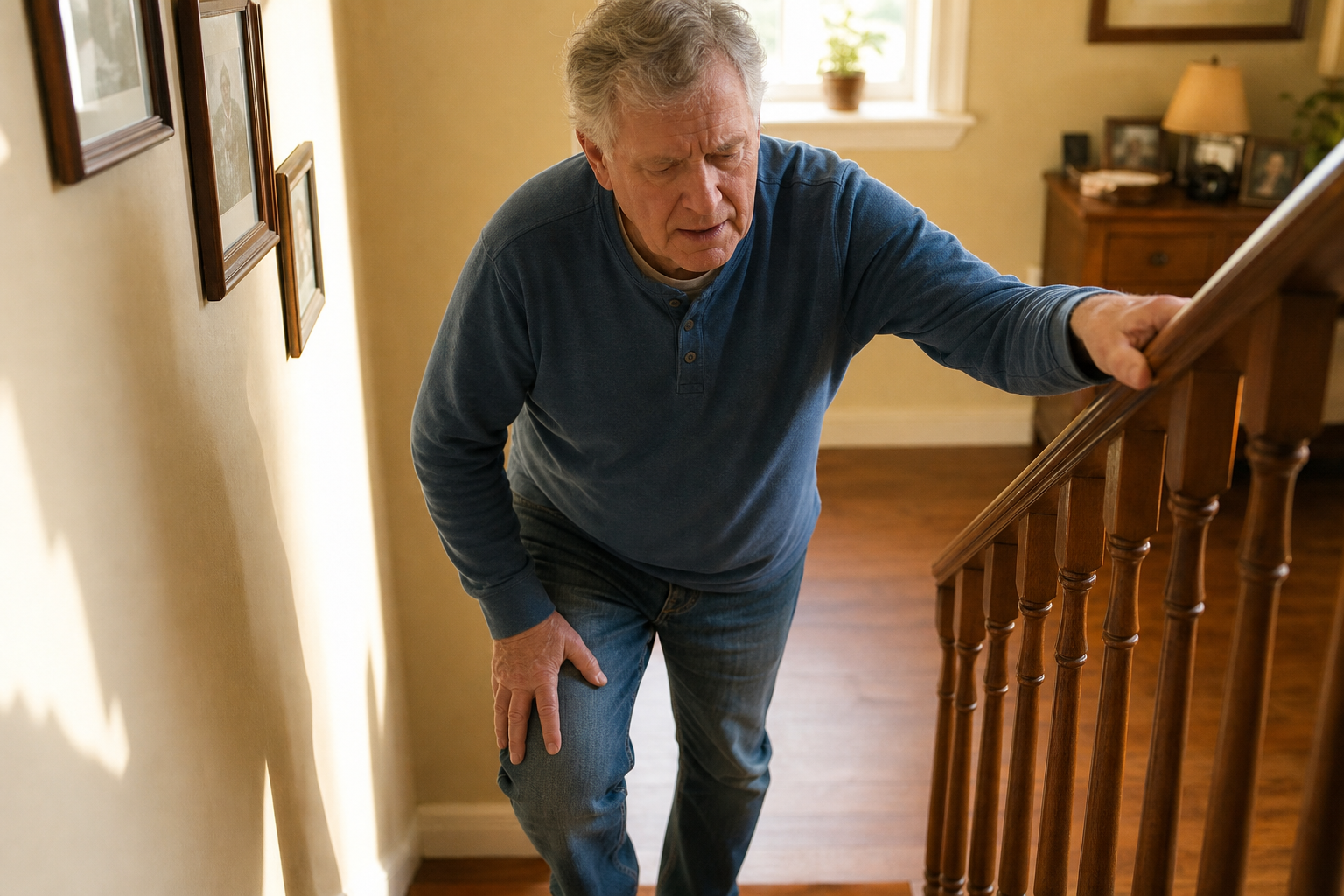
Your glutes are the primary engine for walking, stair climbing, getting up from a chair, and maintaining balance on uneven ground. When they’re weak, every one of those activities becomes harder and less stable.
Weak glutes also put more stress on your knees. If your hips can’t control the position of your thigh bone, your kneecap tracks incorrectly with every step. That’s a direct path to knee pain and long-term joint wear. If you’ve had a hip or knee replacement, rebuilding glute strength is even more critical, and our post-hip replacement exercise guide walks through a safe progression for doing exactly that.
Balance is the other big concern. Strong glutes stabilize your pelvis and keep your body upright when you shift your weight. Without that stability, every step on an uneven sidewalk or a set of stairs is riskier. People with vertigo or balance challenges often find that hip strengthening is a foundational piece of their recovery work.
The Best Exercises to Rebuild Glute Strength
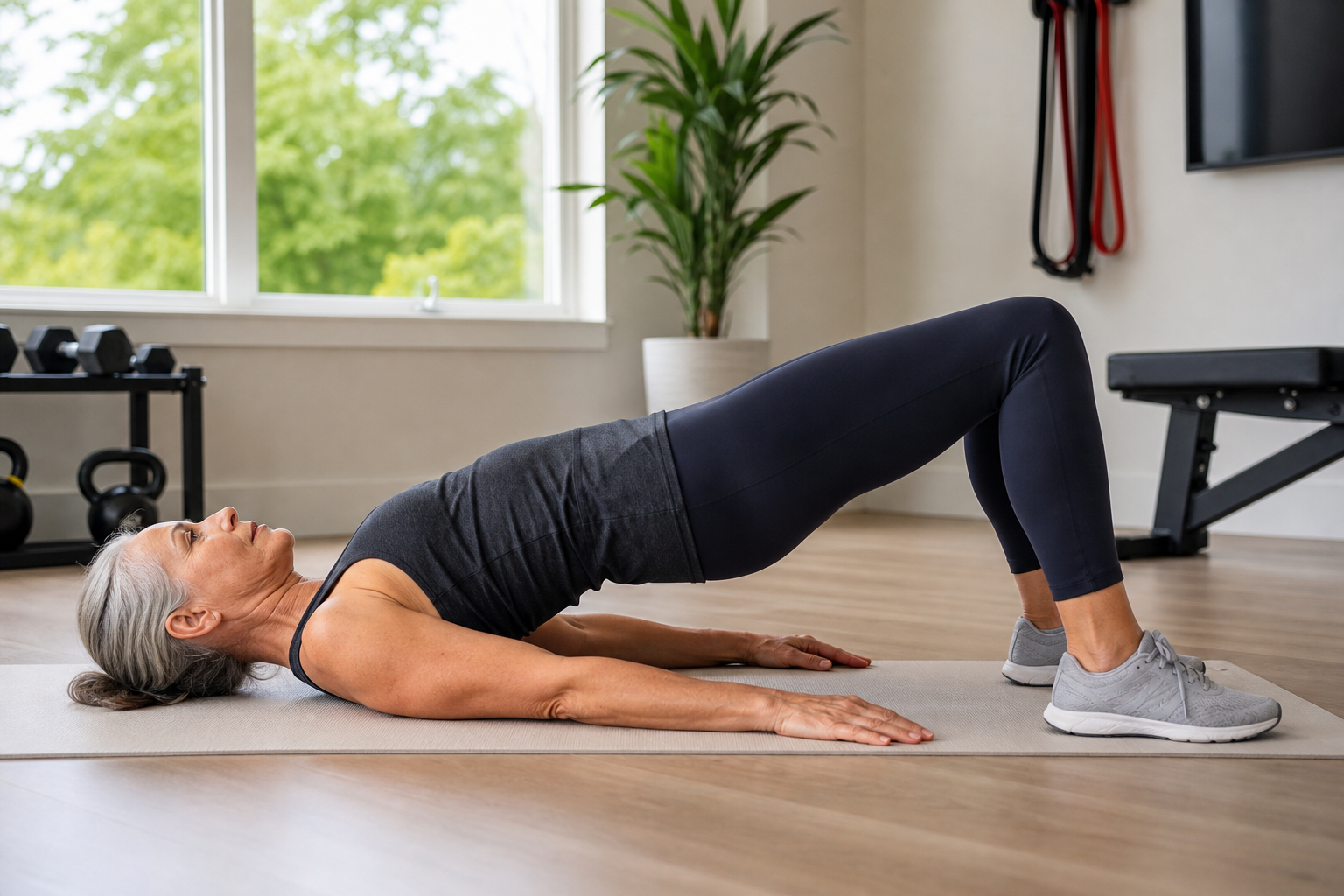
You don’t need a gym or heavy weights to rebuild your glutes. What you need is consistency and the right movement patterns. Focus on exercises that isolate the glutes rather than letting the lower back or hamstrings take over.
Glute Bridges
This is the starting point for almost everyone. Lie on your back with your knees bent and feet flat on the floor. Push through your heels and lift your hips until your body forms a straight line from shoulders to knees. Squeeze your glutes at the top and hold for two seconds before lowering. Do 2 to 3 sets of 12 to 15 reps.
If this feels too easy, add a resistance band just above your knees. The band forces your glutes to work harder to keep your knees pushed apart. Hip resistance bands are one of the most useful and affordable tools you can add to your home routine.

Hip Resistance Bands
A set of looped resistance bands in varying tension levels is ideal for glute bridges, clamshells, and side-steps, giving you a full hip-strengthening toolkit in a compact package.
Clamshells
Lie on your side with your knees bent at about 45 degrees and your feet stacked. Keep your feet together and rotate your top knee upward like a clamshell opening. Lower it slowly. This targets the gluteus medius, the side of your glute that controls pelvic stability when you walk. Do 15 reps per side for 2 to 3 sets.
Adding a light resistance band just above the knees increases the challenge significantly. Most people are surprised how quickly they feel this one.
Step-Ups
Step-ups are one of the most functional exercises for building the kind of glute strength you actually use on stairs. Use a sturdy step or low box, step up leading with one foot, drive through that heel to stand fully upright, then lower back down with control. Do 10 to 12 reps per leg.
Holding a pair of light dumbbells increases the load without putting stress on your joints. Light dumbbells in the 3 to 8 pound range are usually enough to make step-ups challenging at first.
Standing Hip Extensions
Stand behind a chair and hold the back for balance. Keeping your leg straight, slowly swing one leg backward about 12 to 18 inches, then return. The key is to move from the hip and feel the squeeze in your glute, not your lower back. Do 12 to 15 reps per side.
This exercise works well for people who can’t get down to the floor easily. It directly trains the push-off motion you use when walking.
Resistance Bands and Simple Equipment Worth Having
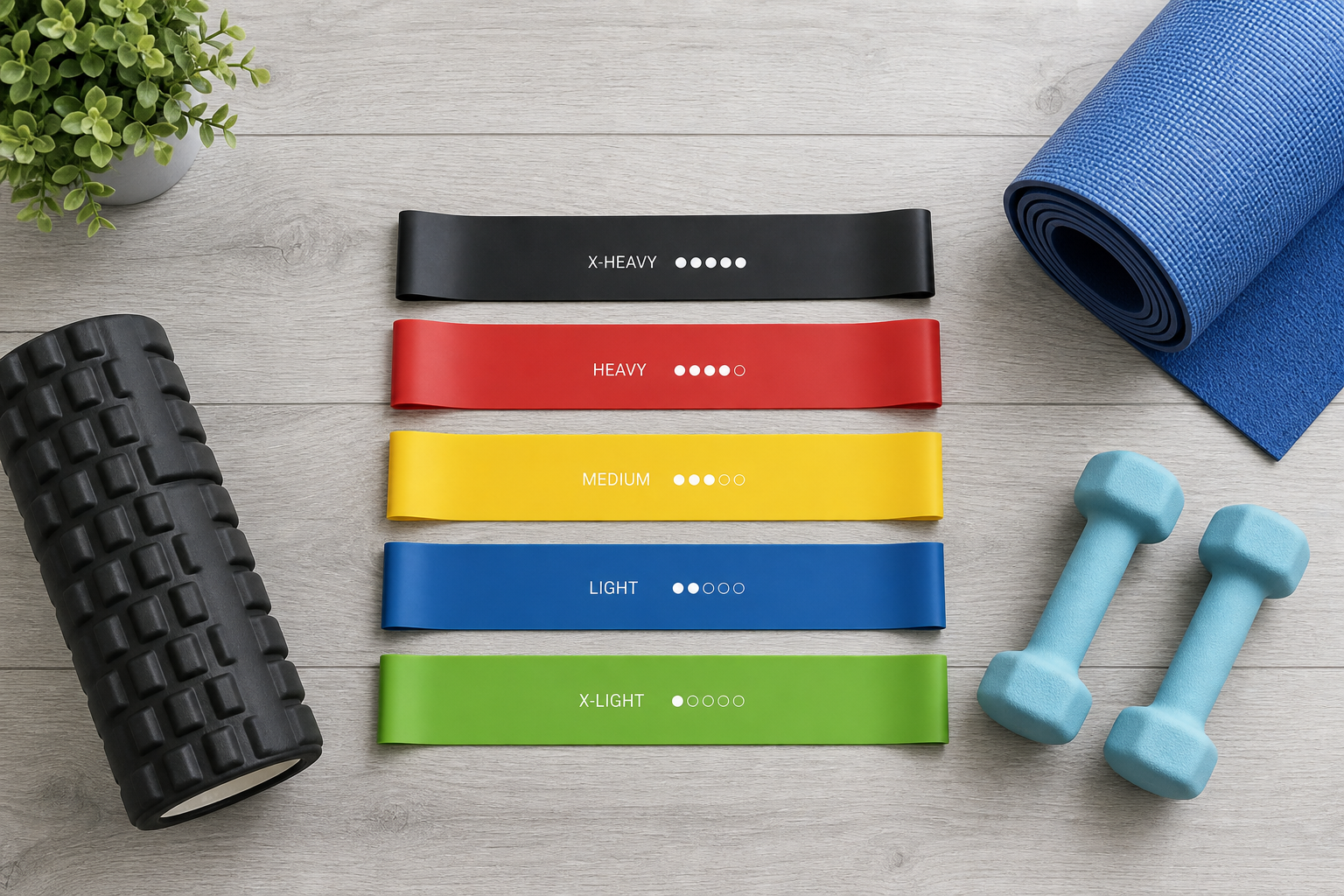
You can do most of these exercises with just your bodyweight, but adding resistance speeds up progress considerably. A good set of loop bands and a pair of adjustable ankle weights cover almost everything you need for a home glute program.

Adjustable Ankle Weights
Adjustable ankle weights let you gradually increase resistance for standing hip extensions and leg raises without needing a full set of machines.
If you’re building out a home setup beyond just bands and weights, our budget-friendly home gym guide for seniors covers everything from mats to stable benches without overcomplicating it.
For recovery between sessions, a foam roller is useful for working through tightness in the hip flexors and glutes after training. Our article on best foam rollers for senior muscle recovery has specific recommendations if you want guidance there.
Supporting Your Glute Training With Nutrition
Muscle doesn’t rebuild without the right fuel. Protein is the most important nutrient for rebuilding glute muscle after training. Most older adults need more protein than they think, and many are chronically undereating it. Aim for a protein source at every meal, whether that’s eggs, fish, chicken, Greek yogurt, or legumes.
After your training sessions, eating a protein-rich snack within an hour or two helps your muscles recover and adapt. Our guide to post-workout recovery meals for seniors has practical meal ideas that work for this purpose. If you’re also thinking about bone health alongside your muscle work, vitamin D plays a direct role in muscle function and is worth reviewing with your doctor.
Frequently Asked Questions
How long does it take to see results from glute exercises?
Most people notice improved stability and less hip fatigue within 3 to 4 weeks of consistent training, even before visible muscle changes appear. Strength gains tend to show up first in functional ways, like stairs feeling easier or less lower back fatigue after walking. Visible muscle changes take longer, typically 8 to 12 weeks of regular work.
Can I do these exercises if I have arthritis in my hips or knees?
In most cases, yes. Glute bridges and clamshells are low-impact and put very little stress on the hip or knee joints. Step-ups may need to start with a very low step height. It’s worth checking with your doctor or physical therapist before starting if you have severe joint damage, but for most people with arthritis, gentle resistance work actually reduces pain over time by building the supporting muscles around the joint. Our guide to arthritis-friendly exercises covers this in more detail.
Is it normal for one glute to be much weaker than the other?
Yes, and it’s very common, especially if you’ve had a previous injury, had a habit of crossing one leg while sitting, or have any leg length discrepancy. Single-leg exercises like step-ups and single-leg glute bridges are the best way to address the imbalance. Always start reps on your weaker side and match the number on your stronger side rather than doing extra reps on the weak one.
Rebuilding glute strength isn’t about vanity or athletic performance. It’s about being able to walk comfortably, climb stairs without hesitation, and stay balanced and independent for years to come. Start with two or three sessions per week, be consistent, and you’ll notice the difference sooner than you expect.
This article contains affiliate links. We may earn a small commission at no extra cost to you.