A rounded upper back and forward head posture don’t just look bad. They compress your lungs (reducing breathing capacity), strain your neck and shoulders, and shift your center of gravity forward, increasing fall risk. Posture correctors promise to fix all of this, but you need to understand what they can and can’t do.
Some help, some don’t, and none work as a standalone solution without exercise.
Talk to your doctor before using a posture corrector if you have osteoporosis, recent spinal surgery, shoulder injuries, or any condition that affects your upper body mobility. Some devices apply pressure that could aggravate existing injuries.
Types of Posture Correctors
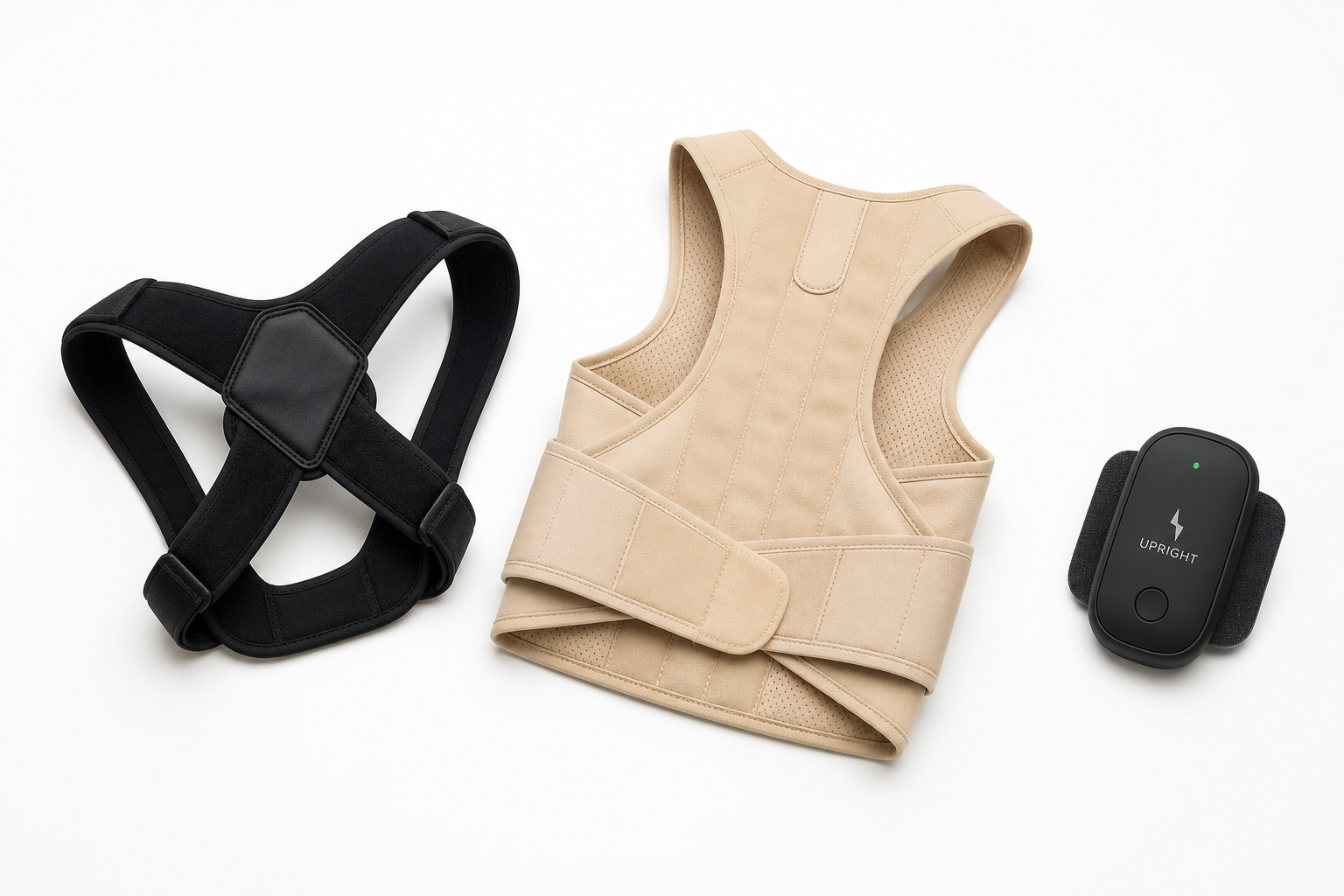
Brace-Style Correctors
These wrap around your upper back and shoulders like a harness, physically pulling your shoulders back. They provide the most immediate correction and are useful for people who need a strong tactile reminder to sit and stand taller.
The downside: they do the work for your muscles, which means your postural muscles can actually weaken with prolonged use.
Brace-style correctors are typically adjustable with Velcro or buckle straps. The rigid design means you’ll feel restricted if you try to slouch, which is the point. But that same restriction limits natural upper body movement.
You won’t want to wear one during activities that require reaching or twisting. They’re best for stationary tasks: reading, computer work, watching TV.
Strap-Style Correctors
Lighter than full braces, strap correctors typically consist of figure-8 bands that loop around your shoulders. They provide a gentle pull-back reminder without the rigid structure of a full brace. Most people find these more comfortable for extended wear under clothing.
The trade-off is less aggressive correction. If your posture is severely rounded, a strap corrector may not provide enough resistance to make a noticeable difference.
But if you’re catching yourself in moderate slouching and need a reminder to straighten up, straps work well. They’re also easier to adjust independently, an important factor if you don’t always have someone around to help you fasten back closures.
Sensor-Based Correctors
These small electronic devices stick to your upper back or clip to your clothing and vibrate when they detect slouching. They don’t physically correct your posture. Instead, they train your awareness so you self-correct.
This approach is better for long-term posture improvement because it strengthens the habit of holding yourself upright rather than depending on external support.
Sensor devices require a learning period. The first few days can feel annoying as the device buzzes constantly. But your body adapts, and the buzzing decreases as you train yourself to stay upright.
The effectiveness depends on your willingness to respond to the vibration each time. If you start ignoring it, you won’t build the habit.
Battery life varies. Most last 2-4 days on a charge. Some use replaceable coin batteries that last several months. Consider whether you’re comfortable charging a device regularly or prefer the set-it-and-forget convenience of replaceable batteries.
Top Posture Correctors for Seniors
Comfy Brace Posture Corrector

Comfy Brace Posture Corrector
Best lightweight strap-style corrector that’s comfortable for daily wear under clothing
The Comfy Brace is one of the best-selling strap-style correctors for seniors. It’s lightweight, adjustable, and slim enough to wear under most shirts.
The padded straps reduce the skin irritation common with cheaper brands (an important consideration for seniors with thinner, more sensitive skin). It provides moderate pull-back without restricting arm movement.
The figure-8 design crosses at your upper back, right between the shoulder blades, where you need the most pull to reverse rounded shoulders. The straps are about 1.5 inches wide with neoprene padding on the contact surfaces. They distribute pressure more evenly than thin elastic bands, which can dig into skin during prolonged wear.
One downside: the Velcro closures can lose grip over time if they get covered in lint or loose threads. Clean them periodically with a soft brush or tape to maintain holding strength.
Best for: Seniors with mild to moderate forward shoulder rounding who want a comfortable, daily-wear reminder that fits under regular clothes.
Upright Go
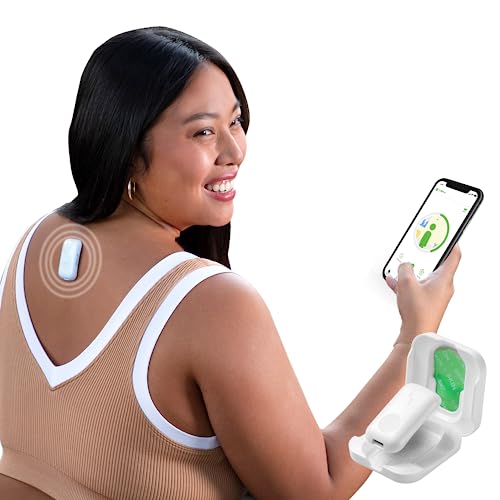
Upright Go Posture Trainer
Best sensor-based device for building long-term posture habits through vibration feedback
The Upright Go is a sensor-based device that sticks to your upper back with adhesive and vibrates when you slouch. It pairs with a smartphone app that tracks your posture over time and lets you set daily training goals (start with 15 minutes of upright time and gradually increase).
This is the best option for building long-term posture habits rather than depending on a brace.
The device is about the size of two stacked quarters. It calibrates to your upright posture when you first set it up, then monitors your position throughout the day. When you slouch past the threshold you set, it vibrates gently. You straighten up, the vibration stops. Over time, the repetition trains muscle memory.
The app shows your daily posture score (percentage of time spent upright) and tracks improvement week by week. Some users find the gamification motivating. Others ignore the app entirely and just use the vibration feedback during focused practice sessions.
Adhesive pads are single-use and need replacing every few days. The device comes with a starter pack, but you’ll need to order more. Check current pricing for replacement adhesives, as this is an ongoing cost consideration.
Best for: Tech-comfortable seniors who want to retrain their posture habits rather than wear a physical brace.
Evoke Pro Back Brace

Evoke Pro Posture Corrector
Best mid-support brace with breathable mesh for moderate physical support during daily activities
The Evoke Pro is a mid-support brace with adjustable tension straps. It provides more structure than a simple figure-8 corrector but is less bulky than a full back brace.
The breathable mesh material reduces heat buildup during extended wear. Adjustable Velcro closures make it easy to put on and take off without help.
The Evoke Pro has a stiffened back panel that supports the thoracic spine while pulling the shoulders back. It’s more substantial than a strap corrector but stops short of the rigid clamshell designs used for post-surgical bracing. This middle ground works well for seniors who need more than a gentle reminder but don’t want to feel locked into a medical device.
The mesh construction helps with temperature regulation, but you’ll still get warmer than wearing nothing. Plan to wear it over a moisture-wicking undershirt if you tend to sweat easily.
Sizing can be tricky. The adjustable straps offer some flexibility, but if you’re between sizes, err on the larger side. A too-tight brace digs into your ribs and underarms, making it unwearable for more than a few minutes.
Best for: Seniors who need moderate physical support during activities like walking, household tasks, or seated work.
Do Posture Correctors Actually Work Long-Term?
The evidence is mixed. Physical correctors improve posture while you’re wearing them, but the effect doesn’t persist after removal unless you also strengthen the muscles responsible for upright posture.
Think of a corrector as training wheels: helpful while you build the strength and awareness to ride on your own, but not a permanent solution.
Research on older adults shows that passive bracing alone produces temporary improvements. One study found that participants who wore a posture brace for eight weeks showed better alignment during wear but returned to baseline posture within days of stopping.
However, participants who combined the brace with twice-weekly strengthening exercises maintained about 60% of the improvement even after discontinuing the device.
Sensor-based correctors have slightly better long-term evidence because they train your nervous system to recognize and correct slouching, building a habit that persists even when the device is off.
The most effective approach combines a corrector (either physical or sensor) with daily posture exercises, similar to how progressive resistance training builds lasting strength gains.
When a Corrector Won’t Help
Posture correctors can’t fix structural issues like advanced osteoporotic compression fractures, severe scoliosis, or fused spinal segments. If your rounded posture is rigid (you can’t straighten up even when lying flat on your back), the problem is likely structural rather than muscular.
A physical therapist can assess whether your posture is correctable with exercises and bracing or if it requires medical management. If you have osteoporosis concerns, refer to our guide on exercises for bone strength.
Similarly, if pain is the main issue rather than posture itself, address the pain first. Wearing a corrector on top of acute back pain often makes things worse by adding compression and restricting movement. Get the pain under control with appropriate treatment, then add posture work as part of prevention.
Posture Exercises to Accompany Your Corrector
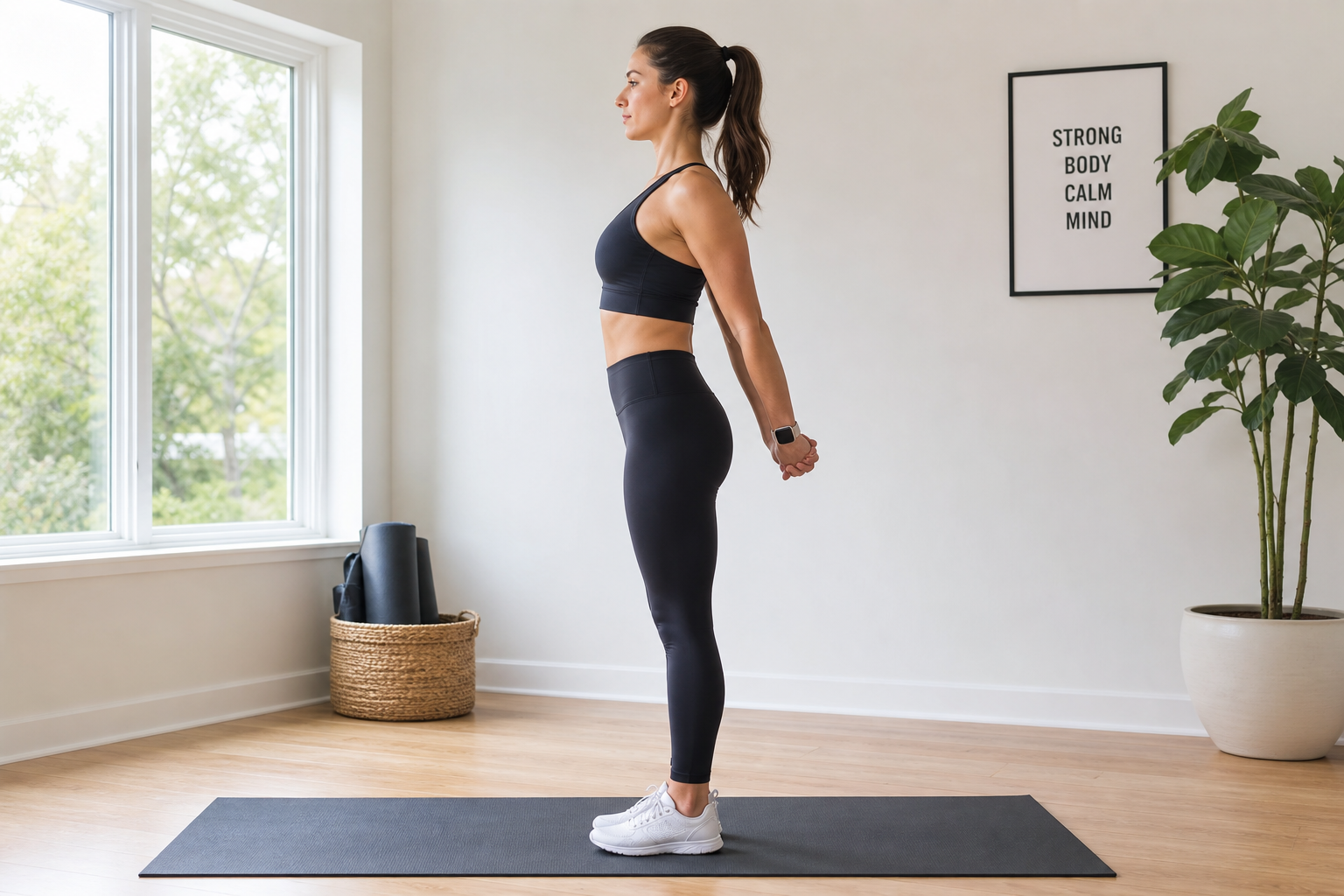
These exercises target the specific muscles that hold you upright: the rhomboids and middle trapezius (between your shoulder blades), the deep neck flexors (front of your neck), and the thoracic extensors (mid-back).
For more detailed guidance, see our complete posture correction exercise program.
Wall Angels
Stand with your back flat against a wall, feet about four inches out from the baseboard. Press your lower back, upper back, and head against the wall.
Raise your arms to 90 degrees like a goalpost, elbows and backs of hands touching the wall. Slowly slide your arms up overhead, keeping contact with the wall. Go as high as you can without losing the flat-back position, then slide back down. 2 sets of 10.
This strengthens the muscles between your shoulder blades while mobilizing the shoulders. If you can’t keep your arms against the wall through the full range, stop where contact breaks and work on increasing range over time.
Chin Tucks
Pull your chin straight back, creating a double chin. Don’t tilt your head down. The movement is purely horizontal, like you’re trying to make the back of your neck longer. Hold 5 seconds. 3 sets of 10.
This reverses forward head posture by strengthening the deep neck flexors, the muscles that pull your head back over your shoulders. Forward head posture is common in seniors and adds significant load to the neck and upper back.
For every inch your head sits forward, it adds about 10 pounds of effective weight your neck muscles have to support.
Band Pull-Aparts
Hold a light resistance band at chest height, arms extended straight in front of you, hands shoulder-width apart. Pull the band apart by squeezing your shoulder blades together. Keep your arms straight. Return slowly to start. 3 sets of 15.
Use a band with light resistance. You should be able to complete all reps without straining. The goal is endurance in the muscles that hold your shoulders back, not maximum strength.
If 15 reps feels easy, add a fourth set rather than increasing resistance.
Thoracic Extension Over a Foam Roller
Place a foam roller across your upper back, just below your shoulder blades. Lie back over it, supporting your head with your hands. Gently arch backward over the roller, letting your upper back extend.
Hold 15 seconds, reposition the roller slightly higher (toward your shoulders), repeat. Move the roller up in 2-inch increments, extending over each position. This mobilizes the thoracic spine.
The thoracic spine (mid-back) becomes stiff with age and prolonged sitting. That stiffness forces your body to compensate by rounding your shoulders forward. Improving thoracic extension allows you to sit and stand taller without forcing it.
Go gently. This should feel like a mild stretch, not painful. If extending over the roller hurts, place a folded towel on top of the roller to reduce the intensity, or skip this exercise and ask a physical therapist for alternatives. For more gentle recovery techniques, check our foam roller guide for seniors.
Doorway Pec Stretch
Stand in a doorway, place your forearms on the door frame with elbows at 90 degrees. Step one foot forward and lean gently into the stretch, feeling it across your chest and front of your shoulders. Hold 30 seconds. Repeat 3 times.
Tight chest muscles pull your shoulders forward. Stretching them gives the corrector and strengthening exercises a better starting point.
Do this stretch daily, especially if you spend a lot of time with your arms in front of you (computer work, reading, cooking).
Skin Irritation Concerns
Seniors with thinner, more fragile skin are prone to chafing and irritation from straps that rub against bare skin. Wear a thin, smooth undershirt beneath any physical corrector.
Cotton or moisture-wicking synthetic blends work well. Avoid textured fabrics like waffle-knit or ribbed materials, which can bunch under the straps and create pressure points.
Check for red marks after the first few uses and adjust strap tightness if irritation appears. A corrector should feel snug but not painful. If red marks fade within 10 minutes of removing the device, tension is fine.
If they last longer than 20 minutes or the skin feels tender, loosen the straps.
Padded correctors (like the Comfy Brace) minimize this issue. Never wear a corrector over sunburned or broken skin.
If you have a history of skin tears or bruise easily, ask your doctor whether a posture corrector is appropriate. The constant pressure and friction might not be worth the risk.
How to Fit a Posture Corrector Properly
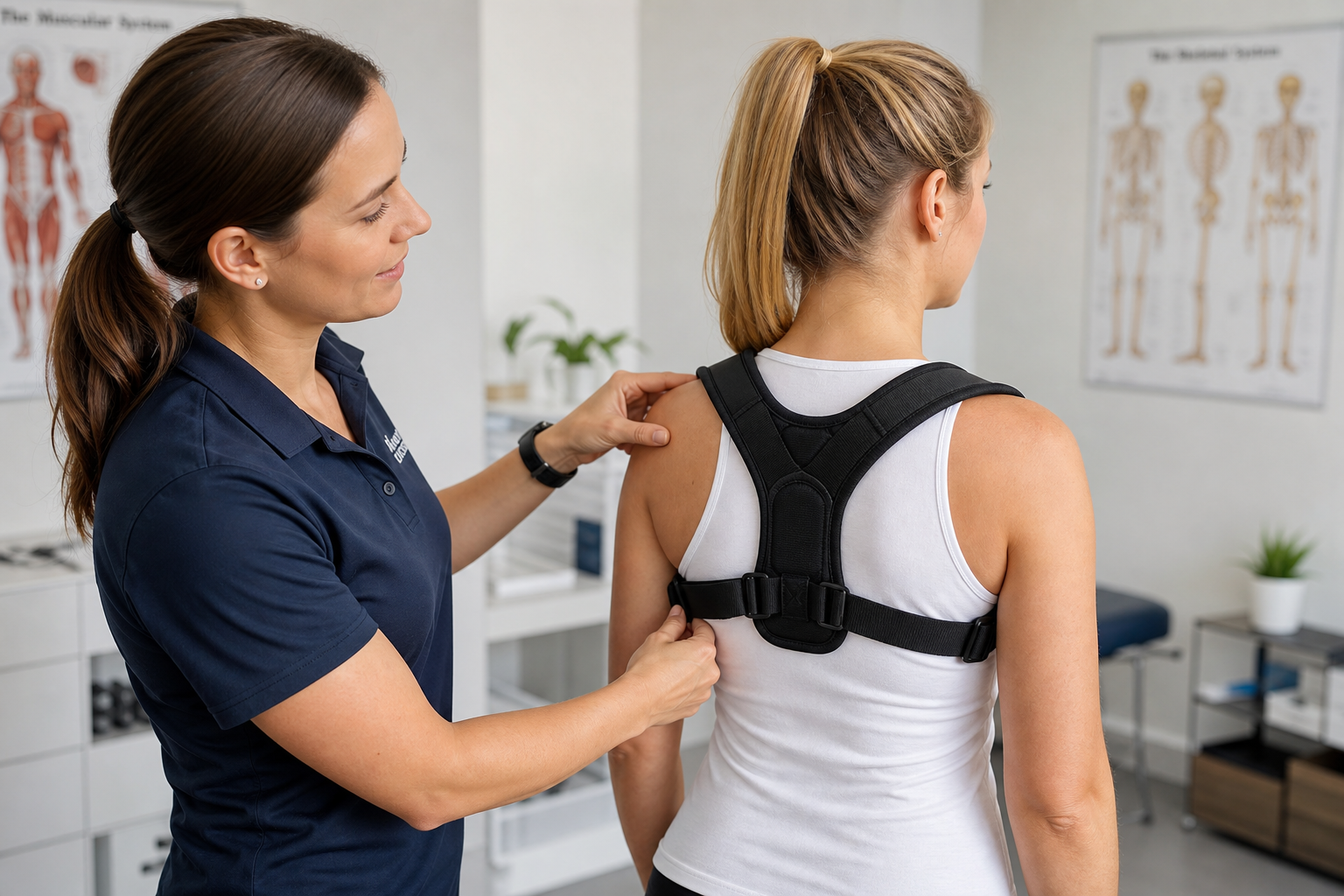
Most physical correctors are adjustable, but that doesn’t mean one size truly fits all. Measure your chest circumference at the fullest part (usually just under your armpits) and compare it to the manufacturer’s sizing chart before ordering.
If you’re at the top end of a size range, go up to the next size for comfort.
When putting on a brace or strap corr