You finish a workout feeling good, maybe even a little proud of yourself. Then two days later your legs feel like concrete and you’re wondering if that’s normal or a sign you overdid it. The honest answer is that recovery time varies a lot more for older adults than most generic fitness advice admits, and giving you one number would be doing you a disservice.
Instead of a one-size-fits-all rule, here’s how to actually figure out what your body needs between sessions.
The General Range: 24 to 72 Hours, Depending on the Work

For most adults over 60, muscle recovery after a strength session lands somewhere between 48 and 72 hours before hitting that same muscle group hard again. Light activity like walking or balance drills usually only needs about 24 hours, sometimes less.
Cardio sessions at a moderate pace, like a walk or a session on a recumbent bike, typically require less downtime than resistance training because they don’t create the same muscle fiber damage. You can often do light cardio daily. Strength work is where the real recovery math matters.
Why the Range Is So Wide
A 62-year-old who has been lifting weights consistently for five years recovers faster than someone who just started strength training last month. Trained muscle tissue adapts more efficiently and clears out metabolic waste products quicker. If you’re new to resistance work, expect to be on the longer end of that 48 to 72 hour window, and don’t be surprised if soreness lingers into day three.
Exercise selection matters just as much. A set of seated arm exercises with light dumbbells taxes your body far less than squats, deadlifts, or anything involving your glutes and hamstrings. Bigger muscle groups and compound movements need more recovery than isolated, smaller-muscle work.
Four Factors That Change Your Number
Instead of memorizing a single figure, run through these four questions after every workout.
1. How Much Training Experience Do You Have?
If you’ve been following a consistent routine for over a year, your body has built up recovery capacity. Newer lifters need more buffer time. If you’re just getting into structured strength work, our guide on how many sets and reps seniors should do can help you set a starting point that won’t leave you flattened for a week.
2. What Did You Actually Train?
Upper body pushing exercises like wall push-ups generally recover faster than lower body work. Your legs and glutes, which handle your bodyweight all day, tend to need the full 72 hours after a tough session, especially if you’re working on the muscles covered in why glutes weaken with age.
3. How Hard Did You Actually Push?
A light session where you stopped well short of fatigue might only need a day off. A session where you pushed close to your limit, especially if you recently learned how to increase your weights safely after 60, deserves the full three days before repeating that same muscle group.
4. What’s Your Health Status Right Now?
Poor sleep, dehydration, a recent illness, or chronic conditions like arthritis all slow recovery down. So does inadequate protein intake. If you’re not sure your diet supports muscle repair, take a look at our guide to protein supplements for seniors and check your hydration habits too, since cramping and slow recovery often trace back to not drinking enough water.
A Simple System: Alternate Muscle Groups
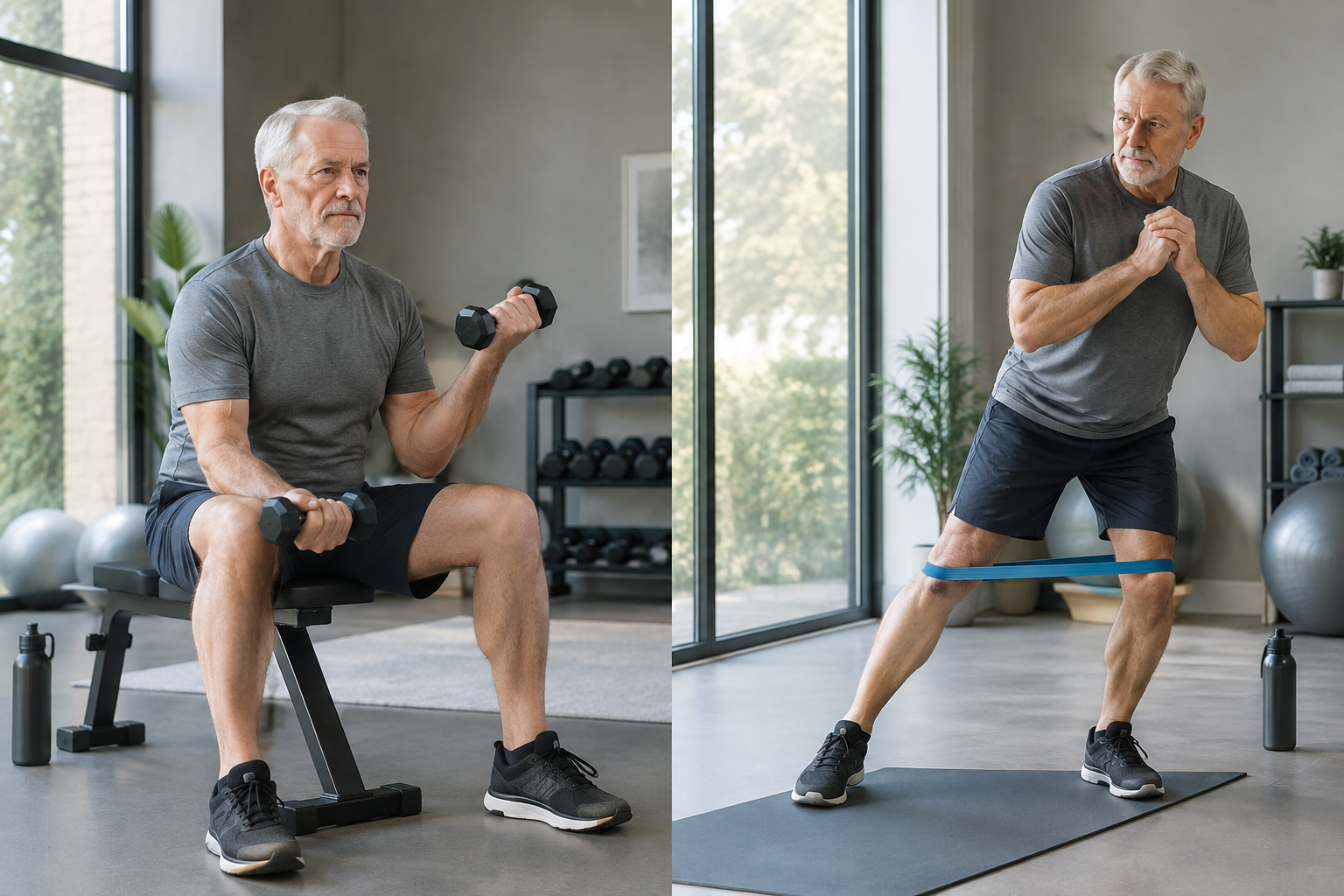
Rather than tracking exact hours, the easiest approach is to avoid training the same muscle group on consecutive days. Work your legs on Monday, upper body on Tuesday, and take a rest or light walk day on Wednesday before repeating the cycle.
This naturally builds in 48 to 72 hours of recovery per muscle group without you needing a calculator. A proper stretching routine after activity and a decent warm-up beforehand both shorten the soreness you feel afterward, too.
When Soreness Is Not Normal

Muscle soreness that peaks around 24 to 48 hours after exercise and fades within a few days is expected. Certain symptoms are not part of normal recovery and need immediate attention.
- Chest pain, tightness, or pressure that’s unusual for you, especially if it spreads to your arm or jaw
- Fainting or feeling like you’re about to pass out
- Severe shortness of breath that doesn’t improve with rest
- Sudden, sharp pain suggesting an acute injury, like a joint that won’t bear weight or visible swelling
Any of these warrant calling your doctor or emergency services right away. Don’t try to push through them or wait to see if they pass on their own.
Soreness that stops you from doing daily activities, or that gets worse instead of better after 72 hours, is also worth mentioning to your doctor, particularly if it’s paired with dizziness. Our article on dizziness and balance issues in seniors covers when that symptom needs more than just rest.
Frequently Asked Questions
Is it okay to walk every day even if my legs are sore from strength training?
Yes, in most cases. Light walking increases blood flow, which can actually help clear out soreness faster than sitting still. Just keep the pace easy and skip anything intense, like stair climbing or hills, until the soreness fades.
How do I know if I’m not recovering enough between workouts?
Watch for soreness that lasts more than four days, a noticeable drop in your strength from one session to the next, poor sleep, or a lingering feeling of fatigue that doesn’t lift with a good night’s rest. Any of those signs mean it’s time to add an extra rest day or dial back your effort for a week.