Recovery is where fitness actually happens. Exercise creates the stimulus, but your muscles, tendons, and cardiovascular system rebuild and strengthen during the hours and days between sessions. After 60, this rebuilding process takes longer because growth hormone production has declined, blood flow to damaged tissues is slower, protein synthesis is less efficient, and inflammatory responses are more prolonged. Understanding these changes and optimizing your recovery strategy lets you train more consistently with less soreness, fewer injuries, and better results.
Why Recovery Slows with Age
A 30-year-old can do a hard workout and feel mostly recovered in 24-36 hours. The same workout leaves a 65-year-old sore and fatigued for 48-72 hours. Several biological changes drive this difference:
- Growth hormone decline: GH peaks during deep sleep and drives muscle repair. Production drops 50-70% between ages 30 and 70.
- Reduced capillary density: Fewer blood vessels in muscle tissue means slower nutrient delivery and waste removal.
- Anabolic resistance: Muscles require a stronger protein signal to activate the repair process.
- Chronic low-grade inflammation: Aging increases baseline inflammatory markers, which prolongs the soreness response to exercise.
You can’t reverse these changes, but you can optimize everything within your control to minimize their impact.
These shifts don’t mean you should stop training hard. They mean you need to plan recovery with the same care you plan your workouts. When you give your body what it needs to recover, strength gains and fitness improvements continue well into your 70s and 80s. The limitation isn’t age itself. It’s whether you respect the recovery timeline your body requires.
The 5 Pillars of Recovery
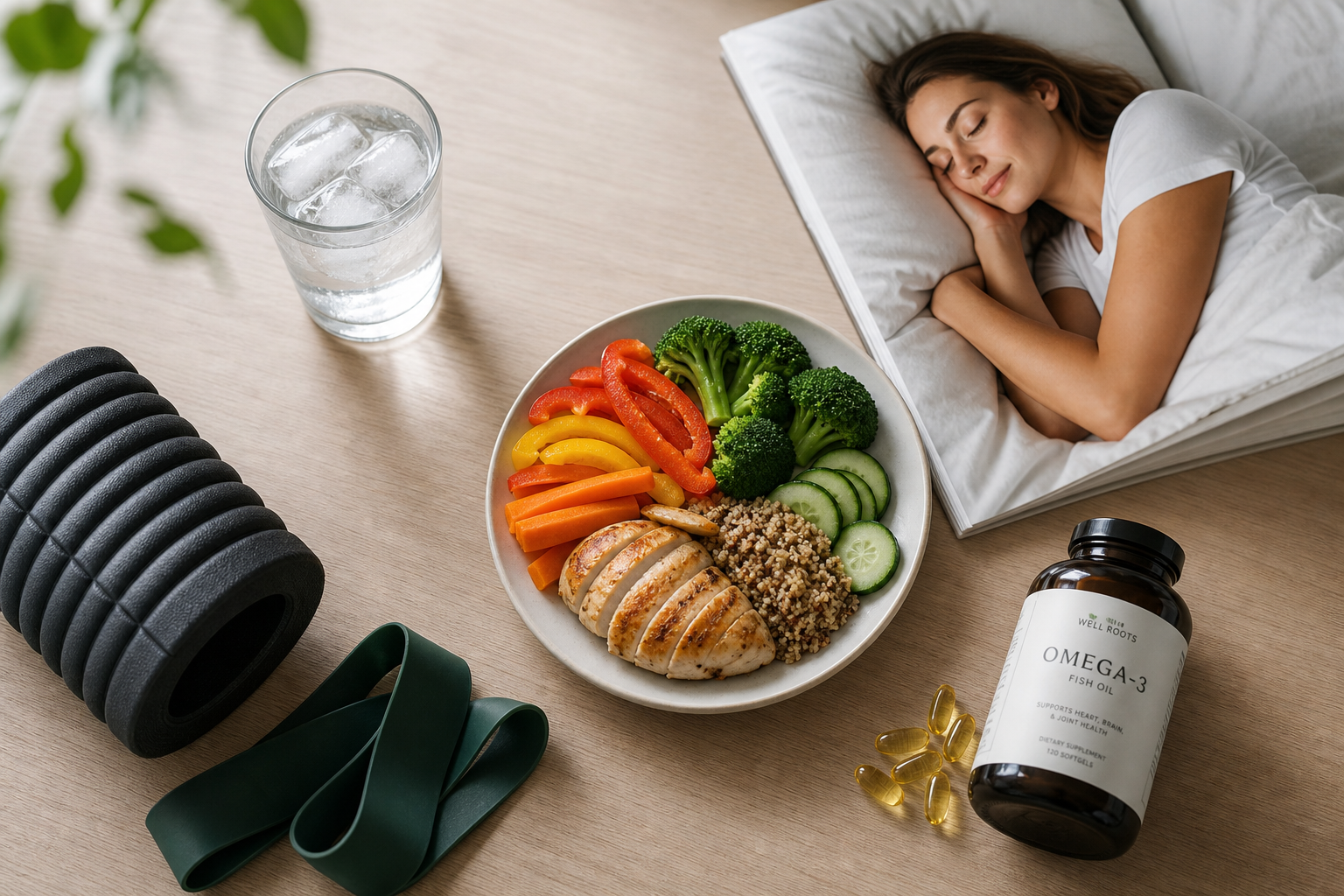
1. Sleep (The Most Important Factor)
Deep sleep is when your body does most of its repair work. Growth hormone release, muscle protein synthesis, and neural consolidation (your brain integrating the movement patterns you practiced) all peak during deep sleep stages. Seniors who get fewer than 6 hours or have poor sleep quality recover significantly slower.
The relationship is dose-dependent. Research shows that older adults getting 5 hours of sleep need roughly 30% more recovery time between sessions compared to those getting 7-8 hours. Sleep fragmentation (waking multiple times) also impairs recovery even when total hours are adequate. Quality matters as much as quantity.
Optimization strategies:
- Aim for 7-8 hours per night. If you can’t sleep that long, prioritize sleep quality over quantity.
- Keep your bedroom cool (65-68°F), dark, and quiet.
- Avoid screens for 60 minutes before bed (blue light suppresses melatonin).
- Consider a magnesium glycinate supplement (200-400 mg before bed), which supports both muscle relaxation and deep sleep quality.
- Establish a consistent sleep schedule. Going to bed and waking at the same time daily (even weekends) strengthens your circadian rhythm and improves deep sleep duration.
- Limit caffeine after noon. Caffeine has a half-life of 5-6 hours, meaning half the dose is still in your system that long after consumption. Afternoon coffee can interfere with sleep onset even when you don’t consciously feel wired.

Magnesium Glycinate for Sleep & Recovery
Supports muscle relaxation and deep sleep quality without morning grogginess
If you wake frequently to urinate, reduce fluid intake in the 2 hours before bed. If pain wakes you, address it with your doctor rather than accepting disrupted sleep as normal. Chronic pain and poor sleep create a vicious cycle that sabotages recovery.
2. Nutrition Timing
What you eat in the 2 hours after exercise significantly affects recovery speed.
Protein: 25-30 grams within 60 minutes of finishing exercise. This provides the amino acids needed for muscle repair. Good sources: Greek yogurt with nuts, a turkey sandwich, a protein shake, or eggs with toast.
Why 25-30 grams specifically? Muscle protein synthesis in older adults requires a higher per-meal protein dose compared to younger people. This is anabolic resistance in action. Studies show 20 grams may be sufficient for younger adults, but older muscles need 25-30 grams to trigger maximal synthesis rates.
Carbohydrates: 30-40 grams alongside your protein. Carbs replenish glycogen (muscle fuel) and trigger insulin release, which enhances amino acid uptake into muscle cells.
The protein-to-carb ratio matters. A 2:1 carb-to-protein ratio (roughly 40g carbs to 20g protein, adjusting the protein higher to hit the 25-30g target) optimizes recovery. All-protein with no carbs slows glycogen replenishment. All-carbs with insufficient protein leaves muscles without the building blocks they need.
Anti-inflammatory foods: Tart cherry juice (8 ounces before and after exercise), fatty fish (salmon, sardines), berries, and turmeric all have evidence supporting reduced exercise-related inflammation and soreness. For more detailed information on foods that fight inflammation, check out our complete anti-inflammatory foods shopping list.
Don’t overlook total daily protein either. Most older adults need 1.0-1.2 grams per kilogram of body weight daily to support recovery and prevent age-related muscle loss. That’s 68-82 grams for a 150-pound person, spread across meals. Post-workout is the most important timing window, but consistent protein throughout the day matters too. Our guide on maintaining muscle mass after 70 covers this in more detail.
3. Active Recovery
Complete rest on recovery days allows muscles to stiffen and blood flow to slow. Light movement on rest days (15-20 minutes of easy walking, gentle stretching, or slow swimming) increases blood flow to recovering muscles by 20-40% without adding stress. This accelerated circulation delivers nutrients and removes waste products faster.
The intensity should be genuinely easy: you should be able to hold a full conversation without any increase in breathing. If it feels like exercise, it’s too hard for a recovery day.
Think of active recovery as maintenance work, not training. You’re not building fitness on these days. You’re flushing out metabolic waste, maintaining joint range of motion, and preventing the stiffness that comes from complete inactivity. Many older adults report feeling better when they move lightly on recovery days compared to sitting still.
Examples that work well:
- A slow neighborhood walk at half your normal pace
- Gentle pool walking or easy lap swimming
- Light gardening or household tasks that keep you moving without strain
- Slow stationary cycling with minimal resistance
- Stretching or mobility routines focused on areas that feel tight
What doesn’t count as active recovery: yard work that involves heavy lifting, carrying grandchildren, extended standing without movement, or any activity that leaves you breathing hard. Those can be fine activities, but they add stress rather than promoting recovery.
4. Hydration
Dehydrated muscles recover slower because blood volume is reduced and waste products concentrate in the tissues. Drink at least half your body weight in ounces daily (a 160-pound person needs 80 ounces minimum). On exercise days, add 16-24 ounces. Your urine should be pale yellow throughout the day; dark urine means you’re falling behind.
Thirst signals weaken with age, meaning you may not feel thirsty even when hydration is suboptimal. Don’t rely on thirst alone. Set reminders to drink water throughout the day, keep a water bottle visible, and develop a routine (drink a glass when you wake, with each meal, and before bed).
Electrolytes matter too, especially if you sweat heavily or exercise for more than 45 minutes. Plain water dilutes sodium levels when consumed in large volumes without electrolyte replacement. Consider adding a pinch of salt to meals or using an electrolyte drink mix with minimal added sugar. Signs of electrolyte imbalance include muscle cramps, persistent fatigue despite adequate fluid intake, and headaches after exercise.
Coffee and tea count toward your fluid total, but alcohol actively impairs recovery. Even moderate drinking disrupts sleep architecture, increases inflammation, and interferes with protein synthesis. If you drink alcohol, do it on non-training days and keep intake minimal.
5. Stress Management
Chronic psychological stress elevates cortisol, which directly impairs muscle recovery, suppresses immune function, and disrupts sleep. For seniors managing health concerns, caregiving responsibilities, or life transitions, stress management isn’t optional luxury; it’s a recovery tool.
Evidence-based stress reduction methods include deep breathing (5 minutes of slow diaphragmatic breathing twice daily), tai chi or gentle yoga, social connection (conversation, group activities), time in nature (even 20 minutes of outdoor sitting reduces cortisol), and limiting news and social media exposure. Learn more about the benefits of these practices in our comparison of yoga vs tai chi for seniors.
Stress doesn’t just come from major life events. Daily hassles accumulate: traffic, technology frustrations, family conflicts, financial worries. The body doesn’t distinguish between physical stress from exercise and psychological stress from other sources. Both trigger cortisol release. If psychological stress is high, your body has fewer resources available for exercise recovery.
Practical approaches that help:
- Set boundaries around caregiving or volunteer commitments. You can’t recover well if you’re chronically overscheduled.
- Practice saying no to obligations that drain you without adding value to your life.
- Schedule recovery time the way you schedule workouts. Treat it as non-negotiable.
- If stress feels unmanageable, talk to your doctor. Anxiety and depression are treatable conditions, not character flaws.
Recovery Tools That Help
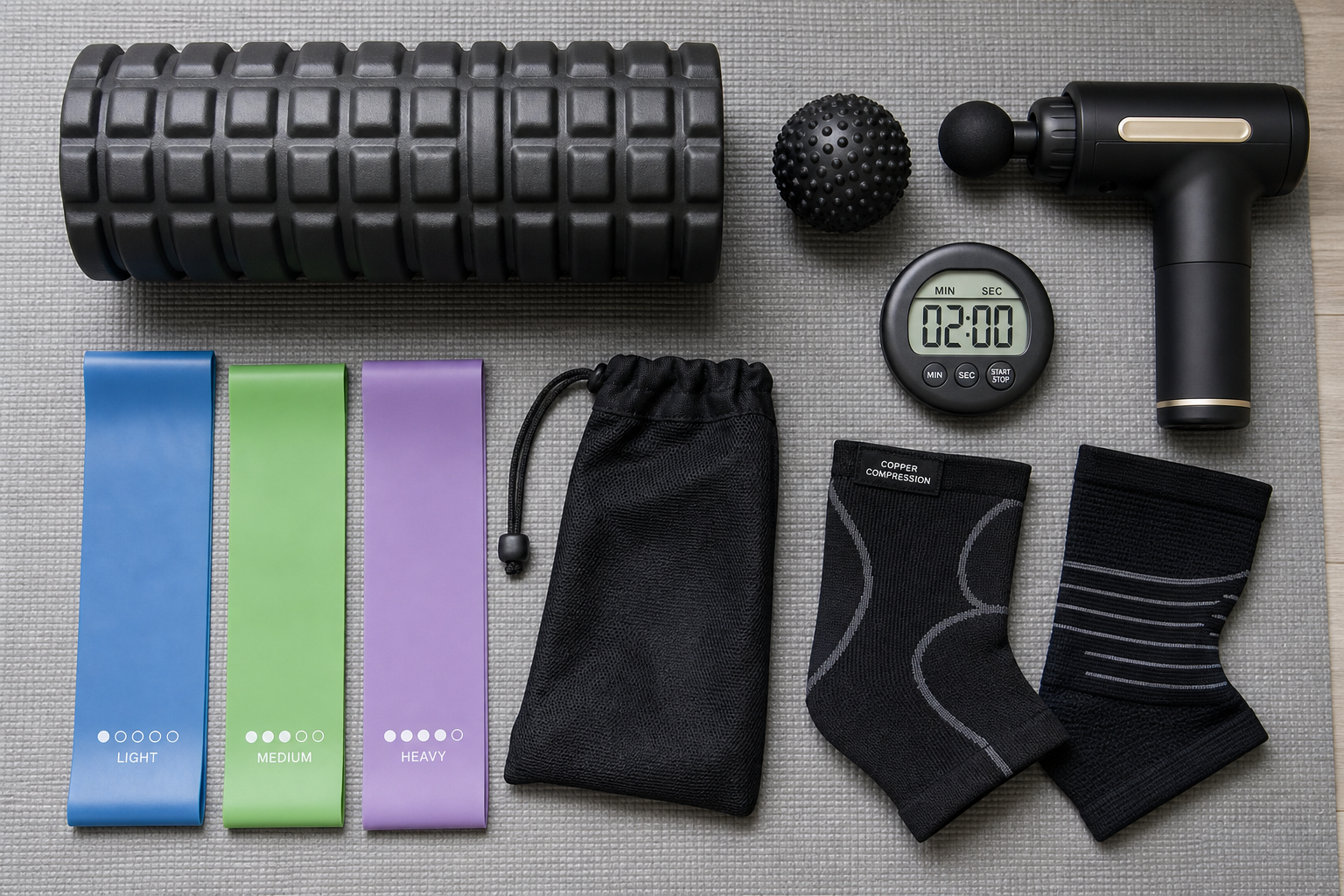
- Foam rolling: 5-10 minutes of gentle rolling on rest days increases blood flow and reduces muscle tension. Use a soft-density roller. Roll slowly, pausing on tender spots for 20-30 seconds. Don’t roll directly over joints or bones. Focus on large muscle groups (thighs, calves, upper back). If you find a spot that’s painful rather than uncomfortable, ease off or skip that area. For detailed guidance, see our foam roller guide for seniors.
- Compression garments: Wearing compression socks or sleeves for 2-3 hours after lower body exercise may reduce swelling and soreness. The evidence is mixed, but many older adults report subjective benefit. Compression shouldn’t be tight enough to cause numbness or discoloration. If you have circulatory issues or diabetes, check with your doctor before using compression.
- Warm baths: 15-20 minutes in a warm bath with Epsom salts relaxes muscles and provides magnesium absorption through the skin. Keep the water warm, not hot (98-102°F). Hot baths stress the cardiovascular system unnecessarily. Add 1-2 cups of Epsom salts and soak after evening workouts to promote relaxation before bed.
- Massage: Professional massage or self-massage with a tennis ball targets trigger points and promotes circulation to specific sore areas. A monthly professional massage can help, but simple self-massage works too. Use a tennis ball against a wall to reach your upper back, or roll it under your foot for plantar relief.

Soft Foam Roller for Seniors
Gentler density designed for aging muscles, perfect for post-workout recovery without excessive discomfort
Cold therapy (ice baths, cold packs) has fallen out of favor for routine recovery. Recent research suggests excessive cold may actually blunt the adaptive response to strength training by suppressing inflammation that signals muscle repair. Use ice for acute injuries or significant swelling, but skip the ice bath after normal training sessions.
Structuring Your Week for Recovery
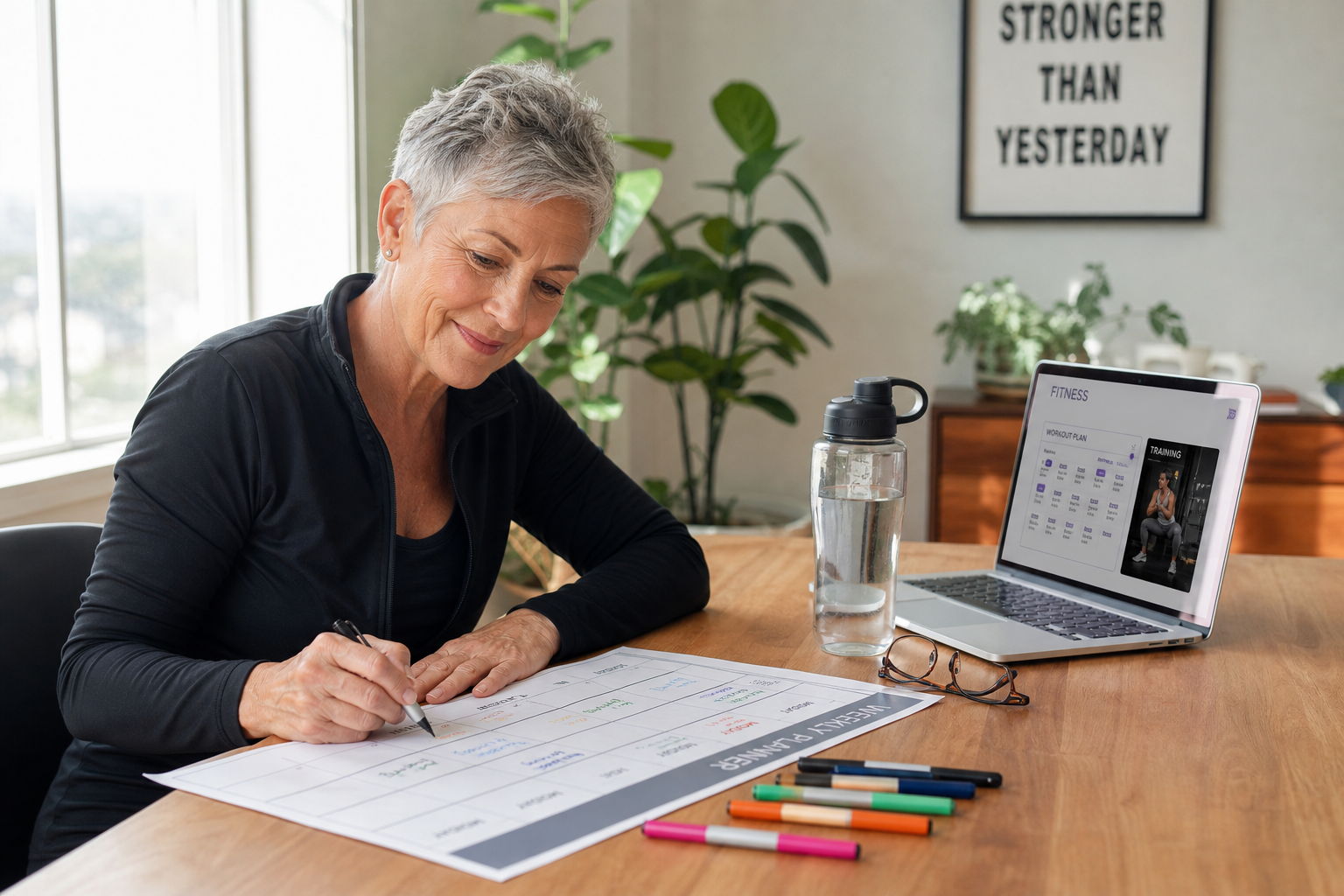
The simplest approach: never do two hard sessions targeting the same muscles on consecutive days. A well-structured week might look like this:
- Monday: Upper body strength (hard)
- Tuesday: Walking + stretching (easy)
- Wednesday: Lower body strength (hard)
- Thursday: Gentle yoga or tai chi (easy)
- Friday: Full body circuit or interval walking (moderate)
- Saturday: Longer walk or swim (moderate)
- Sunday: Rest or very light stretching (easy)
This structure gives each muscle group 2-3 days between hard sessions while keeping you active most days. The easy days maintain movement without adding training stress. The moderate days provide variety and cardiovascular work without the intensity that requires extended recovery.
Some older adults need more recovery time. If you’re consistently sore for 3-4 days after hard sessions, try spacing them further apart:
- Monday: Upper body strength (hard)
- Tuesday: Easy walk
- Wednesday: Rest or stretching
- Thursday: Lower body strength (hard)
- Friday: Easy walk
- Saturday: Moderate cardio or longer walk
- Sunday: Rest
There’s no shame in needing more recovery days. The goal is sustainable progress, not following someone else’s schedule. Your recovery timeline is determined by your age, training history, sleep quality, nutrition, stress level, and genetics. Respect what your body tells you.
For those recovering from surgery, our guide on post-surgery exercise and safe return to activity provides specific timelines for returning to full training after hip or knee replacement.
Signs You’re Not Recovering Adequately
- Persistent soreness: Soreness lasting more than 4 days after a workout or returning during the next workout suggests inadequate recovery.
- Elevated resting heart rate: If your morning resting heart rate is 5-10 beats higher than normal for multiple consecutive days, you’re overtrained or underrecovered.
- Declining performance: Weights feeling heavier, fewer reps completed, or slower times despite consistent effort indicate cumulative fatigue.
- Sleep disturbances: Trouble