Dizziness is one of those things that sneaks up on you. One minute you’re turning your head to check for traffic, and the next you’re gripping the nearest wall, waiting for the world to stop spinning. For older adults, that sensation isn’t just unpleasant. It raises real safety concerns, especially when balance is already something you’re working to maintain.
Before anything else: if you’re experiencing new dizziness, dizziness that’s getting worse, or dizziness paired with headache, chest pain, slurred speech, or sudden weakness, stop reading and call your doctor. Those symptoms need a medical evaluation, not a YouTube video. This article is for people who’ve already been checked out, have chronic mild dizziness related to inner ear issues or poor gaze stability, or are working with a provider on vestibular rehab and want supplemental exercises to practice at home.
Why Dizziness Gets More Common With Age

The vestibular system, the inner ear structures that help your brain track head position and movement, naturally changes as you get older. Sensory hair cells decline. The signals your eyes, inner ears, and feet send to your brain become slightly less precise. Your brain has to work harder to reconcile all that incoming information.
Add in common medications like blood pressure drugs, which can cause orthostatic hypotension (that dizzy feeling when you stand up quickly), and the problem compounds. If you’re on any medications and noticing dizziness, it’s worth reviewing our overview of blood pressure medication and exercise precautions and talking to your prescriber about timing and dosage.
Poor posture also plays a role. When your head shifts forward over your shoulders, your neck muscles and joint receptors send distorted position signals to your brain. Working on posture correction exercises for seniors can sometimes reduce mild dizziness alongside dedicated vestibular work.
The Role of Gaze Stabilization and Head Movement Exercises
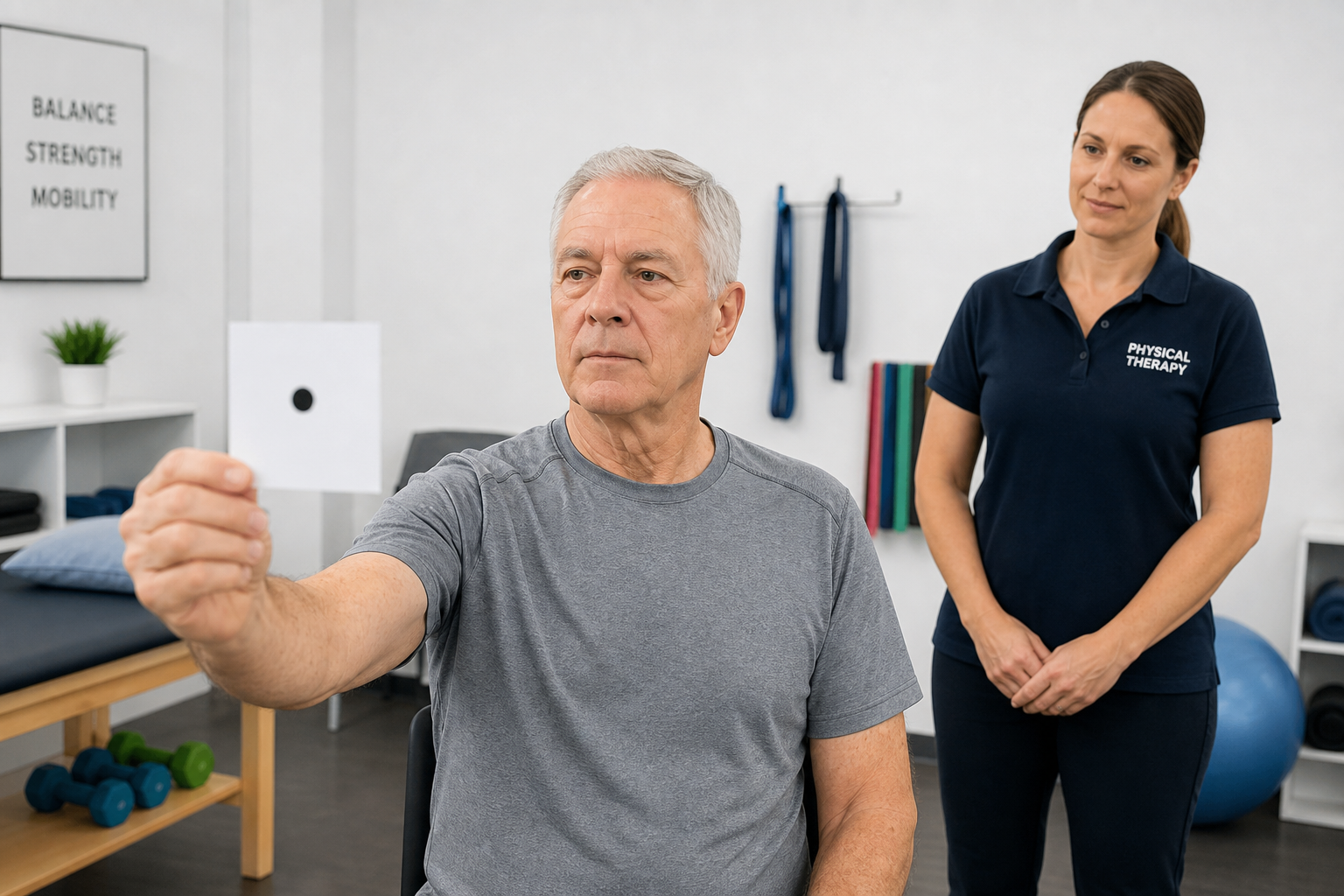
Vestibular rehabilitation therapy (VRT) is a specialized form of physical therapy for balance and dizziness disorders. Two of its core tools are gaze stabilization exercises and head movement exercises. These aren’t complicated movements. They’re systematic ways of retraining your brain to process motion signals more accurately.
Gaze stabilization exercises train your eyes to hold a stable target while your head moves. Head movement exercises gradually desensitize your vestibular system to the movements that trigger symptoms. Done consistently, research shows these approaches can significantly reduce dizziness and improve balance in older adults with vestibular dysfunction.
The video below gives a solid visual walkthrough of foundational exercises you can try at home. Watch it through completely before you start so you know what to expect.
For a deeper library of balance-focused movements, our dedicated guide to vertigo and balance exercises for seniors walks through several additional techniques worth bookmarking.
Gentle Exercises to Try at Home
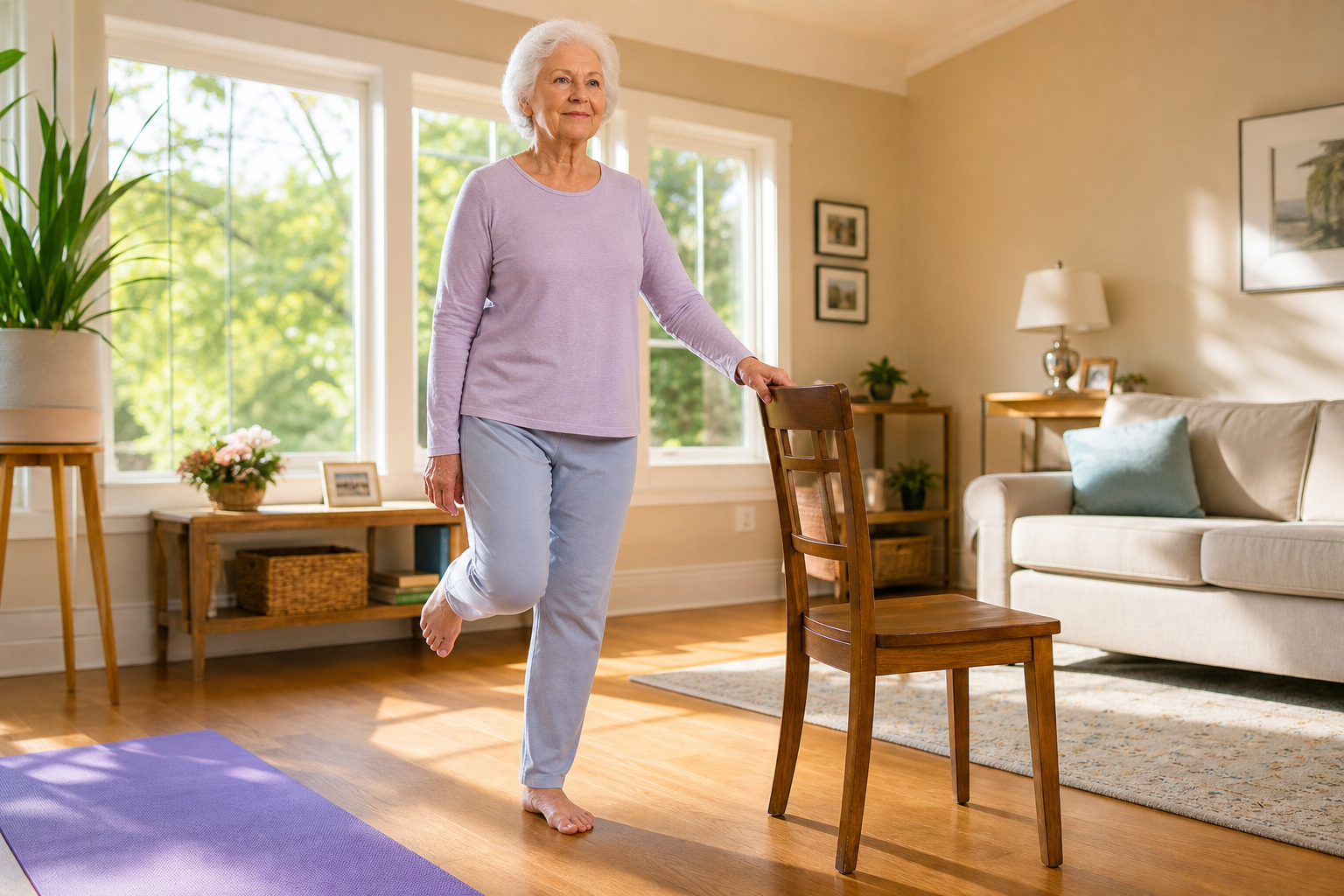
These exercises are gentle starting points. You should feel a mild provocation of symptoms during some of them. That’s normal and expected. It’s the provocation that drives the adaptation. What you shouldn’t feel is severe spinning, nausea so intense you can’t continue, or any neurological symptoms like vision changes or weakness. If that happens, stop and call your doctor.
Always do these seated at first, with a sturdy chair or counter within arm’s reach. Progress to standing only when seated versions feel manageable.
Gaze Stabilization: VOR Exercises
The vestibulo-ocular reflex (VOR) is what keeps your vision stable when your head moves. When this reflex is impaired, the world appears to bounce or blur with movement. VOR exercises retrain it directly.
- Horizontal VOR: Hold your thumb at arm’s length. Fix your eyes on your thumb and slowly turn your head side to side (like saying “no”), keeping your gaze locked on the target. Start with 1 minute, working up to 2 minutes. Do this at a pace that provokes mild symptoms without overwhelming you.
- Vertical VOR: Same setup, but nod your head up and down (like saying “yes”) while keeping your eyes fixed on your thumb.
- Target switching: Place two targets on opposite walls at eye level. Quickly shift your eyes from one to the other while keeping your head still. This trains rapid gaze shifting without head movement.
Start with one set of each, once or twice a day. Most people find that symptoms improve noticeably within two to four weeks of consistent practice.
Head Movement Habituation
Habituation exercises work by repeatedly exposing your vestibular system to the movements that trigger symptoms, in small doses, until the brain stops overreacting to them.
- Seated head turns: Turn your head slowly from side to side, five repetitions. Rest briefly. Repeat two more sets. If this is easy, increase the speed slightly.
- Head tilts: Tilt your right ear toward your right shoulder, then return to center. Repeat to the left. Do ten slow repetitions.
- Chin tucks with head turns: From a neutral position, gently tuck your chin and then turn your head side to side. This challenges the neck proprioceptors in a different way than standard head turns.
The key with habituation is consistency over intensity. Five minutes daily beats a 30-minute session once a week.
Standing Balance Progressions
Once gaze and head exercises feel manageable seated, it’s time to challenge your balance in standing. These progressions work well near a kitchen counter or in a doorway where you can grab something quickly.
- Tandem stance: Stand with one foot directly in front of the other, heel to toe. Hold for 30 seconds. Switch feet.
- Single-leg balance: Lift one foot slightly off the floor and hold for 10 to 30 seconds. Use a fingertip touch on a counter for safety if needed.
- Eyes-closed standing: Stand with feet hip-width apart and close your eyes for 10 to 30 seconds. This removes visual compensation and forces your vestibular and proprioceptive systems to work harder.
A balance pad for seniors can add a useful challenge to standing exercises by creating a slightly unstable surface underfoot. It’s a simple tool that intensifies single-leg and tandem stance work without being dangerous.
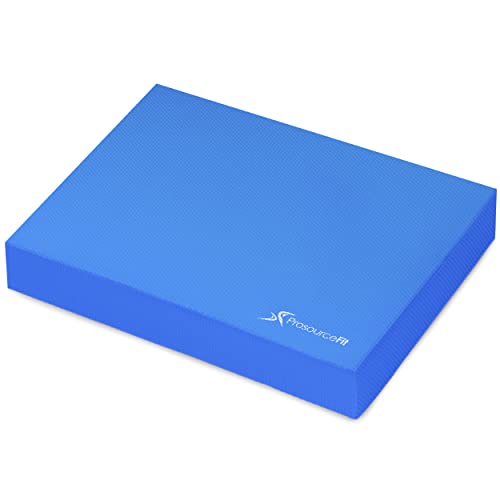
Balance Pad for Seniors
A foam balance pad adds a safe, controlled instability challenge to standing exercises, which is one of the most effective ways to progress vestibular training at home.
If you also deal with foot numbness or nerve sensitivity, check out our article on neuropathy-safe exercises for seniors before progressing to the unstable surface work.
Equipment That Can Support Your Practice
You don’t need much for these exercises, but a few items make home practice safer and more effective.
A non-slip yoga mat gives you a defined, grippy practice space that won’t slide on hardwood floors. Keeping it rolled out near a wall serves as a visual cue to practice, which matters for building the daily habit.
For gait and standing work, a lightweight adjustable cane can provide confidence during standing progressions without making you fully dependent on support. Using a light fingertip touch, rather than a firm grip, actually trains your balance better than leaning heavily on something.

Adjustable Walking Cane for Seniors
An adjustable cane is useful for building confidence during standing balance work, especially in early stages when dizziness symptoms are still unpredictable.
Some people find that tracking practice sessions helps with motivation and consistency. A simple weekly fitness planner journal works well for logging which exercises you did, how your symptoms felt, and any notes for your provider.
Frequently Asked Questions
How do I know if my dizziness is vestibular or something more serious?
Vestibular dizziness typically feels like spinning or unsteadiness that’s triggered or worsened by head movement. It often comes with a sense that the room is moving rather than you. Serious causes, including cardiac issues, neurological problems, or medication interactions, tend to produce dizziness that isn’t clearly movement-triggered, or that comes with other symptoms like chest tightness, blurred vision, sudden severe headache, or one-sided weakness. When in doubt, see a doctor first. These exercises are appropriate only after other causes have been ruled out.
How long before I see improvement from vestibular exercises?
Most people who do these exercises consistently notice meaningful improvement within two to four weeks. Full stabilization can take eight to twelve weeks for more significant vestibular dysfunction. The brain’s ability to compensate for vestibular problems is real, but it requires repeated, daily input. Sporadic practice produces sporadic results.
Can these exercises make dizziness worse?
They can temporarily increase dizziness during and shortly after practice, and that’s actually part of how they work. The mild provocation is the stimulus that drives adaptation. What you want to avoid is severe, prolonged worsening or any new neurological symptoms. If your dizziness is consistently much worse for hours after exercise rather than returning to baseline within 20 to 30 minutes, scale back the intensity and talk to your doctor or a vestibular physical therapist.
One Final Note
These exercises work best as part of a broader approach to healthy aging. Strength, nutrition, and sleep all influence how well your nervous system functions, including your balance system. Adequate vitamin D intake for bone and muscle health is one nutritional factor that specifically affects neuromuscular function and fall risk, and it’s worth reviewing with your provider if you haven’t recently.
Dizziness doesn’t have to be something you just live with. Consistent, guided movement practice can make a real difference for a lot of people. Start slow, stay safe, and loop in your doctor if anything changes.
This article contains affiliate links. We may earn a small commission at no extra cost to you.