If your daily walk has stopped challenging you, intervals are the simplest upgrade. Instead of walking at one steady pace for 30 minutes, you alternate between your normal pace and a brisker effort. This variation forces your cardiovascular system to adapt to changing demands, burns more calories per minute, improves fitness faster than steady walking, and makes the time pass more quickly because your brain stays engaged with the changing effort levels.
Interval walking isn’t just for athletes. It’s a practical tool that meets you where you are. If you can walk comfortably for 20-30 minutes at a moderate pace, you’re ready to try intervals.
Why Intervals Work Better Than Steady Walking
When you walk at the same pace for an entire session, your body settles into a comfortable rhythm. Your heart rate plateaus, your muscles adapt, and the training stimulus weakens over time. This is why your initial walking program felt challenging at first but eventually became routine.
Intervals break that plateau. Each time you increase your pace, your heart rate climbs. Your muscles recruit more fibers. Your cardiovascular system scrambles to deliver more oxygen. Then you recover during the easy interval, and your body learns to clear lactate and drop your heart rate quickly. This recovery-and-surge pattern trains systems that steady walking never touches.
The metabolic benefits add up. Research consistently shows that interval walking produces greater improvements in aerobic capacity, insulin sensitivity, and body composition compared to continuous moderate-pace walking at the same total time. You don’t need to walk longer. You just need to walk smarter.
The psychological benefit matters too. Intervals give your mind something to do. Instead of zoning out for 30 minutes, you’re tracking effort levels, counting intervals, and noticing how your body responds to the changes. Many people find that interval walks feel shorter than steady walks of the same duration.
Before You Start: Essential Prerequisites
You need a solid walking base before adding intervals. If you’re not walking comfortably for at least 20 minutes at a moderate pace three times per week, build that foundation first. Consider following a beginner walking program to establish your base. Intervals are an upgrade to an existing routine, not a starting point.
Talk to your doctor before beginning interval training if you have any cardiovascular condition, uncontrolled blood pressure, significant balance issues, or you’ve been sedentary for more than a year. This isn’t medical paranoia. It’s practical safety. Intervals increase cardiovascular demand substantially, and your doctor needs to know you’re progressing to this level of activity.
Test your readiness with this simple check: can you walk at your normal pace for 25 minutes and finish feeling like you could keep going? Can you hold a conversation throughout the walk without gasping for breath? If yes, you’re ready. If no, keep building your steady walking base.
The Beginner Interval Walking Protocol

Weeks 1-2: Introduction
Walk at your normal moderate pace for 4 minutes. Increase to a brisk pace (noticeably faster, breathing harder, but still able to speak in short phrases) for 1 minute. Return to normal pace. Repeat this 4:1 ratio throughout a 25-minute walk (5 intervals total). The brisk minute should feel like a 6-7 on a 0-10 effort scale.
What does “brisk” actually mean? It’s faster than your comfortable pace but nowhere near a jog. Your arms should swing more. Your stride might lengthen slightly. Your breathing gets louder. You feel your heart rate climb. But you’re not gasping, your form isn’t falling apart, and you could maintain this pace for several minutes if you had to.
Most people find that their brisk pace is 15-25% faster than their normal walking speed. If your normal pace is 3 miles per hour, your brisk pace might be 3.5 to 3.7 mph. Don’t overthink the exact speed. Focus on effort level instead.
During the 4-minute recovery intervals, resist the urge to slow to a crawl. Keep your normal walking pace. The recovery is active, not passive. This maintains blood flow and prevents your muscles from cooling down too much between efforts.
Weeks 3-4: Building
Reduce the recovery to 3 minutes: walk 3 minutes normal, 1 minute brisk. This increases the total brisk-pace time and reduces the recovery between efforts. You’ll complete about 6 intervals in 24 minutes.
This progression might feel more challenging than you expect. Shortening the recovery means your heart rate doesn’t drop as much between intervals. By the fourth or fifth interval, you’ll notice your brisk intervals feel harder than they did in weeks 1-2, even though you’re moving at the same speed. Your body is learning to perform when not fully recovered.
If the 3-minute recovery feels too short and you’re struggling to complete the brisk intervals at the target intensity, stay at 4:1 for another week. There’s no prize for rushing the progression. The protocol works when you follow it at a pace your body can handle.
Weeks 5-6: Progressing
Shift to a 2:1 ratio: 2 minutes normal, 1 minute brisk. This is a significant jump in cardiovascular demand. If it feels too hard, stay at 3:1 for another 2 weeks. You’ll complete 8-10 intervals in 30 minutes.
At this ratio, you spend one-third of your walk at elevated intensity. The recovery intervals start to feel brief. Your heart rate might not drop back to your true baseline before the next brisk interval begins. This cumulative fatigue is exactly what produces the training adaptation.
Some people hit a wall here. If you complete three intervals and feel exhausted, don’t push through eight more. Stop, walk at an easy pace for the rest of your session, and try again in two days. Progression isn’t linear. Some weeks you adapt quickly. Other weeks your body needs more time.
Weeks 7-8: Advanced
Maintain the 2:1 ratio but increase the brisk-pace speed slightly, or extend the brisk interval to 90 seconds (2:1.5 ratio). The goal is sustained, progressive challenge without exhaustion.
You have two options for progression at this stage. Option one: keep the 1-minute brisk interval but walk faster during it. If your brisk pace was a 6-7 effort in previous weeks, aim for a 7-8 now. Option two: keep the same brisk speed but hold it for 90 seconds instead of 60. Both methods increase the training load. Pick whichever feels more manageable.
Don’t try to do both at once. Either walk faster for the same duration, or walk the same speed for a longer duration. Doing both creates too large a jump and increases injury risk.
Safety Guidelines for Senior Intervals

Always Warm Up
Walk at an easy pace for 5 minutes before your first interval. Cold muscles and a cold cardiovascular system don’t tolerate sudden intensity increases safely.
The warm-up isn’t optional. Your heart rate needs time to climb gradually. Your muscles need increased blood flow before they handle higher intensity. Your joints need movement and synovial fluid circulation before you ask them to work harder. Five minutes at an easy pace accomplishes all of this. Skip the warm-up and you risk muscle strains, joint pain, or cardiovascular stress.
Use Landmarks Rather Than a Timer
“Walk briskly to the next mailbox” is easier to manage than watching a stopwatch. Landmarks also prevent the clock-watching that makes intervals feel longer.
Pick visible landmarks before you start each brisk interval. A street sign, a particular tree, the corner of a building. This keeps your eyes up and your attention forward instead of fixated on a watch. It also makes the intervals feel more like a game and less like a test.
If you walk on a track or a featureless path with no landmarks, using a timer is fine. Consider a fitness tracking app to help time your intervals accurately. But outdoor walkers almost always find landmarks more intuitive.

Walking Fitness Tracker
Track your intervals and monitor your heart rate during brisk walking segments
Stay Below the Breathless Threshold
During brisk intervals, you should still be able to speak in 3-5 word phrases. If you can’t speak at all, the intensity is too high. Slow down.
This is the talk test, and it’s your primary safety valve. When you can’t speak at all during a brisk interval, your breathing rate has exceeded a sustainable level. You’ve crossed from challenging aerobic work into unsustainable intensity. Slow down immediately. The goal isn’t to empty your lungs. It’s to walk briskly while breathing hard but controlled.
Don’t Combine Intervals with Hills Initially
Hill walking plus speed intervals creates excessive cardiovascular demand for most seniors. Flat terrain only for the first 8 weeks.
Hills are their own form of interval training. Walking uphill elevates your heart rate significantly even at a moderate pace. Adding speed intervals on top of hills doubles the stress. Your cardiovascular system can’t distinguish between “speed-induced intensity” and “grade-induced intensity.” It just experiences combined overload.
Once you’ve completed 8 weeks of flat-terrain intervals and feel strong, you can experiment with gentle inclines during the brisk intervals. But not before.
Cool Down Properly
End every interval walk with 3-5 minutes at an easy pace. Don’t stop abruptly after a brisk interval.
Abrupt stops after intense effort can cause blood to pool in your legs, leading to dizziness or even fainting. The cool-down keeps blood circulating while your heart rate gradually returns to baseline. It also helps clear metabolic byproducts from your muscles, reducing post-walk soreness.
Walk slowly, take deep breaths, and let your body transition smoothly from work mode to rest mode.
Common Mistakes That Undermine Results
Starting too fast is the most common error. The first brisk interval should feel moderate. If you blast off at maximum speed on interval one, you’ll fade by interval three and spend the rest of the walk recovering. Pace yourself. You should finish the last interval feeling challenged but not destroyed.
Skipping recovery intervals is another frequent mistake. Some people feel guilty walking at a normal pace and try to maintain a brisk pace for the entire session. That’s not interval training. It’s steady-state hard walking, and it defeats the purpose. The recovery intervals are where adaptation happens. Your body learns to process lactate, restore oxygen, and prepare for the next surge. Don’t skip them.
Holding your breath during brisk intervals creates unnecessary cardiovascular stress. Breathe continuously. Inhale through your nose or mouth, exhale fully. If you find yourself breath-holding, slow down until you can breathe rhythmically.
Ignoring pain is dangerous at any age but especially for older walkers. Muscle fatigue is normal. Sharp pain, joint pain, chest discomfort, or dizziness are not normal. Stop immediately if you experience any of those symptoms and consult your doctor before resuming interval training. For those recovering from surgery, review safe return to activity guidelines before starting intervals.
How to Progress After Week 8
Once you’ve completed the 8-week protocol, you have several options. You can maintain the 2:1 ratio indefinitely, treating it as your standard interval walk. Many people find this ratio sustainable long-term and continue it for months or years.
If you want to keep progressing, increase the brisk interval duration gradually. Move from 1-minute intervals to 90 seconds, then to 2 minutes. Keep the recovery interval at 2 minutes regardless of how long the brisk interval gets. A 2:2 ratio (2 minutes brisk, 2 minutes recovery) is sustainable and produces excellent fitness gains.
Another progression option: add a third intensity level. Instead of just normal and brisk, use easy, normal, and brisk. Walk 2 minutes easy, 2 minutes normal, 1 minute brisk, and repeat. This creates a pyramid effect and adds variety to the effort pattern.
You can also experiment with location-based intervals. Walk briskly between every other streetlight. Walk briskly for one full block, then recover for two blocks. Walk briskly uphill and recover on the downhill. These spontaneous intervals work well once you’re comfortable with the basic protocol.
Adapting Intervals for Different Conditions
Weather conditions require modifications to your interval approach. During hot weather, reduce your brisk interval intensity and increase recovery time. Heat adds significant cardiovascular stress on top of the interval intensity. During cold weather, extend your warm-up to 7-10 minutes and consider doing intervals indoors if temperatures drop below freezing.
For those with arthritis, the key is finding a brisk pace that challenges your cardiovascular system without aggravating your joints. This might mean a smaller speed difference between your normal and brisk paces. A 10% increase in speed can provide cardiovascular benefit if a 20% increase causes joint pain.
If you have COPD or other breathing conditions, the talk test becomes even more important. Your brisk intervals should elevate your breathing but never leave you gasping or wheezing. Work with your pulmonologist to determine appropriate intensity levels.
Equipment That Enhances Interval Walking
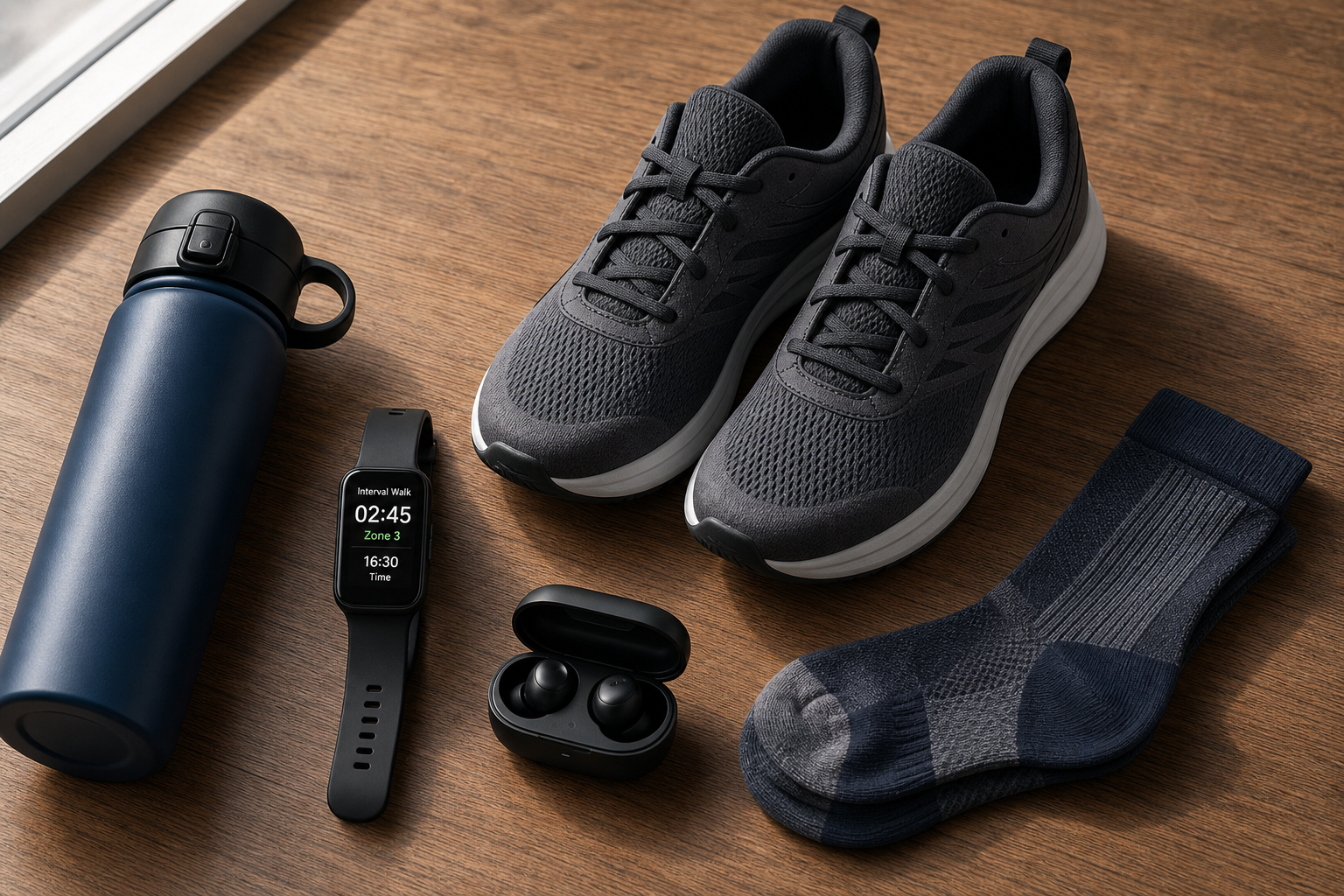
You don’t need much equipment for interval walking, but a few items can improve your experience. A basic fitness tracker or smartphone app helps time your intervals without constant clock-watching. Many free apps include interval timer functions specifically designed for this type of training.
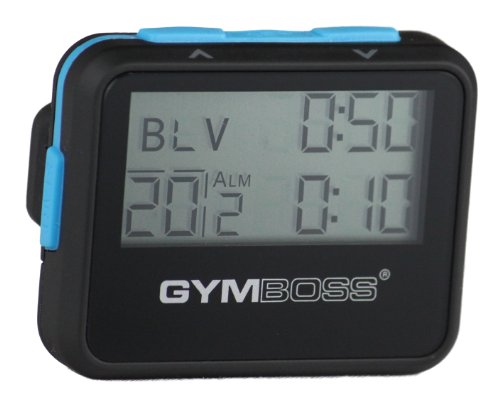
Interval Timer Watch
Simple vibrating alerts help you switch between intervals without looking at your wrist
Proper footwear matters more during intervals than during steady walking. The increased pace puts more stress on your feet and ankles. Look for walking shoes with good arch support and cushioning. If you have balance concerns, stability shoes provide extra support during the faster segments.
For those who walk on treadmills, having a reliable machine with easy speed adjustment buttons makes interval training much simpler. Quick-touch speed controls let you transition smoothly between normal and brisk paces.
Combining Intervals with Other Training
Interval walking fits well into a balanced fitness program. On days when you’re not doing intervals, consider resistance training to build muscle strength. The combination of cardiovascular intervals and strength work provides the most complete fitness benefits for seniors.
For bone health, interval walking alone isn’t enough. You’ll want to add weight-bearing exercises that place controlled stress on your bones. The impact from walking helps, but resistance training provides stronger bone-building stimulus.
Balance work complements interval training nicely. Consider adding