The 5-10 minutes after a walk are the most productive stretching window of your entire day. Your muscles are warm, your blood is flowing, your joints are lubricated, and your connective tissue is at its most pliable. Stretching during this window produces greater flexibility gains than stretching cold, and it prevents the post-walk tightness that makes many seniors stiffer the next morning than if they hadn’t walked at all.
Talk to your doctor before starting a new stretching routine, especially if you have joint replacements, recent surgery, or conditions that affect balance or flexibility. The stretches here are gentle, but individual ability varies, and some positions may need modification based on your medical history.
The 7-Minute Post-Walk Stretch Routine

Perform these stretches immediately after your walk, before sitting down. Once you sit, your muscles cool rapidly and the stretching window narrows. If balance is a concern, do all standing stretches within arm’s reach of a wall, fence, or sturdy chair. There’s no medal for doing these unsupported.
Calf Stretch (60 Seconds Total)
Face a wall, one foot back with knee straight, heel pressed to the ground. Lean forward until you feel a stretch in the upper calf. Hold 20 seconds. Then bend the back knee slightly (keeping heel down) to stretch the deeper soleus muscle. Hold 10 seconds. Switch legs.
Your calves work hardest during walking and tighten the most afterward. Tight calves restrict ankle mobility, which changes your walking stride and increases trip risk. Many seniors develop chronic calf tightness that limits the natural heel-to-toe roll of walking, forcing the foot to slap flat with each step. This stretch directly counteracts that pattern.
If the full wall stretch feels too intense, stand closer to the wall or reduce how far you lean. You should feel a pulling sensation but not pain. The soleus (lower calf) stretch with a bent knee is equally important. This deeper muscle crosses only the ankle joint and needs a different stretch angle than the upper gastrocnemius muscle.
Hip Flexor Stretch (60 Seconds Total)
Step one foot forward into a lunge near a wall or fence for support. Tuck your pelvis slightly and lean forward until you feel a stretch at the front of the back hip. Hold 30 seconds per side.
Your hip flexors contract with every stride during walking and shorten progressively if not stretched. Tight hip flexors pull the pelvis forward, increasing lower back arch and pain. They also limit how far your trailing leg can extend behind you during each step, which shortens your stride and makes walking less efficient.
The pelvic tuck is critical. Many people arch their back during this stretch and feel nothing in the hip. The tuck (imagine pulling your belly button toward your spine) tilts the pelvis back and targets the actual hip flexor muscle group. You don’t need a deep lunge for this stretch to work. Even a small forward step with proper pelvic positioning creates the necessary tension.
If kneeling on the ground is more comfortable and you can get down and up safely, a half-kneeling position (back knee on a pad, front foot flat) works well. Keep the torso upright and tuck the pelvis. Push the hips slightly forward to intensify the stretch. This ground-based version provides better stability for some people.
Hamstring Stretch (60 Seconds Total)
Place one heel on a low surface (curb, park bench, low wall). Keep the raised leg straight and lean forward from the hips, keeping your back flat. Hold 30 seconds per side.
Tight hamstrings limit your stride length and contribute to lower back stiffness. Stretching them while warm produces the greatest range-of-motion improvement. The hamstrings run from the sit bones down the back of the thigh to below the knee. When they’re chronically tight, they pull the pelvis into a posterior tilt, flattening the natural lumbar curve and straining the lower back muscles during everyday activities.
The height of the surface matters. Your foot doesn’t need to be waist-high. A six-inch curb works fine for many people. Start low and work up as flexibility improves. The critical element is keeping your back flat as you hinge forward from the hips. Rounding the spine shifts the stretch away from the hamstrings and into the lower back, where you don’t need more tension.
If you can’t reach your toes, don’t grab for them. Just lean forward from the hips until you feel tension along the back of the raised thigh. Point the toes of the raised foot up toward your shin to intensify the stretch. Many people find they feel this stretch more on one side than the other, which is normal. Flexibility is rarely symmetrical.
Quadriceps Stretch (60 Seconds Total)
Stand near a wall for support. Bend one knee and grab your ankle behind you, or use a yoga strap looped around the foot if you can’t reach. Gently pull the heel toward your buttock while keeping your knees together. Hold 30 seconds per side.
The quads power every step during walking and shorten significantly during uphill segments. They also absorb impact when you walk downhill or step off a curb. Tight quads create uneven pull on the kneecap, which can contribute to anterior knee pain during or after walking.
Keeping your knees together is the part most people skip. When you let the bent knee drift out to the side, you reduce the stretch significantly. The stretch should run down the front of the thigh. If you feel it primarily in the knee joint rather than the muscle belly, ease off. Pull less hard or don’t bend the knee as far.
A yoga strap solves the reach problem for people who can’t comfortably grab their ankle. Loop the strap around your foot, hold both ends, and gently pull. This keeps you more upright and reduces the balance challenge. Straps are worth having for multiple stretches.
Standing Chest Stretch (30 Seconds)
Clasp your hands behind your back and gently lift them away from your body, opening your chest. Hold 30 seconds.
Walking often promotes a forward-leaning posture that tightens the chest muscles. This stretch counteracts the postural effect of extended walking sessions. Tight chest muscles pull the shoulders forward and round the upper back, which exaggerates the forward head posture many older adults develop. Over time, this creates neck and upper back discomfort.
You don’t need to lift your clasped hands very high. Even a few inches of lift opens the chest. Squeeze your shoulder blades together gently as you lift. The stretch should spread across the front of the chest and into the front of the shoulders. If clasping your hands behind your back isn’t comfortable, place your palms flat on a wall at shoulder height and walk your feet back until you feel a stretch across the chest.
Some people find a doorway stretch more effective. Stand in a doorway with your forearm along the door frame, elbow at shoulder height. Step forward through the doorway until you feel a stretch in the chest and front shoulder. Hold and repeat on the other side. This isolates one side at a time and allows you to adjust the angle more precisely.
Neck Stretch (60 Seconds Total)
Tilt your right ear toward your right shoulder until you feel a gentle stretch on the left side of your neck. Hold 15 seconds. Switch sides. Then slowly turn your head to look over each shoulder, holding 15 seconds per side.
Neck tension accumulates during walking from maintaining head position, scanning the environment, and compensating for upper body posture. Your head weighs 10-12 pounds. Holding it upright and stable for 30-45 minutes requires sustained muscle activity. The lateral neck muscles (side) and the posterior neck muscles (back) both tighten during walking.
Go slowly with neck stretches. Never force the range of motion. The tissues here are smaller and more delicate than leg muscles. You should feel a gentle pull, not sharp pain. If you get dizzy during neck rotation stretches, stop. Some people have cervical spine changes that make certain neck movements inadvisable. The side-bending stretch (ear to shoulder) is generally well-tolerated and safe.
For a deeper stretch on the side of the neck, use one hand to gently add pressure. Tilt your ear toward your shoulder, then place the hand on that side lightly on your head and let the weight of your arm increase the stretch. This small addition makes a noticeable difference without requiring active pulling.
Standing Side Bend (30 Seconds Total)
Raise one arm overhead and lean gently to the opposite side. Hold 15 seconds per side.
This stretches the lateral trunk muscles that stabilize your torso during the side-to-side weight shifting of walking. These muscles (quadratus lumborum, obliques, and intercostals between the ribs) work constantly to keep you from toppling sideways with each step. They rarely get a targeted stretch during everyday activities. Tightness here contributes to that locked-up feeling some people experience in the rib cage and mid-back after longer walks.
Reach up and over rather than just leaning. Imagine you’re trying to touch the opposite wall with your raised hand. This creates length through the entire side body rather than just bending at the waist. Keep your hips level. Many people let one hip hike up during this stretch, which reduces the effectiveness. The stretch should run from your armpit down to your hip on the side you’re stretching.
Why These Particular Stretches
This routine targets the muscle groups that work hardest during walking. It skips muscles that don’t need post-walk attention. Your glutes, for example, don’t typically tighten from walking and don’t require immediate stretching afterward. Same with most shoulder muscles (unless you were carrying something or swinging your arms with unusual vigor).
The order matters too. Starting with calves makes sense because they’re the easiest to stretch standing and they respond quickly. Moving from lower body to upper body follows the natural cool-down pattern as your heart rate drops. The neck stretch at the end is deliberate, giving those small muscles time to relax as your overall exertion fades.
This is a floor minimum routine. Seven minutes captures most of the benefit for the average walker. If you have extra time or a particular area of chronic tightness, spending an additional two to three minutes on that muscle group makes sense. Some people need 90 seconds per side on hip flexors. Others need more time on hamstrings. The routine adapts to what your body tells you.
Common Mistakes to Avoid
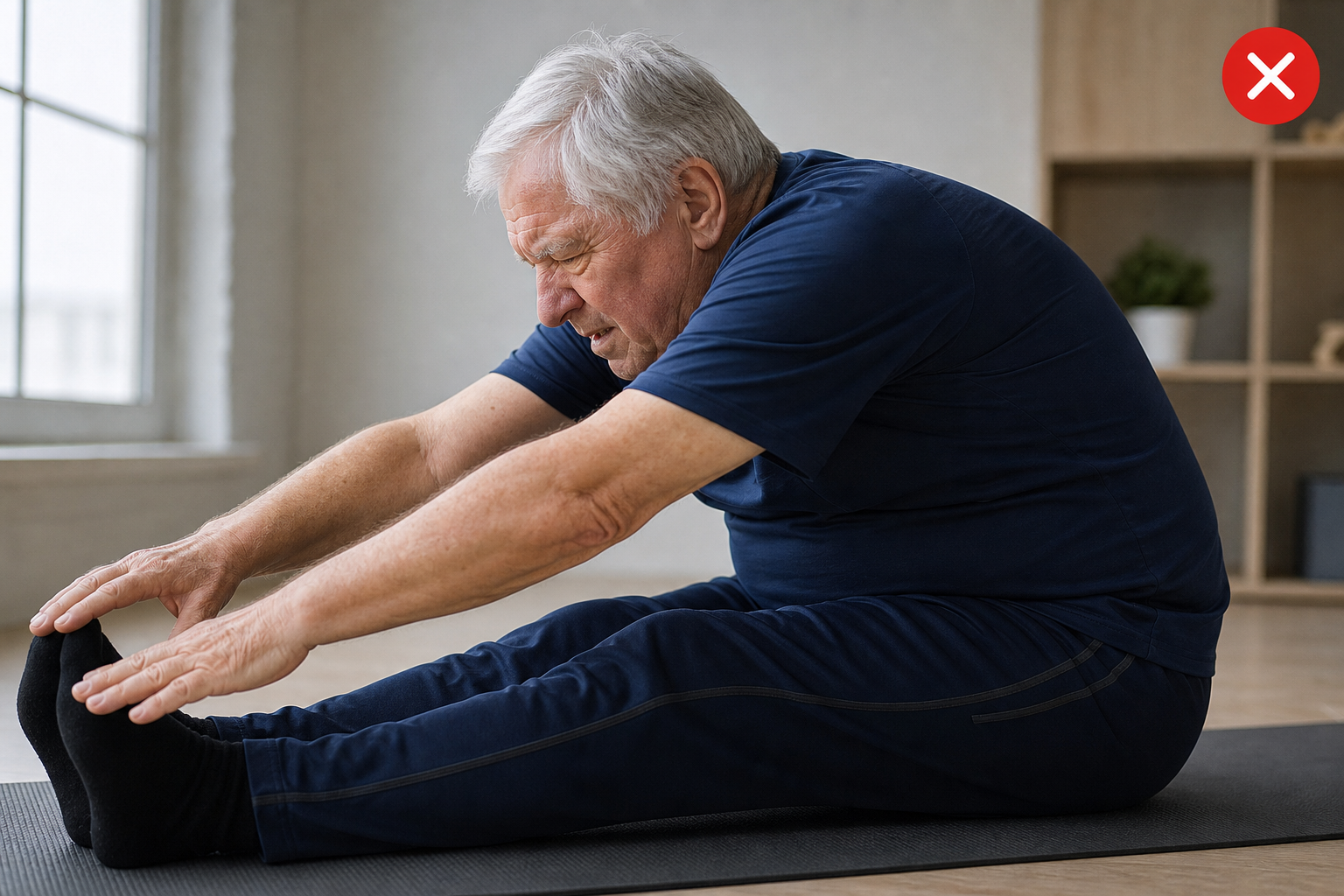
Bouncing during stretches is the most frequent error. Bouncing triggers a protective reflex that makes the muscle contract rather than lengthen. You actually lose flexibility. Use steady, sustained pressure instead. The muscle needs time to register the stretch and gradually relax into the new length.
Holding your breath is another common habit. Many people unconsciously hold their breath during stretches, especially ones that feel challenging. This tenses the entire body and reduces the stretch effectiveness. Breathe normally. Some people find that exhaling during the stretch helps them relax into it more deeply.
Stretching to pain rather than discomfort reduces the benefit and increases injury risk. You should feel a pulling sensation, tightness, or mild discomfort. Not sharp pain, burning, or anything that makes you wince. If you’re grimacing, you’ve pushed too far. Back off slightly.
Rushing through the holds defeats the purpose. Fifteen or twenty seconds feels longer than you think when you’re actually counting it. Many people think they’re holding for 30 seconds but are really holding for 10-12. Count slowly or use your phone’s timer. The muscle tissue needs sustained tension to lengthen. Quick holds don’t produce that adaptation.
Skipping one side happens more often than you’d expect. You finish a set on one leg and immediately move to the next stretch, forgetting to switch. Pay attention. Uneven flexibility develops when one side gets consistently more stretching than the other. You can learn more about common flexibility mistakes to avoid them entirely.
Adjustments for Limited Mobility
If you use a walker for your walks, most of these stretches adapt easily. The walker provides excellent support for standing stretches. Use it for the calf stretch instead of a wall. Hold the walker handle during the hip flexor and quadriceps stretches. It’s more stable than a wall for many people because you can position it exactly where you need it.
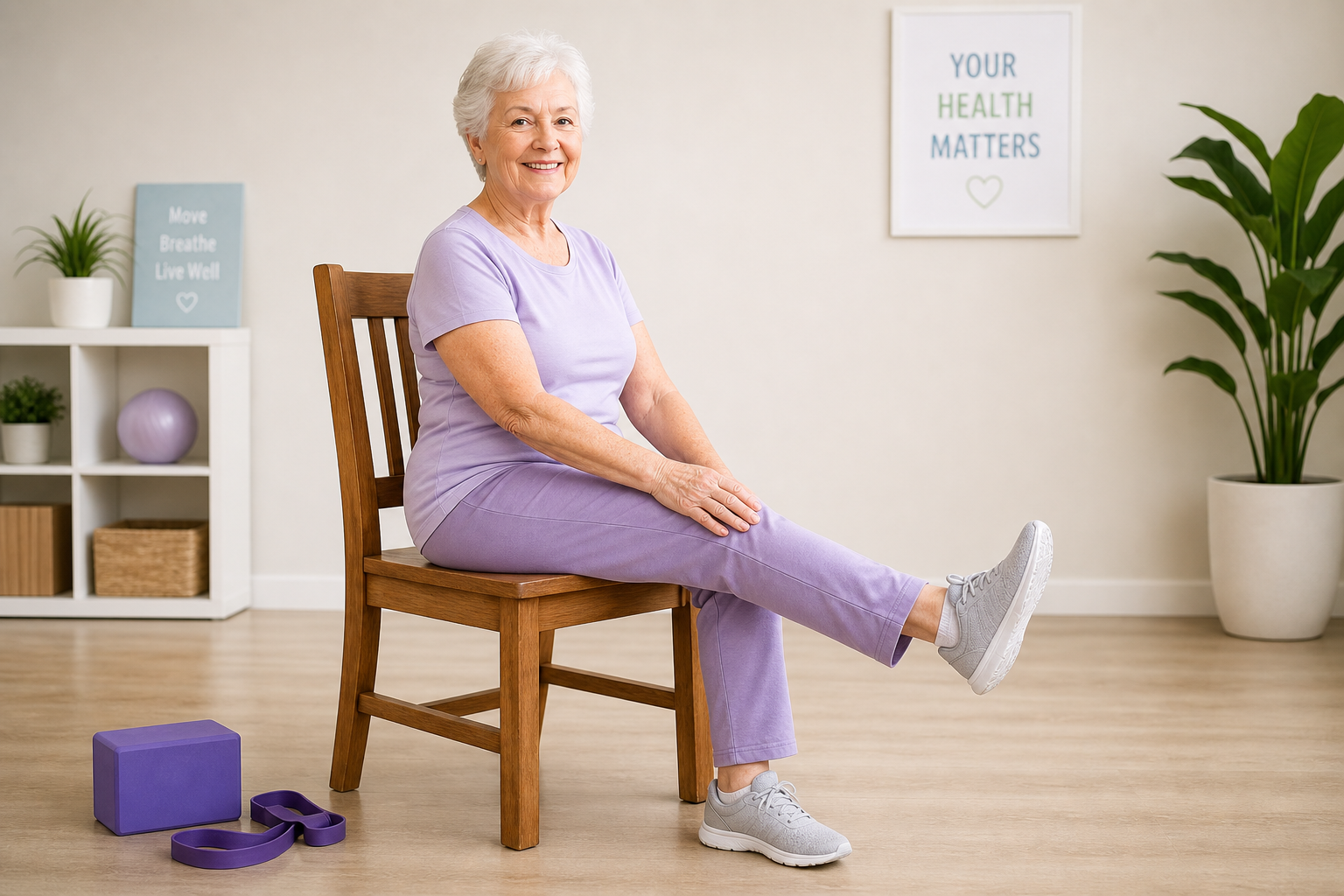
If standing balance is unreliable, do modified versions sitting on a park bench immediately after your walk. For calves, sit with legs extended and use a towel around the ball of your foot to gently pull the toes toward you. For hip flexors, sit at the edge of the bench and pull one knee toward your chest, then lean back slightly to stretch the opposite hip. Hamstrings stretch easily from a seated position by extending one leg and leaning forward.
The quadriceps stretch is trickier sitting, but you can stand and hold the bench back with both hands for support, or skip it if it doesn’t feel safe. Chest and neck stretches work just as well sitting as standing. Side bends adapt to sitting by reaching one arm up and leaning to the side while seated.
If arthritis makes certain positions painful, modify rather than skip. For example, if grabbing your ankle for the quad stretch isn’t possible, loop a strap or towel around your foot and hold that instead. If the full range of motion creates sharp joint pain, work within a smaller range that feels comfortable. Partial stretching still provides benefit. You don’t need full pretzel-like flexibility to reduce post-walk stiffness. For additional guidance on exercising with arthritis, check out these arthritis-friendly exercises.
Timing and Temperature Considerations
Muscles are naturally less stiff later in the day. You’ve been moving around, your body temperature is up, and your connective tissue is more pliable. This means afternoon or evening walks often pair with more productive stretching than early morning walks when you’re stiffer from sleeping. Many people prefer morning walks for schedule or temperature reasons. The post-walk stretching window still works whenever you walk.
If you do walk first thing in the morning, consider an extra two to three minutes of easy warm-up pace before you increase speed. Give your body more time to wake up. The stretching afterward is just as important, maybe more so, because you’re counteracting the stiffness that built up overnight. For more on timing your workouts, read about morning versus evening exercise.
Weather plays a role too. During hot months, you might find your muscles are warmer and more responsive to stretching. Hot weather walking requires extra hydration, but the warmth can actually help with flexibility. In cold weather, your muscles take longer to warm up and benefit more from gentle, extended stretching sessions afterward. Check out cold weather exercise tips for more guidance on winter walking.
Frequently Asked Questions
Should I stretch before or after walking?
After walking is better. Pre-walk stretching (static holds on cold muscles) temporarily reduces muscle strength and doesn’t prevent injury. A brief warm-up (2-3 minutes of easy walking) before your brisk pace is all you need before the walk. Save the static stretching for afterward when your muscles are warm and will respond with the greatest flexibility improvement.
Research shows that static stretching before exercise reduces power output and coordination temporarily, which isn’t what you want before heading out for a walk. Dynamic movement (gentle arm circles,