Strength and mobility don’t have to disappear as you get older. They do require more intentional upkeep, but the habits that protect both are far less complicated than most fitness content makes them sound. You don’t need a gym membership, a complicated program, or two hours a day. What actually works is consistent, low-barrier movement woven into your daily routine alongside a few smart nutrition choices.
This article covers realistic habits you can start this week. Nothing extreme, nothing that requires a complete lifestyle overhaul. Just practical changes that add up over time.
Movement Snacks: Short Bursts That Add Up

A “movement snack” is exactly what it sounds like: a brief bout of physical activity sandwiched between regular daily tasks. Research from McMaster University has shown that short, frequent bouts of activity throughout the day can meaningfully improve cardiovascular health and muscle function, especially for people who spend a lot of time sitting.
The idea is not to replace structured exercise. It’s to fill the gaps between it. Here are some practical examples:
- 10 chair squats before your morning coffee
- A two-minute walk around the block after each meal
- Calf raises while waiting for the kettle to boil
- Wall push-ups between TV shows
- Hip circles and ankle rolls after sitting for 45 minutes
None of these take more than a few minutes. But done consistently, they keep your joints moving through their range of motion and remind your muscles that they’re still needed. That matters more than most people realize.
If you want a structured approach to building this kind of consistent strength, the Progressive Resistance Training 12-Week Strength Building Program is a solid starting point that scales from beginner to more advanced.
Protein at Every Meal (Not Just Dinner)

Most people over 60 eat the majority of their daily protein at dinner. The problem is that muscle protein synthesis works best when protein is spread across all three meals, not front-loaded or back-loaded into one sitting.
The current research suggests that adults over 60 need somewhere between 1.2 and 1.6 grams of protein per kilogram of body weight per day, which is higher than the standard RDA. That means a 150-pound person needs roughly 80 to 110 grams daily to support muscle maintenance, not just survival-level function.
Practical Ways to Hit Your Protein Targets
Breakfast is where most people fall short. A couple of eggs, Greek yogurt, or cottage cheese can get you 20 to 30 grams without much effort. If appetite is low in the morning, a protein smoothie works well too.
If you’re struggling to meet daily totals through whole foods alone, a quality protein powder can fill the gap. The Protein Powder Guide for Seniors Over 70 breaks down which types are easiest to digest and which to avoid.
Fueling around your workouts also matters. What you eat before and after exercise affects how well your muscles recover and adapt. For timing and food choices, the articles on Pre-Workout Nutrition for Senior Athletes and Post-Workout Recovery Meals for Seniors cover this in practical detail.
Balance Practice: A Few Minutes Every Day
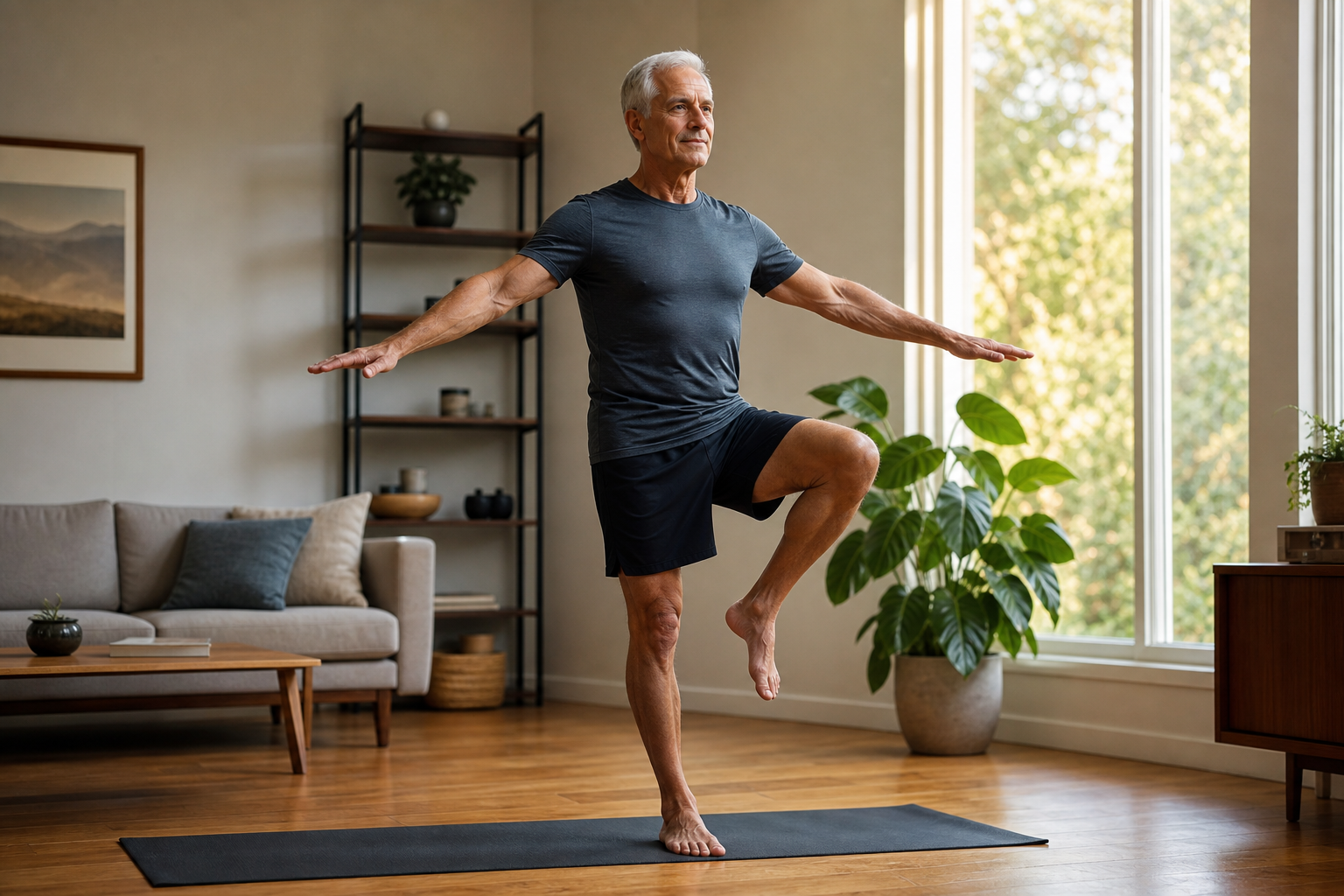
Falls are the leading cause of injury-related hospitalizations among adults over 65 in the United States. Most of that risk comes down to deteriorating balance, which is something you can directly address with regular practice.
Balance is a skill. Like any skill, it gets rusty without use and improves with consistent repetition. The good news is that even five minutes a day of targeted balance work can produce noticeable improvements within a few weeks.
Simple Balance Habits to Build In
- Single-leg stance: Stand on one foot for 10 to 30 seconds while brushing your teeth. Hold a counter nearby if needed.
- Tandem walking: Walk heel-to-toe along a line on the floor for 10 steps. This directly challenges the vestibular system.
- Sit-to-stand without using hands: Getting up from a chair under your own power is one of the best daily tests of lower body strength and balance combined.
If you’re dealing with dizziness or have a history of vertigo, it’s worth reading about Vertigo and Balance Exercises for Seniors before jumping into standing balance work. There are specific modifications that make these exercises much safer.
Mobility Work That Actually Sticks
Stretching and mobility work have a reputation for being boring, which is probably why most people skip them. Changing the framing helps. Think of it less as a cool-down ritual and more as maintenance for the joints you use every day.
Tight hips, a stiff thoracic spine, and limited ankle mobility are three of the most common contributors to poor movement quality in people over 60. Targeting these areas for just 10 minutes in the morning or before bed makes a real difference in how you feel the rest of the day.
Areas Worth Prioritizing
- Hip flexors: A simple kneeling lunge stretch held for 30 to 60 seconds each side helps offset time spent sitting.
- Thoracic spine: Foam rolling the mid-back for two to three minutes improves posture and reduces shoulder tension. A foam roller is one of the most useful tools you can keep at home, and the Best Foam Rollers for Senior Muscle Recovery guide covers the options worth buying.
- Ankle mobility: Ankle circles and forward wall leans keep the ankles flexible, which directly supports balance and walking stability.
Posture also deserves attention on its own. If you notice yourself rounding forward or carrying your head too far in front of your shoulders, the Posture Correction Exercises for Seniors article offers targeted exercises for exactly that.
Nutrition Habits Beyond Protein
Protein gets the most attention, but a few other nutritional habits significantly affect how your muscles and joints hold up over time.
Vitamin D is consistently low in older adults, especially those who spend limited time outdoors. Low vitamin D is directly linked to muscle weakness and increased fall risk. Your doctor can check your levels with a simple blood test, and supplementation is often recommended. More background on this is covered in the article on Vitamin D for Senior Bone and Muscle Health.
Calcium is just as important for bone density, and dairy isn’t the only source. If you’re avoiding or limiting dairy, there are plenty of effective alternatives covered in Calcium Sources Beyond Dairy for Seniors.
Hydration is an underrated factor in joint health and muscle function. Many older adults have a blunted thirst response, meaning you might be mildly dehydrated before you even feel thirsty. Aim for consistent water intake throughout the day rather than waiting for the signal.
Frequently Asked Questions
How much exercise do I actually need each week after 60?
The CDC recommends at least 150 minutes of moderate activity per week for older adults, along with two days of muscle-strengthening activity. That breaks down to about 30 minutes most days, which doesn’t have to happen all at once. Breaking it into smaller chunks throughout the day counts and is often more sustainable for people just getting started.
Is it too late to build muscle after 60?
No. The process is slower and requires more deliberate effort than it does at 30, but research consistently shows that older adults respond to resistance training with real muscle gains. The key is progressive overload, meaning you gradually increase the challenge over time rather than doing the same routine forever. Consistency over months matters far more than intensity on any single day.
What if I have joint pain or a chronic condition that limits what I can do?
Most people with chronic conditions can still exercise safely with appropriate modifications. The important thing is matching the type of movement to your current capacity rather than trying to push through pain. Conditions like arthritis, osteoporosis, and neuropathy all have exercise approaches designed around them. Starting with lower-impact options and working with your healthcare provider to establish safe limits is the right first step.
Consistency with small habits beats occasional intense effort every time. A 10-minute walk done daily for six months does more for your health than a hard workout done sporadically.
Building strength and mobility after 60 isn’t about recapturing your twenties. It’s about staying capable, independent, and comfortable in your own body for the years ahead. The habits in this article aren’t complicated, but they do require showing up regularly. Start with one or two that feel manageable, build from there, and give it enough time to become routine before adding more.