Starting yoga later in life might feel intimidating, especially if you imagine a room full of flexible twenty-somethings twisting themselves into pretzels. But the yoga programs that work best for older beginners look nothing like that. They’re slower, more thoughtful, and built around what your body actually needs right now, not some idealized version of it. The right program can help with balance, joint stiffness, posture, and even stress without requiring any prior experience or a high fitness level.
This roundup focuses on programs and classes that prioritize clear verbal cueing, unhurried pacing, and real modifications for common limitations like tight hips, bad knees, or limited shoulder mobility. Whether you’re brand new to yoga or returning after years away, these options are worth your time.
What to Look for in a Yoga Program for Older Beginners
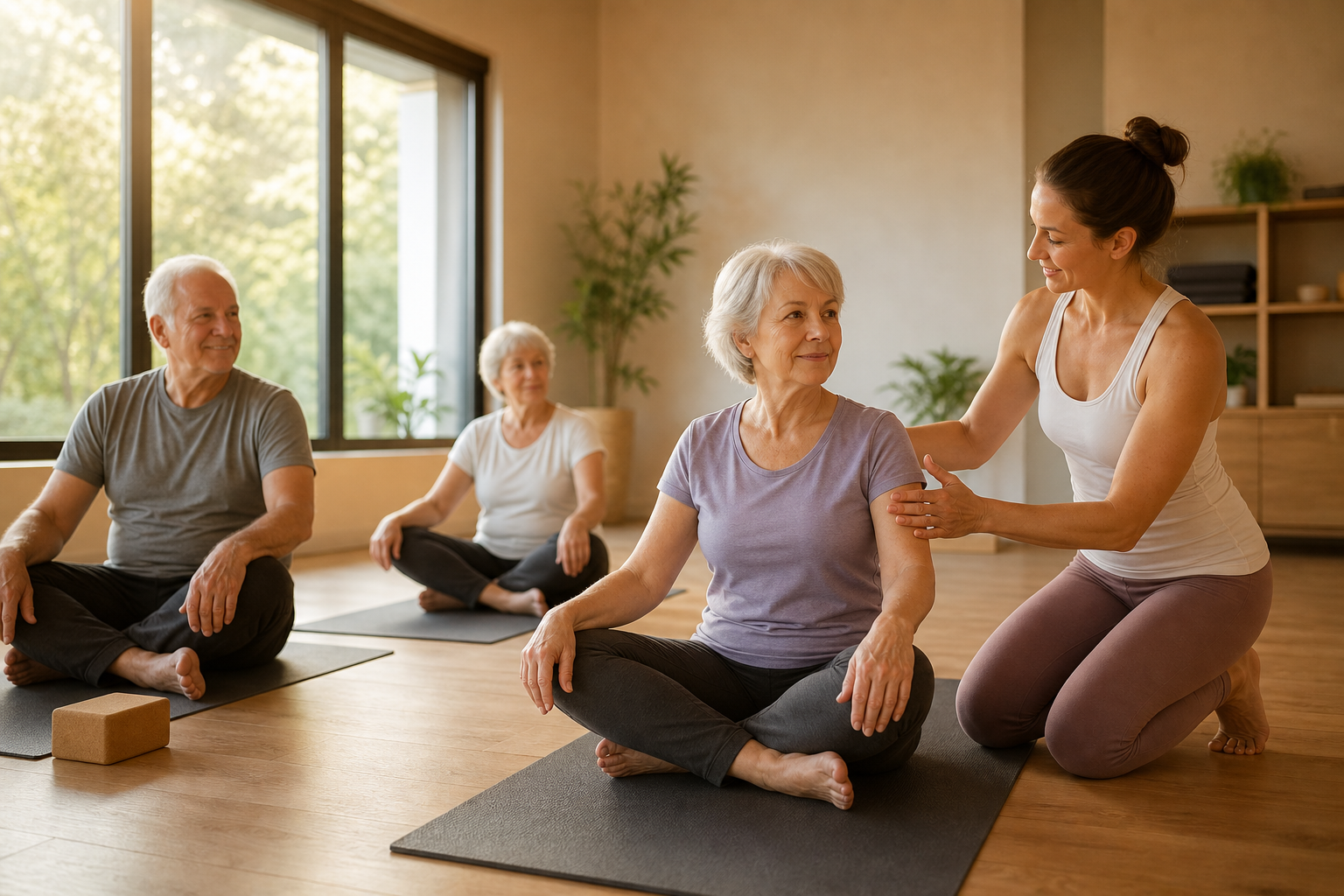
Not all beginner yoga is created equal. A class labeled “beginner” on a general fitness platform might still move too fast or assume a level of flexibility that takes years to develop. Here’s what separates a genuinely senior-friendly program from one that just says it is.
- Clear, descriptive cueing: The instructor should tell you exactly where to place your hands, where to look, and what you should feel in your body. Vague instructions like “open your heart” aren’t helpful if you’re new.
- Slow transitions: Moving quickly between poses increases fall risk and makes it hard to find proper alignment. Good programs for older beginners hold poses longer and transition deliberately.
- Seated and chair options: Many people over 60 have conditions that make floor work difficult, including arthritis, recent joint replacements, or balance issues. A program that offers chair yoga alternatives lets you participate fully.
- Props encouragement: Blocks, straps, and blankets aren’t signs of weakness. Instructors who actively encourage prop use understand how to teach this population well.
If you’re managing joint discomfort, it’s also worth reading about arthritis-friendly exercises for seniors alongside your yoga practice. The two complement each other well.
Top Yoga Programs for Older Beginners
Yoga with Adriene (Free on YouTube)
Adriene Mishler’s YouTube channel is one of the most accessible free resources available, and she has specific playlists for beginners, seniors, and people with limited mobility. Her pacing is patient, her personality is warm without being over the top, and she consistently offers modifications throughout each video. Search “Yoga with Adriene for seniors” or “gentle yoga for beginners” on her channel to find the most relevant content.
Her 30-day challenge series can also work well if you do it at your own pace rather than forcing yourself through one video per day. She uses accessible language and rarely assumes prior knowledge.
Chair Yoga with Sherry Zak Morris
Sherry Zak Morris is one of the most well-known names in yoga specifically designed for older adults. Her chair yoga programs are designed for people who need full seated support, but she also teaches standing versions of most poses using the chair as a balance aid. Her cueing is detailed and deliberate, which matters a lot for beginners who can’t rely on watching an instructor closely while holding a pose.
Her DVD programs are a solid option if you prefer working offline or don’t want to depend on an internet connection during your practice.

Gentle Yoga DVD for Seniors
A quality gentle yoga DVD lets you practice at your own pace without needing an internet connection, making it ideal for home practice.
Yoga for Seniors on Amazon Prime Video and YouTube
Several well-produced yoga series are available through Amazon Prime Video, and many are specifically targeted at the 60-plus age group. These tend to have higher production quality than typical YouTube uploads, with clear audio and camera angles that actually show you what the instructor’s feet and hands are doing.
You can also find excellent free content by searching YouTube for “chair yoga for seniors” or “seated yoga for beginners.” The SilverSneakers channel on YouTube is another reliable source, with short videos that are easy to follow and consistently offer chair modifications.
Local Community Center and Senior Center Classes
If you want the social element and real-time feedback from an instructor, in-person classes through your local YMCA, community center, or senior center are worth exploring. Many offer beginner chair yoga or gentle yoga on a sliding scale or as part of a membership. Being in a room with other people at a similar stage can make a real difference for motivation, and instructors can correct your alignment on the spot in ways no video can.
Connecting with a local class also ties into the broader benefits of exercising with others. If you’ve been thinking about the social side of fitness, our article on social fitness groups for seniors has useful advice on finding your community.
Recommended Props and Equipment
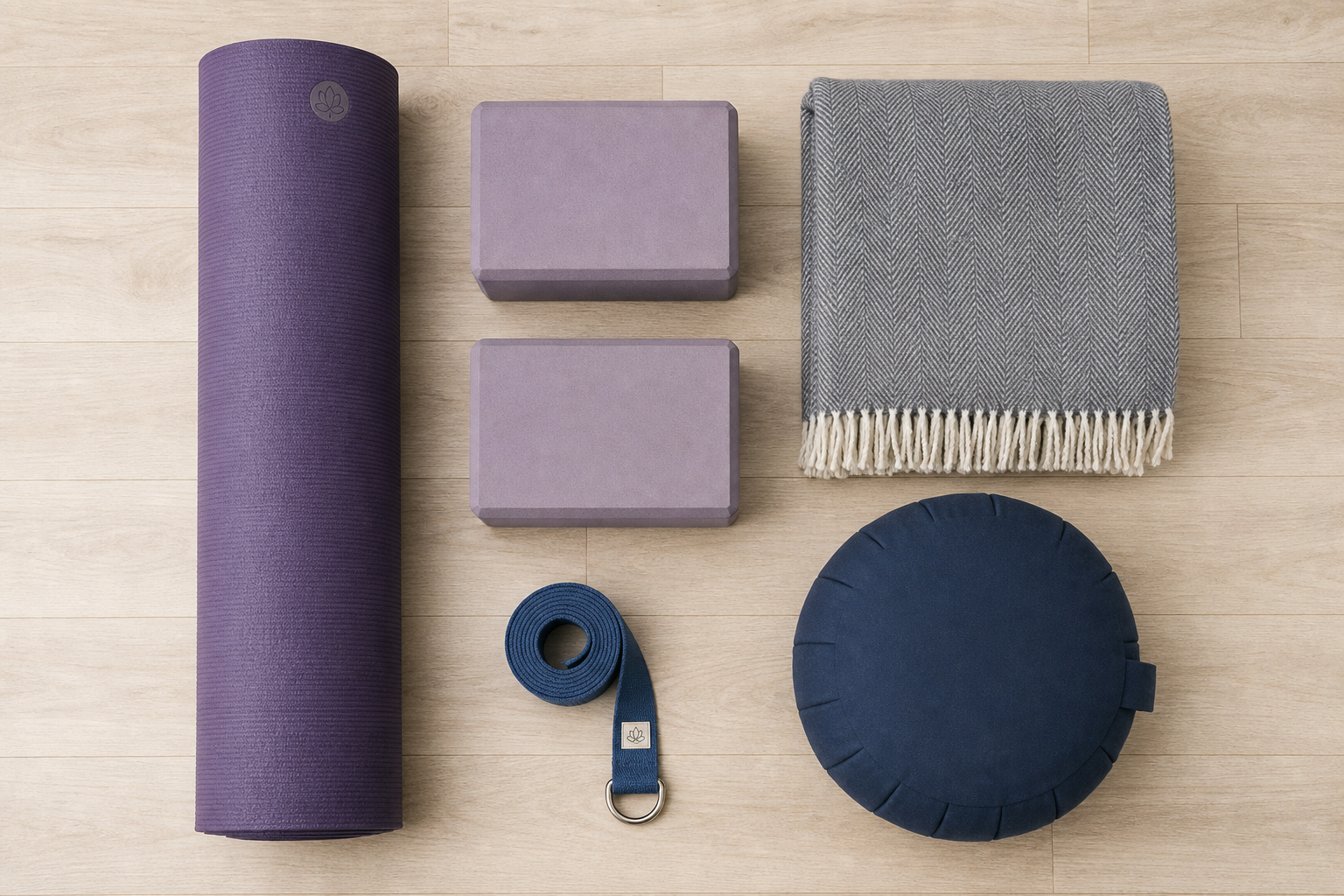
You don’t need much to get started with yoga, but a few items make a real difference in comfort and safety. A non-slip mat is the most important thing. Look for one that’s at least 5mm thick for cushioning on hard floors.

Thick Non-Slip Yoga Mat for Seniors
A thick, grippy mat provides the joint cushioning and traction that older beginners need, especially on hardwood or tile floors.
Yoga blocks are helpful for poses that require reaching the floor when your hamstrings or hips are tight. A set of yoga blocks brings the floor closer to you so you’re not straining to reach it. A yoga strap does the same job for seated forward folds and shoulder stretches. Both are inexpensive and worth keeping nearby.
If you’re setting up a small home practice space on a budget, our budget-friendly home gym setup for seniors article has ideas for making the most of limited space and money.
Pairing Yoga with Good Recovery Habits
Yoga is gentle, but your body still benefits from good recovery habits, especially when you’re just starting out and using muscles you haven’t engaged in a while. Soreness after the first few sessions is normal.
Eating something with protein and a little carbohydrate after your session helps with muscle repair. Our guide on post-workout recovery meals for seniors has practical ideas that aren’t complicated to prepare. Staying consistent with your sessions matters more than going longer or harder, so aim for two to three short sessions per week rather than one long exhausting one.
If joint health is a concern, supporting it through nutrition can also help. Omega-3 supplements have good evidence behind them for reducing joint inflammation, and they’re easy to add to a daily routine.

Chair Yoga for Seniors DVD Program
Chair yoga DVDs are ideal for anyone who prefers fully seated practice or needs extra support for balance and mobility limitations.
Frequently Asked Questions
Is yoga safe if I have osteoporosis?
Yoga can be safe with osteoporosis, but it requires some adjustments. Deep forward folds and poses that involve spinal flexion carry a higher risk of vertebral fractures for people with low bone density. Chair yoga and standing poses with support tend to be the safest entry points. Always let your instructor know about your diagnosis, and check out our osteoporosis exercise plan for more detailed guidance on safe movement with this condition.
How long should I practice before I start to notice benefits?
Most people notice something within two to four weeks of consistent practice, usually better sleep, reduced stiffness in the morning, or a calmer mental state. Physical changes like improved balance and flexibility take a bit longer, typically six to eight weeks. The key word is consistent. Two 20-minute sessions per week will do more for you than one long session crammed in on a weekend.
What if I can’t get down to the floor at all?
Chair yoga was designed exactly for this situation. You can do a complete yoga practice entirely seated in a sturdy chair, working on breath, flexibility, strength, and balance without ever going to the floor. Programs from instructors like Sherry Zak Morris are specifically built around this format. A dining chair with a firm seat and no armrests works well for most chair yoga poses.
Starting yoga at 60, 70, or beyond isn’t a compromise. Many people find it more rewarding than the fitness they did earlier in life because the focus is on how your body feels rather than how it performs. Pick one of the programs above, grab a mat, and give yourself permission to go slowly. That’s not just acceptable for a beginner, it’s the whole point.
This article contains affiliate links. We may earn a small commission at no extra cost to you.