Falls are the leading cause of injury among adults over 65, and the statistics are sobering. One in four seniors falls each year, and many of those falls lead to fractures, hospitalizations, and a significant loss of independence. The encouraging part is that one of the most effective tools for preventing falls has been practiced for centuries and requires no gym membership, no heavy equipment, and no prior fitness experience.
Tai chi is a slow, flowing martial art that has been studied more extensively for fall prevention than almost any other exercise form. Dozens of clinical trials back it up. If you’re looking for a practice that improves balance, builds leg strength, sharpens body awareness, and reduces fall risk, tai chi belongs at the top of your list.
Why Tai Chi Works So Well for Balance
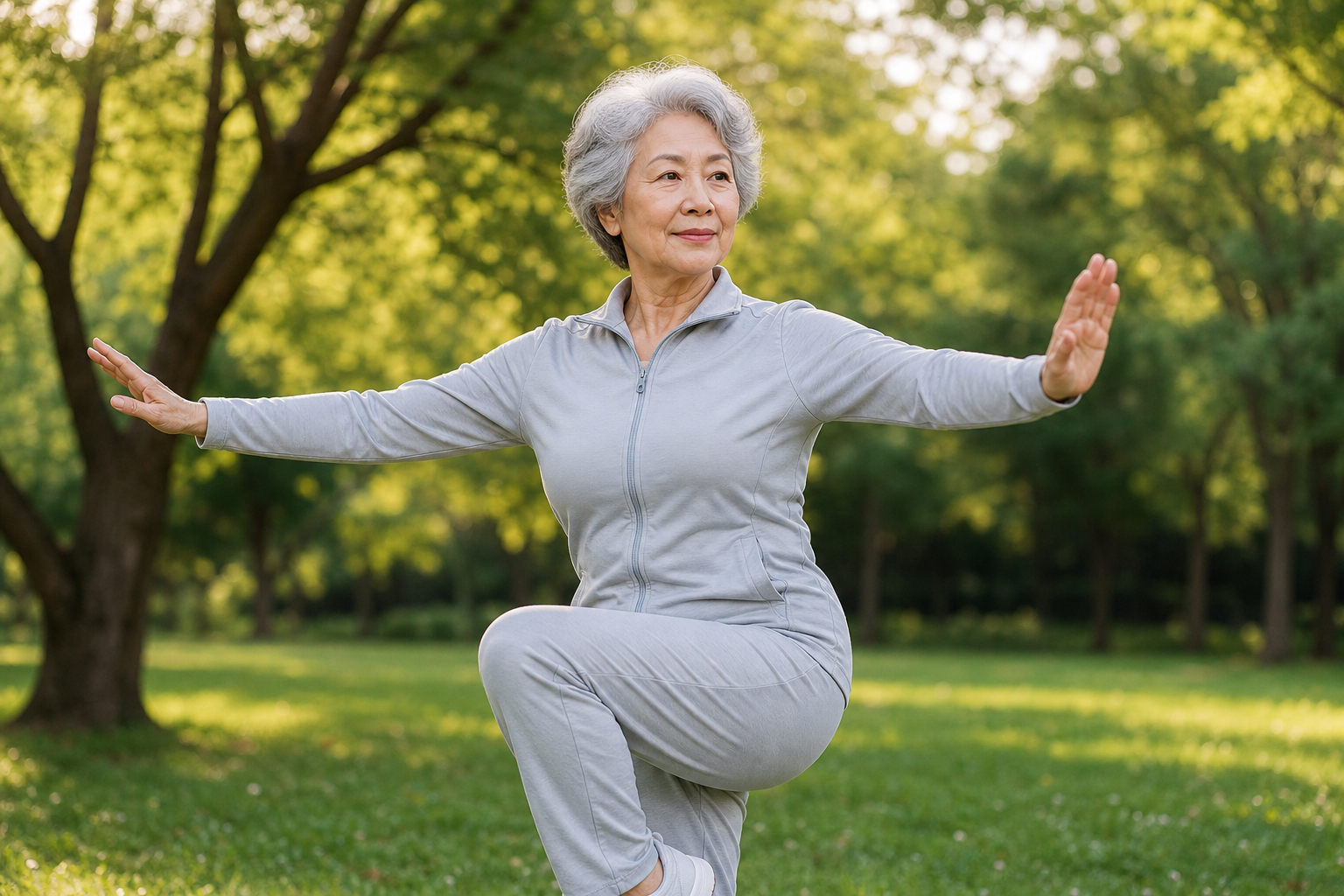
Most exercise improves strength or cardiovascular fitness. Tai chi does something different. It trains the communication between your brain, your inner ear, your eyes, and your muscles, which is called proprioception. As you age, that communication gets slower and less reliable, and that’s a big reason why falls happen.
Tai chi’s slow, deliberate movements force you to shift your weight carefully from foot to foot while staying upright. You’re essentially practicing the exact skill that keeps you from stumbling on an uneven sidewalk or catching yourself when you trip on a rug. Research published in the New England Journal of Medicine found that tai chi reduced fall frequency by up to 47% in older adults, which is a number no pill can match.
Beyond balance, tai chi builds ankle stability, hip strength, and core control. It also improves mental focus, because you have to concentrate on the movements rather than let your mind wander. That mind-body connection is one of the reasons it works so well for people dealing with conditions like vertigo or inner-ear-related balance issues.
Watch This Beginner-Friendly Tai Chi Routine
Before we get into specific moves, here’s an excellent guided video that walks through a gentle tai chi sequence designed specifically for beginners and older adults. Follow along at your own pace, and don’t worry about getting every movement perfect on the first try.
Watch it through once before trying to follow along. Getting a feel for the rhythm and transitions will make your first practice session much smoother.
Five Starter Moves to Learn at Home
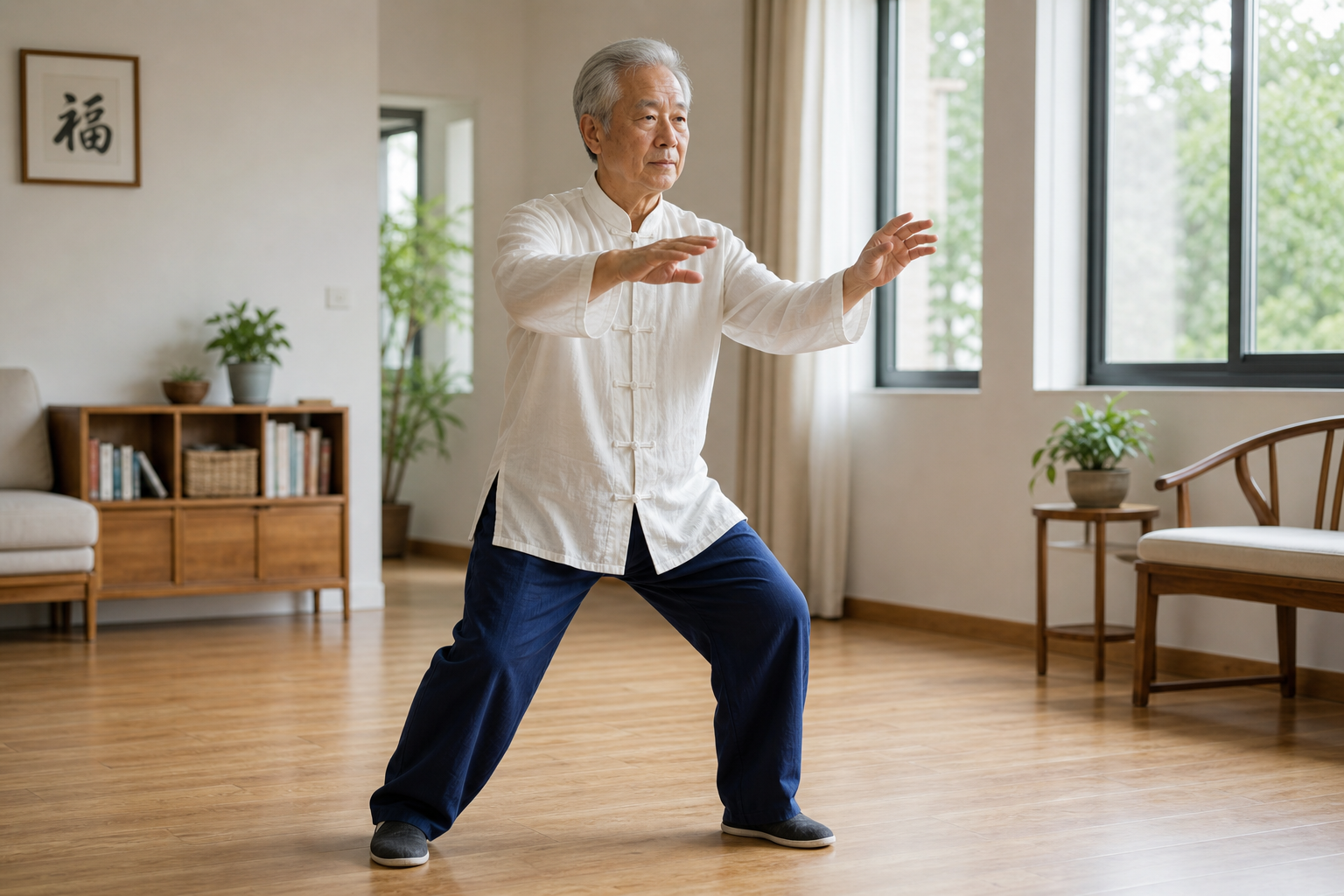
You don’t need to memorize a full tai chi form on day one. These five foundational moves will get you moving safely and build the skills the rest of the practice depends on.
1. Wu Chi Stance (Standing Meditation)
Stand with your feet shoulder-width apart, knees soft (not locked), arms relaxed at your sides, and eyes gently focused ahead. Breathe slowly and let your weight sink into your feet. Hold for one to two minutes. This quiet stance builds body awareness and teaches you how proper alignment feels.
2. Weight Shifting
From Wu Chi, slowly shift your weight to your right foot until your left foot barely touches the ground, then return to center and shift left. Move as slowly as you can without losing your balance. This is the core skill behind almost every tai chi movement and directly trains fall-prevention reflexes.
3. Brush Knee and Push
Step forward with one foot while one hand sweeps low across your knee and the other hand pushes gently forward at chest height. Then step with the other foot and switch hands. This move coordinates your arms and legs, which improves gait and walking stability.
4. Part the Wild Horse’s Mane
Step diagonally forward while one arm rises as if cradling something and the other sweeps down and back. This builds hip mobility, trunk rotation, and single-leg balance, all of which directly reduce fall risk. It’s a beautiful movement that feels meditative even in the learning phase.
5. Cloud Hands
Stand with feet parallel and slowly move your arms in overlapping circular patterns, shifting your weight side to side in rhythm. This is one of the best movements in tai chi for people managing peripheral neuropathy, because it builds spatial awareness without putting stress on the feet.
Setting Up Your Home Practice
One of tai chi’s greatest advantages is how little you need to get started. A clear floor space roughly six feet by six feet is enough for most movements. Wear soft, flat shoes or practice in socks on a non-slip surface. Avoid thick, cushioned sneakers because they can actually reduce the ground feedback your feet depend on for balance.
A quality instructional DVD gives you something a YouTube clip sometimes doesn’t: structure. With a disc, you get a full progressive curriculum rather than random clips at varying skill levels. Tai chi for beginners DVDs are widely available and give you a reliable resource you can return to again and again without hunting for the right video online.
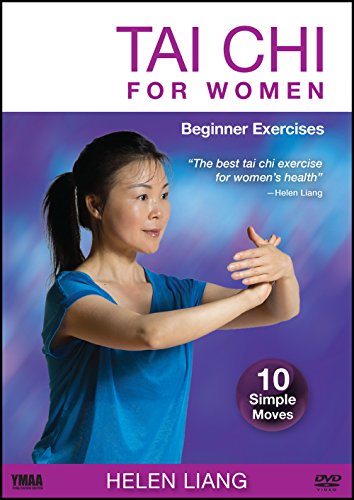
Tai Chi for Beginners DVD
A structured home DVD program gives you a progressive curriculum that’s far easier to follow consistently than scattered online clips.
If you want extra stability while you’re learning, a sturdy chair placed nearby gives you a quick point of contact if you feel unsteady. You don’t need to hold it constantly. Just having it within reach builds confidence so you can focus on the movements instead of worrying about balance.
Pair your tai chi routine with smart nutrition habits. The muscles and joints you’re training benefit from adequate protein intake, and if you’re not sure where to start, our guide to pre-workout nutrition for senior athletes covers practical fueling strategies that work well before any low-impact session.

Tai Chi Shoes for Seniors
Flat-soled tai chi shoes give you better ground feel and grip than regular sneakers, which genuinely improves balance feedback during practice.
Aim for three sessions per week, each lasting 20 to 30 minutes. Most people start feeling meaningfully more stable within four to six weeks of consistent practice. For people managing conditions like osteoporosis, tai chi’s low-impact, weight-bearing nature makes it one of the safest daily movement options available.
Tai Chi and Other Health Benefits Worth Knowing
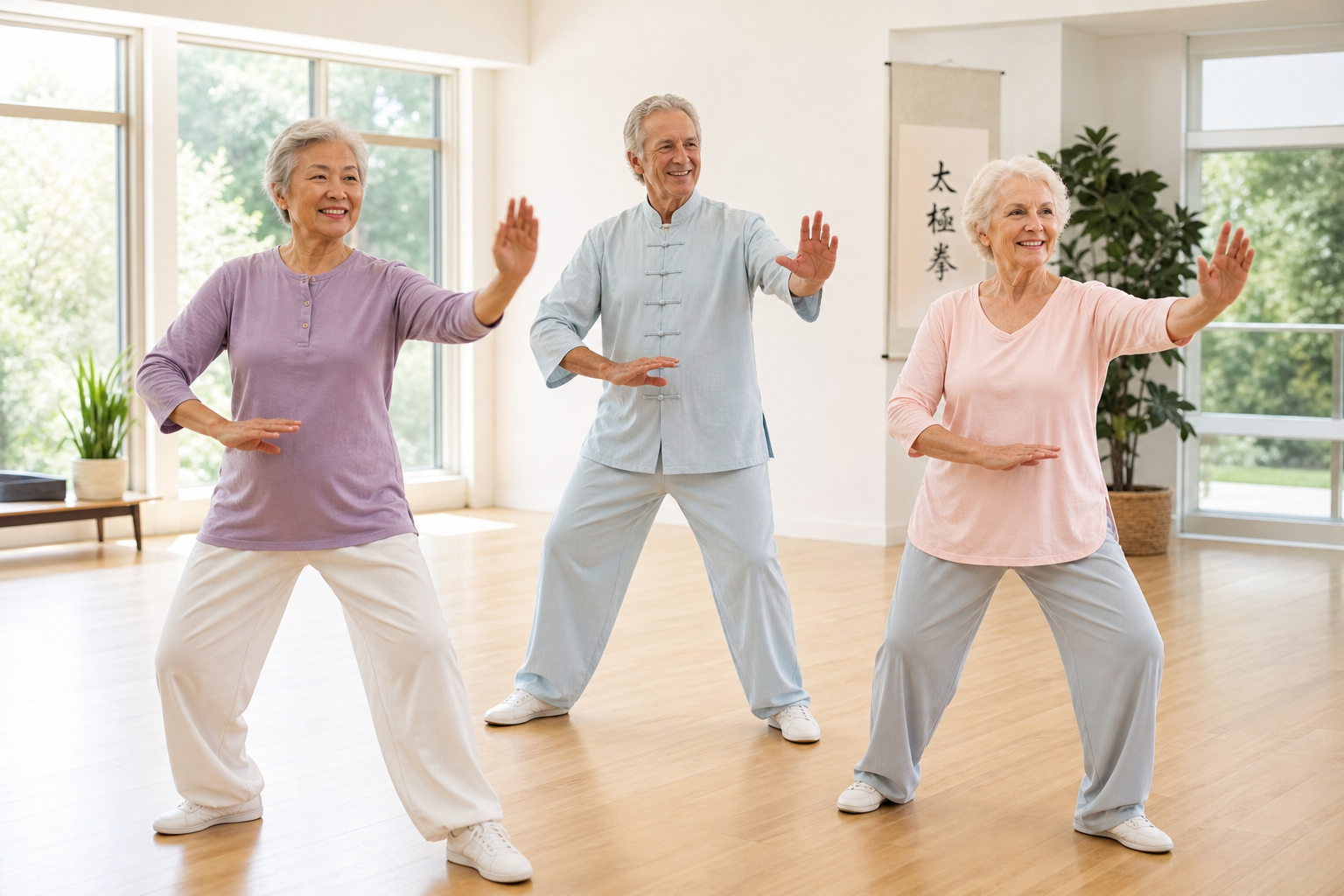
Balance is the headline benefit, but tai chi does a lot more. Regular practice has been shown to lower blood pressure, reduce anxiety, improve sleep quality, and ease joint pain from arthritis. If you’re already dealing with joint discomfort, check out our overview of arthritis-friendly exercises to see how tai chi fits alongside other movement options.
The deep breathing patterns in tai chi also benefit respiratory health and have been shown to reduce cortisol levels over time. It’s genuinely a full-body wellness practice wrapped inside a deceptively gentle-looking workout.
One more underrated benefit: community. Many senior centers, YMCAs, and community parks offer group tai chi classes, and practicing with others adds a social element that keeps people consistent. If you enjoy group fitness, our article on finding social fitness communities for seniors has practical tips for locating classes near you.
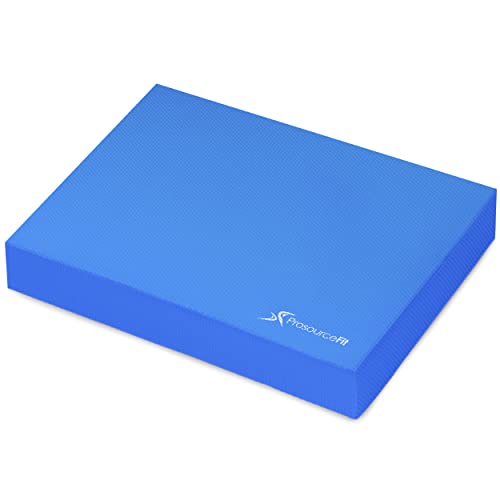
Tai Chi Balance Training Mat
A thin, non-slip mat protects your feet and marks your practice space, making it easier to stay consistent with a daily home routine.
Frequently Asked Questions
Is tai chi safe if I have a recent hip or knee replacement?
Tai chi is generally considered one of the safest post-surgical movement options, but timing matters. Most orthopedic surgeons recommend waiting until you’ve completed your initial physical therapy phase before starting tai chi. Once cleared, the slow, controlled weight shifts are actually ideal for rebuilding confidence and stability. Check our post-hip replacement exercise guide for more detail on what activities are appropriate at different recovery stages.
How long before I notice improvements in balance?
Most research trials that show meaningful balance improvements ran for 12 to 16 weeks with participants practicing three times per week. Anecdotally, many people report feeling steadier and more confident within the first month. The key is consistency rather than session length. Three 20-minute sessions per week beats one long weekly practice by a wide margin.
Do I need a class, or can I learn tai chi entirely at home?
You can absolutely build a solid practice at home using videos and DVDs, and many people do exactly that. A live class offers corrections you can’t get from a screen, which is genuinely helpful in the early weeks. A practical middle ground is to start with an at-home video program, and then attend an occasional class or workshop once you know the basics well enough to ask specific questions.
A Final Word on Getting Started
Tai chi rewards patience. The movements look simple, but learning to do them slowly, with full body awareness, takes real practice. Give yourself permission to be a beginner for the first few weeks. The falls you won’t have, the strength you’ll quietly build, and the clarity you’ll feel after each session are worth every awkward early rep.
After your session, don’t skip recovery. A light meal with adequate protein helps your muscles consolidate the neuromuscular training you just did. For ideas on what to eat, take a look at our guide to post-workout recovery meals for seniors.
This article contains affiliate links. We may earn a small commission at no extra cost to you.