Arthritis doesn’t mean you have to stop moving. In fact, staying active is one of the best things you can do for your joints, your mood, and your overall health. The trick is finding workouts that keep you moving without grinding down already-inflamed cartilage or triggering a flare that puts you on the couch for a week.
This guide covers the most joint-friendly exercise options available, how to troubleshoot common problems like flares and morning stiffness, and what to look for in equipment that won’t make things worse. Before starting any new exercise program, always check in with your doctor or a physical therapist, especially if your arthritis is actively flaring or you’ve recently had a procedure like joint replacement.
Why Movement Matters (Even When It Hurts)
It feels counterintuitive to exercise a painful joint, but rest is rarely the answer long-term. Movement helps lubricate cartilage, strengthen the muscles that support your joints, and reduce stiffness that builds up when you stay still too long.
Research consistently shows that people with osteoarthritis and rheumatoid arthritis who exercise regularly experience less pain, better function, and improved quality of life compared to those who avoid activity. The goal isn’t to push through sharp pain. It’s to keep the body moving in ways that are gentle enough to maintain without causing more damage.
If you’re also dealing with related conditions like chronic pain or fibromyalgia, the same general principles apply: consistent, low-intensity movement beats sporadic high-intensity bursts every time.
The Best Low-Impact Options for Arthritic Joints
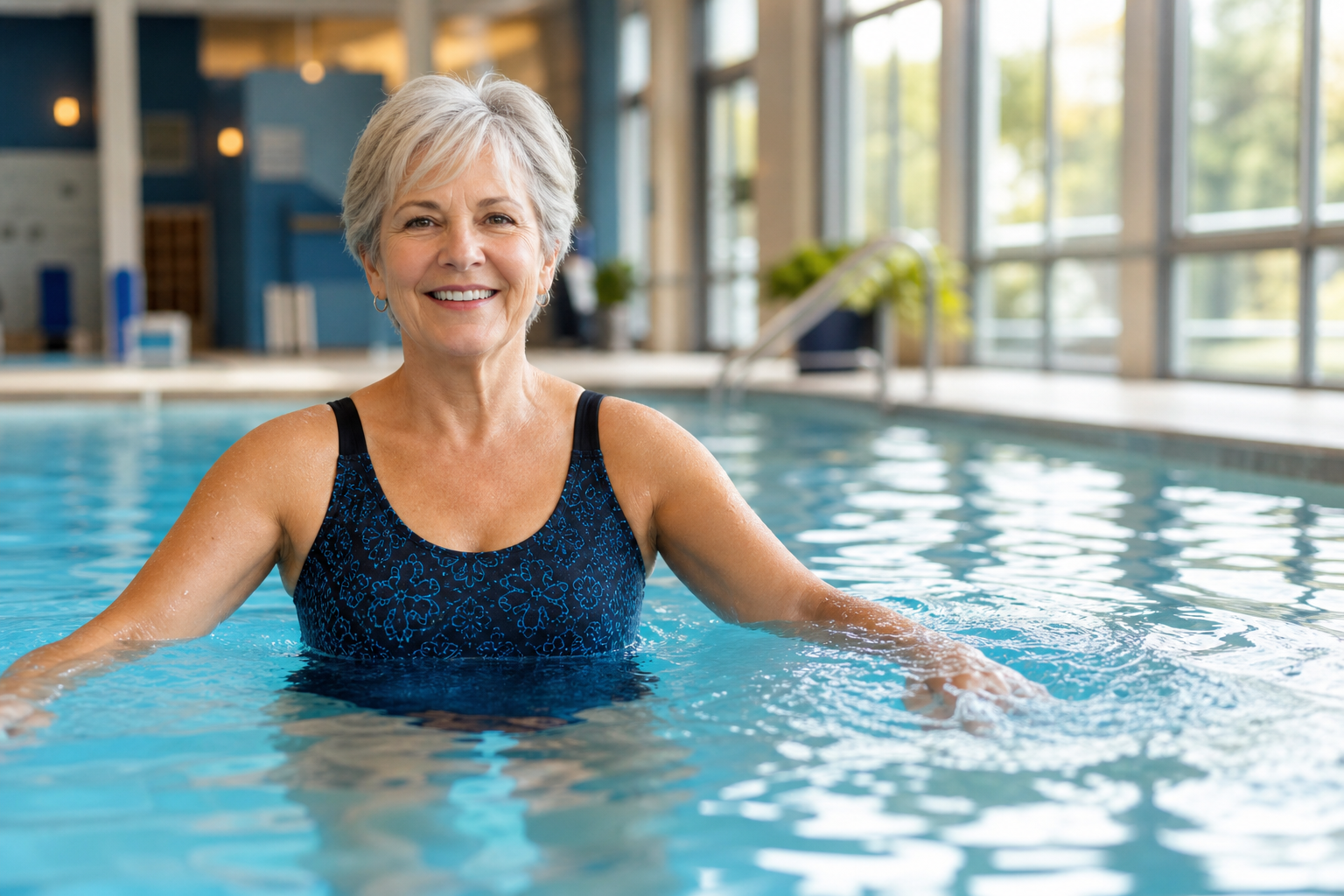
Water Exercise
Pool-based exercise is consistently ranked among the top choices for arthritis, and for good reason. Water reduces the load on your joints by up to 90 percent depending on how deep you’re submerged, while providing enough resistance to build real strength and cardiovascular fitness.
Water aerobics classes, lap swimming, and simple pool walking are all effective. If you want to add resistance without leaving the water, water exercise dumbbells are a solid addition to your pool routine. They’re buoyant, so they create resistance in both directions of movement rather than just on the way down.

Aqua Dumbbells for Water Aerobics
Foam aqua dumbbells add resistance to pool workouts without stressing your joints, making them ideal for arthritis-friendly strength training.
If you don’t have pool access, a warm bath can at least help loosen joints before a workout. Many people with arthritis find that exercising in the early afternoon, after morning stiffness has faded but before fatigue sets in, works better than first thing in the morning.
Cycling (Stationary and Outdoor)
Cycling is one of the best land-based exercises for arthritic knees and hips. The circular motion keeps joints moving through their range of motion without impact. A stationary bike is especially useful because you control the resistance, you don’t have to navigate terrain, and you can stop immediately if something feels off.
Recumbent bikes take the pressure off your lower back and are often more comfortable for people with hip arthritis. Upright bikes work well for knee arthritis if the seat height is adjusted properly (your knee should have a slight bend at the bottom of the pedal stroke, not fully straightened or heavily bent).
For a detailed comparison of cycling machines that are easy on the joints, check out this guide on exercise bikes versus ellipticals for seniors. Both are solid options, but the bike tends to win for people with significant knee involvement.
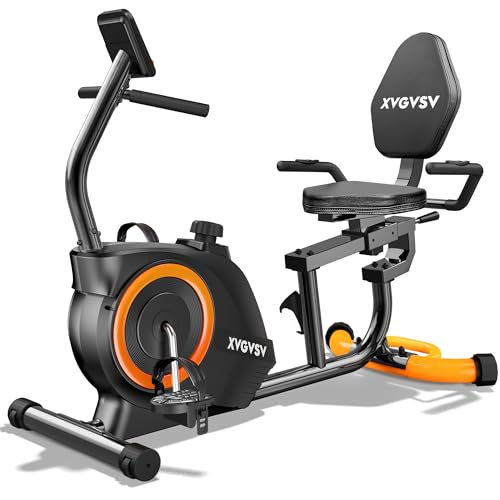
Recumbent Exercise Bike for Seniors
A recumbent bike lets you pedal with low joint stress while supporting your back, making it one of the most comfortable cardio options for arthritis.
Resistance Bands
Resistance bands are one of the most arthritis-friendly strength tools available. Unlike dumbbells, they provide graduated resistance throughout a movement, which means there’s no sudden jerk on your joints at the start of a rep. You can also adjust the difficulty easily by changing your grip position or switching to a lighter band.
Bands work especially well for shoulder, hip, and knee strengthening. A simple routine of banded clamshells, standing hip extensions, and seated rows can build meaningful muscle support around arthritic joints without requiring any equipment that’s hard to grip or heavy to handle.
Resistance bands for arthritis come in sets with varying tensions, which is helpful since you’ll likely need different resistances for different muscle groups. Look for fabric-covered bands if the latex ones irritate your skin or tend to roll up during exercises.
If you’re building out a home setup and want to keep costs reasonable, take a look at this guide to a budget-friendly home gym for seniors. Bands, a mat, and a foam roller can get you surprisingly far.
Dealing With Flares: When to Rest and When to Keep Moving

Arthritis flares are periods of increased inflammation, swelling, and pain. During a flare, your usual workout routine may not be appropriate. This is where having a physical therapist in your corner really matters. They can help you identify a “floor” level of activity that keeps you moving without making things worse.
During mild flares, gentle range-of-motion exercises, slow walking, and warm water movement are usually still okay. During severe flares with significant swelling, you may need to rest the affected joint specifically while keeping the rest of your body active.
After a flare settles down, ease back in gradually rather than jumping straight to your pre-flare intensity. A common mistake is feeling great for a few days and immediately overdoing it, which can trigger another flare. Build back up over a week or two.
It’s also worth paying attention to what you eat during and after flares. An anti-inflammatory diet can support your body’s recovery, and some people with arthritis notice a real difference when they reduce processed foods and increase omega-3-rich foods. You can also read more about omega-3 supplements for joint health if you want to look at that angle.
Equipment Tips for Arthritic Hands and Grip
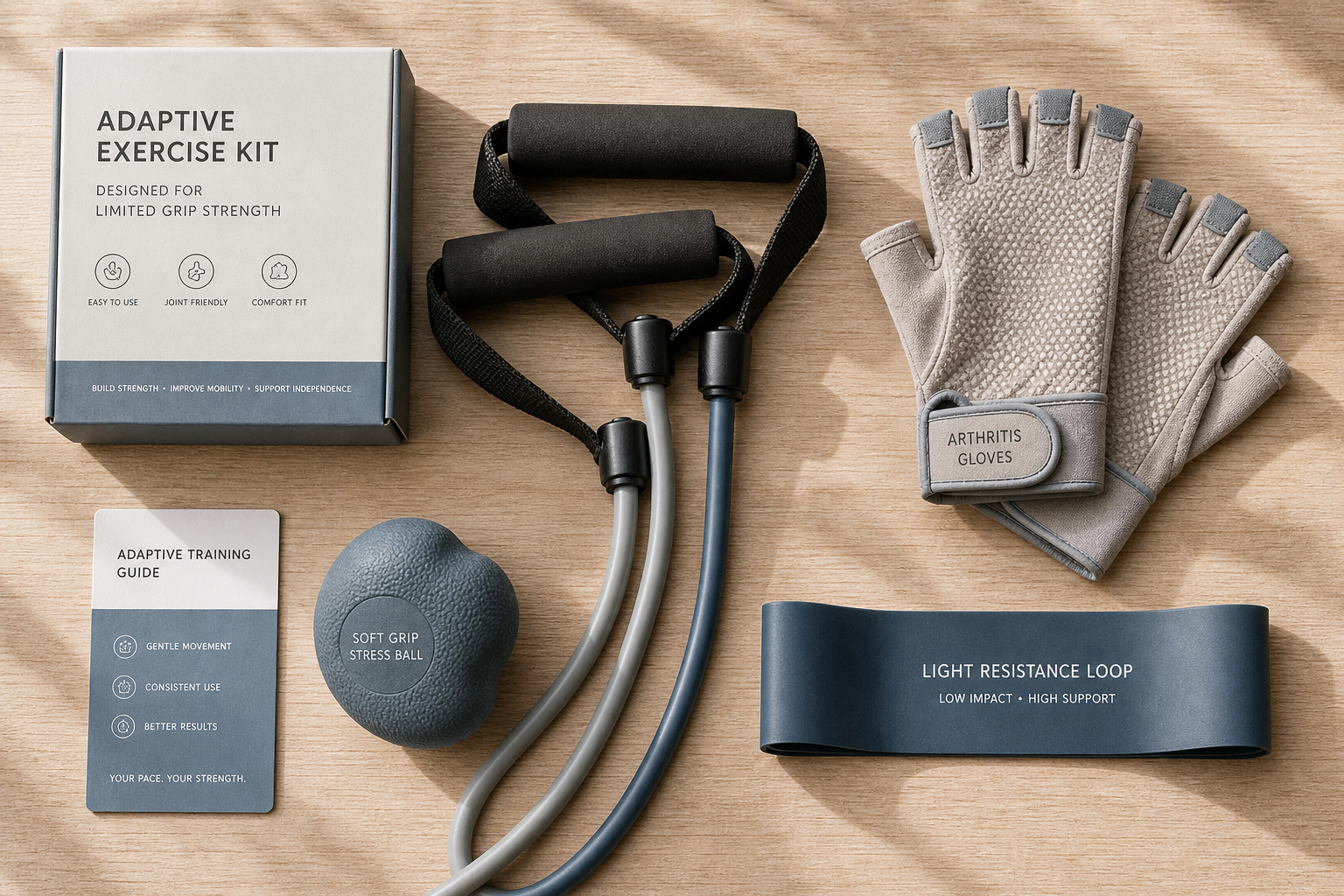
One thing that often gets overlooked is how arthritis in the hands affects what equipment you can realistically use. Standard dumbbell handles, bike grips, and resistance band handles can all aggravate finger and wrist joints if they’re not the right shape or diameter.
Look for equipment with padded, wider grips. Gloves with wrist support can help stabilize your wrists during exercises that load them. If hand pain is a significant issue for you, our grip strength exercise guide includes specific exercises to improve hand function and reduce daily pain over time.

Arthritis Gloves with Wrist Support
Padded exercise gloves reduce hand joint stress during workouts and provide wrist stability for people with arthritis in their hands.
Frequently Asked Questions
Is it safe to exercise every day with arthritis?
Daily movement is generally beneficial, but it doesn’t have to mean a structured workout every single day. Light walking, stretching, and range-of-motion exercises can typically be done daily. More intense resistance or cardio sessions usually benefit from a rest day between sessions to allow your joints and muscles to recover. Listen to your body and track how you feel 24 hours after a workout, not just during it.
What should I do if exercise consistently increases my joint pain?
Some mild muscle soreness after a new activity is normal, but joint pain that persists for more than a couple of hours after exercise, or that is sharp during exercise, is a signal to stop and reassess. Talk to your doctor or physical therapist before continuing. You may need to modify your technique, reduce intensity, or switch to a lower-impact option like water exercise. Don’t try to push through joint pain the way you might push through muscle fatigue.
Can supplements actually help with arthritis and exercise?
Some supplements have decent evidence behind them for joint health. Omega-3 fatty acids have anti-inflammatory effects that may reduce arthritis symptoms over time. Collagen supplements are also worth considering, and there’s a good overview of the evidence in this article on collagen supplements for joint health. Always check with your doctor before adding supplements, especially if you’re on blood thinners or other medications, since some supplements interact with common arthritis drugs.
Putting It All Together
Staying active with arthritis isn’t about finding a perfect pain-free workout. It’s about building a consistent routine that keeps you strong, mobile, and in less pain than you’d be in if you stopped moving entirely. Water exercise, cycling, and resistance bands are your core tools. A physical therapist is your best resource for personalizing your approach, especially during flares.
Start slow, track how your joints respond, and make adjustments as you go. Small, steady progress adds up to a real difference in how you feel and what you’re able to do over months and years.
After your workouts, refueling properly matters too. Check out our guide to post-workout recovery meals for seniors for practical ideas that support muscle repair and overall recovery.
This article contains affiliate links. We may earn a small commission at no extra cost to you.