Your joints ache after a long walk. You notice more fine lines when you look in the mirror. These changes feel frustrating, but they’re also completely normal as we age. What’s changed is how much research now supports collagen supplementation as a real solution for active seniors who want to maintain their mobility and skin health.
Collagen is the most abundant protein in your body, providing structure to your skin, bones, tendons, and ligaments. After age 30, you lose about 1% of your collagen each year. By your 60s, that adds up to significant changes in joint comfort and skin elasticity. The good news is that supplementing with collagen can help replace what you’re losing naturally.
Understanding Different Types of Collagen
Not all collagen supplements are created equal. Your body produces at least 28 different types of collagen, but three types make up about 90% of the collagen in your body.
Type I collagen forms the structure of your skin, bones, tendons, and connective tissue. It’s the most abundant type and the main reason people see improvements in skin elasticity and firmness. When you’re shopping for supplements focused on skin health, look for products emphasizing Type I collagen.
Type II collagen supports your cartilage and joint health. Studies show it can reduce joint discomfort in active adults and improve mobility. If joint support is your primary goal, you’ll want a supplement rich in Type II collagen, often sourced from chicken cartilage.
Type III collagen works alongside Type I to support skin elasticity and blood vessel health. Many high-quality supplements contain both Types I and III together since they naturally occur in similar tissues.

Vital Proteins Collagen Peptides
One of the most studied brands with Type I and III collagen from grass-fed sources
What the Research Actually Shows

Multiple clinical trials have tested collagen supplementation in older adults with encouraging results. A 2019 study published in the Journal of Cosmetic Dermatology found that women who took 2.5 grams of collagen peptides daily for 12 weeks showed significant improvements in skin elasticity and hydration compared to the placebo group.
For joint health, the evidence is equally promising. Research from Penn State University examined athletes with activity-related joint discomfort. Those who took 10 grams of collagen hydrolysate daily for 24 weeks reported reduced joint pain during activity and at rest.
A 2017 study in Applied Physiology, Nutrition, and Metabolism looked specifically at older adults with age-related joint stiffness. Participants taking collagen peptides showed measurable improvements in joint function and reported less discomfort during daily activities after 12 weeks.
The key factor across these studies is consistency. You need to take collagen daily for at least 8 to 12 weeks before you’ll notice significant changes. This isn’t a quick fix, but the results tend to be lasting when you maintain the routine.
Powder vs. Pills: Which Works Better?
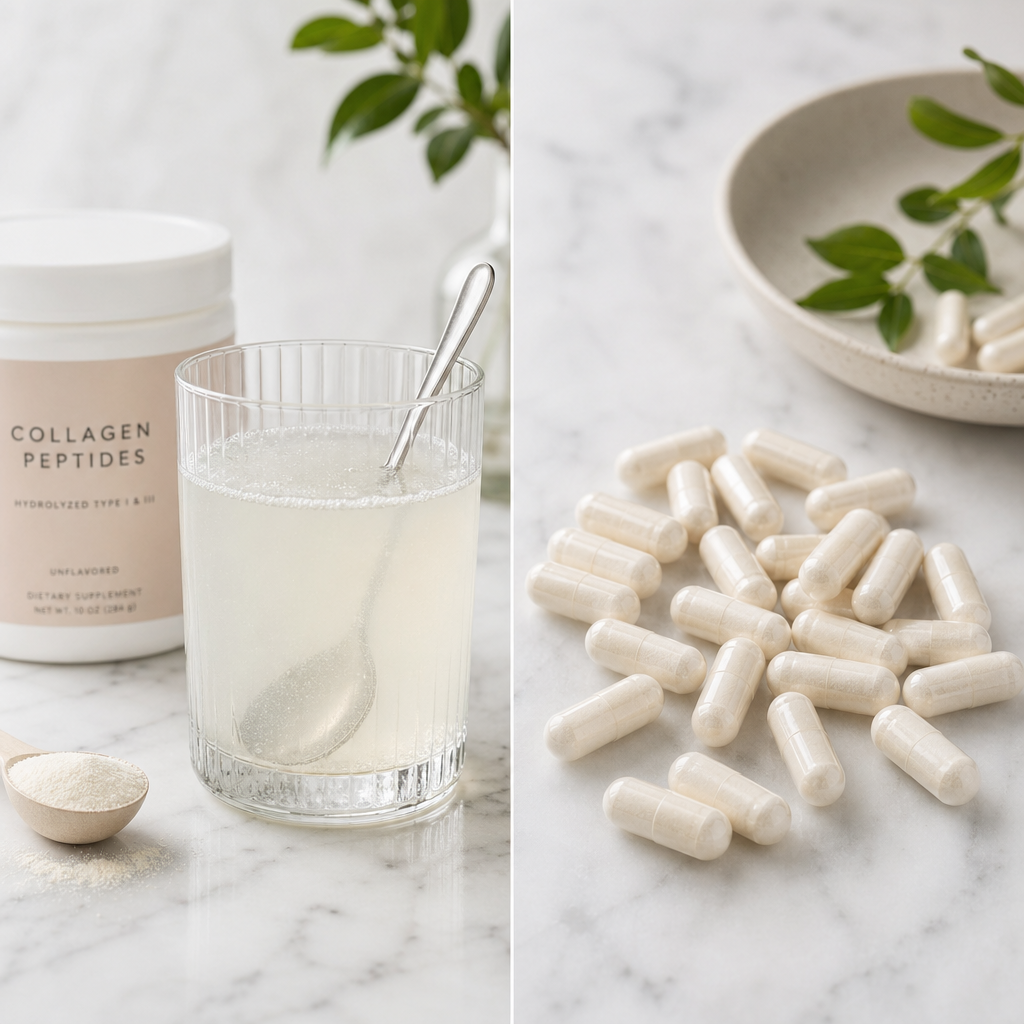
You’ll find collagen in several forms, but powder and capsules are the most popular. Each has distinct advantages depending on your lifestyle.
Collagen powder dissolves in both hot and cold liquids without changing the taste much. You can mix it into your morning coffee, smoothies, or even soup. The main advantage is dosing. Most effective studies use 10 to 15 grams daily, which is easy to get from one scoop of powder but would require taking multiple large capsules.
Powder also tends to be more economical per serving. A container typically lasts a month or longer, and you can adjust your dose more precisely. The downside is portability. Taking powder on vacation or to work requires more planning.
Collagen pills offer convenience. You can toss a bottle in your bag and take them anywhere. They’re pre-measured, so there’s no guessing about your dose. However, most capsules contain only 1 to 2 grams each, meaning you might need to take 5 to 10 pills daily to match the doses used in clinical studies.
For absorption, both forms work equally well as long as you’re getting hydrolyzed collagen peptides. The hydrolyzation process breaks collagen down into smaller molecules that your body can absorb more easily.
Choosing the Right Source and Dose
Collagen supplements come from different animal sources, and this matters for both effectiveness and dietary preferences.
Marine collagen comes from fish skin and scales. It’s primarily Type I collagen, making it excellent for skin health. Studies suggest it may be absorbed slightly more efficiently than other sources because of its smaller particle size. If you avoid land animals or want to focus on skin benefits, marine collagen is worth considering.
Bovine collagen, sourced from cow hides, contains both Type I and Type III. It’s the most common and well-studied form. Most research on joint and skin health uses bovine collagen. Look for grass-fed sources when possible for higher quality.
Chicken collagen provides Type II collagen, which specifically supports cartilage and joint health. Some products blend chicken with bovine or marine collagen to provide multiple types in one supplement.
For dosing, aim for 10 to 15 grams daily for joint support and 2.5 to 10 grams daily for skin health. More isn’t necessarily better. Studies using these ranges show consistent benefits, and higher doses haven’t proven more effective.

Sports Research Collagen Peptides
Third-party tested option with Type I and III collagen at an accessible price point
Making Collagen Part of Your Daily Routine

Taking collagen on an empty stomach may improve absorption, but the most important factor is consistency. Choose a time that you’ll remember every day.
Many people add collagen powder to their morning coffee or tea. The heat doesn’t damage the collagen, and it dissolves completely. If you’re a smoothie person, collagen blends well with fruits and vegetables without affecting the flavor much.
You can also stir collagen into oatmeal, yogurt, or even scrambled eggs. Some creative seniors bake with it, adding collagen powder to muffins or protein balls. The heat during cooking doesn’t significantly reduce its effectiveness.
Pairing collagen with vitamin C improves your body’s ability to synthesize collagen naturally. Consider taking your supplement with orange juice, adding citrus to your smoothie, or eating vitamin C-rich foods like bell peppers and strawberries around the same time. Nutrient-dense superfoods can complement your collagen routine by providing additional vitamins and minerals that support overall wellness.
Staying hydrated also matters. Collagen works by helping your body retain moisture in tissues, but you need adequate water intake for this process to work effectively. Aim for at least eight glasses of water daily.
What to Look for on the Label
Quality varies widely among collagen supplements. Check that the product lists “hydrolyzed collagen” or “collagen peptides” on the label. These terms mean the collagen has been broken down for better absorption.
Third-party testing provides extra assurance. Look for certifications from NSF International, Informed Choice, or USP. These indicate the product has been tested for purity and accuracy of ingredients.
Avoid supplements with lots of added ingredients, artificial flavors, or sweeteners unless you specifically want a flavored product. Pure unflavored collagen peptides give you more flexibility and fewer potential digestive issues.
Check the serving size carefully. Some products require two or three scoops to reach an effective dose, while others deliver a full dose in one scoop. This affects how long a container lasts and the real cost per serving. When evaluating supplements for immune support, similar considerations apply to functional mushroom supplements that can work alongside collagen for overall health.
Frequently Asked Questions
How long before I see results from collagen supplements?
Most people notice skin changes within 4 to 8 weeks of daily use, with more significant improvements by 12 weeks. Joint benefits typically take 8 to 12 weeks to become noticeable. Your body needs time to incorporate the collagen peptides into existing tissues. Keep taking it consistently even if you don’t see immediate changes.
Can I get enough collagen from food instead of supplements?
You can get collagen from bone broth, chicken skin, and fish, but reaching the therapeutic doses used in studies requires consuming large quantities daily. Most people find supplementation more practical and consistent. If you enjoy making bone broth, it can complement your supplement routine.
Are there any side effects or interactions I should know about?
Collagen supplements are generally safe with few reported side effects. Some people experience mild digestive discomfort initially, which usually resolves within a few days. Start with a smaller dose and gradually increase it. If you have a fish or shellfish allergy, avoid marine collagen. Collagen doesn’t typically interact with medications, but always check with your doctor before starting any new supplement. Natural remedies like herbal supplements should also be discussed with your healthcare provider to ensure they fit your health needs.
Combining collagen with other healthy habits amplifies the benefits. Regular movement through practices like gentle yoga can improve joint flexibility and circulation, which helps your body utilize the collagen more effectively for tissue repair and maintenance.
This article contains affiliate links. We may earn a small commission at no extra cost to you.
Related Articles
- How Daily Yoga Practice Benefits Joint Health and Flexibility for Seniors
- Immune-Boosting Supplements: The Health Benefits of Mycelium
- Natural Remedies for Wellness: Health Benefits of Licorice Root
- Nutrient-Dense Superfoods: The Health Benefits of Bee Pollen