You’ve seen the headlines: “Do these 7 stretches every morning and add decades to your life!” And look, there’s a kernel of truth buried in the hype. Moving your body before you fully wake up does make a real difference, just not in a miraculous, cure-all kind of way. What a short morning mobility routine actually does is reduce that stiff, creaky feeling when you get out of bed, warm up your joints before you load them, and set a calmer tone for the day. That’s genuinely worth something.
This sequence takes about 10 minutes. You can do most of it seated in a sturdy chair or standing with one hand on a counter for balance. No mat required, no special equipment, and nothing that should leave you sore. If you’re dealing with arthritis, joint replacements, or chronic pain, check out our guides on arthritis-friendly exercises and chronic pain management through movement before starting any new routine.
Why Morning Stiffness Happens (And What Actually Helps)

When you sleep, your joints produce less synovial fluid, the natural lubricant that keeps movement smooth. Connective tissue also tightens up when it’s not being used. This is why the first few steps out of bed can feel like you’re borrowing someone else’s body.
Gentle movement is the fix. Not aggressive stretching, not bouncing, and definitely not pain. The goal is to gradually increase circulation and fluid movement in your joints, not to hit some flexibility benchmark. Think of it less as a workout and more as warming up a car engine on a cold morning.
If you’re also curious about how morning versus evening timing affects your overall fitness, our article on morning vs evening exercise for seniors breaks down the research in a useful way.
The 7-Stretch Morning Mobility Sequence
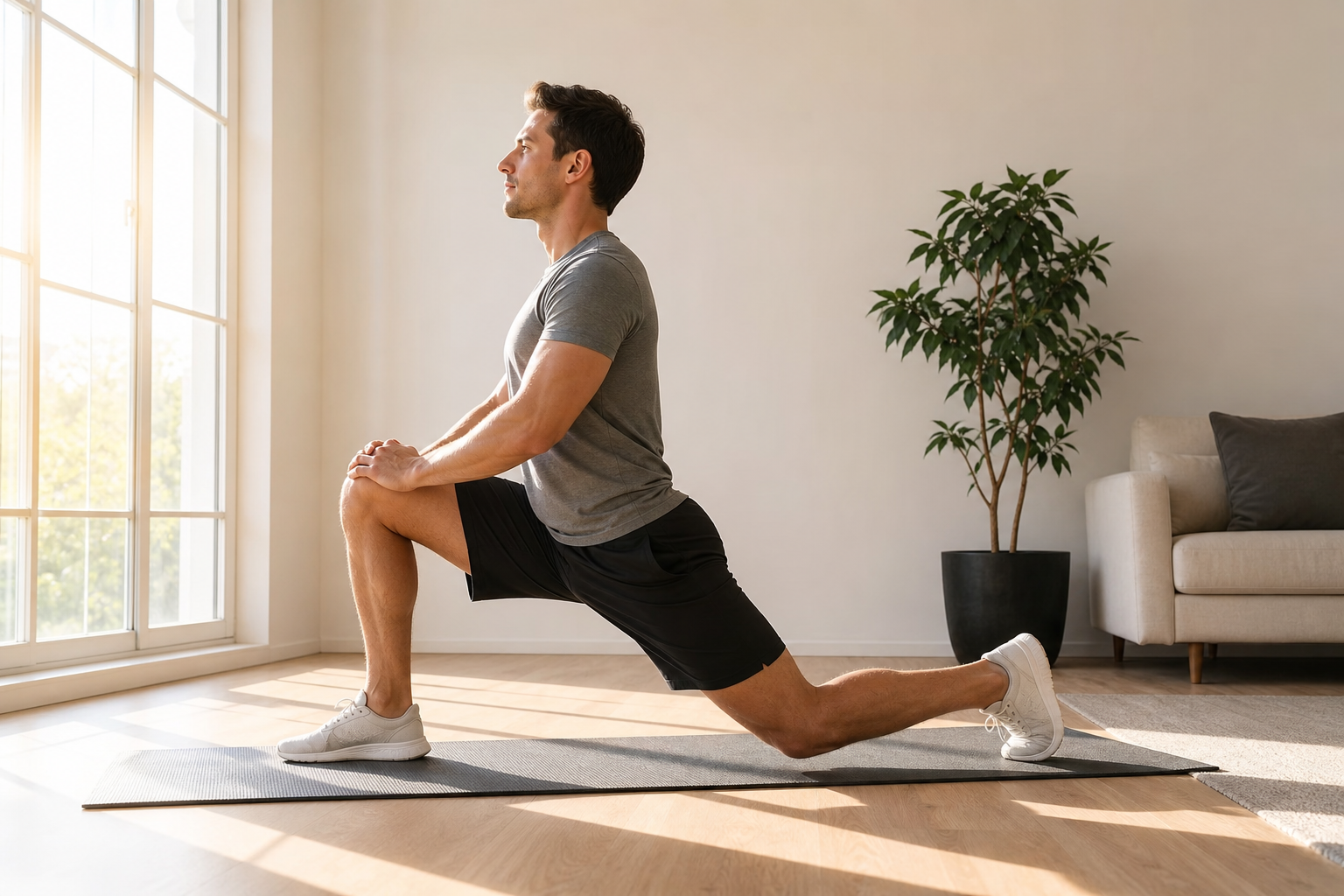
Go through these in order. Hold each stretch for 20 to 30 seconds and repeat on both sides where applicable. Breathe steadily throughout. If something hurts beyond a mild pulling sensation, back off.
1. Neck Rolls (Seated or Standing)
Drop your chin to your chest, then slowly roll your head to the right, bringing your right ear toward your right shoulder. Pause, then roll back through center and to the left. Do three slow rotations each direction. Skip full backward neck extension if you have cervical issues.
2. Shoulder Circles
Roll both shoulders forward five times, then backward five times. Then alternate, rolling one forward while the other goes back. This one wakes up the thoracic spine and upper back as much as the shoulders.
3. Seated Spinal Twist
Sit tall in a chair with both feet flat on the floor. Place your right hand on your left knee and gently rotate your torso to the left, looking over your left shoulder. Hold 20 to 30 seconds, then switch sides. This is one of the best morning moves for lower back stiffness.
4. Cat-Cow (Seated Version)
Still in your chair, place both hands on your knees. On an inhale, arch your back and lift your chest. On an exhale, round your spine and drop your chin. Move slowly and let your breath drive the motion. Do five to eight cycles. This is gentle enough for most people, including those working through sciatica.
5. Hip Circles (Standing)
Stand with feet shoulder-width apart and hands on your hips. Make slow circles with your hips, like a very relaxed hula hoop motion. Five circles clockwise, five counterclockwise. Keep your upper body relatively still and let the motion come from your pelvis.
6. Standing Quad Stretch
Stand next to a wall or counter for support. Bend your right knee, bringing your heel toward your glutes, and hold your ankle with your right hand. Hold 20 to 30 seconds, keeping your knees close together. Switch legs. If balance is a concern, our guide on vertigo and balance exercises has helpful modifications.
7. Calf Raises and Ankle Circles
Finish with your feet. Stand with hands on a counter and rise up onto your toes, then lower back down slowly. Do 10 reps. Then lift one foot slightly off the floor and draw slow circles with your ankle, 5 in each direction, before switching feet. This gets circulation going in the lower legs and is especially helpful if you sit for long stretches during the day.
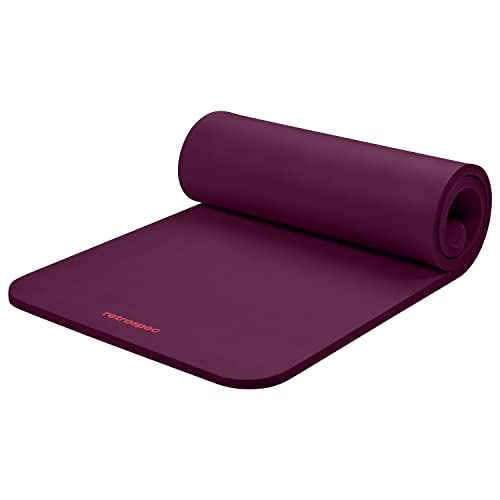
Extra Thick Yoga Mat
An extra-thick mat adds joint-cushioning support for floor-based stretches and makes kneeling positions far more comfortable.
A Few Things That Make This Routine Easier
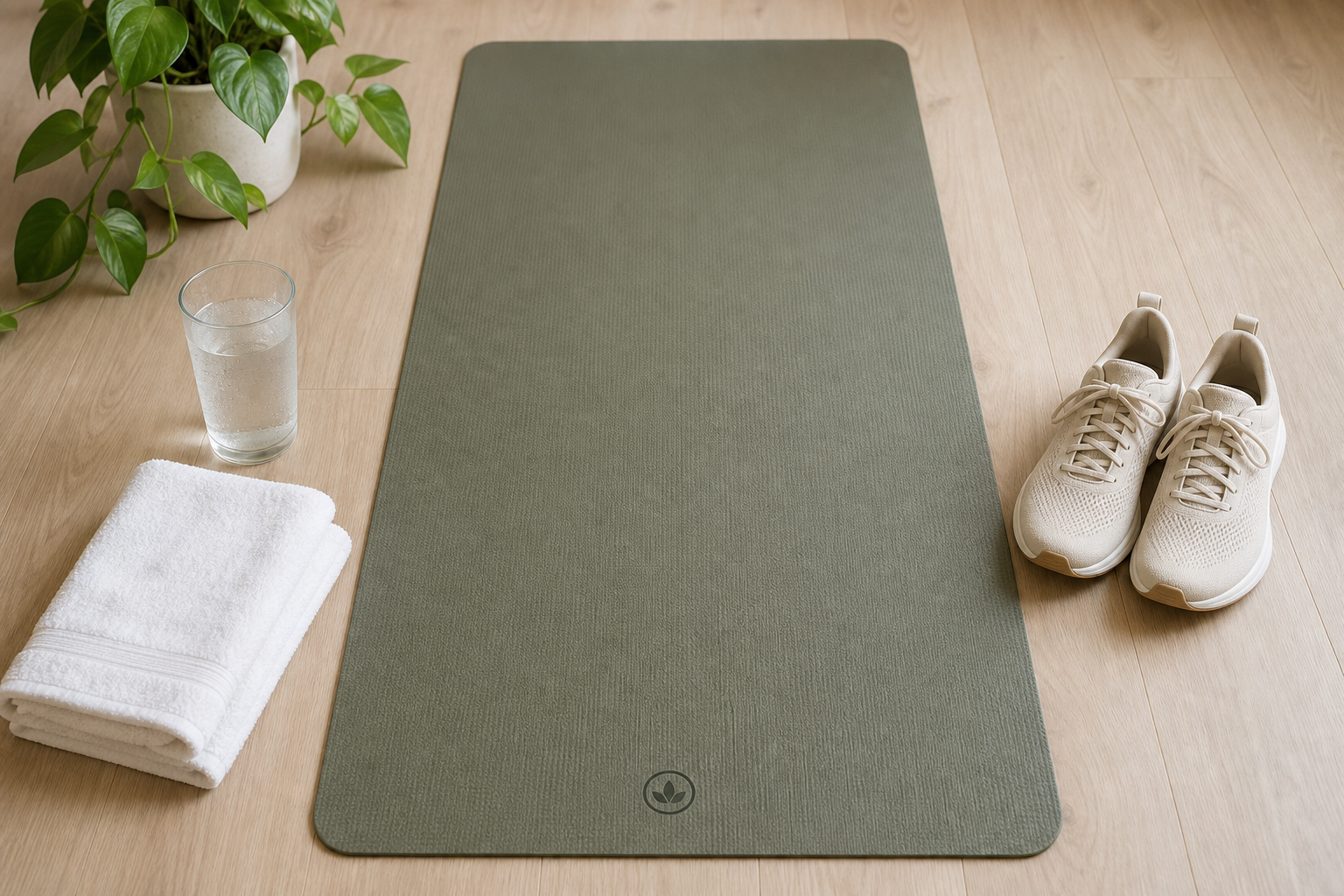
You don’t need much to do this routine, but a couple of items genuinely help. If you ever want to take any of these stretches to the floor, a thick yoga mat makes a noticeable difference in comfort, especially for anyone with knee or hip sensitivity.
A foam roller is also worth having nearby, not as part of this particular routine, but for post-stretch muscle release on days when tightness lingers. We cover the best options in our guide to foam rollers for senior muscle recovery.

Stretch Strap for Flexibility
A simple stretch strap helps you deepen leg and hamstring stretches without straining your back or shoulders reaching for your foot.
If grip or shoulder mobility makes it hard to reach your ankle during the quad stretch, a stretch strap solves the problem cleanly. Loop it around your foot and hold the ends. Simple and effective.
One more thing worth mentioning: what you do for your joints nutritionally matters too. Collagen supplements and omega-3s for joint health won’t replace movement, but the research on their support for connective tissue is solid enough to be worth reading about.
Frequently Asked Questions
How long should this routine take?
About 8 to 12 minutes at a relaxed pace. You’re not rushing through it. If you find yourself speeding up, slow down. The benefit comes from moving with intention, not from finishing quickly.
Is it safe to do this every single morning?
Yes, for most people. This is gentle enough to do daily without accumulating soreness or wear. If you have a specific condition like osteoporosis, neuropathy, or a recent joint replacement, clear it with your doctor or physical therapist first. Our osteoporosis exercise plan and neuropathy-safe exercises guide offer condition-specific guidance.
What if I’m too stiff to do some of these at first?
Start with whatever range of motion you have and don’t push past discomfort. A mild pulling sensation is fine. Sharp, pinching, or radiating pain is not. Most people find that after a week of consistent practice, their available range of motion increases noticeably. Stick with it and meet your body where it is today, not where you want it to be next month.
The Honest Bottom Line
This routine won’t add 30 years to your life. But doing something gentle and consistent every morning does compound over time. Your joints stay more mobile, your posture improves, and you’re less likely to tweak something getting out of bed or bending down for the newspaper. Those small things add up to staying active and independent longer, which is the actual goal.
Ten minutes. Every morning. That’s it.
This article contains affiliate links. We may earn a small commission at no extra cost to you.