Exercise balls (also called stability balls or Swiss balls) are versatile tools for core strengthening, balance training, and gentle stretching. They force your stabilizer muscles to engage constantly, which is exactly the type of training that prevents falls. But for seniors, the standard gym ball approach (just sit on it and hope for the best) isn’t safe enough. You need the right size, the right type, and the right exercises to get the benefits without the risk.
Before starting any new exercise routine with a stability ball, talk to your doctor, especially if you have balance issues, osteoporosis, joint replacements, or chronic conditions that affect stability. An exercise ball workout is low-impact, but it does challenge your equilibrium in ways that might not be appropriate for everyone. For more guidance on safe post-surgery exercise, see our post-hip replacement exercise guide.
Choosing the Right Size
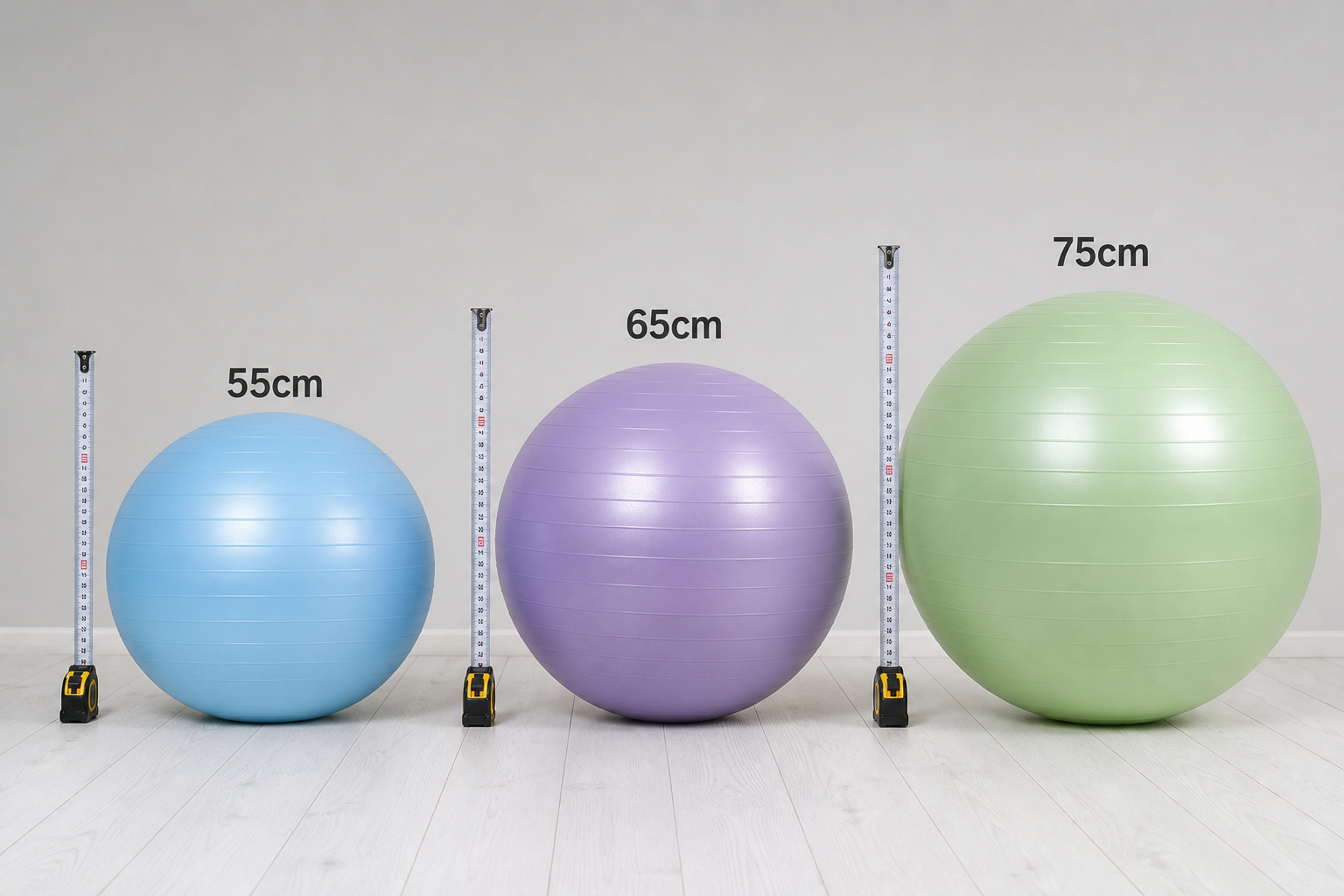
When you sit on a properly sized ball, your hips and knees should both be at approximately 90-degree angles, with your feet flat on the floor. Here’s the general sizing guide:
- Under 5’0″: 45 cm ball
- 5’0″ to 5’5″: 55 cm ball
- 5’6″ to 5’11”: 65 cm ball
- 6’0″ and above: 75 cm ball
If you’re between sizes, go with the larger option. A slightly too-large ball is safer than one that’s too small, because a larger ball provides a wider base of support and keeps your knees at a more comfortable angle.
The 90-degree rule matters for more than comfort. When your knees sit higher than your hips (which happens on an undersized ball), you’re in a mechanically weaker position. Your hip flexors shorten, your core has to work harder just to keep you upright, and getting on and off the ball becomes awkward. If you have knee arthritis or limited hip mobility, err on the side of a larger ball that keeps your joints in a neutral, less stressful position.
Most quality balls come with a tape measure or sizing guide in the box. Inflate the ball according to the manufacturer’s instructions, sit on it, and check the angles. If your thighs slope downward toward your knees, the ball is too small. If your knees are noticeably lower than your hips and you feel like you’re perched on top, the ball is too large. Small adjustments in inflation pressure can fine-tune the fit once you’re in the right diameter range.
Safety Features That Matter
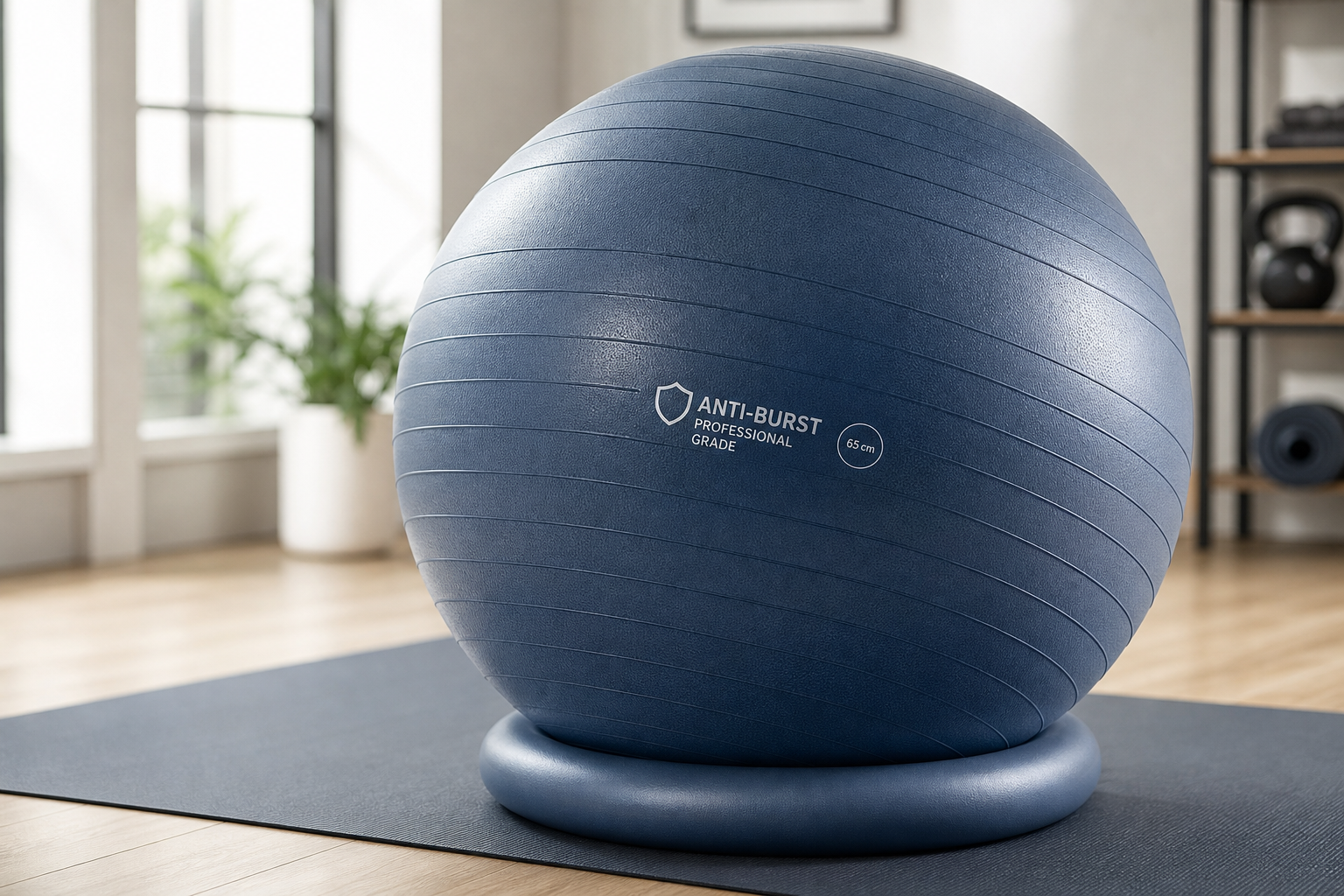
Anti-Burst Construction
Standard exercise balls can pop suddenly if punctured, causing a rapid collapse that drops you to the floor. Anti-burst balls deflate slowly when punctured, giving you time to react and lower yourself safely. For seniors, anti-burst construction is non-negotiable. Never use a standard ball without this feature.
The mechanism is simple: anti-burst balls use thicker PVC with a denser molecular structure. When punctured, instead of a catastrophic tear, you get a slow leak. The ball gradually loses air over 10 to 30 seconds rather than exploding. That window is enough to shift your weight, grab a support, or simply lower yourself to the floor in a controlled manner.
Budget balls sometimes advertise as anti-burst but use thinner material that doesn’t perform reliably under stress. Check user reviews for mentions of actual punctures and how the ball responded. A true anti-burst ball won’t collapse instantly even if you sit on a thumbtack.
Weight Rating
Check the maximum weight capacity, which should appear on the packaging or product listing. Quality anti-burst balls are typically rated for 600-2,000 pounds (which accounts for the dynamic forces of bouncing and shifting, not just static weight). Budget balls may have lower ratings. For a senior who weighs 180 pounds, a ball rated for at least 600 pounds provides an adequate safety margin.
The weight rating accounts for impact forces, not just body weight. When you sit down on the ball, your effective weight can spike to 1.5 or 2 times your actual weight depending on how quickly you sit. If you perform any bouncing movements (which some exercises call for), the forces multiply further. A 150-pound person doing gentle seated bounces can generate 300-400 pounds of dynamic load.
Higher weight ratings usually correlate with thicker PVC and better manufacturing quality. A ball rated to 2,000 pounds will feel more solid and stable under you than one rated to 600 pounds, even if you weigh far less than either limit. If budget allows, choose the higher-rated option. You’ll notice the difference in how planted and secure the ball feels during use.
Non-Slip Surface
A textured or slightly tacky surface prevents the ball from sliding on hard floors. Smooth, glossy balls are slippery on tile and hardwood. If your workout space has a hard floor, place the ball on a yoga mat for added friction, or choose a ball with a ribbed or matte finish.
Some balls feature a pebbled texture similar to a basketball. Others use a fine matte finish. Both work, though the pebbled texture tends to grip better on slick surfaces. If you have a smooth laminate or polished concrete floor, the surface texture becomes critical. A glossy ball on tile is an accident waiting to happen.
Carpet provides natural grip, so surface texture matters less if you’re working out on carpeted floors. But if you’re using the ball in a kitchen, bathroom, or garage with hard flooring, test the grip before committing to exercises. Set the ball down, press on it, and see if it shifts. If it slides easily under light pressure, add a yoga mat underneath or choose a different ball.
Top Exercise Balls for Seniors
TheraBand Pro Series SCP Exercise Ball
The TheraBand Pro Series is the standard in physical therapy clinics. It features slow-deflate anti-burst technology, a non-slip surface, and comes in all four sizes. The latex-free PVC construction is durable and easy to clean. It includes a pump and a sizing guide.
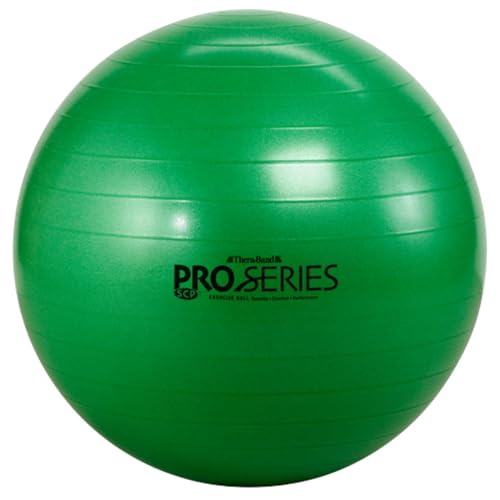
TheraBand Pro Series Exercise Ball
The trusted choice in physical therapy clinics with proven anti-burst technology and excellent durability
Physical therapists prefer TheraBand balls because they hold their shape over months of daily use. The material resists stretching, so the ball maintains its diameter and firmness without constant re-inflation. The surface has a fine matte texture that grips well on most floors without feeling sticky or tacky.
The included pump is a simple hand pump that works fine for initial inflation but takes a bit of effort. If you plan to adjust inflation frequently (some people prefer slightly different firmness for different exercises), consider a small electric pump as a convenience upgrade.
TheraBand balls carry a 600-pound weight rating, which is adequate but not the highest available. For most seniors, that rating provides sufficient safety margin. The slower deflation rate in case of puncture is the real selling point here, since TheraBand’s anti-burst technology is proven in clinical settings.
URBNFit Exercise Ball
The URBNFit is a popular consumer option with anti-burst construction rated to 2,000 pounds. It includes a quick-inflate pump and a workout guide. The surface texture provides good grip on most floors. Available in multiple colors and all standard sizes.

URBNFit Exercise Ball
Higher 2,000-pound weight rating and thicker PVC for extra stability and confidence
URBNFit’s higher weight rating translates to noticeably thicker PVC. The ball feels sturdier and more solid when you sit on it compared to lower-rated options. That extra thickness also makes the slow-deflate feature more reliable. Puncture tests (done by users, not official testing, but still informative) show the URBNFit holding air longer when punctured than thinner balls.
The included pump is a foot pump, which inflates the ball faster and with less effort than a hand pump. The workout guide is basic but covers the fundamental exercises in simple illustrated steps. If you’re new to stability ball training, the guide provides a reasonable starting point, though it’s not senior-specific.
One practical note: the URBNFit tends to arrive slightly underinflated and takes a day or two to fully stretch and hold its intended diameter. Inflate it, let it sit overnight, then top it off the next day. After that initial stretch period, it holds inflation well.
Ball Chair Base Option
For seniors who want to use the ball as a desk chair or for seated exercises but worry about it rolling away, a ball base ring holds the ball in place while still allowing the micro-movements that engage your core. The ring prevents the ball from rolling while you sit or perform seated exercises, adding a significant safety layer.
The base ring is a plastic or rubber ring that cradles the bottom of the ball. It doesn’t lock the ball rigidly in place. You can still shift your weight and the ball responds, but it won’t roll across the floor if you shift too far forward or to one side. That makes seated exercises much safer, especially if you’re working near a desk or table edge where a rolling ball could send you off balance.
Base rings work with most standard exercise balls. Check the diameter compatibility before buying. A 65 cm ball needs a ring designed for 65 cm balls. Using a mismatched ring defeats the purpose, since the ball will either sit too high and unstable or too low and compressed.
If you have significant balance concerns, start all exercises with the ball in a base ring until you build confidence. Once your core strength improves and you feel stable on the ball, you can progress to using it without the ring for exercises that specifically benefit from the increased instability.
Safe Exercises for Seniors on a Stability Ball
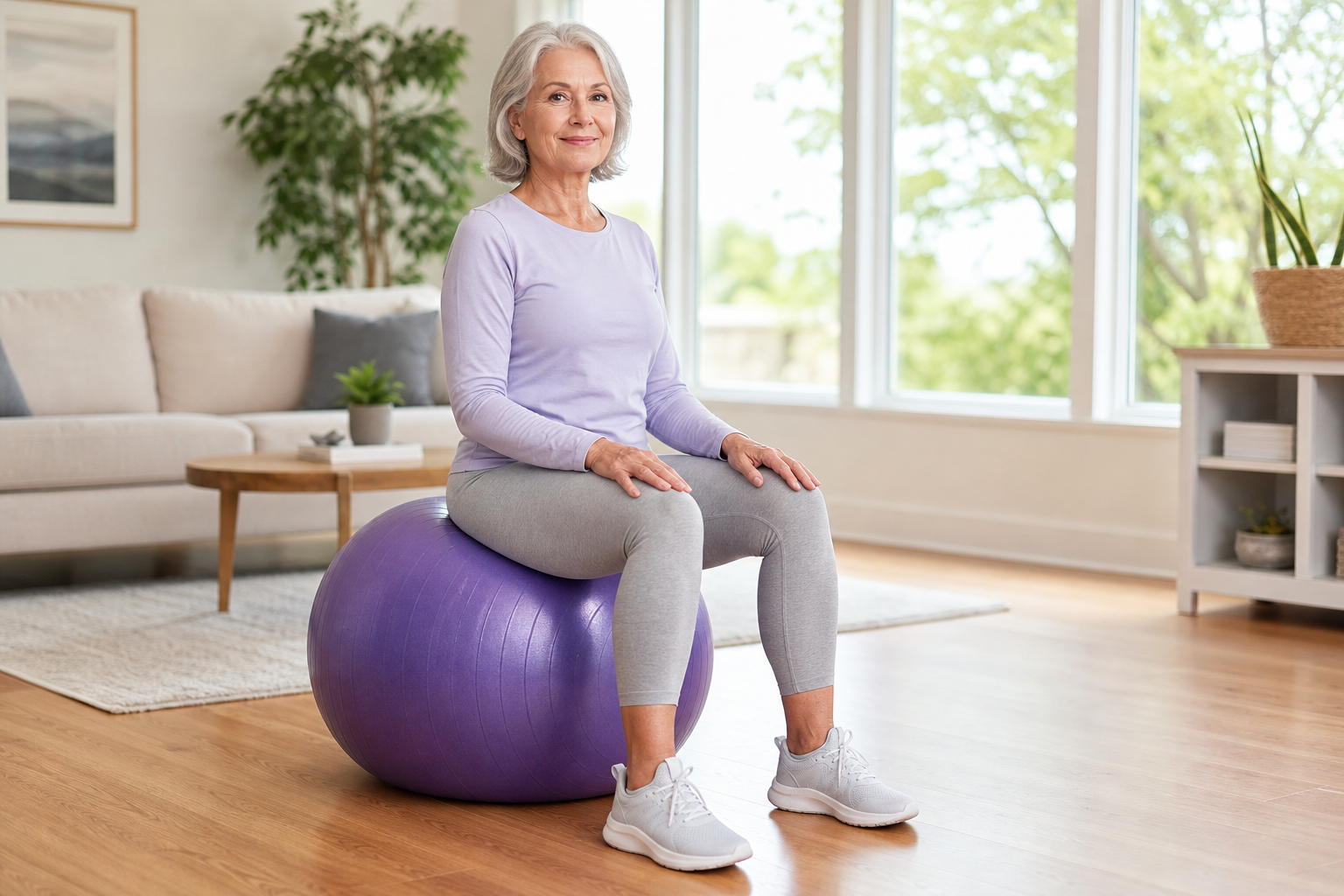
Seated Exercises (Beginner)
- Seated marches: Sit on the ball with feet flat on the floor, hip-width apart. Slowly lift one foot 2-3 inches, hold 3 seconds, set it down, and lift the other. Perform 10 per side. This challenges your core to maintain balance on an unstable surface.
- Seated pelvic tilts: Sit on the ball and gently rock your pelvis forward and backward, then side to side. Perform 10 tilts in each direction. This mobilizes the spine and activates the deep core muscles.
- Seated arm raises: Sit on the ball and slowly raise one arm overhead, then the other, alternating for 10 per side. The shifting weight challenges your balance without any complex movements.
These three exercises form the foundation for all stability ball work. If you can’t perform