If you’ve spent any time on YouTube lately, you’ve probably seen the headlines: “Magnesium cures insomnia!” or “Sleep like a baby with this one mineral!” The enthusiasm is understandable, but it tends to outrun the actual science. Magnesium is a genuinely important nutrient, and there is real research suggesting it may support sleep quality in older adults. But the story is more nuanced than most videos let on, and knowing the difference between solid evidence and wishful thinking will help you make a smarter decision.
This article breaks down what the research actually shows, which forms of magnesium are most commonly used for sleep, what to realistically expect, and why a quick conversation with your doctor or pharmacist before starting is worth more than any supplement video.
Why Magnesium Matters More as You Age

Magnesium is involved in over 300 enzymatic reactions in the body, including muscle function, nerve signaling, blood pressure regulation, and yes, the regulation of sleep-related neurotransmitters. It helps activate GABA receptors, which are the same receptors that many sleep medications target. It also plays a role in regulating melatonin production.
Older adults are more likely to be low in magnesium for a few reasons. Dietary intake often decreases with age. The kidneys become less efficient at conserving magnesium. And many common medications, including diuretics, proton pump inhibitors, and certain blood pressure drugs, can deplete magnesium levels over time. This connection to medications is one reason the supplement conversation is particularly relevant for people over 60. If you’re already managing multiple prescriptions, as many older adults are, you’ll want to read the interactions section below carefully.
Magnesium also works closely alongside other nutrients. If you’ve been following our articles on Vitamin D for senior bone and muscle health or calcium sources beyond dairy, you may already know that these three nutrients interact in important ways. A deficiency in one can affect how the others function.
What the Research Actually Shows
There have been several studies looking at magnesium and sleep in older adults, and the results are modestly encouraging, not dramatic. A commonly cited 2012 randomized controlled trial published in the Journal of Research in Medical Sciences followed 46 older adults over eight weeks. Those taking magnesium supplements reported improvements in sleep efficiency, sleep time, and early morning awakening compared to the placebo group. They also had lower levels of cortisol and higher melatonin levels.
Those are real findings, and they matter. But a few things are worth keeping in mind. The sample size was small. The participants were specifically selected for low magnesium status. And the effect sizes, while statistically significant, were modest. This wasn’t a transformative cure; it was a meaningful improvement in people who were likely already deficient.
A broader 2021 review in BMC Complementary Medicine and Therapies looked at multiple studies and found some evidence that magnesium, particularly in combination with other nutrients like zinc and melatonin, may improve sleep quality in older adults. But the authors were careful to note that the evidence base is still limited and that larger, well-designed trials are needed before strong conclusions can be drawn.
The honest summary: magnesium supplementation may help older adults who are genuinely low in magnesium sleep better. It is not a proven cure for insomnia, and it’s unlikely to produce dramatic results in someone with normal magnesium levels. Good sleep hygiene and regular exercise remain the most evidence-backed tools for improving sleep quality.
Common Forms of Magnesium and How They Differ

Not all magnesium supplements are the same. The form matters both for absorption and for how well your stomach tolerates it.
- Magnesium glycinate: Magnesium bound to the amino acid glycine. This is one of the most bioavailable forms and is generally well tolerated, with less risk of the digestive side effects that plague some other forms. It’s the most commonly recommended form for sleep support.
- Magnesium citrate: Well absorbed and widely available. It does have a mild laxative effect at higher doses, which can be a benefit or a drawback depending on your situation.
- Magnesium oxide: The cheapest and most common form in drugstore supplements. It has lower bioavailability than glycinate or citrate, meaning your body absorbs less of it per dose.
- Magnesium threonate: A newer form that some researchers believe crosses the blood-brain barrier more effectively. Early animal studies are interesting, but human evidence for sleep specifically is still limited.
- Magnesium malate: Often marketed for energy and muscle recovery. Less commonly used for sleep specifically.
For sleep support, most practitioners point toward magnesium glycinate as a reasonable starting point based on tolerability and absorption. If you’re considering adding it to your routine, here’s a solid option to start your search:

Magnesium Glycinate Supplement
Well-absorbed form of magnesium commonly recommended for sleep support and gentle on the digestive system.
Typical doses in sleep studies have ranged from 300 to 500 mg of elemental magnesium daily. The recommended dietary allowance for adults over 51 is 420 mg for men and 320 mg for women per day from all sources combined, including food. Many people already get a portion of that through diet, so the supplement dose needed to fill a gap will vary by individual.
If you prefer getting more nutrients from food, good dietary sources of magnesium include dark leafy greens, pumpkin seeds, almonds, black beans, and whole grains. A diet aligned with anti-inflammatory principles, as outlined in our guide to an anti-inflammatory diet for active seniors, naturally tends to be higher in magnesium.

Magnesium Citrate Supplement
A well-absorbed, widely available form that’s a practical alternative if glycinate is hard to find locally.
Drug Interactions and Safety Considerations
This is the section that most supplement videos skip, and it’s arguably the most important one for older adults.
Magnesium can interact with a number of common medications. It can reduce the absorption of certain antibiotics, including quinolones and tetracyclines, if taken at the same time. It can interact with bisphosphonates used for osteoporosis. High doses can affect how certain heart medications work, including those used for arrhythmias. And because magnesium has a mild blood pressure lowering effect, it can compound the effect of antihypertensive drugs. For more context on medication timing and physical activity, see our article on medication and exercise timing for seniors.
People with kidney disease need to be especially cautious. The kidneys are responsible for excreting excess magnesium, and impaired kidney function means magnesium can build up to potentially dangerous levels.
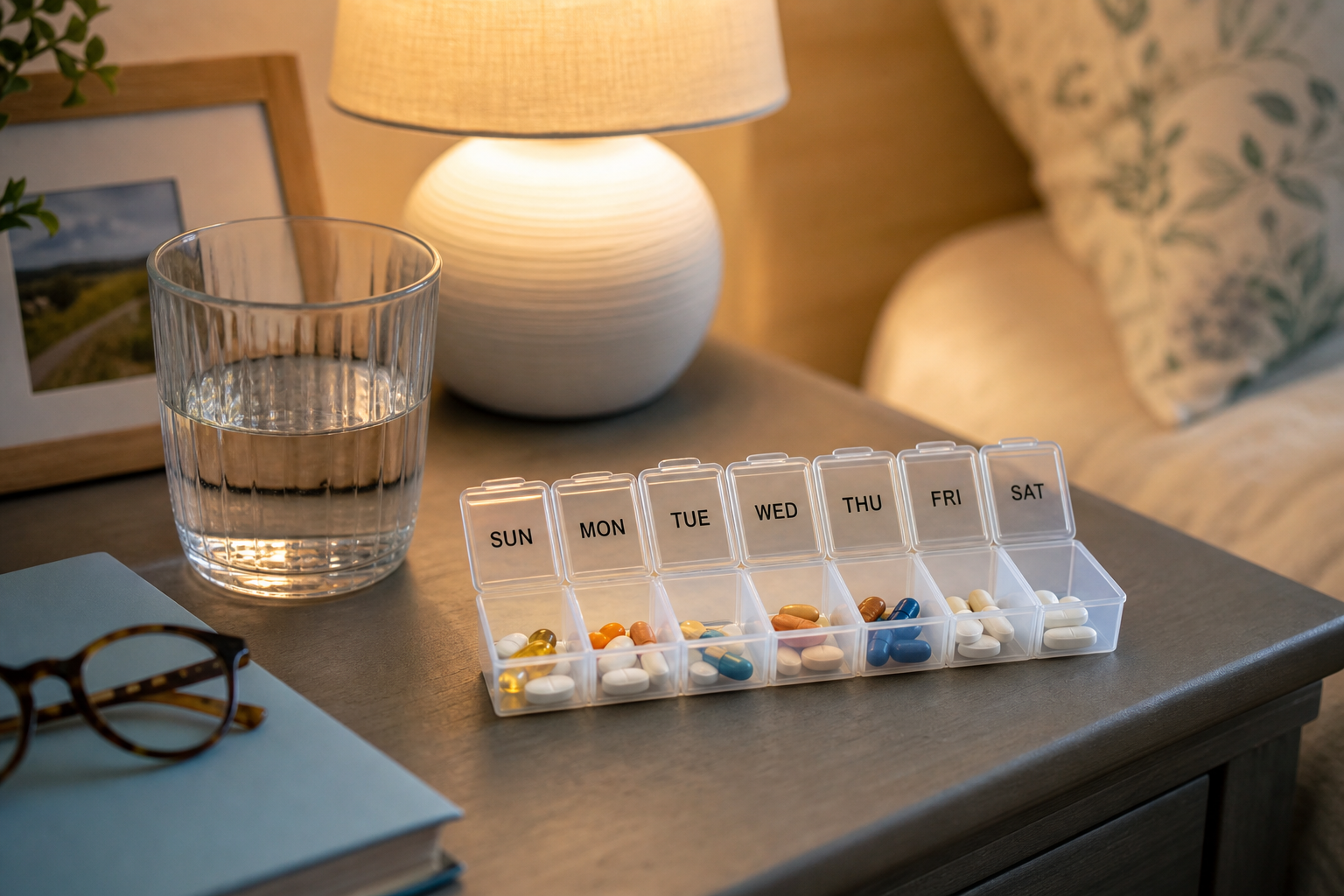
Please check with your doctor or pharmacist before starting any magnesium supplement. This isn’t a formality. It’s genuinely useful, because your pharmacist can quickly review your current medication list and flag any timing or interaction concerns that a YouTube video won’t know about.
Frequently Asked Questions
How long does it take for magnesium to affect sleep?
The 2012 clinical trial mentioned earlier ran for eight weeks before differences became clear. Anecdotally, some people notice effects sooner, within one to two weeks. If you’ve been consistently supplementing for six to eight weeks with no noticeable change, it may be worth reassessing whether magnesium is the right tool for your particular sleep challenges. Magnesium is most likely to help if low magnesium status was contributing to your sleep difficulties in the first place.
Can you get too much magnesium from supplements?
Yes. Excess supplemental magnesium can cause diarrhea, nausea, and abdominal cramping at moderate doses. At very high doses, especially in people with kidney problems, it can lead to more serious issues including low blood pressure, irregular heartbeat, and in extreme cases, toxicity. The tolerable upper intake level for supplemental magnesium in adults is set at 350 mg per day by the National Institutes of Health. Note that this limit applies to supplemental magnesium only, not the magnesium naturally found in food.
Is magnesium glycinate better than melatonin for sleep?
They work through different mechanisms, so it’s not quite a head-to-head comparison. Melatonin primarily helps with sleep timing, which makes it more useful for jet lag or circadian rhythm disruptions. Magnesium may help with sleep quality and relaxation, particularly in people who are deficient. Some older adults find that napping habits also play a role, and our article on napping for active seniors covers that topic in more detail. If you’re unsure which approach fits your situation, a conversation with your doctor is the best starting point.
A Realistic Takeaway
Magnesium is not a miracle sleep cure, but it’s also not hype without substance. There is reasonable evidence that correcting a magnesium deficiency can modestly improve sleep quality in older adults, and magnesium glycinate in particular is a well-tolerated form worth discussing with your healthcare provider.
The key word is discussing. Given how common medication use is among older adults, and how easily supplement interactions get overlooked, running this by your doctor or pharmacist first is a genuinely practical step. A few minutes of that conversation is worth more than any supplement video recommendation, including this one.
This article contains affiliate links. We may earn a small commission at no extra cost to you.