Stretching questions rarely come with a simple answer, but this one actually does have a clear starting point. Most seniors benefit from stretching the major muscle groups at least three to five times a week, though how you stretch matters just as much as how often. A quick session before bed won’t do much if you’re rushing through it or pushing too hard, while a slower, more intentional approach a few times a week can genuinely improve how you move and feel.
Before getting into specifics, it helps to see what good stretching actually looks like in practice.
The Short Answer: Three to Five Times a Week Is Enough
You don’t need to stretch every single day to see benefits. Research on flexibility training generally supports stretching major muscle groups three to five days a week, holding each stretch for around 20 to 30 seconds. That’s enough frequency to maintain and slowly improve your range of motion without turning it into another daily obligation.
Daily stretching isn’t harmful either, as long as you’re not overdoing the intensity. Many seniors find that a short routine after walking or light activity feels good enough to do most days. If you already have a walking habit, pairing it with something like this post-walk stretching routine is a simple way to build consistency without adding extra time to your day.
Comfortable Range of Motion, Not Maximum Range of Motion

This is where a lot of people get stretching wrong. The goal isn’t to reach as far as you possibly can. It’s to move into a position where you feel gentle tension, not pain, and hold there.
A good way to think about it: if you can feel the stretch but you can still breathe normally and hold a conversation, you’re in the right zone. If you’re gritting your teeth, holding your breath, or feeling sharp pain, you’ve gone too far. Pull back until the sensation feels manageable again.
This matters more as you get older because joint tissue changes with age, and pushing into aggressive end-range positions increases injury risk without adding much benefit. You’re not training for the splits. You’re training to reach your top shelf, get up from a chair without stiffness, and turn your head to check your blind spot while driving.
Steady Breathing Matters More Than People Realize
Your breath is actually a good gauge for how a stretch is going. Breathing slowly and steadily through your nose while you hold a stretch helps your muscles relax, which allows you to ease slightly deeper into the position over time without forcing anything.
Holding your breath tends to do the opposite. It tenses your body up, which works against what you’re trying to accomplish. A simple pattern that works well: inhale for a count of four before you start the stretch, then exhale slowly as you settle into position. Keep breathing normally for the rest of the hold.
This is also why bouncing during a stretch is a bad idea. Bouncing (sometimes called ballistic stretching) triggers a reflex that actually tightens the muscle you’re trying to lengthen, and it increases the chance of small tears in muscle fibers. Slow and steady wins here, every time.
When Static Stretching Fits, and When Dynamic Stretching Works Better
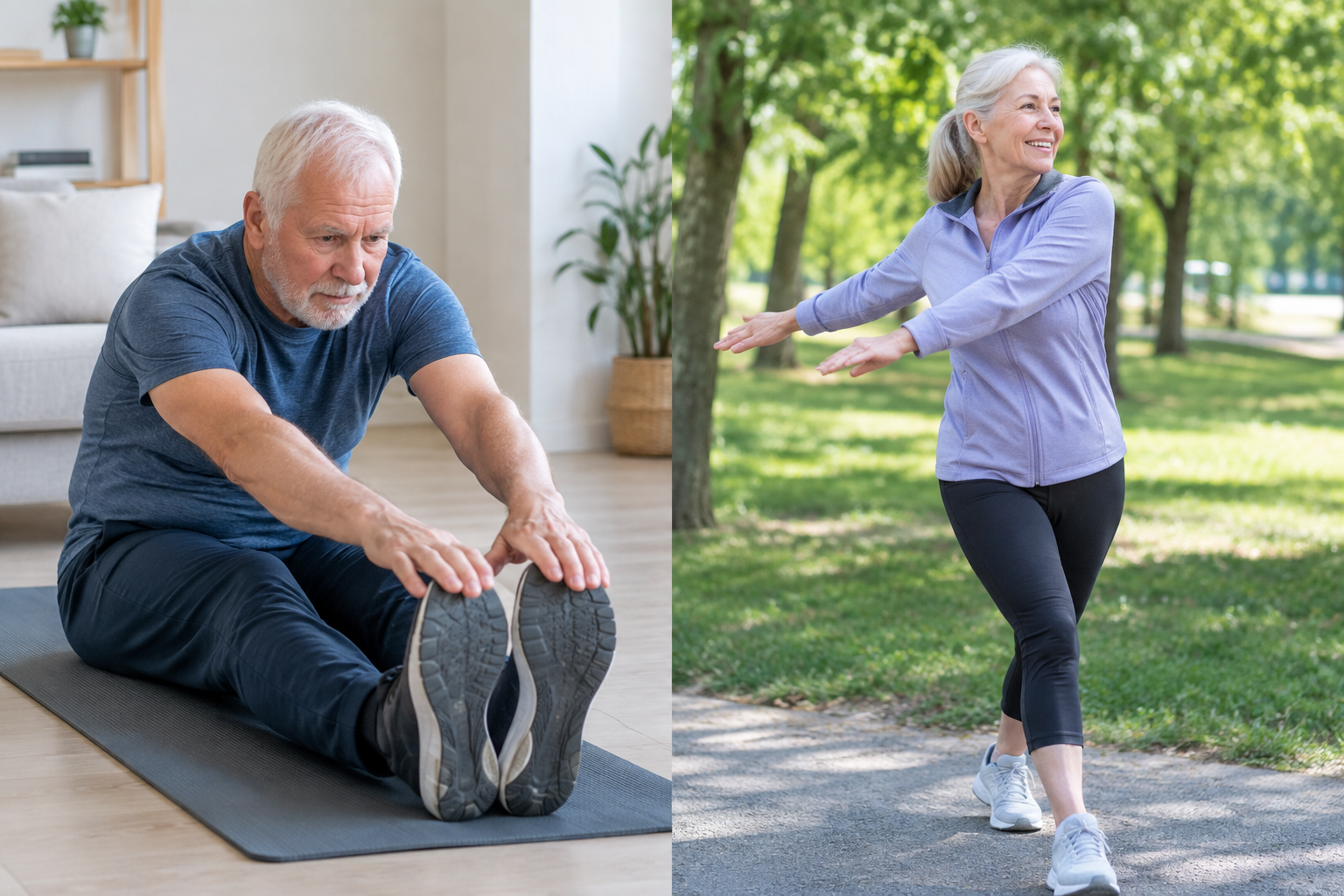
Static stretching, where you hold a position for a set amount of time, is what most people picture when they think about stretching. It’s best done when your muscles are already a little warm, like after a walk, in the evening, or after a light warm-up. Holding stretches when muscles are cold doesn’t feel as good and doesn’t offer much benefit.
Dynamic stretching is different. Instead of holding a position, you move through a range of motion in a controlled, repeated way, like arm circles, leg swings, or gentle torso twists. This works better before activity, since it warms up the muscles and prepares your joints for movement rather than trying to lengthen tissue that isn’t warmed up yet.
A practical way to apply this:
- Before a walk or strength workout, use dynamic stretching for two to three minutes to get blood flowing.
- After activity, or in the evening, use static stretching to work on flexibility while your muscles are warm and relaxed.
If you’re already following a strength routine, this pairs naturally with your existing schedule. For guidance on structuring your workouts around rest and recovery, take a look at how many rest days seniors need between strength workouts and how long a senior strength workout should last, since stretching fits around both.
How Frequency and Duration Can Change Based on Your Body

The three to five day guideline is a solid baseline, but it’s not a rigid rule. Some people need more frequent stretching, and some need less, depending on a few factors.
If you sit for long periods during the day, whether at a desk or in a recliner, your hip flexors and hamstrings tend to tighten up faster. In that case, daily stretching, even in short five minute sessions, tends to help more than doing longer sessions less often. A standing desk or an under-desk pedaler can also reduce how tight you get in the first place, which means less catch-up stretching later.
If you already have decent flexibility and you’re mostly maintaining it, three days a week is usually plenty. Pushing for daily stretching in this case doesn’t add much extra benefit and can start to feel like a chore, which makes it less likely you’ll stick with it long term.
Duration matters too. A 20 to 30 second hold is a reasonable minimum, but if you’re working on a particularly tight area, like your calves or lower back, holding for closer to 45 seconds to a full minute, done once or twice, tends to work better than several short holds.
Your stretching routine doesn’t exist in isolation either. It works best alongside strength training rather than as a replacement for it. If you’re trying to figure out how the two fit together, stretching versus strength training for seniors breaks down what each one actually does for your body.
When Stretching Isn’t the Right Tool
Stretching is meant to maintain and gradually improve flexibility, not to fix pain that keeps showing up in the same spot. If you have a joint or muscle that hurts consistently, especially pain that doesn’t ease up after a few days of gentle stretching, that’s a sign to get it looked at rather than stretching harder.
This is particularly true for lower back pain, which often responds better to targeted strengthening than to stretching alone. If that describes your situation, back pain relief strengthening exercises for seniors is a better place to start. The same goes for knee pain that flares up with standing or walking, which usually needs a strength-based approach rather than more flexibility work.
A good rule to follow: stretching should reduce stiffness and improve comfort within a session or two. If it’s not doing that, or if pain is getting worse rather than better, talk to your doctor or a physical therapist before continuing on your own.
Frequently Asked Questions
Should I stretch every day or take rest days from it?
You can stretch daily without any downside, as long as you’re staying within a comfortable range of motion and not stretching to the point of pain. Three to five days a week is enough for most people, but daily light stretching is fine too, especially if you sit a lot during the day.
How long should each stretch be held?
Somewhere between 20 and 30 seconds works well for general maintenance. For particularly tight muscles, holding for 45 seconds to a minute once or twice tends to produce better results than several shorter holds.
Is it better to stretch before or after exercise?
Dynamic stretching, like arm circles or leg swings, works best before exercise since it warms up your muscles and joints without lengthening cold tissue. Static stretching, where you hold a position, is better saved for after exercise or for a separate session later in the day when your muscles are already warm.