You finish a set of bicep curls or chair squats, and then what? Do you jump right into the next set, or do you sit there until your heart rate settles all the way down? This one question trips up more seniors than almost anything else in strength training, and the answer isn’t the same for everyone.
Rest periods between sets matter more as you get older, not less. Your recovery time affects your blood pressure response, your joint stability on the next rep, and whether you actually get stronger or just get tired. Here’s how to figure out the right rest window for your body, your goals, and the exercise you’re doing.
The Short Answer: 60 to 120 Seconds for Most Seniors

For the majority of strength exercises, resting 60 to 120 seconds between sets works well for people over 60. This gives your heart rate and blood pressure enough time to stabilize, your muscles enough time to clear out fatigue byproducts, and your joints a breather before you load them again.
That range isn’t arbitrary. It’s long enough to recover if you pushed close to your limit, but short enough to keep your workout efficient and your muscles from cooling down too much between efforts. If you’re doing a routine like the one in our 15-minute chair workout, 60 seconds is usually plenty since the exercises are lower intensity.
Think of 60 to 120 seconds as your starting point, not a rule carved in stone. The rest of this article explains when you should lean toward the shorter end, the longer end, or go outside that range entirely.
What Actually Changes the Right Rest Time
Training Experience
If you’re new to strength training, you’ll generally need more rest, not less. Your body hasn’t built the efficient recovery systems that come with months of consistent training, and your form tends to break down faster when you’re fatigued.
Give yourself 90 to 120 seconds between sets for the first few months. As your body adapts, you can experiment with shorter rest periods if your goals shift toward endurance rather than pure strength. This ties directly into how you structure your workouts in the first place, so if you haven’t read our guide on how many sets and reps seniors should do, that’s a good companion piece to this one.
Exercise Selection
Not all exercises demand the same recovery. Small, isolated movements like seated arm exercises or wrist curls tax a small muscle group and a short rest of 45 to 60 seconds is usually enough.
Bigger, compound movements like squats, chest presses, or rows involve multiple muscle groups and put more demand on your cardiovascular system. These deserve 90 to 120 seconds, sometimes longer if you’re lifting heavier loads. If you’re working with kettlebells or doing full-body movements, don’t rush the rest period just to finish faster. Recovering properly between big lifts protects your form on the next set, which matters more than shaving off a couple minutes.
Effort Level
How hard you pushed on the previous set changes how much rest you need afterward. If you stopped a set with several reps left in the tank, you might only need 45 seconds before the next one.
If you pushed close to muscular fatigue, meaning your last rep or two felt genuinely hard, give yourself closer to two minutes. Your muscles and nervous system need more time to recover from higher effort, and rushing back in usually means your next set suffers, both in quality and in reps completed.
Recovery Speed and Age
Recovery capacity varies a lot between individuals, and it tends to slow somewhat with age. Two seniors doing the identical workout might need different rest times based on sleep quality, hydration, and overall conditioning.
Pay attention to your breathing and how your muscles feel. If you’re still breathing hard or your muscles feel shaky after 60 seconds, take another 30 to 60 seconds before starting the next set. Staying properly hydrated also affects how quickly you recover between sets, and cramping from dehydration can force you to rest longer than necessary. Our article on hydration and muscle cramps in seniors covers this in more detail.
Health Status and Medications
If you’re managing high blood pressure, heart conditions, or take medications that affect heart rate (like beta blockers), your rest periods should generally run longer, often 2 to 3 minutes. These conditions can slow how quickly your heart rate and blood pressure return to baseline after exertion.
If you’re recovering from a joint replacement, dealing with arthritis flare-ups, or working around a recent injury, longer rest periods also give inflamed tissue more time to settle between loads. When in doubt, always check with your doctor or physical therapist about what’s appropriate for your specific condition before starting a new strength routine.
How Rest Time Connects to Weight and Progression
Rest periods and the weight you lift are linked. If you’re using the guidance in how heavy your dumbbells should be, you’ll notice that heavier weights naturally require longer rest to maintain good form on the next set.
This becomes especially relevant when you’re working on progression. If you’re following advice from how to increase your weights safely after 60, plan on longer rest periods, closer to 2 to 3 minutes, whenever you bump up the load. Your body needs that extra recovery time to handle the new demand safely.
A simple way to track this without overthinking it is to use a basic kitchen timer or a dedicated tool. Our roundup of workout timers for seniors covers a few options that make timing rest periods easy without needing a phone app.
Signs You Need More Rest, Not Less

Your body gives you clear signals when 60 seconds isn’t enough. Learn to recognize them instead of sticking rigidly to a timer.
- You feel lightheaded or dizzy when you stand up for the next set
- Your heart is still pounding and you’re noticeably out of breath
- Your grip or muscles are shaking more than usual
- Your form on the last set felt noticeably worse than the first
- You feel unusually fatigued compared to your normal workouts
If you experience dizziness regularly during workouts, it’s worth reading our article on dizziness and balance exercises for seniors, since this can sometimes point to a bigger issue than just needing more rest between sets.
When to Stop the Workout Entirely
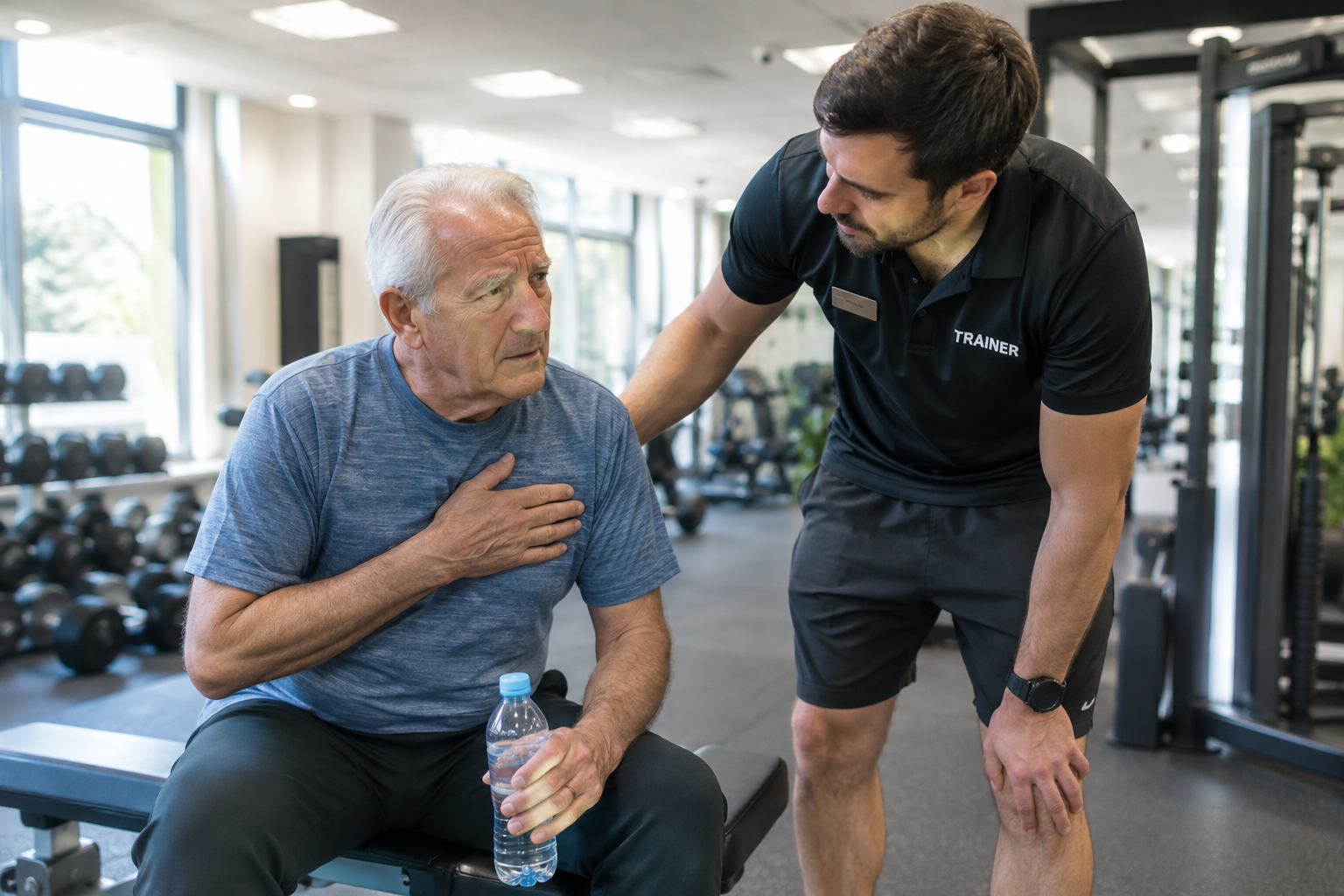
Rest periods are about performance and recovery. Some symptoms mean you need to stop the workout altogether, not just rest longer.
Stop immediately and seek medical attention if you experience chest pain or pressure that feels unusual for you, sudden severe shortness of breath that doesn’t ease with rest, fainting or near fainting, or sudden severe pain from an acute injury like a fall or a joint that gives out. These are not signs to push through or manage with a longer rest period. Call your doctor or emergency services depending on severity, and don’t return to exercise until you’ve been cleared.
Mild muscle fatigue, a slightly elevated heart rate, or normal exercise breathlessness are expected parts of strength training. The symptoms above are different, and they warrant stopping right away rather than adjusting your rest time.
Frequently Asked Questions
Is it bad to rest too long between sets?
Resting longer than necessary won’t hurt you, but it can let your muscles cool down too much, which sometimes makes the next set feel harder to start. If you find yourself resting more than 3 to 4 minutes regularly without a specific health reason, your workout may just be taking longer than it needs to.
Should rest periods be different for cardio versus strength exercises?
Yes. Strength training rest periods focus on muscle and joint recovery, typically 60 to 120 seconds. Cardio intervals, like those in seated cardio workouts, often use shorter rest periods of 30 to 60 seconds since the goal is sustained heart rate elevation rather than maximum strength output on each interval.
Can I use rest time to stretch instead of just sitting still?
Light stretching during rest periods is fine and can even help with mobility, as long as it doesn’t turn into an intense stretch that fatigues the same muscles you just worked. Save deeper stretching for after your workout, similar to the approach in our post-walk stretching routine.