Kettlebells have a reputation for being a tool reserved for CrossFit athletes and twenty-somethings swinging heavy iron around a gym floor. But that reputation is completely undeserved. At the right weight and with the right technique, kettlebells are one of the most practical pieces of home gym equipment for older adults. They build grip strength, improve hip stability, and challenge your balance in ways that dumbbells simply don’t replicate.
The key word in all of this is controlled. Kettlebell training for seniors isn’t about generating maximum power or moving fast. It’s about slow, deliberate movement that teaches your body how to produce and absorb force safely. This guide will walk you through what to look for when buying a kettlebell, which specific products work well for older hands, and a few beginner-friendly moves you can start practicing today.
Why Kettlebells Work Well for Older Adults
Unlike a barbell or a machine, a kettlebell’s center of gravity sits below the handle, which means your muscles have to work harder to stabilize it through every movement. That’s actually a good thing. It trains the stabilizing muscles around your joints, which tend to weaken with age and are responsible for a lot of the falls and injuries seniors experience.
Kettlebell exercises also tend to be functional. A goblet squat mimics sitting and standing. A deadlift variation mirrors picking something up from the floor. These aren’t arbitrary gym movements; they’re the exact patterns your body needs to stay independent. If you’ve been working on grip strength exercises for hand function and independence, kettlebell training is a natural and effective next step.
For women navigating hormonal changes, kettlebell training also supports the kind of muscle retention that matters. Research consistently shows that resistance training helps maintain lean mass after 50, which is exactly what’s covered in our guide on menopause strength training and building muscle after 50.
What to Look for When Buying a Kettlebell for Seniors
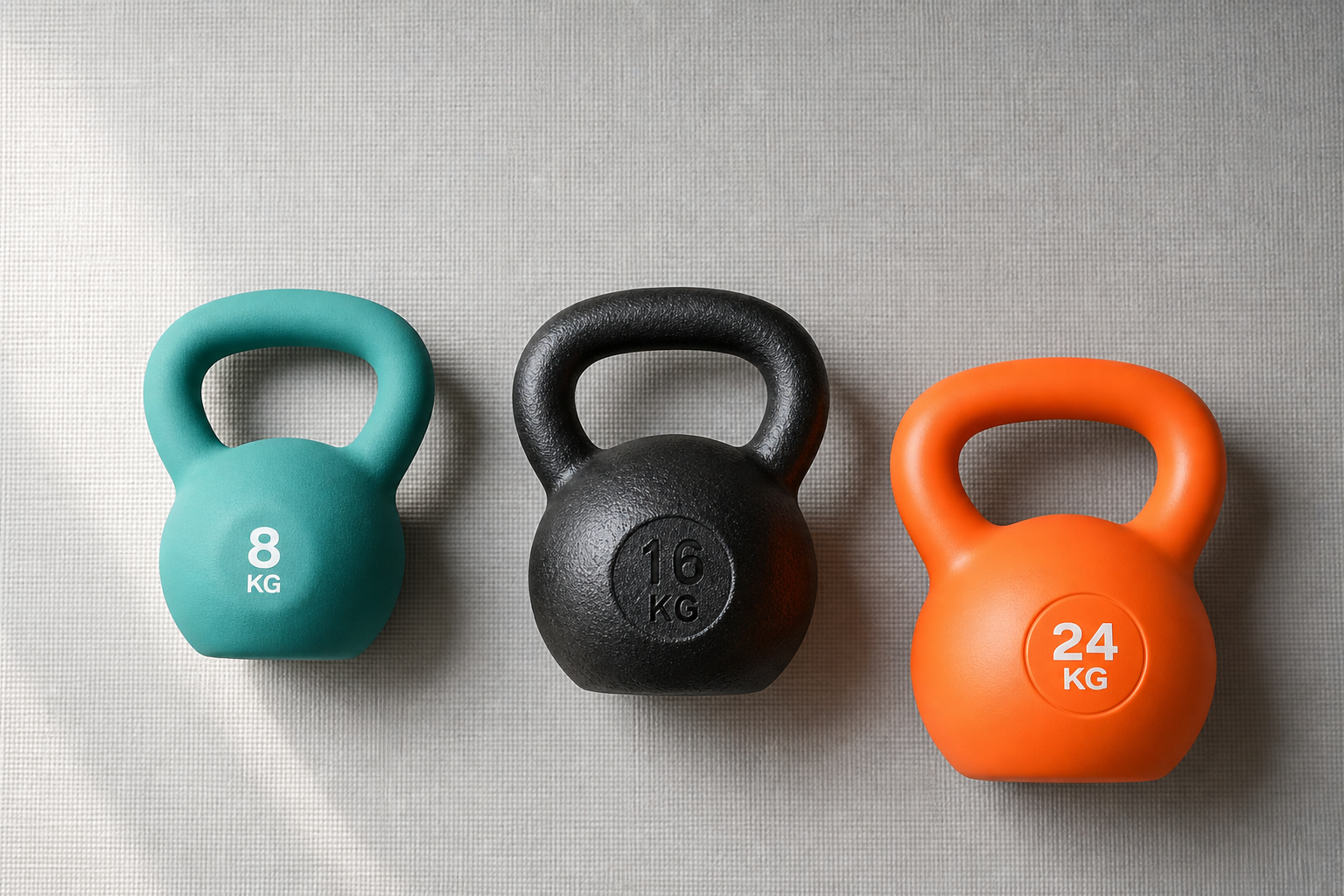
Not all kettlebells are created equal, and the differences matter more when you’re older. Here’s what to pay attention to before you buy.
Weight Range
Most beginners start too heavy. For seniors who are new to kettlebell training, a 5 lb to 15 lb range is appropriate for most exercises. Women often start well with 8 to 10 lbs, and men typically do well starting at 10 to 15 lbs. You want a weight where you can complete 8 to 10 slow, controlled reps with perfect form and still have a little left in the tank.
Resist the urge to go heavier quickly. Controlled, light-weight training done consistently will do far more for your strength and joint health than straining under a weight that compromises your form.
Handle Design
This is where a lot of seniors get tripped up. A handle that’s too thin bites into the palm, while one that’s too thick can be difficult to grip with arthritic hands. Look for handles with a diameter between 30mm and 35mm. Smooth, powder-coated handles are gentler on the skin than rough-cast iron finishes.
Vinyl-coated or rubber-coated kettlebells are also worth considering because they protect your floors and are a bit easier to hold. Just make sure the coating is uniform with no rough seams that could irritate your hands during extended sets.
Flat Base
A flat, stable base is a small detail that makes a big difference in safety. You want a kettlebell that sits flat on the floor without rocking, so it doesn’t tip over when you set it down between sets. This is especially important if you’re working out on a hard floor.
Adjustable vs. Fixed Weight
Adjustable kettlebells sound appealing for home gyms, but many of them have handles that feel bulkier and less natural to grip than fixed-weight models. For seniors, a small set of two or three fixed-weight kettlebells often works better in practice. Consider starting with an 8 lb and a 12 lb, or a 10 lb and a 15 lb, depending on your current fitness level.
If you’re building out a home gym on a budget, our budget-friendly home gym setup for seniors has practical advice on prioritizing equipment purchases without overspending.
Top Kettlebell Picks for Seniors
These recommendations focus on lightweight options with comfortable handles and designs that work well for older hands. All of them are available through Amazon.
AmazonBasics Cast Iron Kettlebell
The AmazonBasics Cast Iron Kettlebell is a dependable entry-level option. It comes in weights starting at 10 lbs, has a smooth finish that won’t tear up your palms, and sits flat on the floor. It’s one of the most widely available and consistently reviewed kettlebells for beginners. Nothing fancy, but it does the job well.
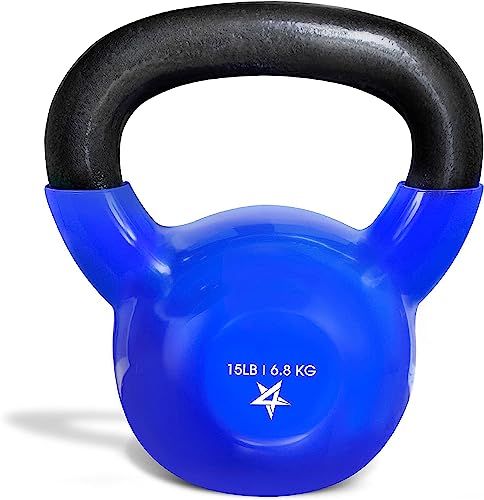
Yes4All Vinyl Coated Kettlebell
Vinyl coating protects floors and offers a gentler grip surface, making it an ideal choice for seniors working out at home on hard floors.
Vinyl-coated options like the Yes4All are especially worth considering if you’re doing seated or floor-based exercises. The coating prevents the bell from scratching hardwood or tile, and many users with arthritis find the slightly softer surface easier to hold than bare cast iron.
CAP Barbell Enamel Coated Kettlebell
The CAP Barbell Enamel Coated Kettlebell has a wider handle than many competitors at lower weights, which makes it easier to grip for people with larger hands or reduced flexibility. The enamel finish gives you a slightly tacky feel without being rough. It’s available in weights starting as low as 5 lbs, which is perfect if you’re recovering from an injury or just starting out.
Kettlebell Kings Powder Coat Kettlebell
If you want to invest in something built to last, the Kettlebell Kings Powder Coat Kettlebell is a premium pick. The handles are consistently machined to a comfortable diameter, the powder coat provides excellent grip without chalk, and the flat base is very stable. It’s a step up in quality from budget options, and many people find it’s the last kettlebell they need to buy at a given weight.
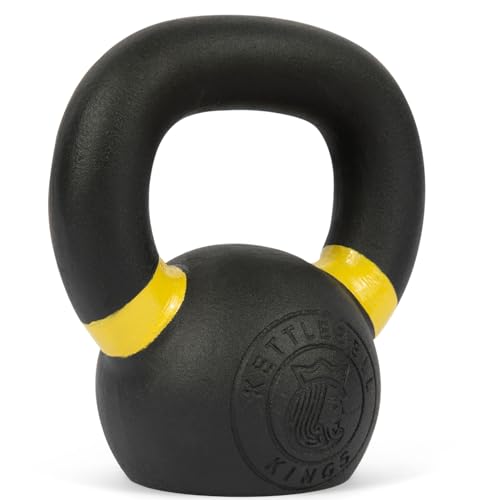
Kettlebell Kings Powder Coat Kettlebell
A premium option with consistent handle dimensions and excellent grip texture, ideal for seniors who want a durable, long-lasting kettlebell.
You can also browse a wider selection of light options with this light kettlebell set search on Amazon to compare models side by side and check current pricing and availability.
Watch This Before You Start: Beginner Kettlebell Tutorial
Before jumping into specific exercises, take a few minutes to watch this beginner-friendly tutorial. It covers foundational movement patterns and pays attention to the kind of form details that help you stay safe and get results.
Once you’ve watched through it once, come back to the exercise descriptions below. You’ll have a much better sense of what each cue means when you see it demonstrated first.
Beginner-Friendly Kettlebell Moves for Seniors
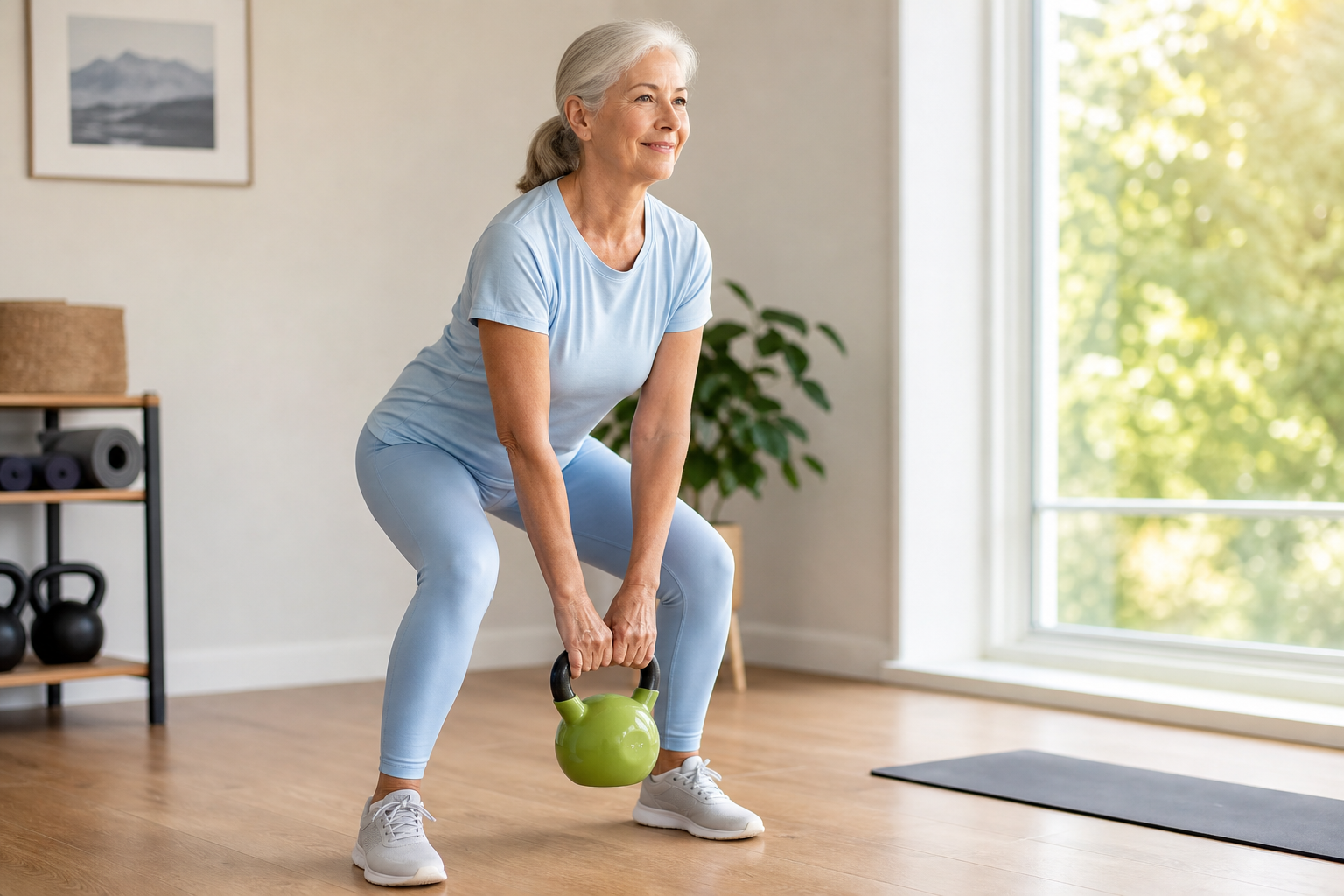
Each of these exercises emphasizes controlled movement over speed. You’re not trying to generate momentum. You’re trying to build a relationship with the weight through slow, intentional repetitions.
The Goblet Hold and Goblet Squat
Start by simply holding the kettlebell. Cup the bell with both hands, one on each side of the handle, at chest height. Your elbows should be bent and pointed slightly downward. This position alone challenges your grip, your core, and your shoulder stability.
From the goblet hold, practice a slow squat. Push your hips back and down, keep your chest tall, and descend to a comfortable depth. Pause for a full second at the bottom, then press through your heels to stand. Aim for 8 to 10 reps, resting 60 to 90 seconds between sets. The goblet squat is one of the safest squat variations for seniors because the weight in front of your body naturally encourages an upright torso.
The Deadlift
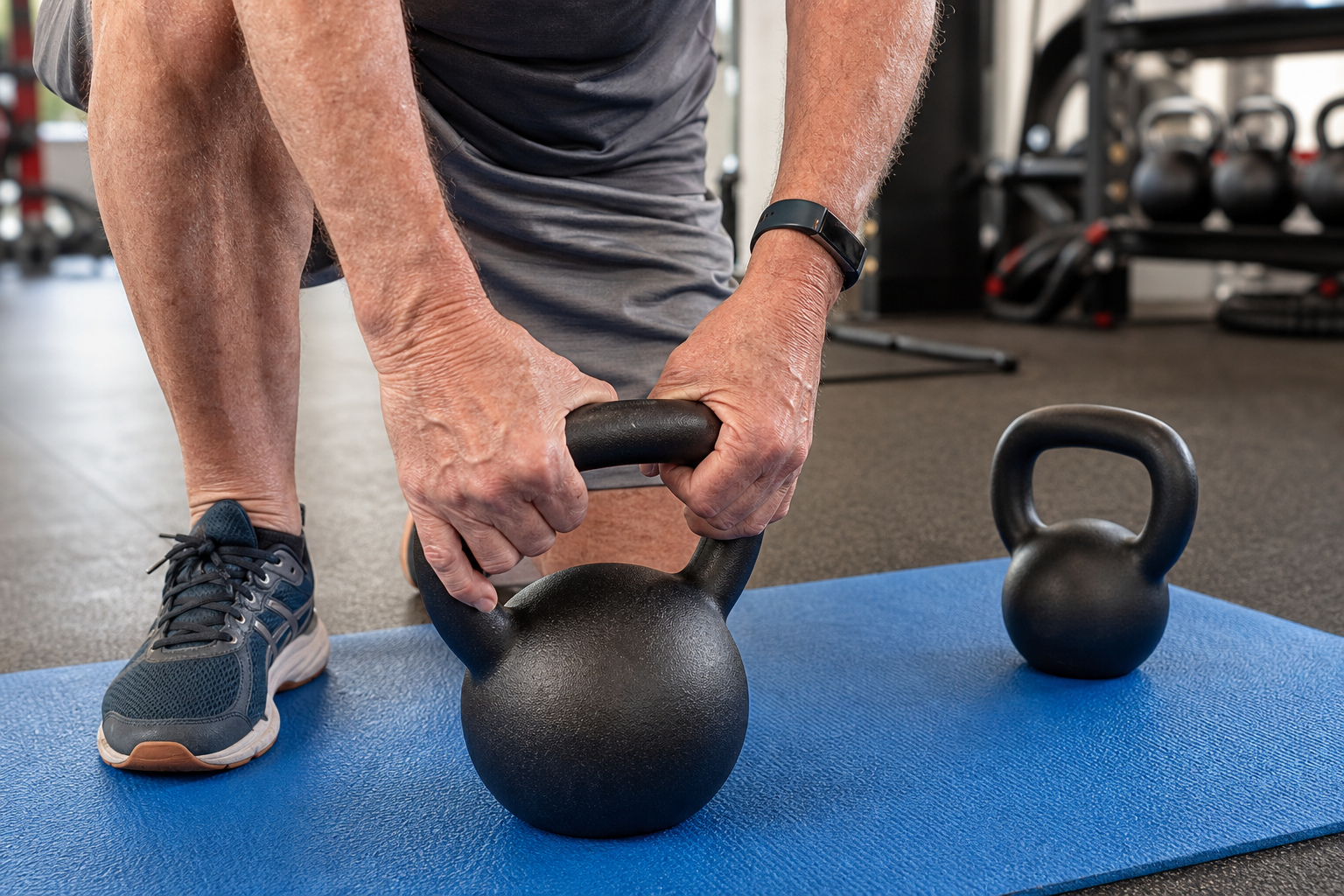
Place the kettlebell on the floor between your feet. Stand with your feet about hip-width apart, hinge at your hips (not your waist), and grip the handle with both hands. Keep your back flat, take a breath in, and stand by driving your hips forward. Lower it back down with the same controlled hinge. This is not a swing or a pull; it’s a pure hip hinge.
The deadlift pattern is one of the most functional movements you can train. It directly translates to picking things up from low shelves or the floor, which is exactly the kind of daily task that gets harder and more risky as we age. If you’re managing back discomfort, our article on chronic pain management through movement has relevant guidance on training safely around pain.
The Two-Hand Swing (Light and Controlled)
The swing is the signature kettlebell movement, but it needs to be taught correctly before you do it with any real intensity. Start with a very light weight, maybe 5 to 8 lbs, until the pattern feels natural.
Begin with the kettlebell on the floor about a foot in front of you. Hike it back between your legs like a hiking a football, then drive your hips forward to swing it to chest height. Let gravity bring it back down and hike it back again. The power comes from your hips snapping forward, not from your arms pulling the weight up. Keep your core tight throughout.
Swings are cardiovascular as well as muscular, so don’t be surprised if 10 to 15 reps leaves you breathing hard. That’s normal and a sign that you’re working multiple systems at once.
The Halo
The halo is a gentle shoulder mobility drill that’s very approachable for beginners. Stand or sit tall and hold the kettlebell by the horns (the sides of the handle) at chest height. Slowly circle it around your head in one direction for 5 reps, then reverse. Keep the movement slow and controlled, and stop if you feel any sharp pain in your neck or shoulder. It’s an excellent warm-up move before any upper body work.
Programming: How Often and How Much
Two sessions per week is a reasonable starting point for most seniors. Each session can be as short as 15 to 20 minutes, especially when you’re new to this type of training. Rest at least one day between sessions so your muscles and connective tissue have time to adapt.
After four to six weeks, you can add a third session or increase your volume slightly. Don’t rush this process. The adaptation that happens in the first few months of training is largely neurological, meaning your nervous system is learning to recruit muscles more efficiently. This takes time and can’t be rushed by adding more weight.
Fueling your workouts properly makes a real difference in your results and recovery. Our guide on pre-workout nutrition for senior athletes explains what to eat before training, and our post-workout recovery meals for seniors article covers how to support muscle repair after your sessions.
Supporting joint health nutritionally is also worth thinking about if you’re going to be adding regular resistance training to your routine. Many active seniors find that omega-3 supplements for senior joint health help reduce exercise-related inflammation over time.
Safety Notes Worth Taking Seriously
Always warm up before picking up a kettlebell. Five minutes of light walking, shoulder circles, hip circles, and gentle squats prepares your joints for loaded movement.
If you take blood pressure medication, check our article on blood pressure medication and exercise precautions before starting a new resistance program. Some medications affect your heart rate response to exercise, and it’s important to know how that applies to you.
Set the kettlebell down if your form breaks. Fatigue-driven bad form is how injuries happen. It’s much better to cut a set short at 6 reps than to grind out 10 with a rounded back.
A note on footwear: Train in flat-soled shoes or barefoot if possible. Running shoes with cushioned heels put your ankle in a slightly elevated position that can throw off your hinge pattern and reduce stability. Cross-trainers or minimalist sneakers work best for kettlebell work.
Frequently Asked Questions
What weight kettlebell should a 65-year-old beginner start with?
Most women over 60 who are new to kettlebells do well starting with 8 lbs, and most men start comfortably at 10 to 12 lbs. The goal at first is to learn the movement patterns with a weight light enough that your form stays clean. You can always add weight once the fundamentals feel solid, but starting too heavy is the most common beginner mistake.
Is kettlebell training safe with arthritis?
It can be, with the right modifications. Light weights, padded handles, and avoiding moves that put direct pressure on affected joints are key. The goblet hold and deadlift are generally well tolerated. Our article on best arthritis-friendly exercises for seniors covers more specific guidance, and it’s always worth checking with your doctor or physical therapist before starting if your arthritis affects your wrists, hands, or hips significantly.
How is a kettlebell different from a dumbbell for seniors?
The main difference is where the center of gravity sits. With a dumbbell, the weight is distributed evenly on both sides of your hand. With a kettlebell, the ball of the weight hangs below your grip, which means your stabilizing muscles have to work continuously to control it. That extra challenge is actually beneficial for building the functional stability that matters in daily life, but it also means you need slightly more attentiveness to form.
Can I do kettlebell training after a knee or hip replacement?
Possibly, but timing and clearance from your surgeon matter a lot. Light goblet squats and