If your knees ache on the treadmill or your hips protest after a long walk, water aerobics might be exactly what your body has been waiting for. Pool exercise takes the pressure off your joints while still giving your muscles a genuine workout, and it’s one of the most doctor-recommended activities for adults over 60. Whether you’re brand new to exercise or returning after an injury, the pool is one of the most forgiving places you can train.
This guide walks you through why water exercise works so well for older adults, which moves to start with, what gear you actually need, and how to get into the pool safely. No swimming ability required.
Why Water Exercise Is So Easy on the Body
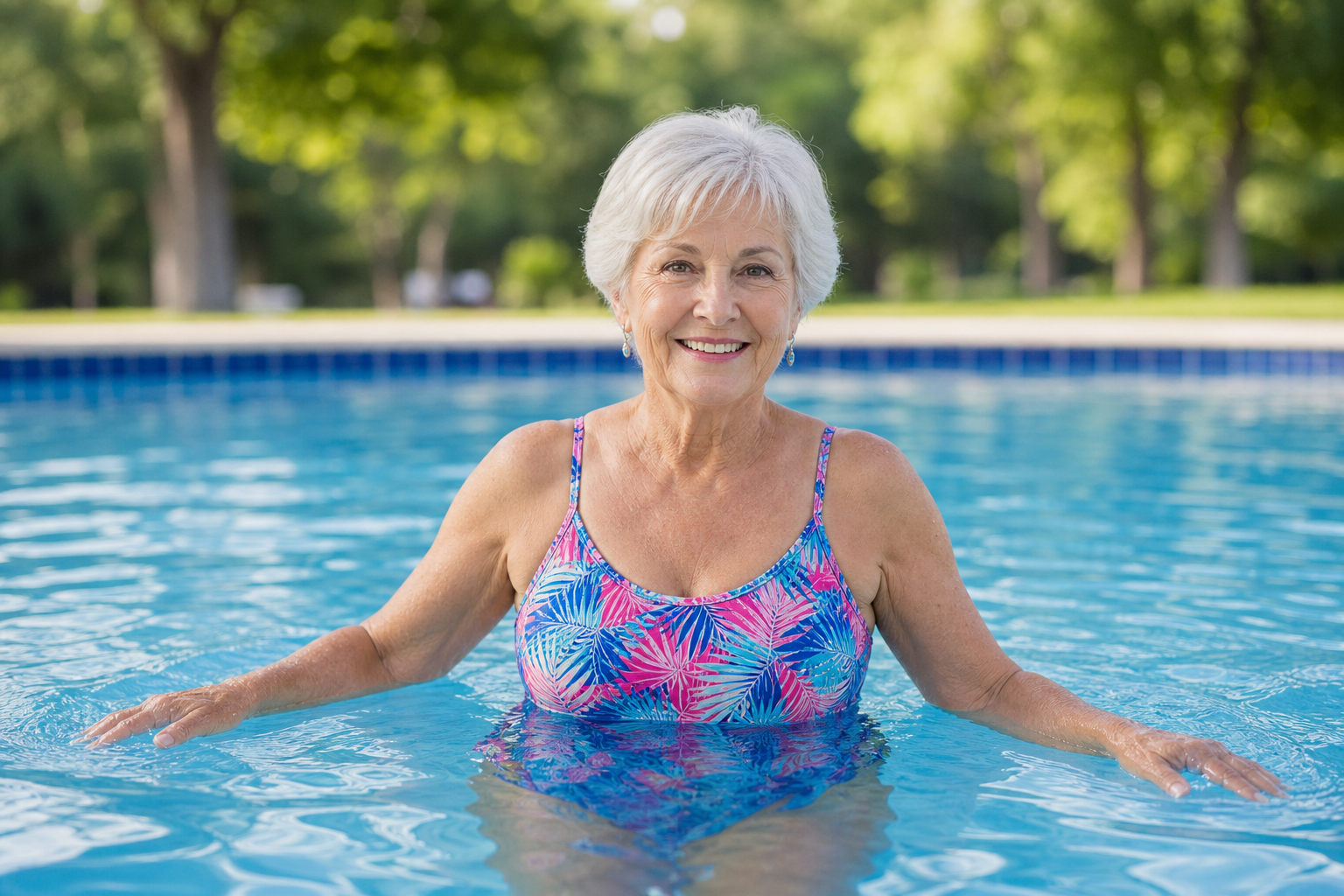
Water reduces your effective body weight by about 90 percent when you’re submerged to your neck. That means a 180-pound person feels like they weigh around 18 pounds in the pool. Your joints handle a fraction of the impact they’d face on land, which makes movement feel smoother and far less painful.
At the same time, water provides constant resistance in every direction. When you push your arms forward, the water pushes back. When you kick your legs out, the water resists that too. You’re building strength and endurance without ever touching a weight machine. For anyone managing arthritis or recovering from knee replacement surgery, that combination is hard to beat.
Water exercise also improves balance and coordination. Moving against water resistance trains your stabilizer muscles, which are the small muscles around your ankles, hips, and core that keep you upright. Better balance means a lower risk of falls on land, which is one of the most important health goals for older adults.
Watch: Water Aerobics for Beginners
This video gives you a great visual overview of beginner-friendly water aerobics moves you can try on your very first session. It’s worth watching before you head to the pool so the movements feel familiar when you’re in the water.
Basic Moves to Get You Started
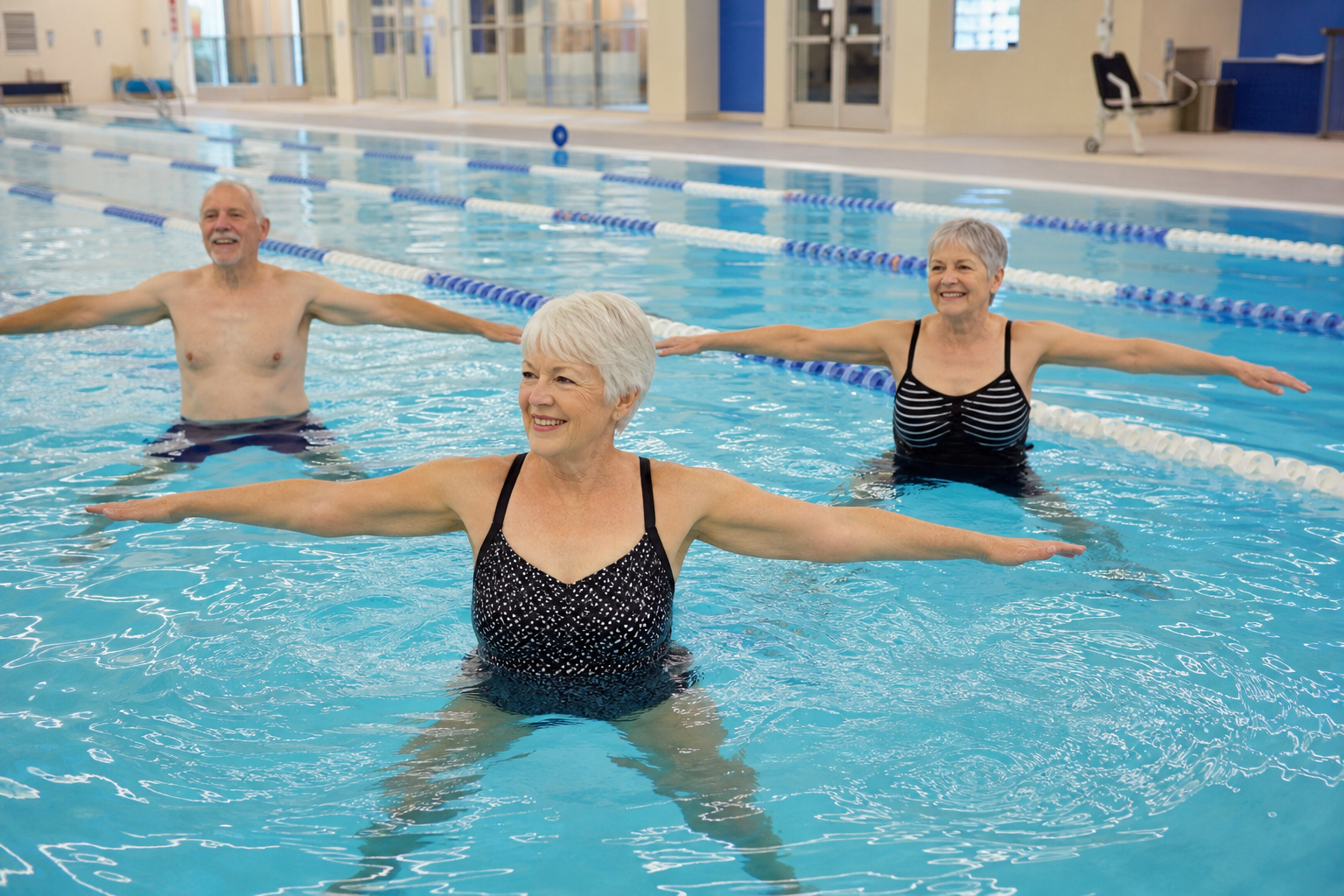
You don’t need a class to begin. These five moves cover the full body and work well in waist-to-chest-deep water. Start with 30 seconds per move and build up as you get more comfortable.
Water Walking
Walk forward and backward across the pool, swinging your arms naturally. Keep your back straight and your core lightly engaged. This one sounds simple, but the resistance makes it a real workout. It’s a perfect warm-up for every session.
Standing Bicycle Kicks
Hold the pool wall or a noodle for support and pedal your legs in a cycling motion. This strengthens your hip flexors, quads, and lower abs without putting any pressure on your knees. Aim for 30 to 60 seconds per set.
Arm Curls
Stand in chest-deep water with your arms at your sides. Curl both forearms up toward your shoulders, then lower slowly. The water provides resistance on both the upward and downward phase. Add water dumbbells when this starts to feel too easy.
Flutter Kicks
Hold the pool wall with both hands and extend your body horizontally. Kick your legs up and down in a small, controlled flutter. This targets your core and hip flexors. If holding the wall is uncomfortable for your wrists, use a pool noodle under your armpits instead.
Side Steps
Step sideways across the pool, leading with one foot and bringing the other foot to meet it. Then return the other direction. This targets your hip abductors and helps with lateral stability. If you deal with balance concerns or vertigo, keep one hand lightly touching the wall.
The Gear Worth Having
You don’t need a lot of equipment to get started, but a few well-chosen items will make your workouts more effective and more enjoyable.
Water Dumbbells
These are foam or plastic dumbbells designed for pool use. Unlike regular weights, they create resistance by pushing against the water rather than using gravity. They come in different sizes, and bigger foam heads mean more resistance. Most beginners do well starting with a medium-density pair.

Water Aerobics Dumbbells
A quality pair of foam water dumbbells adds upper body resistance to your pool workout without any joint strain.
Pool Noodles
A pool noodle might look like a toy, but it’s genuinely useful for balance and flotation during leg exercises. You can use it under your arms for flutter kicks, wrap it around your back for floating abdominal work, or hold it in front of you for extra stability. Pool noodles are lightweight and easy to store.
Water Shoes
Pool decks are slippery, and the bottom of a public pool can be rough on bare feet. A pair of water shoes gives you traction on the pool floor and protects your feet during exercises where you’re pushing off the bottom. Look for a snug fit with a non-slip sole.

Water Shoes for Pool Exercise
Non-slip water shoes protect your feet on slick pool decks and give you better grip during standing exercises.
Aqua Belt
An aqua jogging belt straps around your waist and keeps you buoyant in the deep end without any effort. This lets you do water running or vertical kicking without touching the bottom, which removes almost all joint impact. It’s particularly useful for anyone recovering from a lower body injury.
Getting Into the Pool Safely
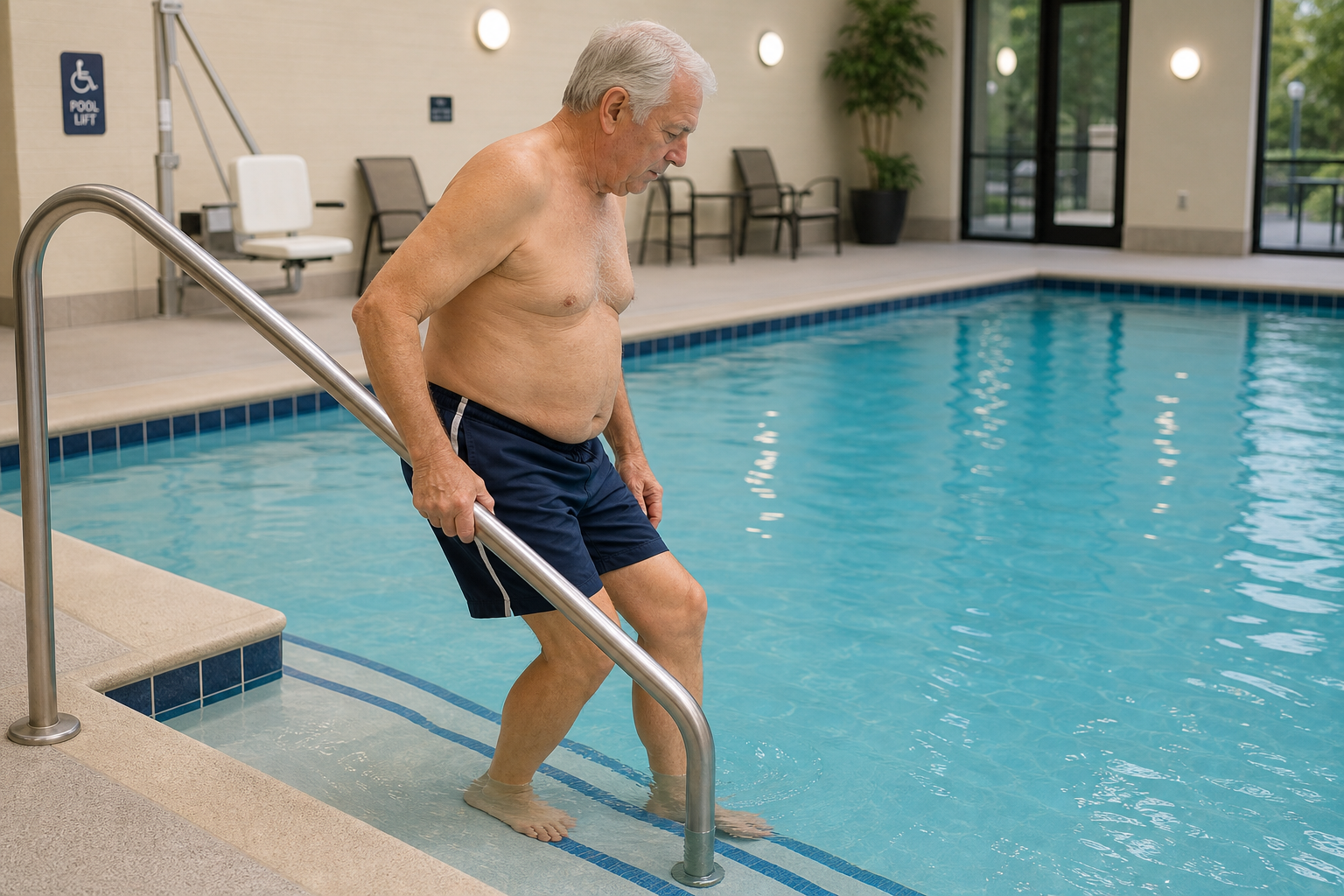
Pool entry is one of the places where seniors are most likely to slip or lose their balance, so it deserves real attention. Always use the steps, not a ladder, if steps are available. Grip the handrail with both hands and take one step at a time. Never jump into the pool.
If your facility has a pool lift, don’t hesitate to use it. That’s exactly what it’s there for. Many aquatic centers that cater to older adults have accessible entry options, so ask the staff before your first visit. If you take medication that affects blood pressure, it’s worth reviewing how those medications interact with exercise before starting a new routine.
Always exercise in a pool with a lifeguard present, especially when you’re new to the water. If you go to a facility without on-duty supervision, bring a friend or family member. Avoid exercising alone in the pool, even if you’re a confident swimmer.
Give yourself time to adjust to the water temperature before working hard. Cold water can cause your muscles to tighten suddenly, which increases the risk of cramps. Wade in slowly and do a few minutes of gentle movement before ramping up your intensity.
Fueling and Recovery Around Your Pool Sessions
Water exercise burns more calories than most people expect, especially because the cool water masks how hard your body is working. Eating a light snack about 60 to 90 minutes before your session helps sustain your energy without making you feel heavy in the water. Good options include a banana with nut butter or a small bowl of oatmeal. For more ideas, the guide on pre-workout nutrition for seniors has practical suggestions tailored to older athletes.
After your session, your muscles need protein to rebuild and recover. Aim to eat a balanced meal or snack within an hour of finishing. The post-workout recovery meal guide for seniors is a helpful starting point if you’re not sure what to eat. If joint health is a priority for you alongside your new pool routine, it’s also worth reading up on omega-3 supplements for joint support, which many older adults find beneficial.
Frequently Asked Questions
Do I need to know how to swim to do water aerobics?
No swimming ability is required. Water aerobics is done in shallow water where you can stand comfortably, usually between waist and chest deep. Your feet stay on the pool floor for almost all the exercises. If you’re nervous in the water, start in the shallow end and stay near the wall until you feel confident.
How often should seniors do water aerobics?
Two to three sessions per week is a solid starting point. Each session can be 30 to 45 minutes, including a warm-up and cool-down. As your fitness improves, you can increase frequency or add resistance with equipment. Most people find their joints feel noticeably better within the first few weeks of consistent pool exercise.
Is water aerobics good for people with osteoporosis?
Water aerobics is low-impact and gentle on bones, which makes it excellent for joint comfort, but it doesn’t provide the bone-strengthening stimulus that weight-bearing exercise does. If you have osteoporosis, water workouts are a great addition to your routine, but ideally combined with some land-based strength training. Check with your doctor and review the osteoporosis exercise plan for a more complete picture of what your bones need.
This article contains affiliate links. We may earn a small commission at no extra cost to you.