Chair dancing is exactly what it sounds like: dancing while seated. And it’s one of the most enjoyable ways for seniors to get cardiovascular exercise without standing, risking a fall, or pounding their joints. The rhythm of music naturally motivates movement, the social media trend of seated dance routines has produced genuinely creative choreography, and the endorphin boost from moving to your favorite songs makes this feel like entertainment, not exercise.
The beauty of chair dancing is that it meets you where you are. If you haven’t exercised in years, you can start with gentle arm waves and toe taps. If you’re already active but need to reduce standing time, you can push the intensity with fast-paced choreography and added resistance. The chair provides stability while still allowing freedom of movement in your upper body, core, and legs.
Why Chair Dancing Works for Fitness
Cardiovascular Conditioning
Moving your arms, legs, and torso to music at a moderate pace elevates your heart rate into the aerobic training zone (50-70% of maximum). A 20-minute chair dance session burns 100-200 calories and provides cardiovascular stimulus comparable to a moderate-pace walk. The key is sustained movement: keep moving throughout the song rather than stopping between movements.
The continuous nature of dance makes it easier to maintain your target heart rate than exercises with frequent pauses. You’re not thinking about repetitions or sets. You’re following the music, and the music doesn’t stop until the song ends. This creates natural interval training when you match your movement intensity to the song’s tempo changes.
Upper Body Engagement
Chair dancing relies heavily on arm movements (reaching, punching, waving, clapping, pushing), which many walking-based exercises don’t target. This builds shoulder endurance, arm strength, and the chest and back involvement that makes carrying, reaching, and pushing easier in daily life.
Many people experience upper body weakness as they age simply because they stop using their arms above chest height. Reaching for overhead cabinets becomes harder, lifting a pot off a high shelf feels risky, and even putting on a coat requires more effort. Chair dancing reverses this by incorporating overhead reaches, side extensions, and cross-body movements that maintain shoulder mobility and strength. The repetitive nature of dancing to multiple songs means you’re performing dozens of functional upper body movements per session without the tedium of isolated arm exercises.
Core Activation
Twisting, leaning, and reaching from a seated position activates your obliques, transverse abdominis, and spinal stabilizers. The unstable demands of moving rhythmically in a chair (your body weight constantly shifts direction) provide genuine core training that static sitting doesn’t.
Seated twists work the rotational muscles that help you turn to look behind you when backing up the car or reaching across your body to grab something. Side leans target the lateral core muscles that stabilize you when you bend to pick something up from the side. The faster the music, the more your core has to work to control these movements and keep you stable in the chair. This is functional core training: you’re strengthening the exact movement patterns you use in daily life.
Mood Enhancement
Music independently reduces cortisol (the stress hormone) and increases dopamine (the pleasure chemical). Combining music with rhythmic movement amplifies both effects. Chair dancing is frequently recommended by occupational therapists for seniors with depression or social isolation because the mood benefits are rapid and reliable.
The psychological boost isn’t trivial. Many people abandon exercise routines because they feel like work. Chair dancing feels like fun first and happens to be exercise second. That shift in perception changes everything. You’re more likely to do it consistently, which is what matters for long-term fitness. The mood lift also extends beyond the session itself: studies on music and movement show elevated mood for hours afterward.
A 20-Minute Chair Dance Routine
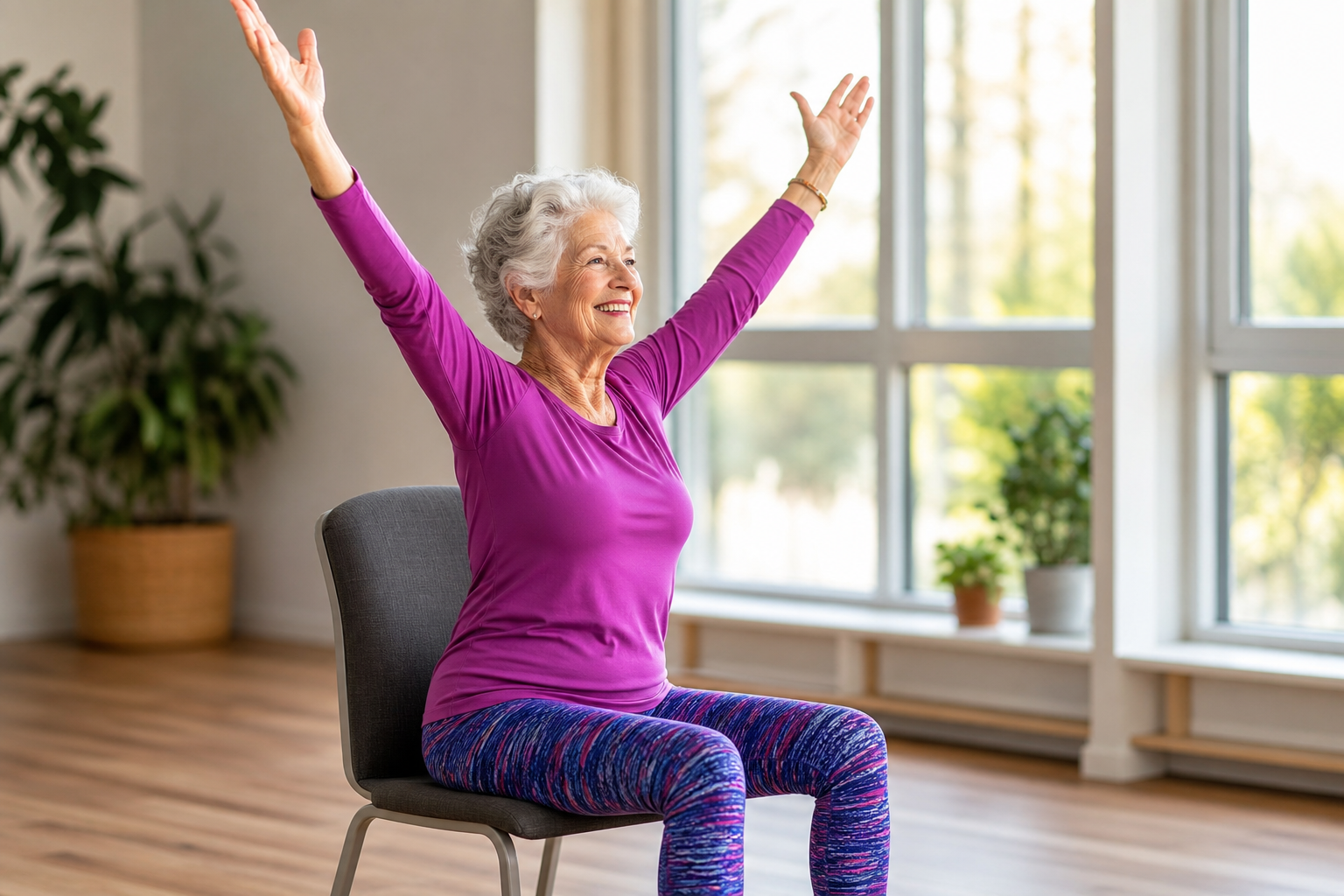
Choose 5-6 songs with a moderate tempo (100-120 beats per minute) that you enjoy. Upbeat pop, classic rock, Motown, big band, or Latin music all work well. Each song gets a different movement pattern.
Song 1: Warm-Up (Slow Tempo)
Gentle seated marching with small arm swings. Roll your shoulders forward and back. Lift your knees gently in time with the beat. Tap your toes and heels alternately. This song warms your muscles and gets you in rhythm.
Think of this as waking up your body. You’re not trying to work hard yet. You’re telling your joints, muscles, and cardiovascular system that movement is coming. If your hips or knees feel stiff, this is when that stiffness starts to ease. If you’ve been sitting for hours, this is the transition back into being a moving person. By the end of this song, you should feel looser and ready to pick up the pace.
Song 2: Arm Work
Alternate between these arm patterns, switching every 8-16 beats: punches forward (alternating fists), reaches overhead (both arms up, both arms down), side reaches (arms extend left, then right), and chest presses (push both arms forward, pull back).
Keep your movements controlled but energetic. Punches should be quick and sharp, not flailing. Overhead reaches should go as high as your shoulder mobility allows without straining. If lifting both arms overhead at once feels like too much, reach one arm up at a time. Side reaches should extend far enough that you feel a gentle stretch along your ribs. Chest presses should engage your pecs and upper back, not just move your arms through space.
Song 3: Leg Work
Alternate between: high marches (knees as high as comfortable), heel taps (extend one leg, tap the heel on the floor, alternate), toe taps (tap toes out to the side, alternate), and seated kicks (extend one leg forward with energy, alternate).
The goal here is to get your hip flexors, quads, and hamstrings involved. High marches should lift your knee toward your chest, but only as high as feels safe. If you have hip pain or limited hip flexion, even a small lift counts. Heel taps require you to extend your leg straight, which works the quadriceps. Toe taps to the side engage your outer hip and inner thigh as you move your leg laterally. Seated kicks add a bit of dynamic force: extend your leg with intention, like you’re kicking a ball away from you, but without hyperextending your knee.
Song 4: Combination (Arms + Legs)
Combine arm and leg movements simultaneously: march with arm punches, kick with overhead reaches, side-tap feet while clapping. The coordination challenge adds a cognitive component that makes the exercise more engaging and more brain-healthy.
This is where chair dancing becomes more than just cardio. You’re asking your brain to coordinate two body parts moving in rhythm at the same time. That requires attention, motor planning, and spatial awareness. Research on coordination exercises and cognitive function in older adults consistently shows benefits: the dual-task nature of choreographed movement helps maintain neural connections and processing speed. Don’t worry if you mess up the pattern. Fumbling and recovering is part of the process and part of the brain benefit.
Song 5: Core and Twist
Arms crossed over chest, twist your torso to the beat (left, right, left, right). Add leaning (reach to the left side, then right). Add diagonal movements (right hand reaches toward left knee, then switch). Keep your hips facing forward while your upper body rotates.
The twisting motion should come from your mid-back and core, not from swinging your shoulders. Focus on keeping your hips and thighs stable while your rib cage rotates. Side leans should tilt you far enough that you feel the stretch along your side body, but not so far that you feel unstable. Diagonal reaches combine rotation and flexion: you’re twisting and bending slightly forward at the same time, which works the obliques harder than pure twisting alone.
Song 6: Cool-Down (Slow Tempo)
Slow marching, gentle arm sweeps, shoulder rolls, and deep breathing. Gradually reduce your movement speed and intensity. Finish with a few seated stretches: neck tilts, cross-body shoulder stretch, and a seated forward fold.
The cool-down is as important as the warm-up. Your heart rate needs time to come back down gradually. Moving slowly with deep breaths helps your cardiovascular system transition back to rest. The stretches target the muscles you just worked: neck tilts release tension from holding your head stable during movement, the cross-body shoulder stretch opens up your chest and shoulders, and the forward fold gently stretches your lower back and hamstrings. Hold each stretch for 15-30 seconds, breathing slowly.
Modifying the Routine for Different Abilities
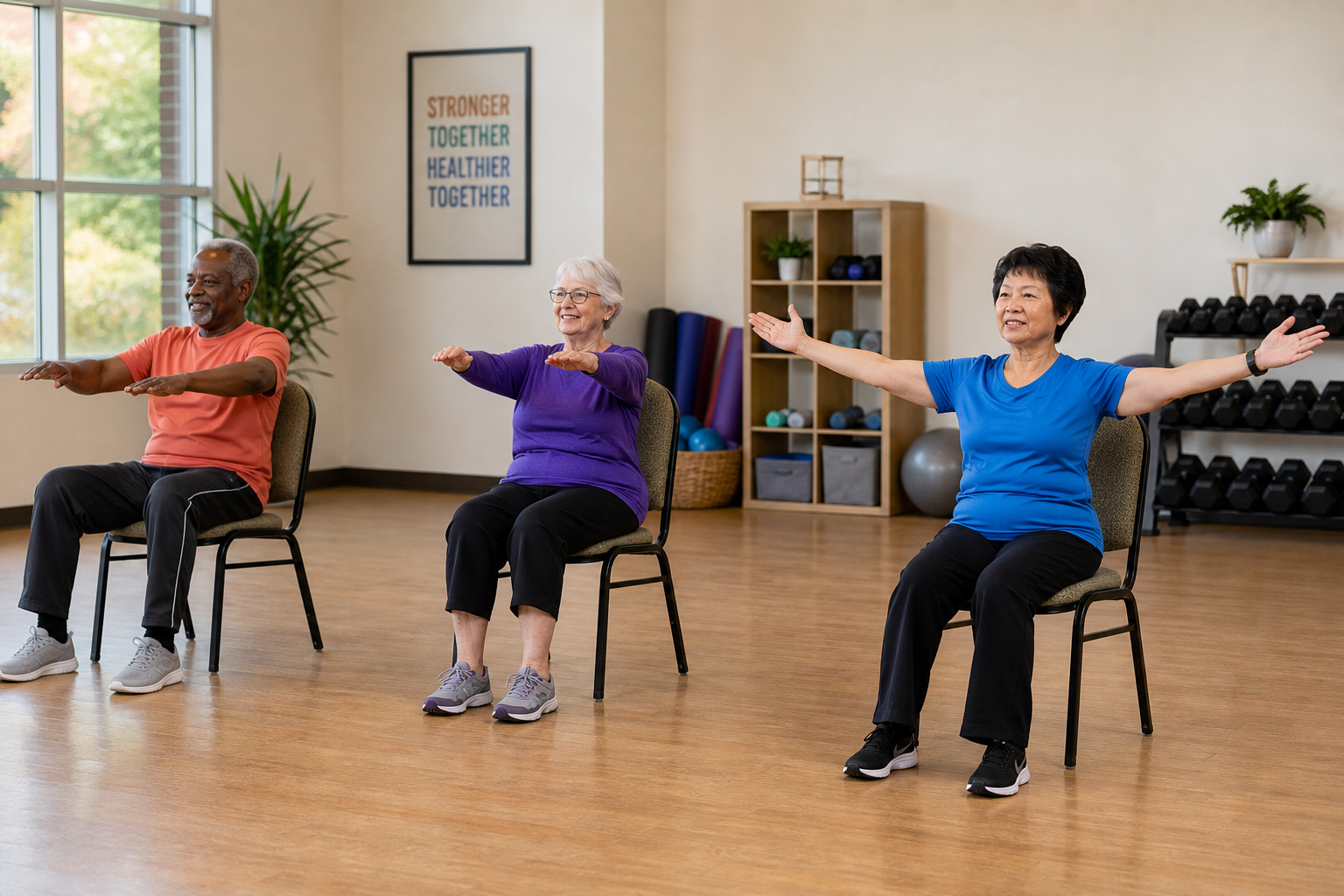
If the standard routine feels too intense, scale back. Lower your arm movements so they stay below shoulder height. March in place with smaller, slower knee lifts. Skip the kicks and just alternate heel taps. The music can stay the same, your movement just becomes gentler.
If you want more challenge, add light hand weights (1-2 pounds maximum), increase the tempo of your music (120-130 beats per minute), or incorporate larger, more dynamic movements. You can also extend the session to 30 minutes by adding more songs. Some people progress to standing for part of the routine, using the chair for balance during more challenging movements, then sitting back down when needed.
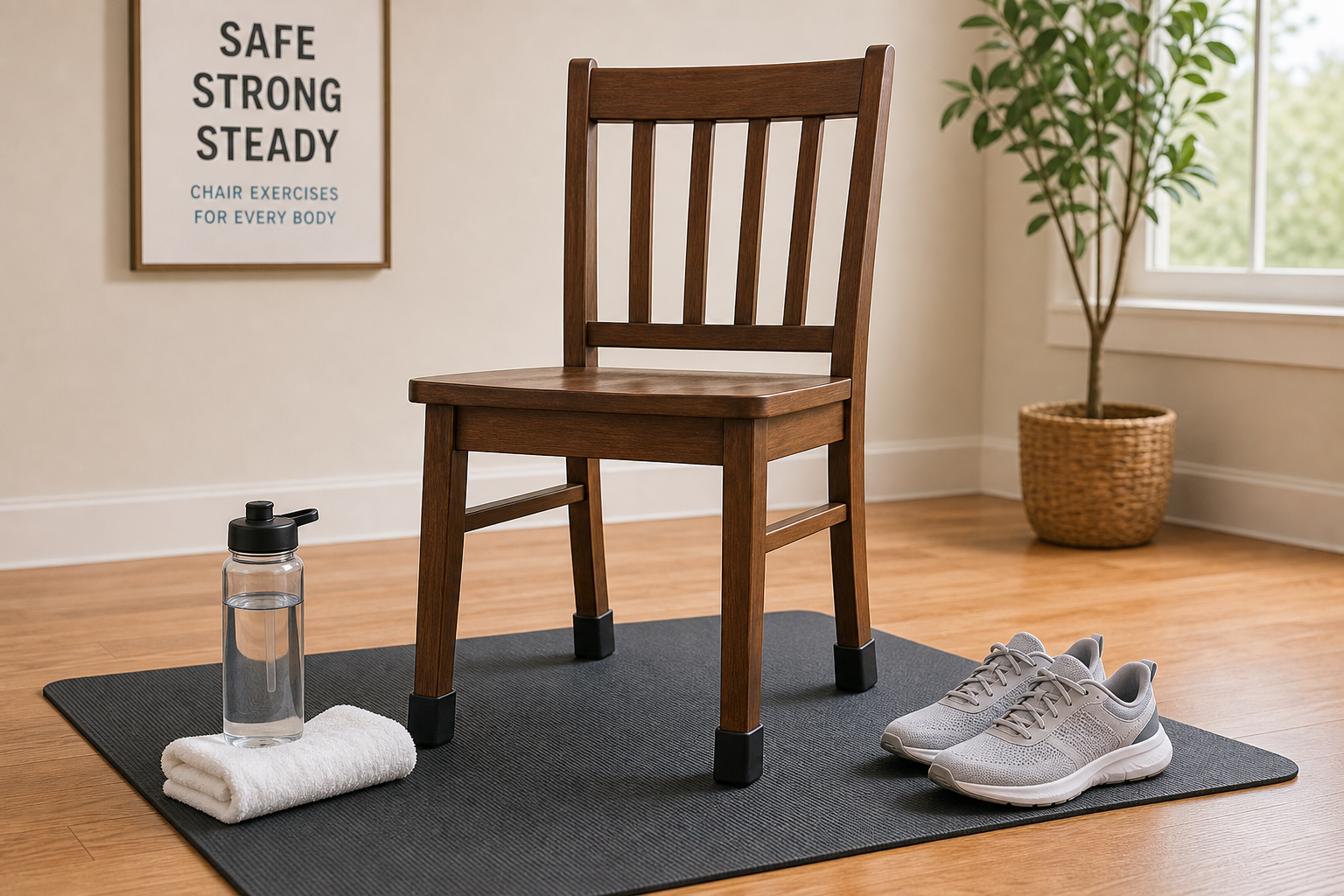
The chair itself can vary. Some people prefer an armless chair so they can move their arms freely to the sides. Others feel more secure with arms they can hold onto during leg movements. A folding chair works fine as long as it’s stable. Dining room chairs work. Even a sturdy bench is an option. The main requirement is that it doesn’t slide, tip, or roll while you’re moving.

Stable Exercise Chair
Look for chairs with non-slip feet and sturdy construction designed specifically for seated exercise routines
Finding Chair Dance Videos
YouTube is the best source for guided chair dance routines. Search these terms for senior-appropriate content:
- “Senior chair dance workout” (general cardio routines)
- “Seated dance exercise for seniors” (structured fitness-focused routines)
- “Chair Zumba for seniors” (Latin-inspired music and movements)
- “Seated line dance” (country and pop music routines with patterned steps)
- “Wheelchair dance fitness” (routines specifically designed for wheelchair users)
Preview the video before starting to make sure the pace and movements match your ability. Some videos labeled “senior” are surprisingly vigorous. Start with the gentlest options and work up.
Look for instructors who demonstrate modifications. Good chair dance videos show a simpler version of each movement for people just starting out. They also cue the movements clearly so you’re not scrambling to figure out what comes next. If a video moves too fast or the instructor doesn’t explain the movements, find a different one. There are hundreds available, and you’ll know within the first two minutes whether the instructor’s style and the routine’s pace work for you.
Making It Social
Chair dancing is more fun with company. Invite a friend over for a weekly chair dance session. Many senior centers and community programs offer group seated dance classes. The social component adds accountability, laughter, and the human connection that solo home exercise lacks. Some assisted living facilities have incorporated chair dancing as a regular group activity because the participation rate is dramatically higher than for traditional exercise classes.
Group classes also create a natural progression effect: you watch other participants, you pick up variations on movements, you see someone else’s enthusiasm and it boosts your own. There’s a shared energy in moving to music together that makes the session feel lighter and faster. Thirty minutes of group chair dancing feels shorter than twenty minutes of solo exercise at home.
If you live somewhere without in-person classes, online live classes exist. Zoom-based chair dance sessions let you see other participants, follow an instructor in real time, and still get the group energy from your living room. Some organizations offer free or low-cost virtual chair fitness classes specifically for older adults.
Equipment
All you need is a sturdy chair (no wheels, no rocking) and music. For video-guided routines, a phone, tablet, or smart TV with YouTube access works. Light hand weights (1-2 pounds) or weighted gloves can be added to arm movements for increased intensity once you’re comfortable with the basic choreography.
Resistance bands can also add challenge. A light resistance band around your thighs turns marching and leg taps into strength exercises. A longer band held in both hands adds tension to arm reaches and presses. Don’t rush to add equipment, though. Master the movements with just your body weight first. Once the choreography feels easy and your heart rate isn’t climbing the way it used to, external resistance makes sense.
For music, streaming services, CDs, or even a radio station work. The advantage of streaming is that you can create playlists with songs at the same tempo so the workout flow stays consistent. The advantage of live radio is spontaneity: you don’t know what song is coming next, which keeps it interesting.
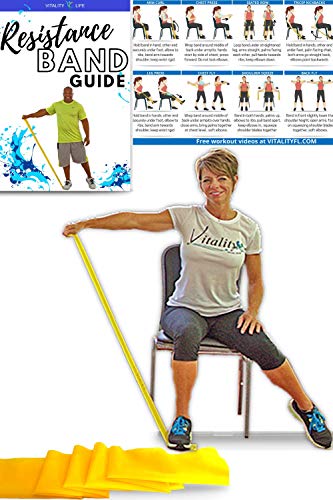
Light Resistance Bands
Choose bands with comfortable handles and low resistance levels perfect for seated exercises
Safety Considerations
Chair dancing is low-impact, but it’s still exercise. If you have cardiovascular conditions, uncontrolled high blood pressure, recent surgery, or significant joint problems, talk to your doctor before starting any new exercise routine.
Pay attention to how you feel during the session. Mild muscle fatigue is normal. Sharp pain, dizziness, chest discomfort, or severe shortness of breath are not. If you experience any of those, stop immediately and rest. If symptoms don’t resolve quickly, seek medical attention.
Keep water nearby. Even though you’re seated, you’re still working up a sweat and need hydration. Sip water between songs or during the cool-down.
If you have balance issues severe enough that shifting your weight in a chair feels unstable, chair dancing might not be appropriate without supervision. In that case, working with a physical therapist first to improve seated stability makes sense before trying choreographed routines on your own.
Chair Dancing for Specific Health Conditions
Chair dancing adapts well to various health challenges. If you’re recovering from hip replacement or knee replacement surgery, seated dance provides a way to maintain cardiovascular fitness while your joints heal. The seated position removes the weight-bearing stress that walking or standing exercises create.
For people with arthritis, the rhythmic movements can actually reduce joint stiffness. The key is to move within a comfortable range of motion. You’re not trying to force your joints into positions that hurt. The gentle, repeated movements combined with the warmth your muscles generate during exercise often provide temporary pain relief.
Those managing COPD or other breathing conditions can pace their movements to match their breathing capacity. Start with slower songs and take breaks between movements as needed. The cardiovascular benefits still accumulate even if you move at a gentler pace than someone without breathing limitations.
Tracking Your Progress
Consider using a fitness tracking app or simple heart rate monitor to track your sessions. You’ll see measurable improvements over time: your resting heart rate may decrease, you’ll be able to dance for longer periods without fatigue, and movements that felt challenging at first will become easier.
Keep a simple log of how many sessions you complete each week. Consistency matters more than intensity, especially when you’re building a new habit. Seeing a