If you’ve caught a glimpse of yourself in a mirror lately and noticed your shoulders creeping forward or your upper back rounding into a hunch, you’re not imagining things. Posture tends to shift gradually as we age, so gradually that most people don’t notice until the change is already significant. The encouraging news is that for most seniors, rounded shoulders and forward hunching are correctable with consistent effort.
This article walks through why posture changes happen, how to tell whether yours is fixable with exercise or needs a doctor’s attention, and the specific stretches and strengthening moves that actually make a difference.
Why Seniors Develop Rounded Shoulders and a Forward Hunch

The forward hunch most commonly seen in older adults has a medical name: kyphosis. It refers to an exaggerated outward curve of the thoracic spine (the upper and mid-back). Some degree of spinal curvature is normal. An excessive curve is not, and it usually develops from a combination of factors.
The biggest culprits are muscle imbalances and prolonged sitting. When the chest muscles (pectorals) get tight and the upper back muscles (rhomboids, lower trapezius, and rear deltoids) get weak, the shoulders naturally pull forward. Years of desk work, driving, or sitting in a recliner reinforce this pattern every single day.
Bone density loss is also a major factor. Vertebral compression fractures from osteoporosis can cause the spine to lose height in the front, physically tipping the torso forward. If you have known osteoporosis, be sure to read our guide on the osteoporosis exercise plan for bone strength, which covers safe loading strategies for fragile bones.
Other contributors include weak core muscles, loss of hip flexor flexibility, and simple habit. Looking down at phones and tablets for hours a day is a newer addition to the list, and it’s surprisingly destructive to posture.
When to See a Doctor First
Exercises can address muscular causes of hunching, but they cannot reverse a curvature that’s already become structural or bony. If your rounded upper back feels stiff and fixed, meaning it doesn’t move much when you try to sit up tall, that’s worth discussing with your doctor before starting a corrective program.
Signs that warrant a medical checkup before exercising:
- The curve doesn’t change at all when you consciously try to stand straight
- You’ve had a recent fall or back injury
- You experience pain, numbness, or tingling in your arms or legs
- You have a known history of vertebral fractures or severe osteoporosis
- The curve appeared or worsened rapidly
A physical therapist can assess whether your posture is primarily muscular or structural, and they can tailor a program specifically to your spine. For many seniors, it’s a mix of both, and knowing the ratio helps set realistic expectations.
Stretches to Open the Chest and Release Tight Muscles

Tight chest muscles pull the shoulders forward, so stretching them is step one. You can’t strengthen your way out of a posture problem if the opposing muscles are locked short.
Doorway Chest Stretch
Stand in a doorway and place your forearms on the door frame with your elbows at shoulder height. Gently lean your body forward until you feel a stretch across your chest and front of your shoulders. Hold for 20 to 30 seconds, and repeat two or three times. Do this daily.
Thoracic Extension Over a Foam Roller
Place a foam roller horizontally on the floor and sit in front of it. Lean back so the roller sits at your mid-back (not your lower back or neck). Support your head with your hands, and gently extend over the roller for 30 to 60 seconds, moving it slightly up and down your thoracic spine. If you’re new to foam rolling, our article on the best foam rollers for senior muscle recovery covers which options work best for older adults.
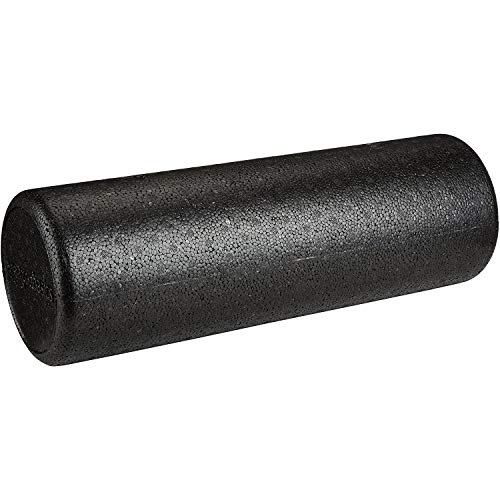
High Density Foam Roller for Back
A firm foam roller is one of the most effective tools for opening up a stiff thoracic spine when used consistently.
Chin Tucks
This one looks simple but targets the deep neck flexors that get stretched out when your head drifts forward. While sitting or standing, gently pull your chin straight back (not down) as if making a double chin. Hold for five seconds, release, and repeat ten times. Do this several times a day, even at your desk or in the car.
Strengthening Exercises to Pull the Shoulders Back

Stretching loosens the tight muscles. Strengthening builds the muscles that will actually hold your posture in the corrected position. Without this part, any improvement tends to fade within days.
Band Pull-Aparts
Hold a resistance band with both hands in front of you at shoulder height, palms down. Pull the band apart by squeezing your shoulder blades together, keeping your arms straight. Slowly return. Aim for three sets of 12 to 15 repetitions. This directly targets the rear deltoids and rhomboids that tend to go dormant from years of forward-reaching postures.
A good set of resistance bands with handles gives you enough variety to progress this and other back exercises over time without needing a full gym. They’re easy to store and gentle on the joints.

Resistance Bands Set with Handles
A set with multiple resistance levels lets you start light and progress steadily as your upper back gets stronger.
Seated Rows with a Band
Anchor your resistance band around a door handle or a sturdy post. Sit in a chair facing the anchor point, hold both handles, and pull your elbows back while squeezing your shoulder blades. This mimics a rowing motion and strengthens the mid-back muscles responsible for holding the shoulders back. Three sets of 12 repetitions works well here.
If you’re working on a broader strength program, our 12-week progressive resistance training program gives you a structured plan that builds these exercises into a full-body routine.
Wall Angels
Stand with your back flat against a wall, feet a few inches out from the base. Press your lower back, shoulders, and head gently into the wall. Raise your arms to a goalpost position (elbows at 90 degrees, upper arms at shoulder height) and slowly slide them up the wall as far as you can while keeping everything in contact with the wall. Slide back down. Do 10 reps. This exercise is harder than it looks, and that difficulty tells you exactly which muscles need the most work.
Building Good Posture Into Daily Habits
Exercises only work if daily habits aren’t undoing them. Spending 10 minutes stretching and then slumping in a chair for six hours is a losing equation.
A few practical changes that add up over time:
- Set a timer to stand and reset your posture every 30 to 45 minutes when sitting
- Raise your monitor or tablet to eye level instead of looking down
- Use a lumbar support cushion in your chair to encourage a neutral spine
- Try sleeping on your back with a small pillow under your knees rather than curled on your side
- When walking, think about lifting through the crown of your head rather than pulling your shoulders back forcefully
Nutrition also plays a role that often gets overlooked. The muscles supporting your spine need adequate protein to stay strong, and bone health depends on more than just calcium. Getting enough vitamin D for bone and muscle health is especially important for seniors, since deficiency is extremely common and quietly accelerates both bone loss and muscle weakness.
Frequently Asked Questions
Can a forward hunch be fully corrected in older adults?
It depends on the cause. If the hunch is primarily muscular and postural, consistent stretching and strengthening can produce significant improvement, sometimes dramatic improvement, within a few months. If there’s a structural component like compressed vertebrae from osteoporosis, the curve itself may not fully reverse, but strengthening the surrounding muscles can still reduce discomfort and prevent further worsening.
How long does it take to see results from posture exercises?
Most people notice some improvement in how they feel, reduced tightness and less fatigue from holding themselves upright, within two to four weeks of consistent daily work. Visible changes in posture typically take six to twelve weeks. The longer the pattern has been ingrained, the more patience it requires.
Is a posture corrector brace worth using?
A posture corrector brace can serve as a useful reminder early in the process, nudging you into alignment while you’re building the muscle memory. The key is not to rely on it as a substitute for strengthening. Wearing a brace all day without doing the underlying exercises can actually weaken the muscles you’re trying to build. Use it as a cue, not a crutch.

Posture Corrector Brace for Upper Back
Best used as a temporary training aid alongside active strengthening exercises, not as a long-term fix on its own.
Working on posture is one of those areas where small, consistent efforts really do add up. A few minutes of stretching in the morning, a set of band pull-aparts while watching TV, and a little more awareness while sitting can shift things considerably over time. Start with the exercises above, be patient with the process, and don’t hesitate to loop in a physical therapist if you’re not seeing progress after six to eight weeks.
This article contains affiliate links. We may earn a small commission at no extra cost to you.