Foot pain during walking is one of the top reasons seniors reduce their physical activity. When every step hurts, the motivation to walk for exercise evaporates.
The feet absorb 1-1.5 times your body weight with each step, which means a 30-minute walk subjects them to hundreds of tons of cumulative force. After decades of this loading plus the age-related changes in foot structure, it’s no surprise that pain develops.
Most walking-related foot pain responds to a combination of targeted exercises, proper footwear, and simple modifications. Before starting any new exercise program or making significant changes to your walking routine, talk to your doctor, especially if you have diabetes, peripheral neuropathy, balance concerns, or existing foot conditions.
Common Causes of Foot Pain During Walking
Plantar Fasciitis
Pain under the heel or along the arch that’s worst with the first steps of the morning and after prolonged sitting. The pain may improve after a few minutes of walking, then return as your walk gets longer.
The plantar fascia (thick band under the foot) becomes inflamed from overuse, tight calves, or unsupportive shoes. The pain pattern is distinctive: sharp and stabbing with initial steps, then dulling to a deep ache as the tissue warms up.
Many people describe it as a bruised feeling directly under the heel bone. The fascia tightens overnight while you sleep, which explains the morning agony. Walking stretches it back out temporarily, but continued use during a long walk re-inflames the tissue.
Metatarsalgia (Ball of Foot Pain)
Pain under the ball of the foot, often described as walking on a pebble. The fat pad that cushions the metatarsal heads thins with age, leaving the bones more exposed to impact.
This type of pain increases with walking duration and is worse on hard surfaces. The second and third metatarsal heads (the bones behind your second and third toes) usually hurt the most.
You may notice calluses forming under these spots as your body tries to build protective layers. Shoes with thin soles, high heels, or anything that forces your weight forward onto the ball of the foot makes this worse. Concrete sidewalks produce more pain than grass or dirt trails.
Morton’s Neuroma
Sharp, burning pain between the third and fourth toes that worsens during walking and may cause numbness or tingling in the toes. A thickened nerve between the metatarsal bones gets compressed with each step, especially in narrow shoes.
The pain often forces you to stop mid-walk, pull off your shoe, and massage your foot before continuing. Some people feel like their sock is bunched up under their toes even when it’s not.
The burning sensation can radiate into the toes themselves. Wider shoes with a roomy toe box often provide immediate relief, which helps distinguish this from metatarsalgia.
Bunion Pain
Pain at the base of the big toe where the bone protrudes outward. Walking aggravates the bunion as your shoe presses against the bony prominence with each step. The big toe joint stiffens and loses its ability to push off properly.
The bunion itself is the visible bump, but the deeper problem is that your big toe is angling toward the second toe instead of pointing straight ahead. This misalignment shifts weight distribution across your entire foot.
During the push-off phase of walking, you can’t use your big toe effectively, forcing the smaller toes to compensate. The joint may be red, swollen, and warm to the touch after a walk.
Flat Feet / Fallen Arches
The arch of the foot gradually collapses with age, lengthening the foot and shifting weight distribution. This produces a tired, aching sensation throughout the foot during longer walks and can contribute to shin pain, knee pain, and hip pain as the altered mechanics travel up the chain.
Your shoes may wear unevenly, with more breakdown on the inside edge. You might notice your feet rolling inward excessively (overpronation) when you walk.
The fatigue feeling is diffuse rather than pinpointed to one spot. Standing still may feel almost as tiring as walking. Many people with flat feet also develop plantar fasciitis because the dropped arch overstretches the fascia.
Achilles Tendinitis
A tight, aching pain in the back of the heel and lower calf that worsens during and after walking. The Achilles tendon, which connects your calf muscles to your heel bone, develops microtears from repetitive stress.
This is especially common in people who increase their walking distance too quickly or wear shoes with insufficient heel support. The pain is often worse when you first start walking, improves slightly as you warm up, then returns with increased intensity afterward.
You may feel stiffness in the morning. Pressing on the tendon itself produces tenderness. If you try to rise up on your toes, the painful side may not lift as high as the other foot.
Exercises That Help
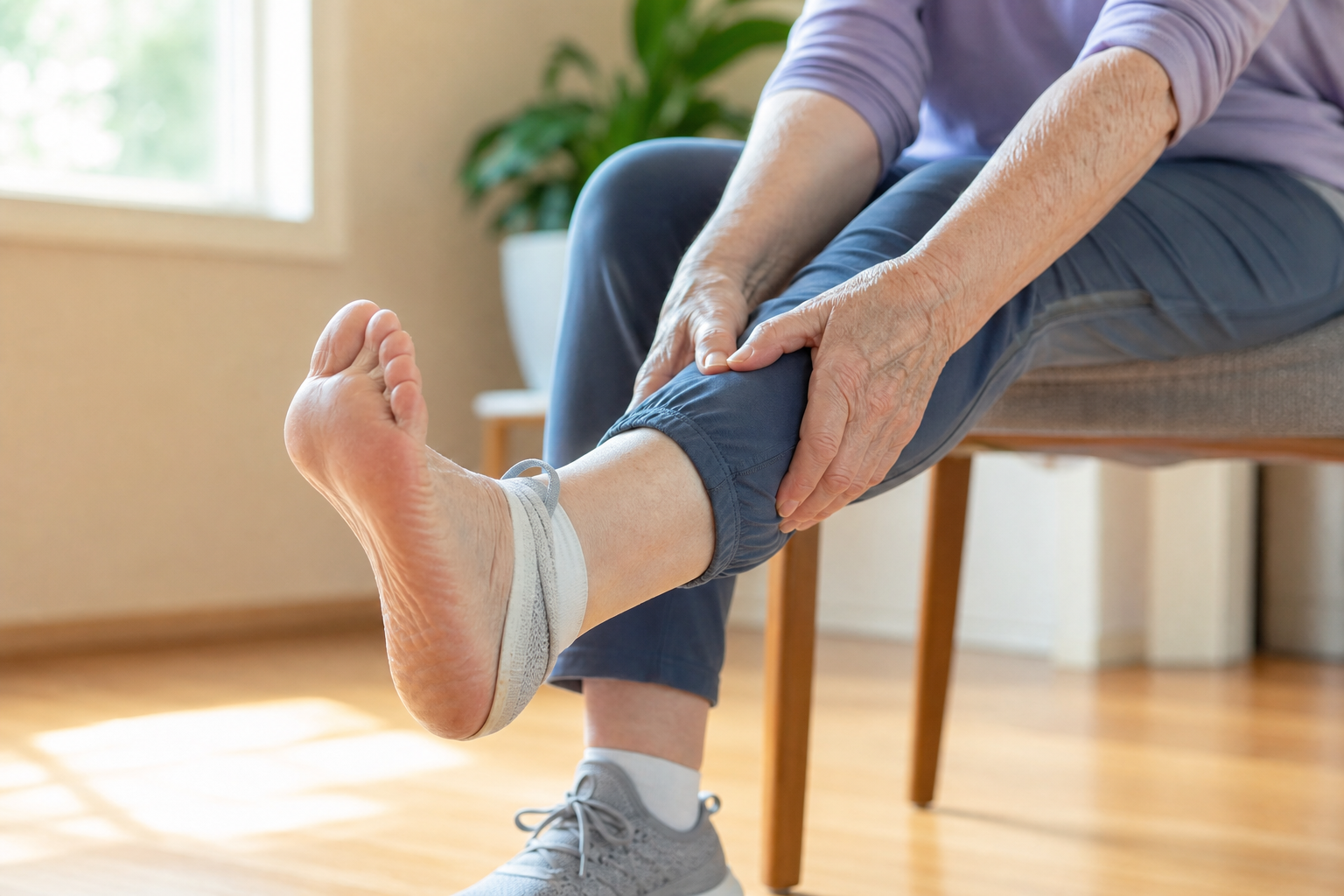
Plantar Fascia Stretch
Sit and cross one foot over the opposite knee. Grab your toes and pull them back toward your shin until you feel a stretch along the arch. Hold 30 seconds. Repeat 3 times per foot.
Do this before getting out of bed each morning and before every walk. Research suggests this single exercise reduces plantar fasciitis pain significantly when done consistently.
You should feel the stretch along the bottom of your foot from heel to toes, not in your toes themselves. If you can’t reach your toes comfortably, loop a towel or belt around the ball of your foot and pull on that instead.
The stretch should be firm but not painful. If you have significant balance issues, do this exercise seated in a stable chair rather than on the edge of your bed. Chair-based exercises can be particularly helpful for building strength while maintaining stability.
Calf Stretches (Two Variations)
Tight calves increase tension on the plantar fascia with every step. Stand facing a wall. For the gastrocnemius stretch: one foot back, knee straight, lean forward. Hold 30 seconds.
For the soleus stretch: same position but bend the back knee slightly. Hold 30 seconds. 3 repetitions of each per side. Perform before and after walking.
The gastrocnemius is the large, visible calf muscle. The soleus sits underneath it and often gets overlooked, but it’s just as important for foot mechanics. Both need stretching.
Keep your back heel flat on the ground during both stretches. If you feel the stretch only in your Achilles tendon (back of the heel) and not up in the belly of the calf, adjust your position by stepping the back foot slightly farther away.
Towel Scrunches
Place a towel flat on the floor. Using only your toes, scrunch the towel toward you. Repeat 10 times per foot. This strengthens the intrinsic foot muscles that support the arch and reduce strain on the plantar fascia and metatarsal heads.
Start with a small hand towel before progressing to a larger bath towel. The movement should come from curling your toes under, not from pulling your whole foot back.
If this is too easy, place a light weight (a book or small dumbbell) on the far end of the towel to add resistance. If your toes cramp up, that’s normal at first. Take a break, massage your foot, and try again. Building this type of functional strength through resistance training helps prevent future foot problems.
Toe Yoga
Sitting or standing, try to lift only your big toe while pressing the other four toes into the floor. Then press the big toe down while lifting the other four.
This is surprisingly difficult but builds the independent toe control that supports proper push-off during walking. Practice 10 repetitions of each pattern per foot.
Most people can’t do this at all when they first try. That’s fine. The effort to activate those muscles is what matters. You may find it easier to start seated, watching your toes to see if they’re moving independently.
Using your hand to physically assist the movement at first can help your brain learn the motor pattern. With practice over several weeks, the movement becomes smoother and more controlled.
Marble Pickups
Place 10-15 marbles on the floor. Pick them up one at a time with your toes and drop them into a cup. This builds toe dexterity and intrinsic foot muscle strength. If marbles are too small, use larger objects like pencils or small towels.
This exercise targets the flexor muscles that run along the bottom of your foot. Sit in a chair with your foot flat on the floor beside the marbles. Curl your toes around each marble and lift it up to drop into the cup.
If marbles roll away too much, try using dice, small erasers, or crumpled paper balls instead. Some people find it easier to pick up objects from a slightly elevated surface like a folded towel.
Frozen Bottle Roll
Freeze a water bottle. Roll it under your foot from heel to toes for 5-10 minutes while seated. This combines ice therapy (for inflammation) with massage (for fascial tightness). Do this after every walk if plantar fasciitis or arch pain is present.
The bottle should be fully frozen, not just cold. Apply moderate pressure, enough to feel the bottle working into the tissue but not so much that it causes sharp pain. Roll slowly and deliberately.
You can spend extra time on particularly tender spots. The cold reduces inflammation while the rolling motion breaks up adhesions in the fascia. A golf ball or tennis ball works as an alternative if you need deeper pressure without the ice.
Ankle Circles and Alphabet
Sit with one leg extended. Slowly circle your ankle 10 times in each direction. Then use your big toe to “write” the letters A through Z in the air. This mobilizes the ankle joint and activates all the small stabilizing muscles of the foot and lower leg.
The movements should be slow and controlled, using the full range of motion your ankle allows. If certain directions feel tight or restricted, spend extra time exploring that range.
This exercise is particularly useful for people with stiff ankles or those recovering from an ankle sprain. It can be done while watching TV or reading.
Short Foot Exercise
Sitting or standing, try to shorten your foot by pulling the ball of your foot toward your heel without curling your toes under. Your arch should lift slightly. Hold for 5 seconds, relax, and repeat 10 times.
This activates the intrinsic foot muscles that form your arch. Many people find this movement abstract and difficult to learn. An easier cue: imagine pulling a marble under the center of your foot toward your heel using only the muscles inside your foot.
Your toes should stay long and relaxed. Your heel shouldn’t lift off the ground. Once you can do this seated, progress to doing it while standing, then while shifting your weight from foot to foot. Practicing balance drills alongside foot strengthening exercises creates a more stable foundation for walking.
Footwear Solutions
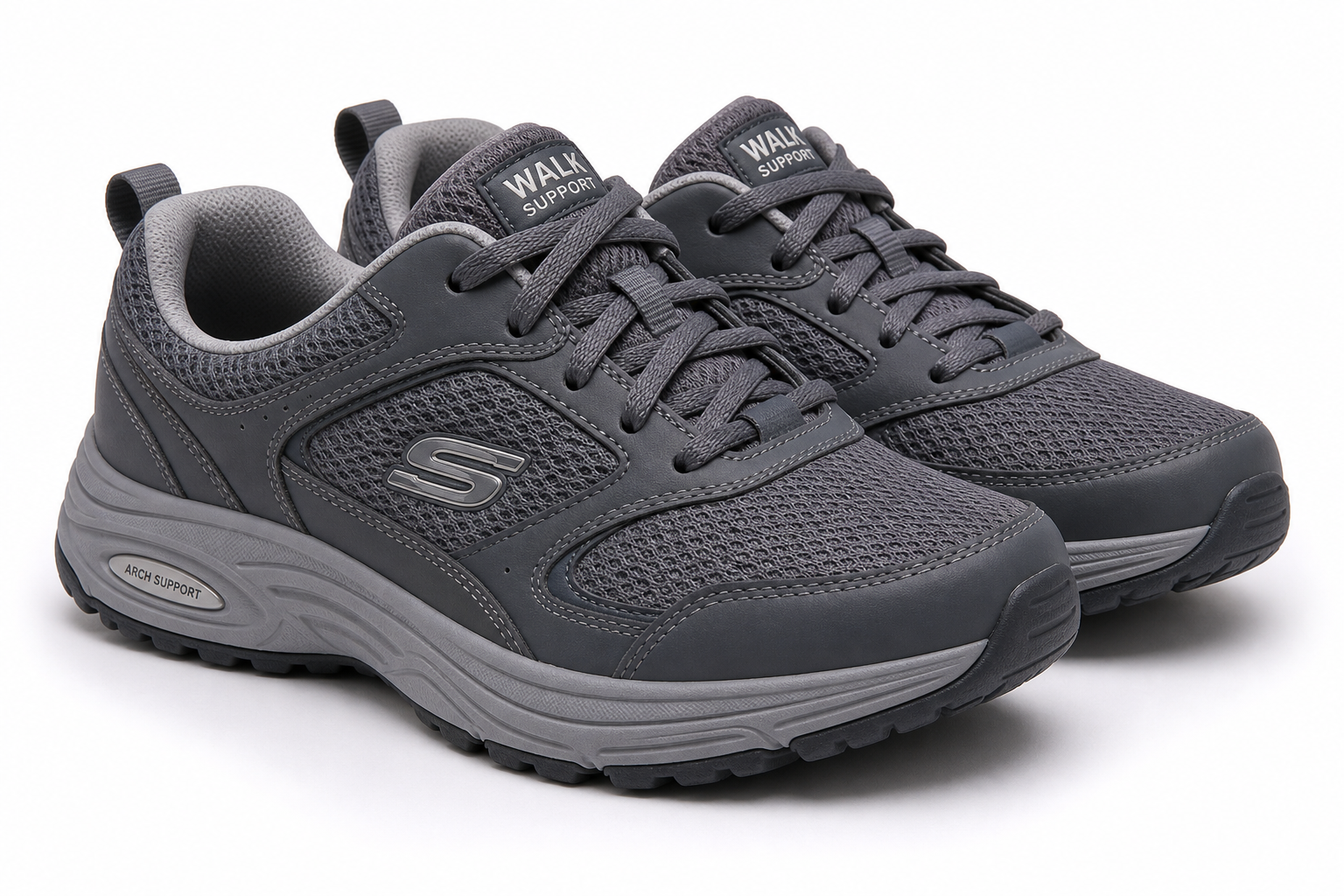
Walking shoes with firm arch support reduce plantar fascia strain. Supportive walking shoes with a cushioned midsole, rigid heel counter, and rocker-style sole (slightly rounded at the toe) are the best choices for seniors with foot pain.
Avoid flat shoes, flip-flops, and any shoe that bends in half easily (indicating no structural support). Test the heel counter by squeezing it between your thumb and fingers. It should feel firm and resist collapsing.
The shoe should only bend at the ball of the foot, not in the middle of the arch. A rocker sole helps reduce the pressure on your forefoot during push-off and can significantly decrease metatarsal pain. Replace walking shoes every 300-500 miles or when you notice the midsole foam no longer springs back after compression.

Supportive Walking Shoes
Look for shoes with firm heel counters, rocker soles, and cushioned midsoles that provide both support and shock absorption for painful feet
Over-the-counter insoles provide additional arch support inside your shoes. Plantar fasciitis-specific insoles with a deep heel cup and firm arch support can transform an uncomfortable shoe into a comfortable one.
The deep heel cup centers your heel and prevents the inward rolling that overstretches the plantar fascia. The arch support should feel snug but not painful. Some discomfort during the first few days of wear is normal as your foot adjusts, but sharp pain means the arch is too aggressive for your foot.
If your shoes are already tight, you may need to size up by a half size to accommodate the insole. Remove the original insole that came with the shoe before inserting your new one.