Staying flexible becomes more important with each passing year, but many seniors unknowingly sabotage their stretching routines with habits that do more harm than good. You might think you’re doing everything right, only to wonder why your flexibility isn’t improving or why you’re dealing with unexpected aches and pains.
The truth is that stretching techniques matter just as much as the stretching itself. Small mistakes can limit your progress, increase injury risk, and make your entire routine less effective. Let’s look at the five most common flexibility mistakes older adults make and how to fix them.
Mistake #1: Bouncing During Stretches

Ballistic stretching, the fancy term for bouncing, might feel productive because you’re moving more. But this approach actually triggers your muscles’ protective stretch reflex, causing them to tighten up instead of releasing. For seniors, this increases the risk of muscle tears and strains.
Your muscles and tendons become less elastic with age, making them more vulnerable to sudden movements. When you bounce, you’re creating tiny tears in the muscle fibers that can lead to scar tissue formation over time.
The correct approach is static stretching, where you move slowly into a stretch and hold it steady. Ease into each position gradually, stopping when you feel gentle tension. No jerking, no bouncing, just steady, controlled movement.
Mistake #2: Holding Your Breath While Stretching
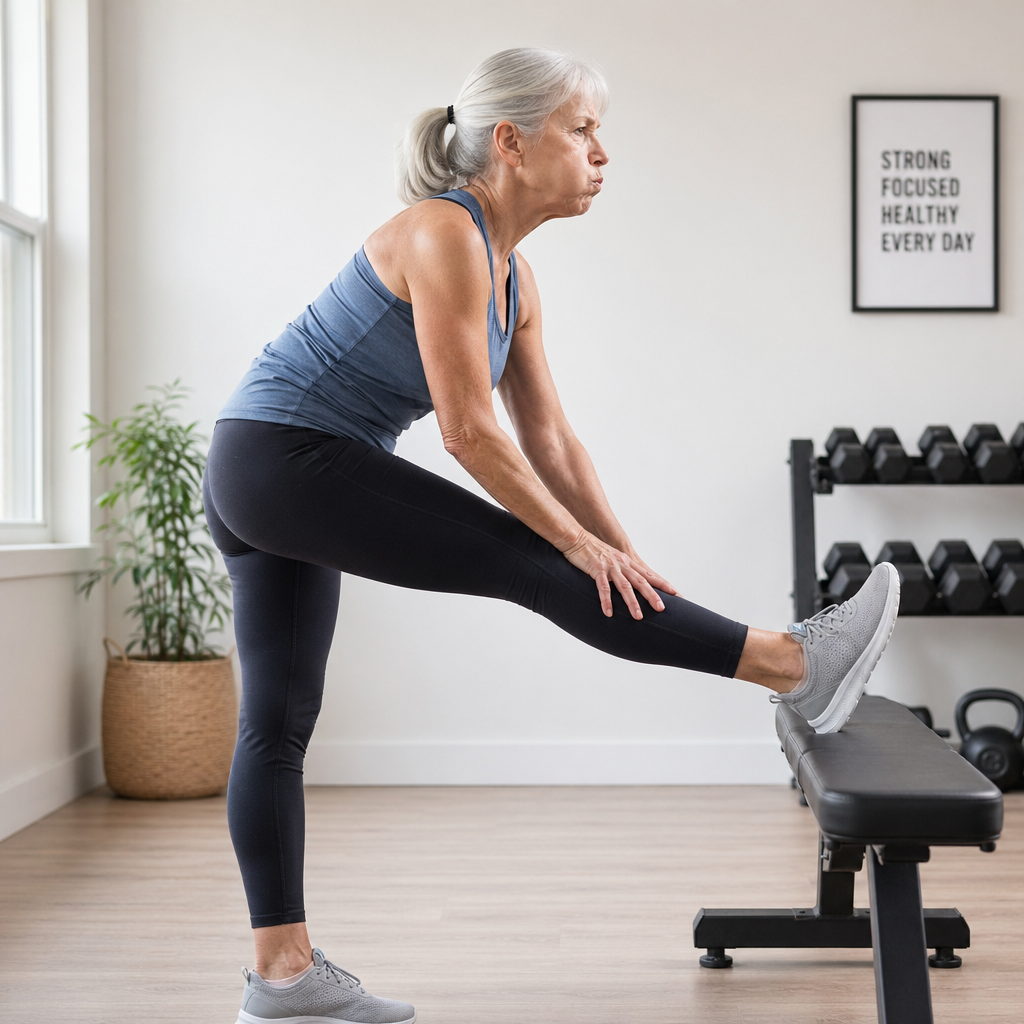
It’s surprisingly common to hold your breath when you stretch, especially when reaching for a challenging position. This tenses your muscles and raises your blood pressure, which is particularly problematic for older adults who may already be managing cardiovascular concerns.
Proper breathing actually enhances your stretch. Oxygen helps your muscles relax and allows you to sink deeper into each position safely. Plus, focused breathing keeps you present and aware of what your body is telling you.
Try this technique: breathe in deeply through your nose as you prepare for the stretch, then exhale slowly through your mouth as you move into position. Continue breathing steadily throughout the hold, using each exhale to relax a bit more into the stretch. You’ll notice an immediate difference in how your body responds.
Mistake #3: Stretching Cold Muscles

Jumping straight into stretching without any warm-up is like trying to bend cold taffy. Your muscles need increased blood flow and elevated temperature to stretch safely and effectively.
Cold muscles are stiff and resistant, making you more prone to pulls and strains. This is where understanding the difference between dynamic and static stretching becomes crucial. Dynamic stretches involve gentle movement and are perfect for warming up, while static stretches should come after your muscles are already warm.
Before any static stretching session, spend 5-10 minutes doing light activity. Walk around your house, march in place, do some gentle arm circles, or perform leg swings. Even taking a warm shower can help prepare your muscles for stretching.
For your regular routine, start with dynamic stretches like shoulder rolls, hip circles, and gentle torso twists. These movements pump blood into your muscles and increase your core temperature. Save the longer-held static stretches for after this warm-up phase or at the end of other physical activity.
Mistake #4: Overstretching and Pushing Too Hard
Many seniors grew up with the “no pain, no gain” mentality, but this mindset can be dangerous when applied to flexibility training. Overstretching creates micro-tears in your muscles and connective tissue, leading to inflammation and decreased flexibility over time.
Your stretch should feel like gentle tension, not pain. Think of it as a 4 or 5 out of 10 on the intensity scale. You should be able to breathe comfortably and maintain the position without shaking or grimacing.
For older adults, holding each static stretch for 15-30 seconds is sufficient. Research shows that holding stretches longer than 30 seconds provides minimal additional benefit for most people, and holding too long can actually cause muscle fatigue. Repeat each stretch 2-4 times if you want to increase the overall duration.
Your flexibility will improve gradually over weeks and months, not in a single session. Consistency beats intensity every time. A gentle daily stretching routine will give you better results than aggressive stretching once a week.
Mistake #5: Ignoring Pain Signals
Your body communicates through sensations, and pain is its emergency broadcast system. Too many people dismiss sharp pains, shooting sensations, or joint discomfort as normal parts of aging or necessary evils of exercise.
Sharp pain, burning sensations, or pain that radiates down a limb are red flags. These aren’t signs that you’re working hard; they’re warnings that you’re causing damage. Joint pain during stretching is particularly concerning and should never be pushed through.
Learn to distinguish between the mild discomfort of a good stretch and the warning signs of injury. Muscle tension feels like a gentle pull in the belly of the muscle. Pain feels sharp, shooting, or burning, often concentrated in joints or at muscle attachment points.
If you feel pain during a stretch, ease off immediately. Don’t try to push through it or assume it will get better if you keep going. Modify the stretch by reducing your range of motion, or skip it entirely and consult with a physical therapist or doctor if the pain persists.
Building a Sustainable Stretching Practice
Avoiding these five mistakes will transform your flexibility routine from potentially harmful to genuinely beneficial. Remember that flexibility training is a long-term investment in your mobility and independence.
Start each session with 5-10 minutes of light movement to warm up. Use dynamic stretches first, then transition to static holds. Keep your breathing steady and natural throughout. Hold each static stretch for 15-30 seconds without bouncing, aiming for gentle tension rather than pain. Listen to your body’s feedback and adjust accordingly.
Consistency matters more than intensity. A gentle 15-minute routine performed daily will deliver better results than an aggressive hour-long session once a week. Your body adapts gradually, and regular practice allows your nervous system to reset its default muscle length over time.
Frequently Asked Questions
How often should seniors stretch for flexibility improvement?
Daily stretching provides the best results for older adults. Your muscles and connective tissues respond well to frequent, gentle stimulus. Even 10-15 minutes each day will improve your flexibility more effectively than longer, less frequent sessions. You can stretch the same muscle groups daily since you’re not causing the type of breakdown that requires recovery time.
Is morning or evening better for stretching as you get older?
Evening stretching typically feels easier because your muscles are naturally warmer and more pliable after a day of movement. However, the best time is whenever you’ll actually do it consistently. Many seniors find that a gentle morning stretch helps reduce stiffness and improves mobility throughout the day. Just make sure to warm up more thoroughly in the morning since your body temperature is lower after sleep.
Can stretching help with arthritis pain?
Gentle stretching can help maintain range of motion and reduce stiffness associated with arthritis, but it should never aggravate joint pain. Focus on moving through comfortable ranges of motion rather than pushing into painful territory. Work with your doctor or physical therapist to develop a stretching routine that accommodates your specific arthritis concerns. They may recommend certain stretches while advising you to avoid others based on which joints are affected.