You’ve probably heard the number 30 seconds tossed around so many times it feels like law. But if you’ve ever wondered whether you’re supposed to hold a hamstring stretch for 15 seconds or a full minute, and whether that changes as you get older, you’re asking a smarter question than most people bother with. The answer isn’t one-size-fits-all, and getting it right matters more for joint health and flexibility than most people realize.
The Short Answer: 20 to 30 Seconds, With Some Flexibility
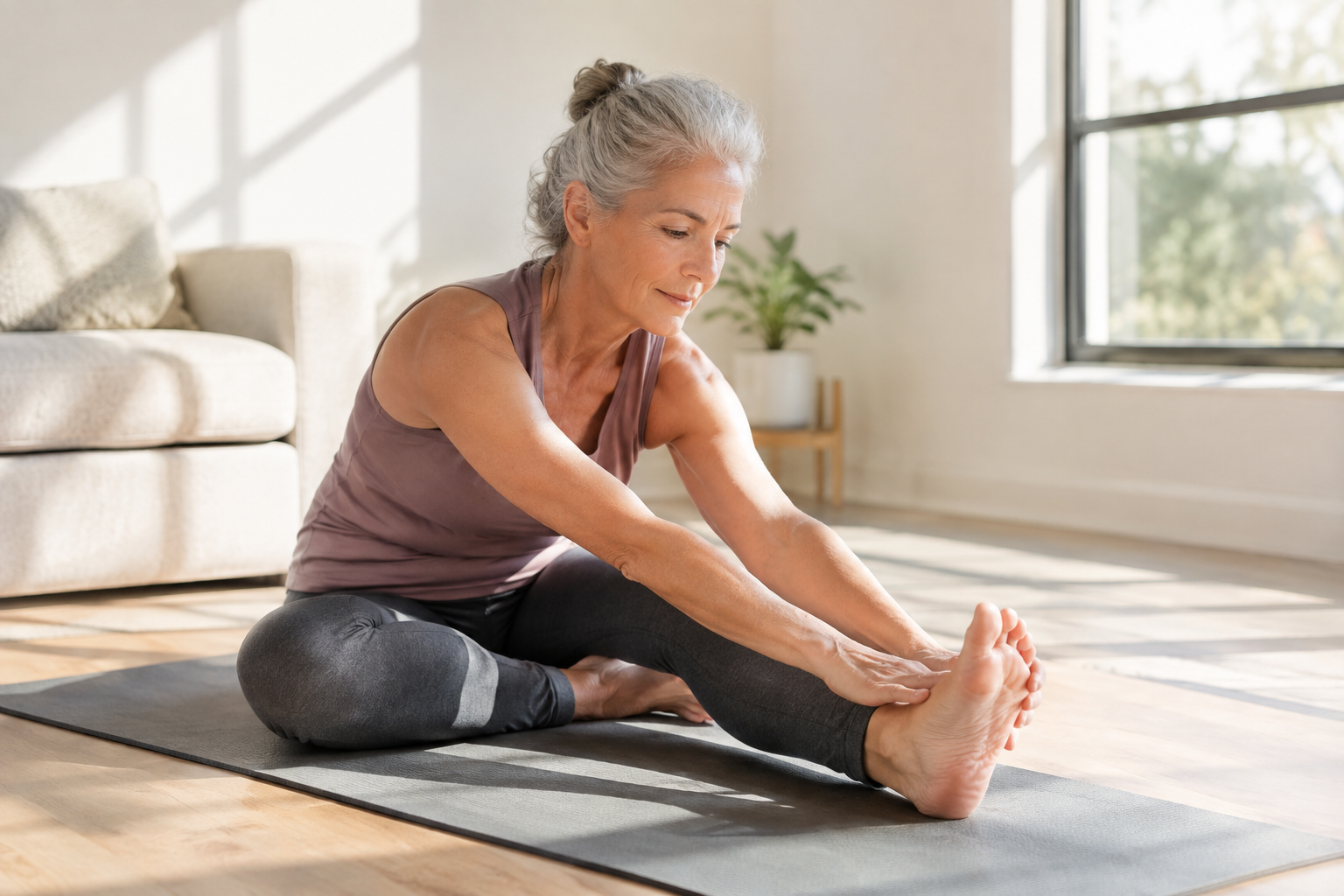
For most static stretches, holding for 20 to 30 seconds is the sweet spot. This gives your muscle fibers and connective tissue enough time to relax and lengthen without tipping into overstretching territory. Research on flexibility training generally supports this range for adults of any age, though seniors often benefit from staying on the shorter end at first.
If you’re newer to stretching or working with stiffer joints, start with 15 to 20 seconds and build up gradually over several weeks. There’s no prize for holding longer than your body wants to. Once a muscle has released its initial tension, extra time under tension doesn’t add much benefit and can increase the risk of straining tissue that isn’t used to being stretched.
For tighter areas like the calves, hips, or lower back, some people find that repeating a shorter stretch two or three times works better than holding one long stretch. This lets you check in with your body between rounds rather than pushing through discomfort just because a timer hasn’t gone off yet.
Comfortable Range of Motion Beats Deep Stretching
The goal of a stretch is to reach a point of mild tension, not pain. You should feel a gentle pull in the muscle, never a sharp or burning sensation. If you’re gritting your teeth or holding your breath, you’ve gone too far, and that’s true no matter how many seconds are left on the clock.
This matters more as you get older because tendons and connective tissue lose some elasticity over time, and joints can be more vulnerable to injury from aggressive stretching. Pushing into an end-range position, especially if it involves bouncing or forcing the movement, can actually cause micro-tears or joint irritation rather than improving flexibility.
Think of it as stretching to about 70 or 80 percent of your available range rather than chasing your absolute limit every time. Your flexibility will still improve over weeks and months, just more safely. If you’re dealing with ongoing joint pain, it’s worth reading about strengthening exercises for knee pain or back pain relief exercises, since strength and flexibility often need to be addressed together.
Breathe Through It, Don’t Hold Your Breath

Steady breathing is one of the most overlooked parts of stretching, and it makes a real difference in how much tension your body releases. When you hold your breath during a stretch, your muscles tend to stay guarded and tight, which works against what you’re trying to accomplish.
Try inhaling slowly as you move into the stretch, then exhaling as you settle into the hold. Keep breathing normally for the remainder of the time, rather than locking your breath in place. Many people find that a slow exhale actually helps them ease a few extra degrees into the stretch without forcing anything.
This is also a good moment to check your posture. If you’re stretching your hamstrings while seated and rounding your entire spine to reach your toes, you’re putting strain on your lower back instead of your hamstrings. Adjust your position so the stretch targets the muscle you’re actually trying to loosen.
Static Versus Dynamic Stretching: When Each One Fits
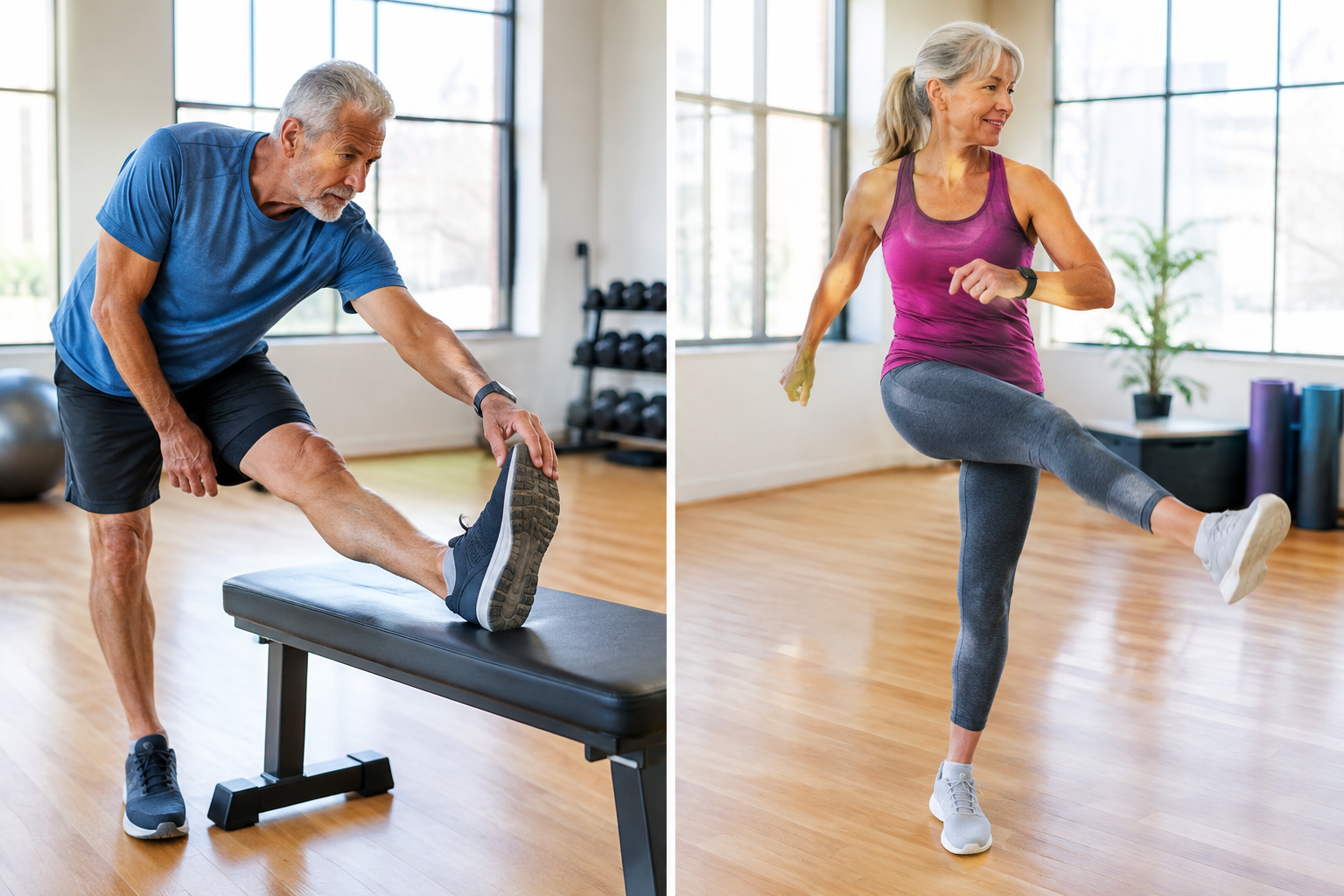
Static stretching, where you hold a position for a set time, works best after activity when your muscles are already warm. This is when tissue is most pliable and least likely to be injured by lengthening. Holding stretches after a walk, a strength session, or a chair workout is a great habit, and our post-walk stretching routine is a solid template if you want structure.
Dynamic stretching, on the other hand, involves controlled movement through a range of motion, like leg swings or arm circles, and it’s better suited for warming up before exercise. It raises your heart rate slightly and prepares your joints for the movement ahead, without holding you in a static position while your muscles are still cold.
A simple rule to remember: move before you exercise, hold after you exercise. If you’re planning a strength session, pairing dynamic warm ups with proper stretching afterward rounds out your routine nicely, and you can learn more about structuring that time in our guide on how long a senior strength workout should last.
How Frequency and Duration Can Vary
Not every stretch needs to happen every day, and not every stretch needs the same amount of time. Areas that tend to get tight from sitting, like the hip flexors and lower back, often benefit from daily attention. Muscles that aren’t chronically shortened by your daily habits might only need stretching two or three times a week.
Total time matters too. If you’re targeting a specific tight spot, doing two or three holds of 20 to 30 seconds each, with a short break in between, tends to work better than one long marathon hold. This is especially true for older adults whose tissue responds better to repeated, gentle exposure than to one intense stretch.
Using a simple stretching strap can help you maintain proper form and a comfortable range of motion, especially for stretches like hamstring or calf stretches where reaching your foot with your hands is difficult.
Stretching Strap for Seniors
A stretching strap makes it easier to hold proper form on lower body stretches without straining your back or shoulders to reach your feet.
If you keep track of your stretching sessions the same way you might track workouts, a basic timer or even a low-tech method can help you stay consistent without needing to count seconds in your head. Our post on low-tech exercise tracking methods covers some simple options, and a basic workout timer can take the guesswork out of holding stretches for a consistent duration.
Flexibility Guidance Versus Treatment for Persistent Pain
Everything in this article applies to general flexibility maintenance, not to injuries or chronic pain that isn’t improving. If a joint or muscle hurts every time you move it, or if pain lingers well after you stretch, that’s a signal to talk to a doctor or physical therapist rather than trying to stretch your way through it.
Stretching a muscle that’s guarding an underlying injury can sometimes make things worse, not better. A professional can tell you whether what you’re feeling is normal tightness or something that needs a different kind of attention, and they can build a plan around your specific situation.
For a broader look at how stretching fits alongside building strength, our article on stretching versus strength training breaks down what your body needs most and when. Flexibility work supports strength training, but it isn’t a replacement for it, and both play a role in staying mobile and steady on your feet as you age.
Frequently Asked Questions
Is it bad to hold a stretch for too long?
Holding a stretch well beyond 30 to 60 seconds doesn’t add meaningful benefit for most people and can increase the risk of straining tissue, especially if you’re pushing into discomfort to maintain the position. Shorter, comfortable holds repeated a few times are generally more effective and safer than one very long hold.
Should stretches hurt if I’m doing them right?
No. You should feel gentle tension or a mild pulling sensation, never sharp pain, burning, or numbness. If a stretch hurts, ease off the range of motion immediately and reassess your positioning, since pain usually means you’ve gone past what your muscle or joint is ready for.
How often should seniors stretch each week?
Tight areas like the hips, hamstrings, and lower back often benefit from daily gentle stretching, while other muscle groups may only need attention two to three times a week. Consistency matters more than intensity, so a short daily habit tends to produce better long-term flexibility than occasional long sessions.
This article contains affiliate links. We may earn a small commission at no extra cost to you.