Your core does a lot more than hold your stomach in. It’s the foundation for everything from standing up straight to catching yourself before a stumble. When those deep muscles weaken, you start to see the effects everywhere: a forward lean when you walk, lower back aches after standing too long, and a general sense of feeling less steady on your feet. The encouraging thing is that you don’t need to get down on the floor and crank out crunches to fix any of this.
This routine focuses on seated and standing supported movements that are safer for older adults and actually more effective for the kind of functional strength you use every day. If you’ve been told to “strengthen your core” by a doctor or physical therapist but weren’t sure where to start, this is a practical place to begin.
Why Core Strength Matters More As You Age
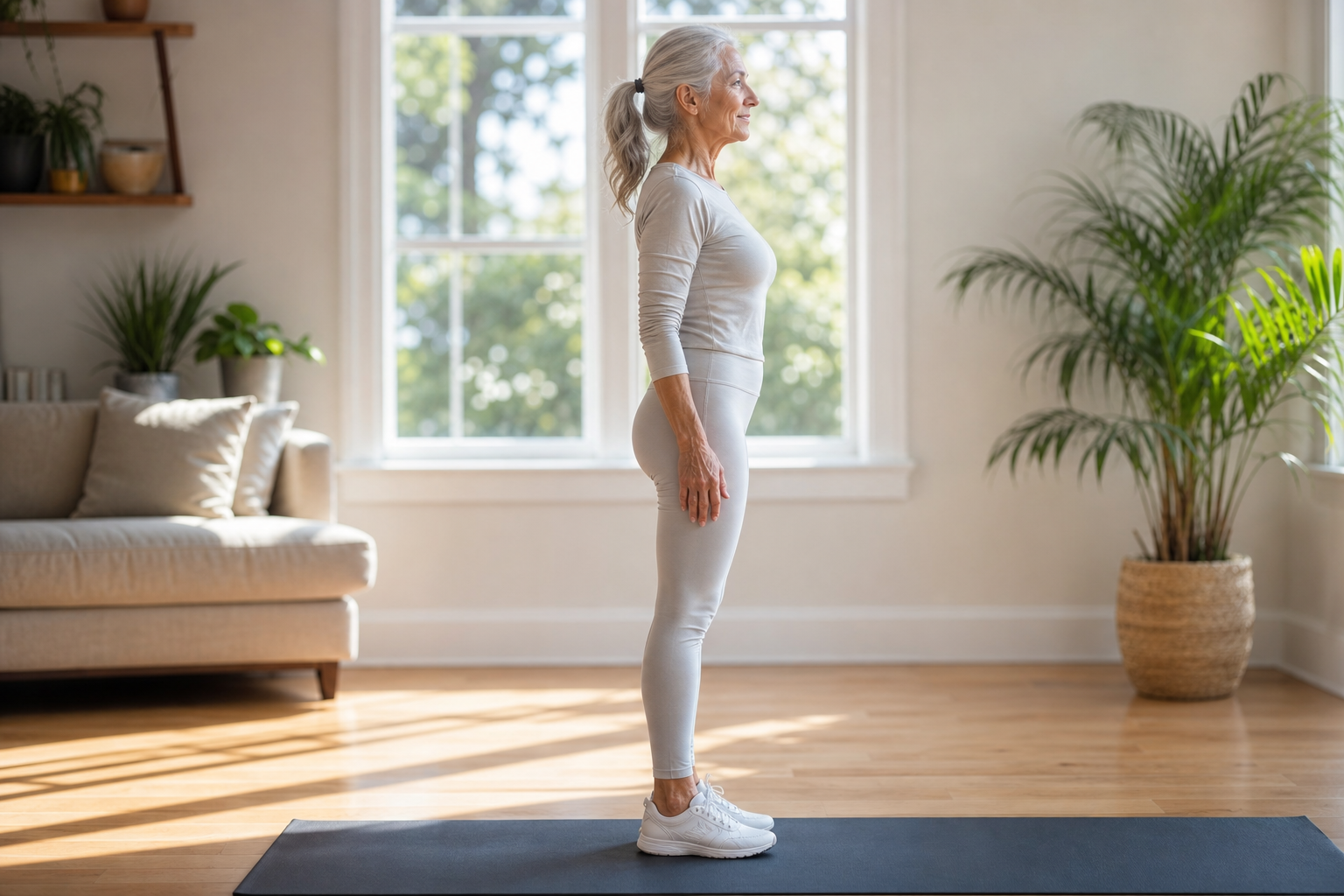
The core isn’t just your abs. It includes the muscles along your spine, your pelvic floor, your hips, and the deep stabilizers that wrap around your midsection like a natural back brace. Together, these muscles keep your spine upright, absorb impact when you walk, and help your brain and body communicate about where you are in space.
When these muscles weaken, which happens gradually after 50 if you’re not actively working against it, posture suffers first. You may notice a rounded upper back, a forward head position, or a tendency to lean slightly when walking. That forward lean shifts your center of gravity and makes falls more likely. Strengthening your core directly addresses all of this.
For seniors dealing with specific conditions, this kind of foundational work is especially important. If you’re managing vertigo or other balance challenges, core stability is one of the first things a physical therapist will target. The same applies if you’re working through neuropathy, where reduced sensation in the feet makes your core’s stabilizing role even more critical.
The Case for Seated and Supported Core Work
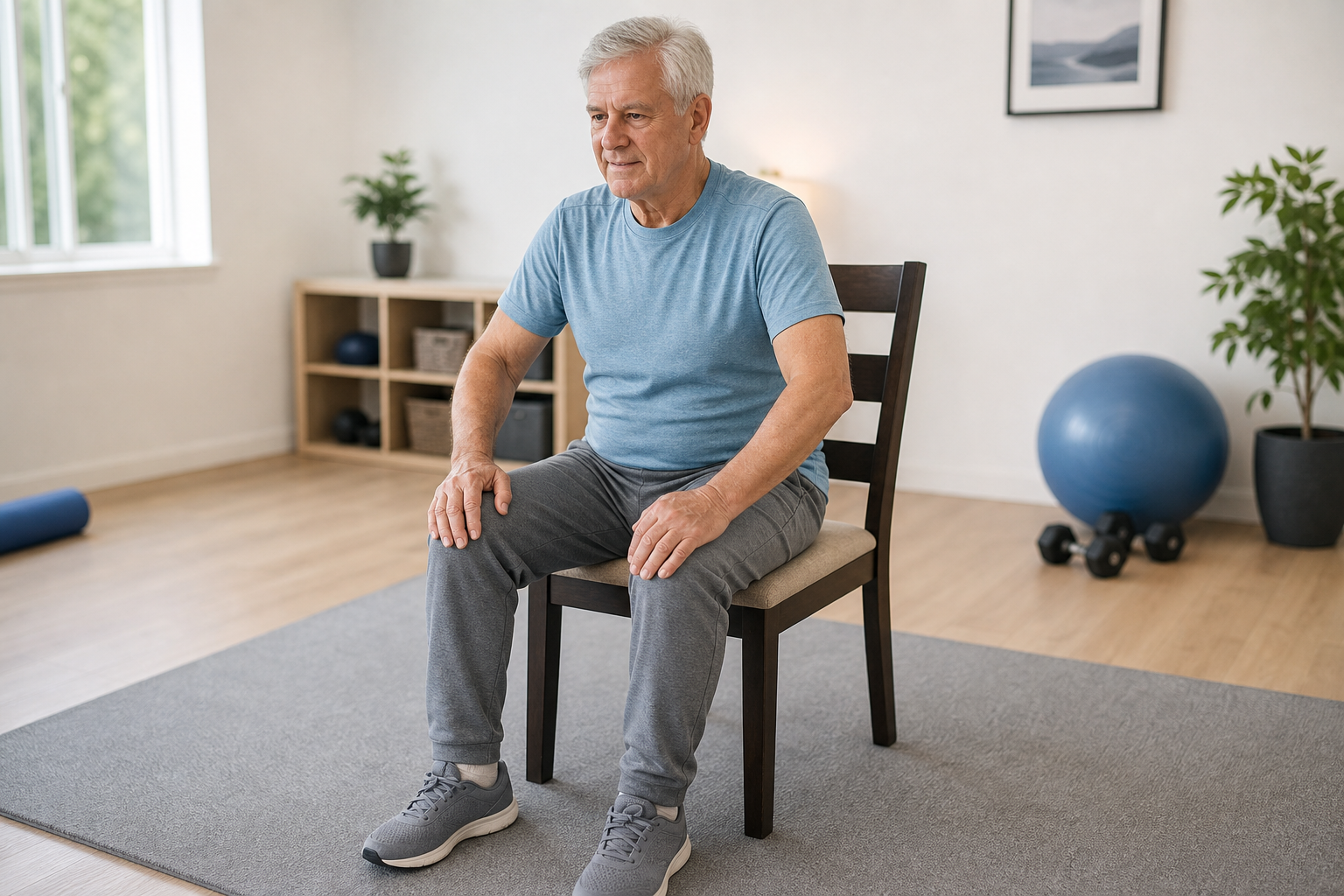
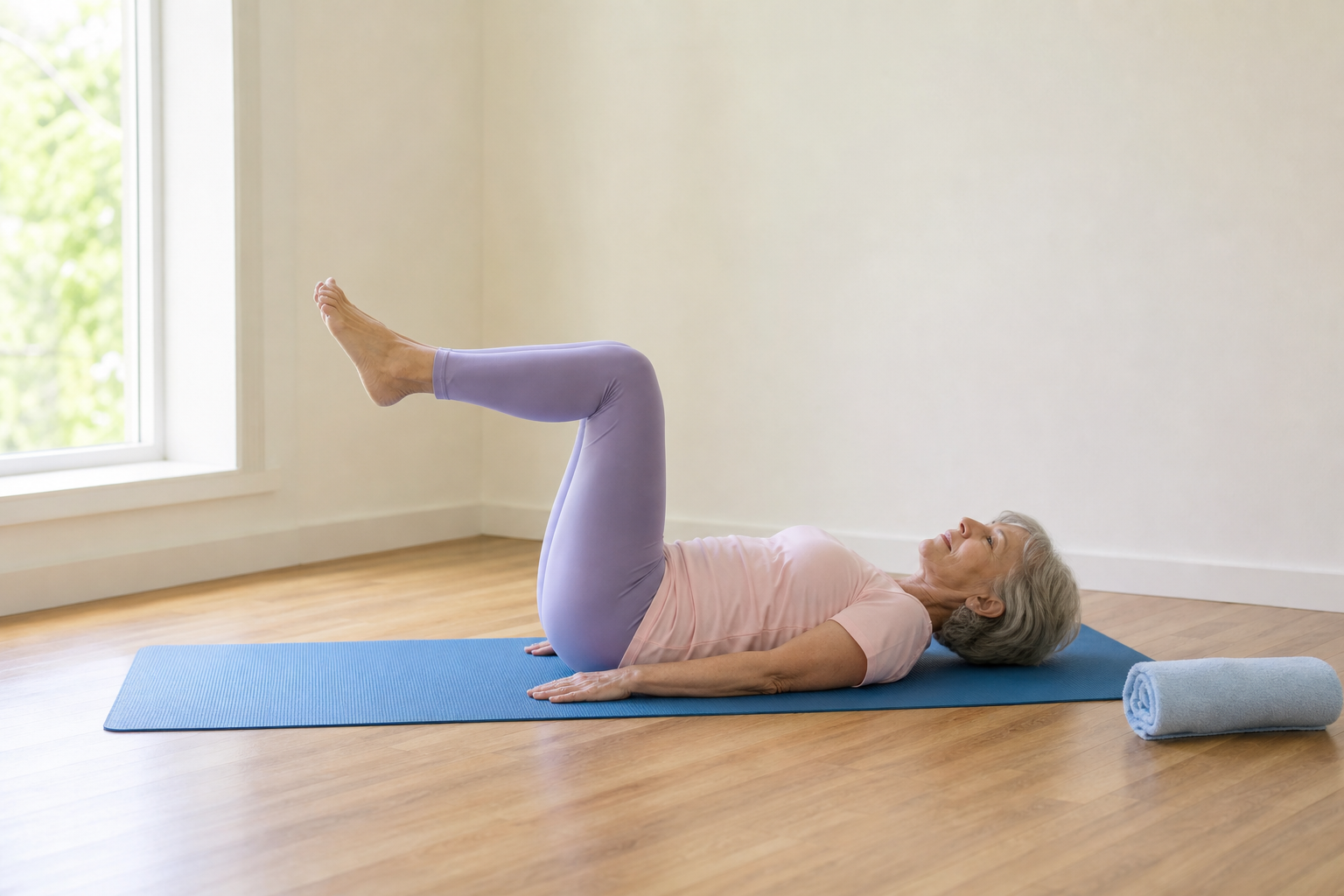
Traditional floor exercises like crunches put stress on the neck and require getting up and down from the floor, which is a fall risk in itself. Seated and standing supported movements let you build real core strength without those drawbacks.
Seated exercises also make it easier to feel which muscles are actually working. When you’re flat on your back, momentum can do a lot of the work. When you’re sitting upright and lifting a leg, there’s nowhere for momentum to hide. You have to engage the deep stabilizers to stay balanced, which is exactly what you want.
For anyone also working on their forward head posture or upper back rounding, pairing these core exercises with targeted posture corrections will speed up your results considerably.
The Core Routine: 6 Safe Exercises to Start With
1. Seated Abdominal Bracing
Sit near the front edge of a sturdy chair, feet flat on the floor. Take a breath in, then as you exhale, gently pull your navel toward your spine without holding your breath. Hold for 5 to 10 seconds, then release. Do 10 repetitions. This teaches your deep core muscle, the transverse abdominis, to activate on demand.
2. Seated Marching
From the same position, lift one knee toward the ceiling while keeping your back tall and avoiding any rocking. Lower it and alternate sides. Aim for 20 lifts total, 10 per side. This challenges your hip flexors and core at the same time, which directly mimics the muscle coordination needed for walking.
3. Seated Torso Rotation
Cross your arms over your chest or hold them out in front of you. Keeping your hips still, slowly rotate your upper body to the right, then back to center, then to the left. Do 10 rotations per side. This builds rotational stability and helps with turning movements, which are a common moment when falls happen.
4. Standing Wall Press
Stand facing a wall about arm’s length away. Place both palms flat on the wall at shoulder height. Engage your core, keep your body in a straight line, and slowly bend your elbows to bring your chest toward the wall, then push back. This is essentially a standing push-up that also trains your core to resist extension, one of its most important jobs.
5. Chair-Supported Single Leg Stand
Stand behind a sturdy chair with both hands resting lightly on the back for support. Shift your weight onto your left foot and lift your right foot slightly off the floor. Hold for 10 seconds, then switch. Over time, try using just one hand, then just one finger. This exercise translates directly to steadier walking and stair climbing.
6. Seated Ball Squeeze
Place a small exercise ball or folded pillow between your knees while seated. Gently squeeze and hold for 5 seconds, then release. Do 10 to 15 repetitions. This activates the inner thighs and pelvic floor, which are core muscles often overlooked in standard routines.
A small exercise ball works well for the squeeze exercise, and many people also use one for gentle seated balance work.

Stability Ball for Seniors
A properly sized stability ball lets you add gentle seated balance challenges as your core strength improves.
Equipment That Helps (Without Overcomplicating Things)
You don’t need much to do this routine well. A firm, sturdy chair is the main piece of equipment. Avoid anything with wheels or a soft, squishy seat. A dining chair or a solid folding chair is ideal.
If you want to gradually increase the challenge on the seated exercises, a resistance band adds variety and a little extra work for your upper core and back. Looped bands are especially easy to use without complicated setup.
A non-slip exercise mat under your chair is a smart safety addition, especially on hardwood or tile floors. It keeps the chair from sliding during the standing wall press or any movements where you’re pushing against something.
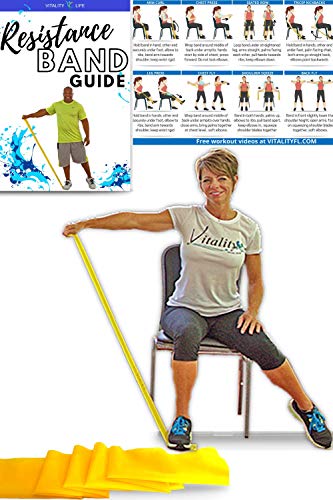
Resistance Bands for Seniors
Light to medium resistance bands let you add upper back and shoulder work that complements your core routine without straining joints.
If you’re setting up a dedicated space at home for exercise, there’s a helpful guide to building a budget-friendly home gym that covers what’s actually worth buying and what you can skip.
How Often to Do This Routine
Three to four times per week is the sweet spot for most seniors. Your core muscles recover quickly because these exercises aren’t heavily loading the spine or joints, so you don’t need long rest days between sessions. That said, if you feel soreness or fatigue, give yourself an extra day.
Each session should take about 15 to 20 minutes once you’re comfortable with the movements. You can do this routine on its own or add it to the end of a walk or another workout. For timing guidance, this article on when to work out as a senior gives some practical context depending on your energy patterns and any medications you take.
Supporting your muscles with good nutrition matters too. After your workout, a light meal or snack with protein helps muscle fibers recover. The article on post-workout recovery meals for seniors has some practical ideas that are easy to put together.
Frequently Asked Questions
Can I do these exercises if I have lower back pain?
Most of these movements are appropriate for mild to moderate lower back pain and may actually help relieve it over time by building the supportive muscles around the spine. However, if you have a diagnosed disc issue, spinal stenosis, or recent back injury, check with your doctor or physical therapist before starting. The seated abdominal bracing exercise is usually the safest starting point because it’s gentle and teaches muscle activation without movement.
How long before I notice improvement in my posture and balance?
Most people notice subtle improvements in how they carry themselves within two to four weeks of consistent practice. Balance improvements, like feeling steadier on one foot, often come a bit later, around the four to six week mark. The key word is consistent. Doing the routine twice and then stopping won’t get you there. Three times a week is where the real progress happens.
Are these exercises safe after hip or knee replacement?
Many of them are, but timing and individual recovery matter a great deal. The seated exercises are generally low-risk, but the single leg stand and any exercise requiring hip rotation should be cleared by your surgeon or physical therapist first. For more detailed guidance on returning to exercise after joint replacement, this post-hip replacement exercise guide is a good resource to review alongside your medical team’s advice.
Core strength is one of those things that quietly affects almost everything you do, from how you sit at the table to how confidently you walk on uneven ground. The exercises in this routine don’t look dramatic, but done consistently, they build the kind of functional strength that genuinely changes your daily life. Start with what feels manageable, stay consistent, and you’ll notice the difference.
This article contains affiliate links. We may earn a small commission at no extra cost to you.