When space is tight and a full-size treadmill or bike won’t fit, compact cardio machines deliver genuine cardiovascular conditioning in a footprint smaller than a bathroom scale. Mini steppers, under-desk ellipticals, and compact climbers all elevate heart rate enough for aerobic benefit while storing in a closet, under a bed, or beside your favorite chair. Here’s what works best for seniors.
Best Compact Cardio Machines
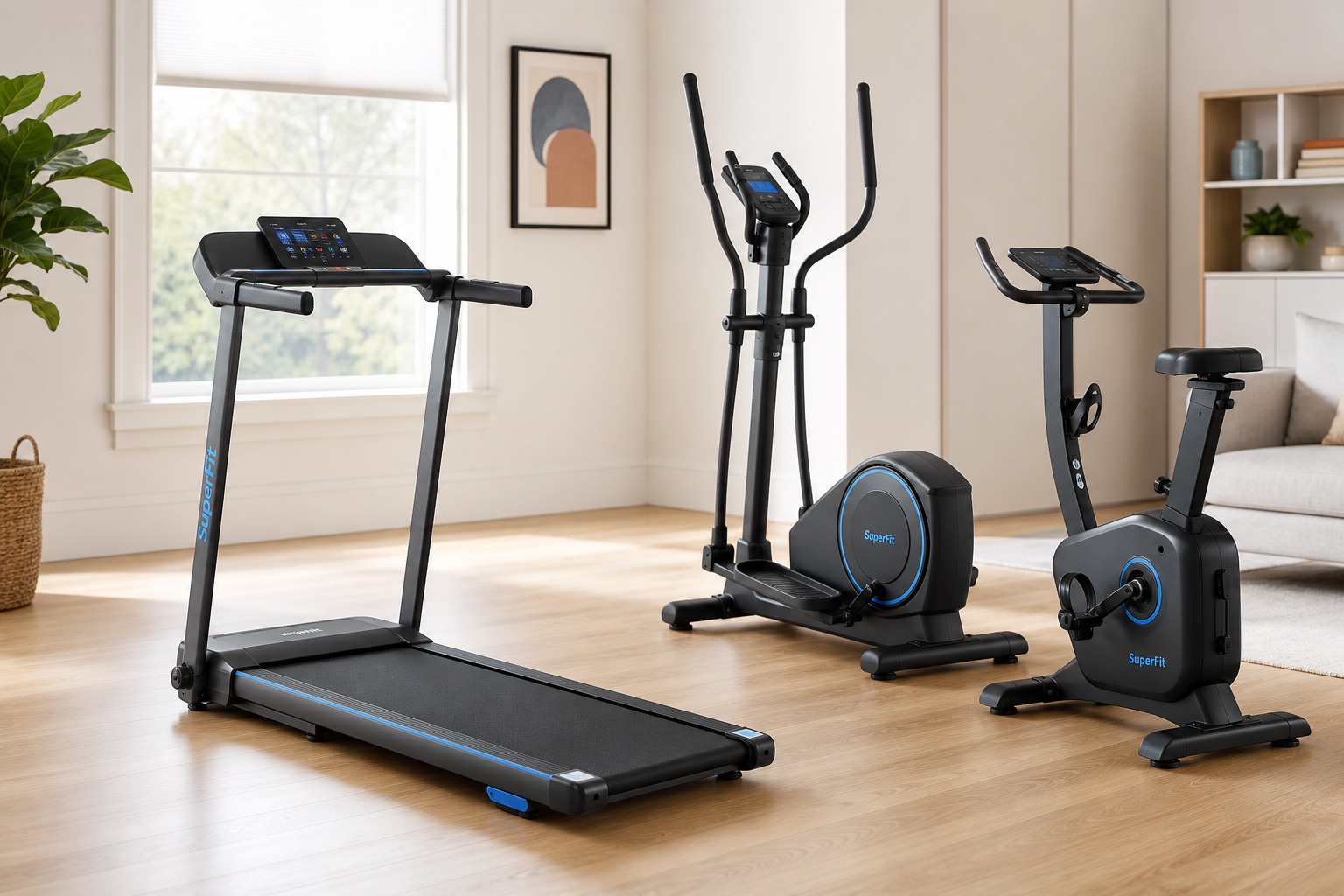
Mini Stepper
A mini stepper mimics stair climbing in a device roughly 16×12 inches. Step on the foot plates and pump your legs in an alternating up-down motion. Hydraulic resistance provides smooth stepping. Models with resistance bands attached add upper body engagement. Heart rate reaches the moderate zone within 3-5 minutes for most seniors.

Mini Stepper with Resistance Bands
Best option for full-body engagement and bone density support
The stepping motion engages quads, glutes, calves, and hip flexors in a pattern similar to climbing stairs, but with adjustable resistance and no actual elevation change. Most units handle users up to 220-250 pounds. The hydraulic cylinders compress and extend as you step, creating resistance you can usually adjust via a knob or dial. Higher resistance settings make each step harder, requiring more effort and building more leg strength.
Models with attached resistance bands let you pull or press while stepping, turning a lower-body exercise into full-body cardio. The bands typically anchor to the base and have handles you grip. This setup works well for interval training: step without bands for 2 minutes, then add band pulls for 1 minute.
Pros: Weight-bearing (builds bone density), small footprint, budget-friendly.
Cons: Requires standing balance (use a wall or counter for support), can be hard on knees at high resistance.
Who should skip it: Anyone with significant balance impairment without a stability aid within arm’s reach. If you’ve had recent knee surgery or have active knee pain, consult your physical therapist before using a stepper. The repetitive flexion can aggravate some knee conditions.
Under-Desk Elliptical (Cubii-Style)
The Cubii and similar under-desk ellipticals provide a smooth, seated elliptical motion. Place it under a desk, table, or in front of your couch. The elliptical motion is gentler on knees than the up-down stepping motion. Magnetic resistance is whisper-quiet for TV-time use.
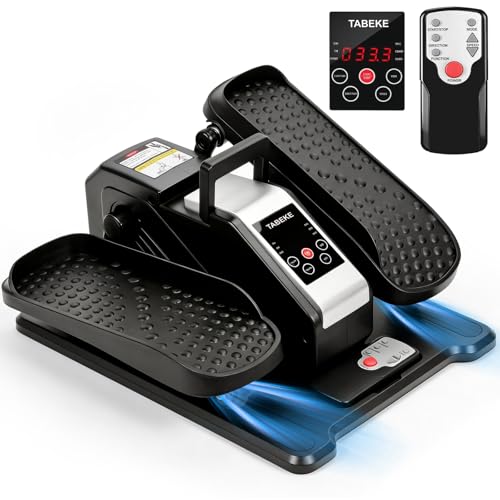
Under-Desk Elliptical
Best for bad knees and multitasking during sedentary activities
The oval pedaling path reduces joint stress compared to circular pedaling (pedal exerciser) or vertical stepping (mini stepper). Your feet trace a smooth ellipse, keeping knees in a partial range of motion without full flexion or extension. Most under-desk ellipticals offer 8 to 16 magnetic resistance levels controlled by a dial or digital display. The higher the resistance, the more effort each pedal stroke requires.
Some models track distance, time, calories, and RPM via a small LCD screen or Bluetooth app. The data helps you set goals and monitor consistency. A typical moderate-intensity session runs at 50-80 RPM (revolutions per minute). Going faster or increasing resistance pushes heart rate higher.
Chair height matters. You need 8-10 inches of clearance between the seat and the top of the pedal arc. Dining chairs and office chairs usually work. Low couches can force your knees too high, shortening your range of motion and making the exercise less effective.
Pros: Seated (zero fall risk), quiet, knee-friendly elliptical motion.
Cons: Lower cardiovascular intensity than standing exercises, requires a chair with adequate clearance.
Who should skip it: If you have limited hip or knee range of motion and can’t pedal comfortably in a seated position, a pedal exerciser with smaller range of motion may be easier.
Pedal Exerciser
A pedal exerciser provides the simplest, most affordable seated cardio option. Circular pedaling at adjustable resistance. Can be used for legs (on the floor) or arms (on a table). The quietest option for shared living spaces.
The circular pedaling motion is identical to a stationary bike, just scaled down. Place it on the floor and pedal with your feet, or set it on a table and turn the pedals with your hands for an upper-body workout. Resistance is typically magnetic (quiet, smooth) or friction-based (slightly noisier, more affordable). Check current pricing on Amazon for options in both categories.
Pedal exercisers with longer cranks (the arm connecting pedal to flywheel) provide smoother motion and more range of motion per revolution. Look for crank arms at least 5 inches long. Shorter cranks feel choppy and don’t engage muscles through a full range.
Some models include straps to secure your feet on the pedals. Straps help if you have limited ankle strength or coordination. Without straps, your feet can slip off during faster pedaling.
Pros: Most affordable option, quietest, dual-use (legs and arms), zero balance requirement.
Cons: Lowest intensity of the three options.
Who should skip it: If your goal is weight-bearing exercise for bone density, a pedal exerciser won’t deliver. It’s seated and non-impact. For cardiovascular conditioning alone, it works fine.
Choosing the Right Machine
- Best for bone health: Mini stepper (weight-bearing standing exercise)
- Best for bad knees: Under-desk elliptical or pedal exerciser (seated, non-impact)
- Best for multitasking: Pedal exerciser or under-desk elliptical (use during TV, reading, phone calls)
- Best cardiovascular intensity: Mini stepper (standing exercise engages more muscle mass)
- Quietest for apartments: Magnetic pedal exerciser (virtually silent)
If your primary concern is maintaining bone density, the mini stepper is the only weight-bearing option here. Standing exercises load your bones, signaling them to maintain or build density. Seated options don’t provide that stimulus.
If you have arthritis, prior knee injury, or joint pain, seated machines reduce impact and joint stress. The elliptical motion (under-desk elliptical) is smoother than circular pedaling (pedal exerciser), but both are easier on knees than stepping.
For consistency, pick the machine you’ll actually use. A pedal exerciser you use 5 days a week beats a mini stepper you avoid because it requires more setup and effort. The best cardio machine is the one that fits into your routine without friction.
Common Mistakes and How to Avoid Them
Starting at too high a resistance. Begin at the lowest setting and add resistance gradually over weeks. Jumping to high resistance on day one can strain muscles, aggravate joints, and make the exercise unpleasant enough that you quit.
Leaning forward on a mini stepper. Keep your torso upright and shoulders back. Leaning forward shifts your center of gravity and increases fall risk. Use a wall or countertop for balance if needed, but don’t lean on it. Light fingertip contact is enough.
Pedaling with your toes only. On pedal exercisers and under-desk ellipticals, place your whole foot on the pedal. Toe-only pedaling limits power output and can cause foot cramping.
Skipping warm-up and cool-down. Always start at low resistance for 3-5 minutes to let joints warm up and blood flow increase. Finish with 3-5 minutes of easy effort to bring heart rate down gradually.
Using inconsistent speed or resistance. Pick a resistance level that lets you maintain steady effort for your target duration. If you have to slow down or stop every 30 seconds, the resistance is too high.
A 20-Minute Compact Machine Workout
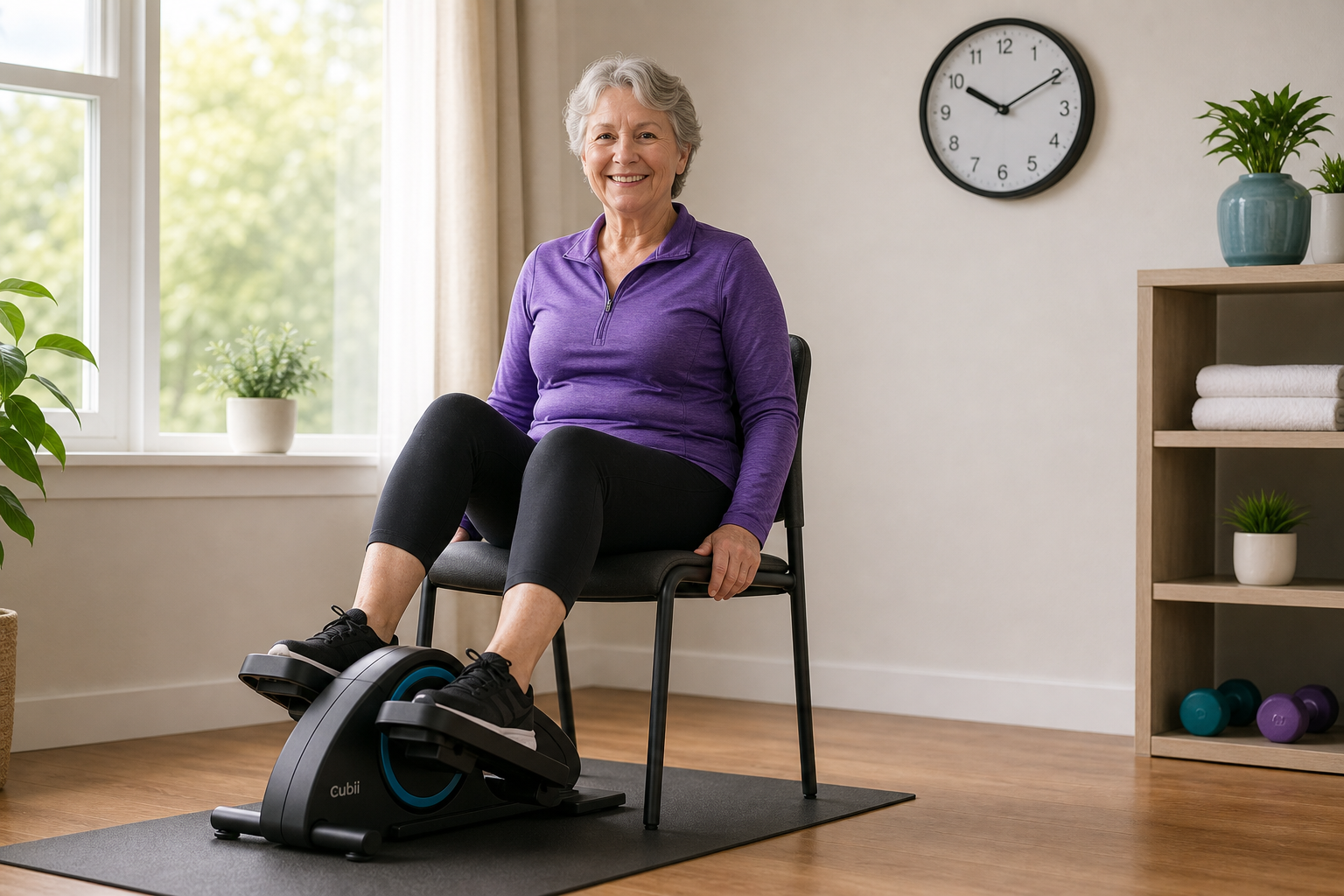
- Warm-up: 3 minutes at lowest resistance/speed
- Moderate effort: 5 minutes at comfortable resistance
- Intervals: 2 minutes faster/harder, 1 minute easy (repeat 3 times = 9 minutes)
- Cool-down: 3 minutes at lowest resistance
Moderate effort means you can talk in short sentences but not hold a full conversation. Your breathing is noticeably faster than at rest. Heart rate typically sits in the 50-70% of max range for most seniors. That’s roughly 100-120 beats per minute for a 70-year-old, but this varies by fitness level.
Intervals mean alternating harder and easier effort. During the 2-minute “harder” segments, increase resistance by one or two levels, or pedal/step faster, or both. You should feel like you’re working noticeably harder. Your breathing gets heavier. During the 1-minute “easy” segments, drop back to the warm-up resistance and slow down. Let your heart rate and breathing recover partially before the next hard interval.
This structure provides cardiovascular conditioning benefits in a short session. The intervals push your heart rate higher than steady moderate effort alone, improving aerobic capacity over time.
Modifications: If intervals feel too hard, skip them and do 15 minutes of steady moderate effort instead. If 20 minutes is too long, start with 10 minutes and add 1-2 minutes per week until you reach 20.
Maintenance and Safety
Compact machines need minimal upkeep, but a few habits extend their lifespan and keep them safe.
Check for wobble before each use. Step on or pedal lightly to make sure the unit doesn’t shift or rock. Tighten any loose bolts or screws you find. A wobbly stepper can throw you off balance. A wobbly pedal exerciser slides across the floor.
Wipe down after sweaty sessions. Sweat corrodes metal parts and degrades plastic over time. A quick wipe with a dry towel keeps things working smoothly.
Store on a flat surface. Don’t stack heavy items on top of a mini stepper or elliptical. The weight can bend the frame or damage hydraulic cylinders.
Replace batteries in digital displays promptly. Dead batteries can leak and damage electronics. If your machine has a display, swap batteries when the screen dims.
Lubricate friction-based pedal exercisers occasionally. If you have a friction-resistance model and notice squeaking or roughness, apply a small amount of silicone spray to the resistance pad. Magnetic models don’t need lubrication.
Setting Up Your Space
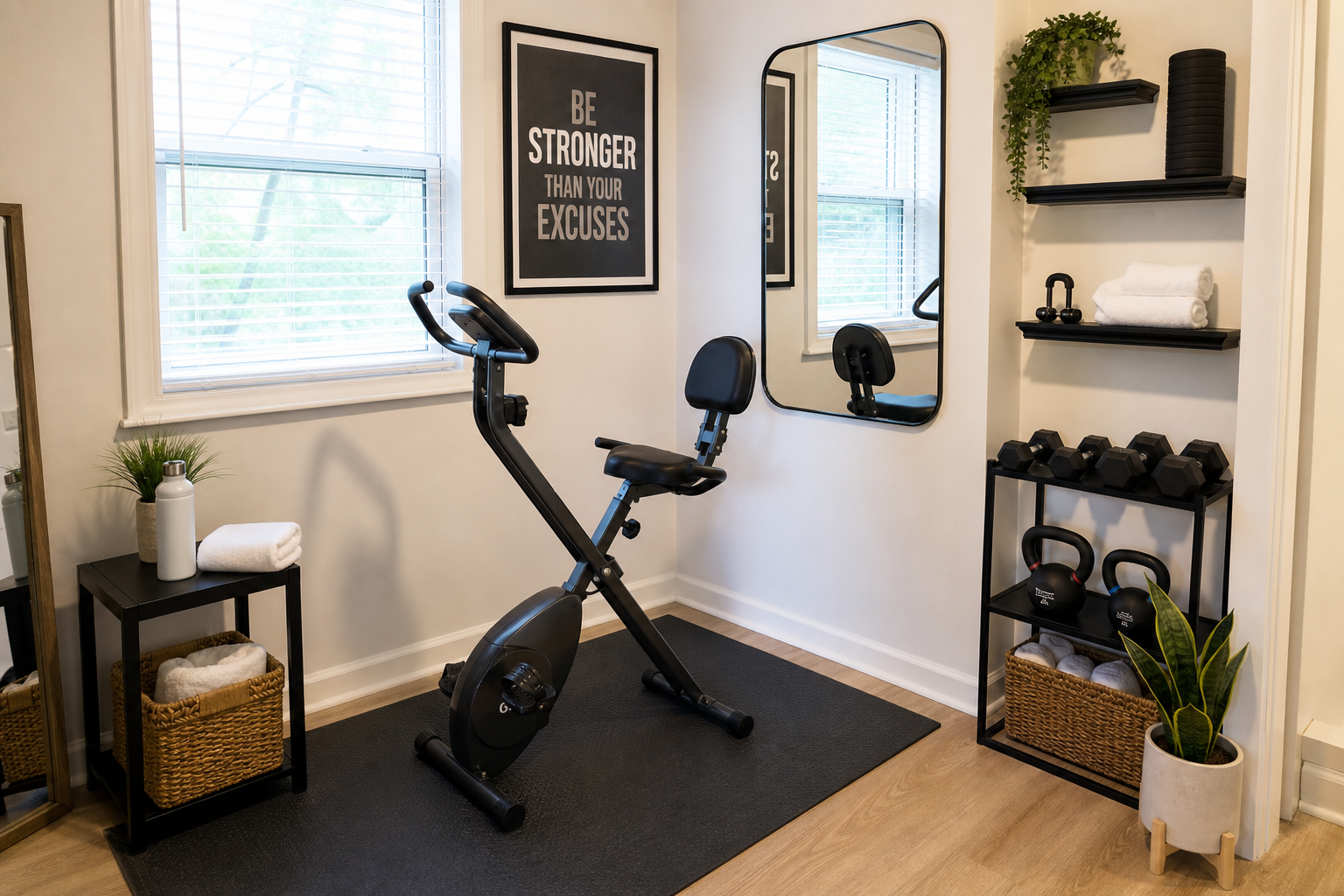
Where you place the machine affects how often you use it.
Keep it visible. Out of sight is out of mind. If your pedal exerciser lives in a closet, you’ll forget to use it. Leave it beside your favorite chair or under your desk where you see it daily.
Clear enough floor space for safe entry and exit. For a mini stepper, you need room to step on and off safely. Two feet of clearance on at least two sides works for most people. For seated machines, make sure you can pull your chair in and out without obstruction.
Add a yoga mat or rubber mat underneath. A mat prevents slipping on hard floors and dampens noise for downstairs neighbors. It also protects your floor from scratches or scuff marks.
Position near a power outlet if your machine uses one. Some under-desk ellipticals and pedal exercisers run on batteries, but models with digital displays and Bluetooth often plug in. Running an extension cord across a walkway creates a trip hazard.
Frequently Asked Questions
Can a mini stepper replace walking?
For cardiovascular conditioning, a mini stepper at moderate intensity provides comparable heart rate elevation to brisk walking. It doesn’t replicate the balance challenge, gait pattern, or outdoor exposure of actual walking. Use the stepper as a weather-proof, space-efficient supplement to walking, not a permanent replacement.
Walking outdoors also provides vitamin D from sunlight, fresh air, and environmental variation that benefits mental health. A stepper can’t replace those elements. But on days when weather, mobility issues, or safety concerns keep you inside, a stepper delivers real cardiovascular work.
Are mini steppers safe for seniors?
With proper precautions, yes. Always place the stepper near a wall, counter, or sturdy furniture for hand support. Start at the lowest resistance. Keep your posture upright (don’t lean forward). If balance is a significant concern, a seated option (pedal exerciser or under-desk elliptical) is safer.
If you use a cane or walker for daily mobility, a mini stepper may not be appropriate without supervision from a physical therapist. The stepping motion requires single-leg balance for brief moments as you shift weight. Seated machines eliminate that risk entirely.
Talk to your doctor before starting if you have a history of falls, recent surgery, or conditions affecting balance like vertigo or neuropathy.
How many calories do these machines burn?
At moderate intensity: mini stepper burns 150-250 calories per 20 minutes (standing, full body). Under-desk elliptical burns 80-150 calories per 20 minutes (seated). Pedal exerciser burns 60-120 calories per 20 minutes (seated, legs only). The calorie burn is less important than the cardiovascular conditioning; consistent moderate-intensity sessions provide heart health benefits regardless of the exact calorie number.
Calorie estimates vary widely based on your weight, fitness level, effort, and resistance setting. A 180-pound person burns more calories than a 130-pound person doing the same exercise. Higher resistance and faster speed increase calorie burn.
The real benefit is cumulative cardiovascular work. Regular sessions strengthen your heart, improve circulation, and