Most people know they should cool down after a workout, but it’s easy to skip it when you’re tired, short on time, or just ready to sit down. For seniors, though, the cool-down isn’t optional. It’s one of the most important parts of the whole session. Jumping from moderate exercise to a full stop can cause blood to pool in your legs, make you feel dizzy, and leave your muscles stiff and sore the next day.
A proper cool-down takes about 10 to 15 minutes and pays you back with faster recovery, better flexibility over time, and a calmer heart rate heading into the rest of your day. Here’s a gentle, practical sequence you can use after almost any workout.
Why Cooling Down Matters More As You Age
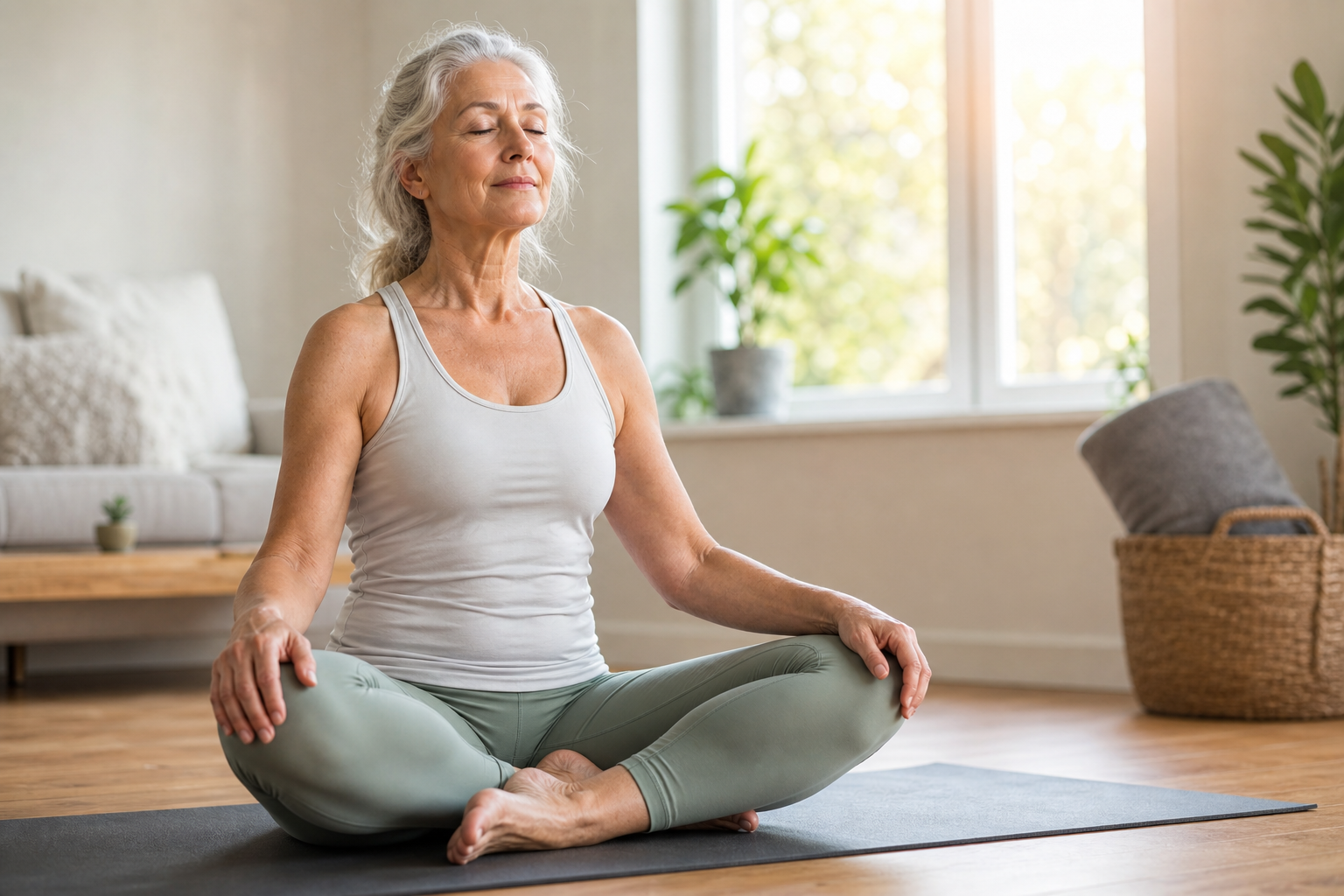
As we get older, the cardiovascular system takes a little longer to regulate itself after exertion. Your heart rate doesn’t drop as quickly as it did at 30, and your blood vessels need more time to adjust. A gradual cool-down gives your circulatory system that transition time instead of forcing an abrupt shift.
Muscles also lose elasticity with age. Static stretching after exercise, when muscles are warm and pliable, is one of the best opportunities you have to maintain and even improve your range of motion. Skipping it regularly leads to the kind of stiffness that makes everyday movements harder over time.
If you’re managing a condition like arthritis or osteoporosis, a consistent cool-down routine becomes even more valuable. Gentle post-workout movement helps joints flush out inflammatory byproducts and keeps connective tissue from tightening up between sessions.
A Step-by-Step Post-Workout Cool-Down Sequence
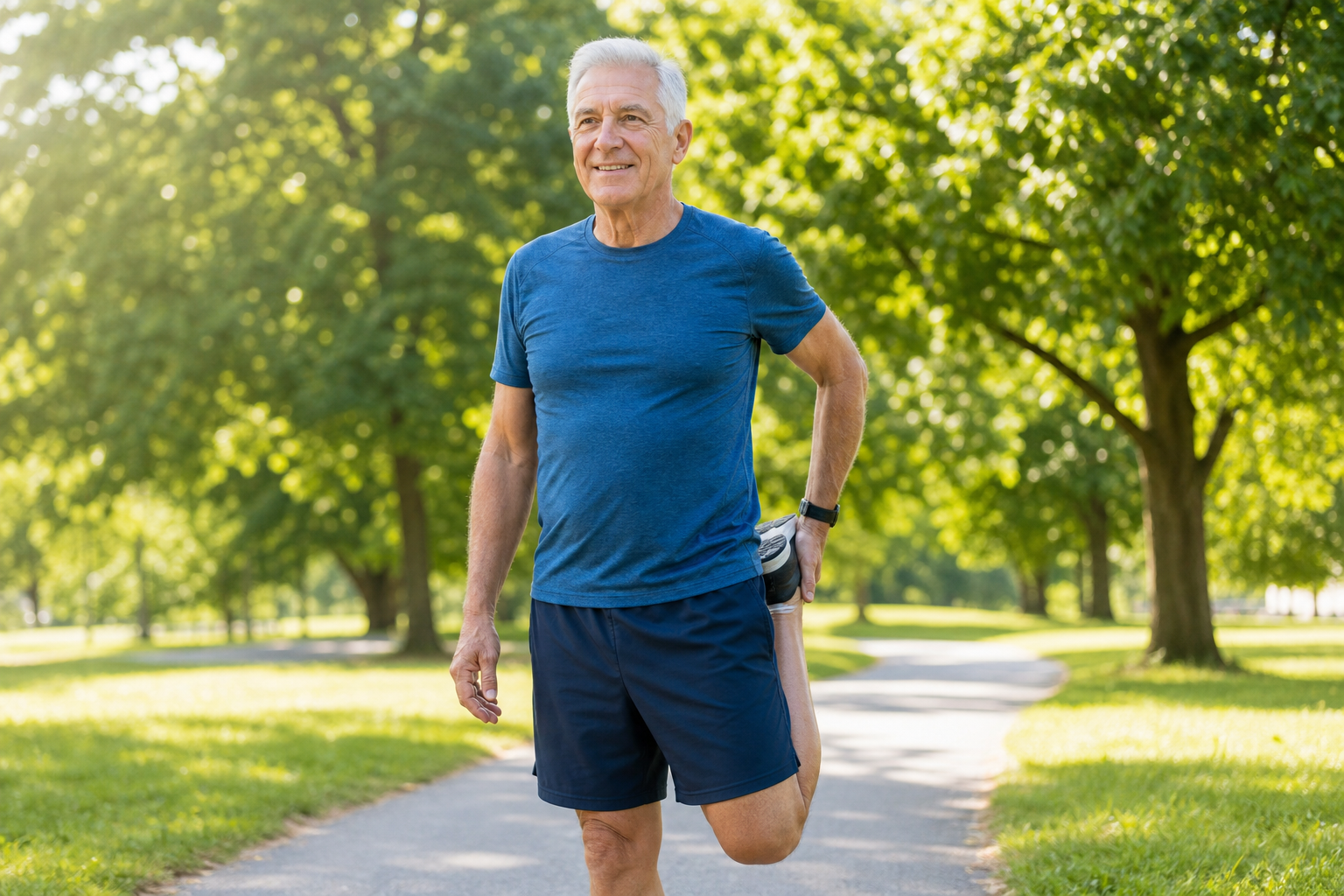
Work through this sequence in order. You don’t need any equipment, though a thick yoga mat makes the floor stretches much more comfortable, especially on hard surfaces.

Extra Thick Yoga Mat for Seniors
A thick, non-slip mat cushions your joints during floor stretches and gives you stable footing for standing cool-down movements.
Step 1: Slow Walk or March in Place (3 to 5 Minutes)
Don’t stop moving immediately after your main workout. If you’ve been walking, slow your pace gradually over a few minutes. If you’ve been doing strength work or chair exercises, march gently in place or do slow, relaxed arm circles. Keep moving until you feel your breathing settle and your heart rate start to drop.
Step 2: Standing Calf and Hip Flexor Stretch
Stand facing a wall or chair for balance. Step one foot back and press the heel flat into the floor, holding for 20 to 30 seconds per side. This targets the calves, which take a lot of work during walking and standing exercises. Then step one foot forward into a gentle lunge position, keeping your back knee slightly bent, and hold to release the hip flexors.
Step 3: Seated Hamstring and Quad Stretch
Sit on the edge of a sturdy chair. Straighten one leg out in front of you, flex your foot, and lean forward gently from your hips (not your lower back) until you feel a mild pull along the back of the thigh. Hold 20 to 30 seconds per side. For the quads, stand behind your chair and hold the back for balance while you bring one heel toward your glutes.
Step 4: Upper Body Release
Cross one arm across your chest and hold it there with your opposite hand for a shoulder stretch. Follow that with a gentle neck side-bend, dropping one ear toward your shoulder and holding 15 to 20 seconds each side. Finish with a chest opener: clasp your hands behind your back, gently squeeze your shoulder blades together, and lift your hands slightly. This counteracts any forward rounding from exercise or daily posture habits. For more on addressing that forward curve, check out these posture correction exercises for seniors.
Step 5: Diaphragmatic Breathing (2 Minutes)
Sit or lie down and place one hand on your chest and one on your belly. Breathe in slowly through your nose for a count of four, letting your belly rise rather than your chest. Exhale slowly for a count of six. This activates your parasympathetic nervous system and signals your body that it’s time to shift into recovery mode.
A good foam roller can also be a helpful addition to your cool-down, especially for rolling out the calves, upper back, and thighs. Our full guide to the best foam rollers for senior muscle recovery covers what to look for and how to use one safely.
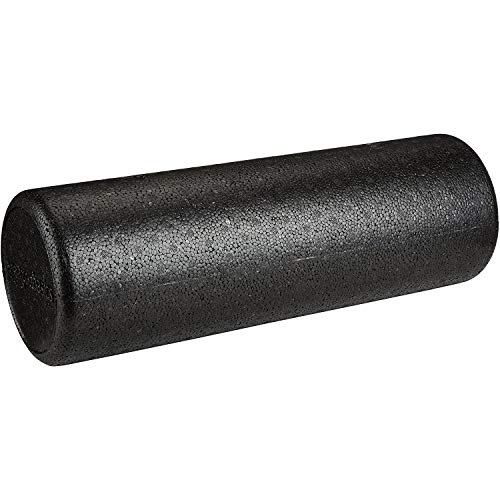
Foam Roller for Muscle Recovery
A softer-density foam roller helps seniors work out muscle tension after exercise without causing discomfort on sensitive areas.
Supporting Recovery Beyond the Cool-Down
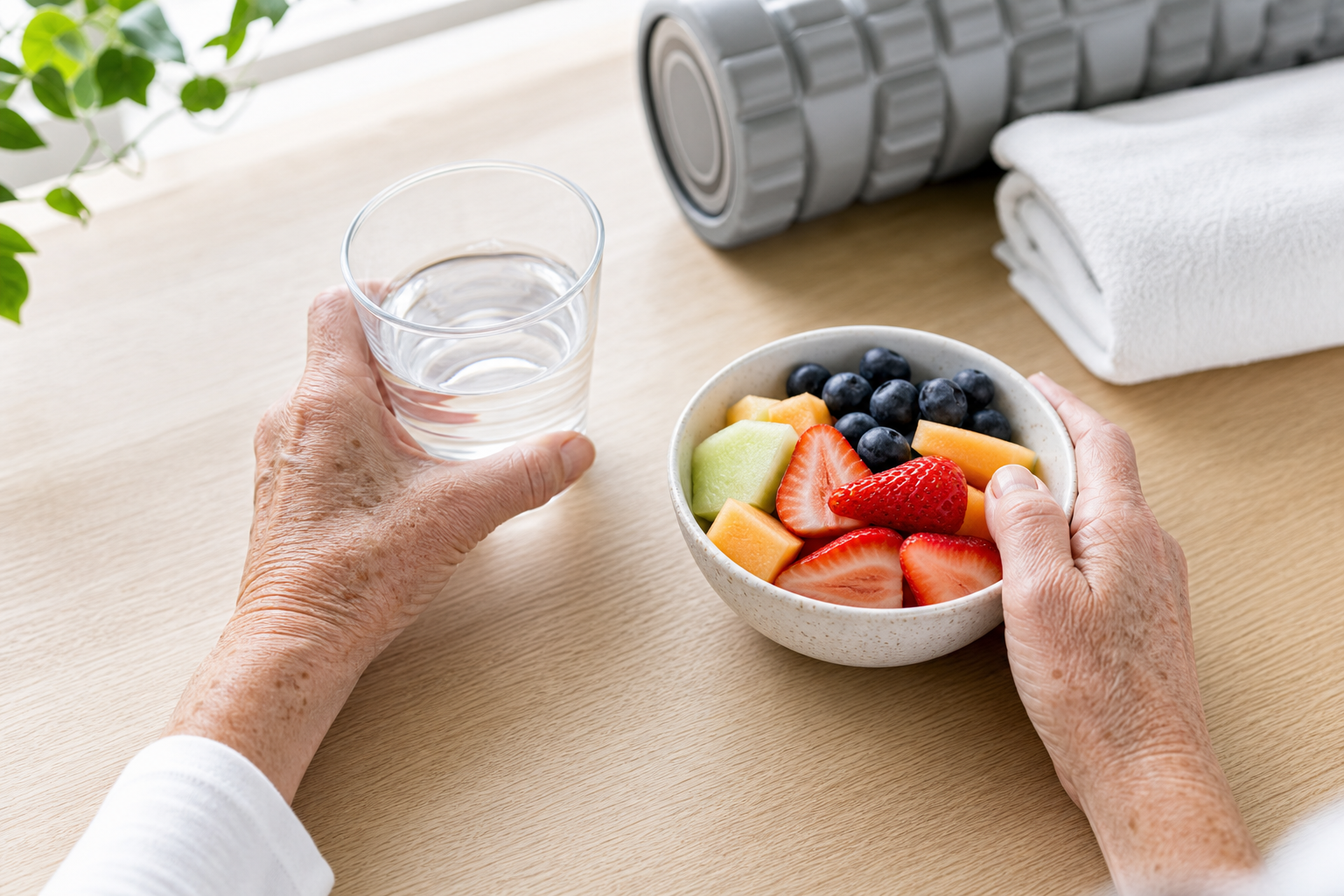
What you do in the hour or two after a workout also matters. Eating a small protein-rich snack within 30 to 60 minutes helps your muscles repair. For ideas that work well for older adults, our article on post-workout recovery meals for seniors has practical, easy options.
Sleep is another major recovery factor that often gets overlooked. If you find you’re sore or fatigued despite cooling down well, it might be worth reading about sleep hygiene and exercise for better rest. Quality sleep is when most of the actual muscle repair happens.
You might also want to add a stretching strap to your routine to make hamstring and hip flexor stretches easier to hold without straining. A yoga stretching strap lets you reach further than you normally could and maintain better form throughout each stretch.

Yoga Stretching Strap
A simple stretching strap helps you hold poses longer and go deeper into hamstring and hip stretches without straining your arms or shoulders.
Frequently Asked Questions
How long should a cool-down be for seniors?
Aim for at least 10 minutes, ideally closer to 15. That gives your heart rate enough time to drop gradually and your muscles enough time to be stretched while they’re still warm. A shorter cool-down is better than none, but anything under five minutes doesn’t provide much benefit for cardiovascular recovery or flexibility.
Is it okay to skip stretching if I’m not sore?
Soreness isn’t the only reason to stretch. Regular post-workout stretching improves long-term flexibility,