Finding the right exercise bike when you’re older isn’t just about picking the one with the best reviews on Amazon. It’s about finding a machine that actually fits your body, your joints, and your daily routine. Recumbent bikes are consistently recommended by physical therapists for seniors because the reclined seating position takes pressure off the lower back, the pedals sit out in front rather than underneath you, and you don’t need to balance or grip tightly to stay safe. If you’ve been putting off buying one because you’re overwhelmed by the options, this guide cuts through the noise.
We’ve broken everything down by budget tier so you can find the best fit for what you’re willing to spend, without sacrificing the features that actually matter for older adults. Whether you’re recovering from a joint replacement, managing chronic pain, or simply want a reliable way to get your cardio in without leaving the house, there’s a solid option for every situation below.
What Makes a Recumbent Bike Good for Seniors Specifically
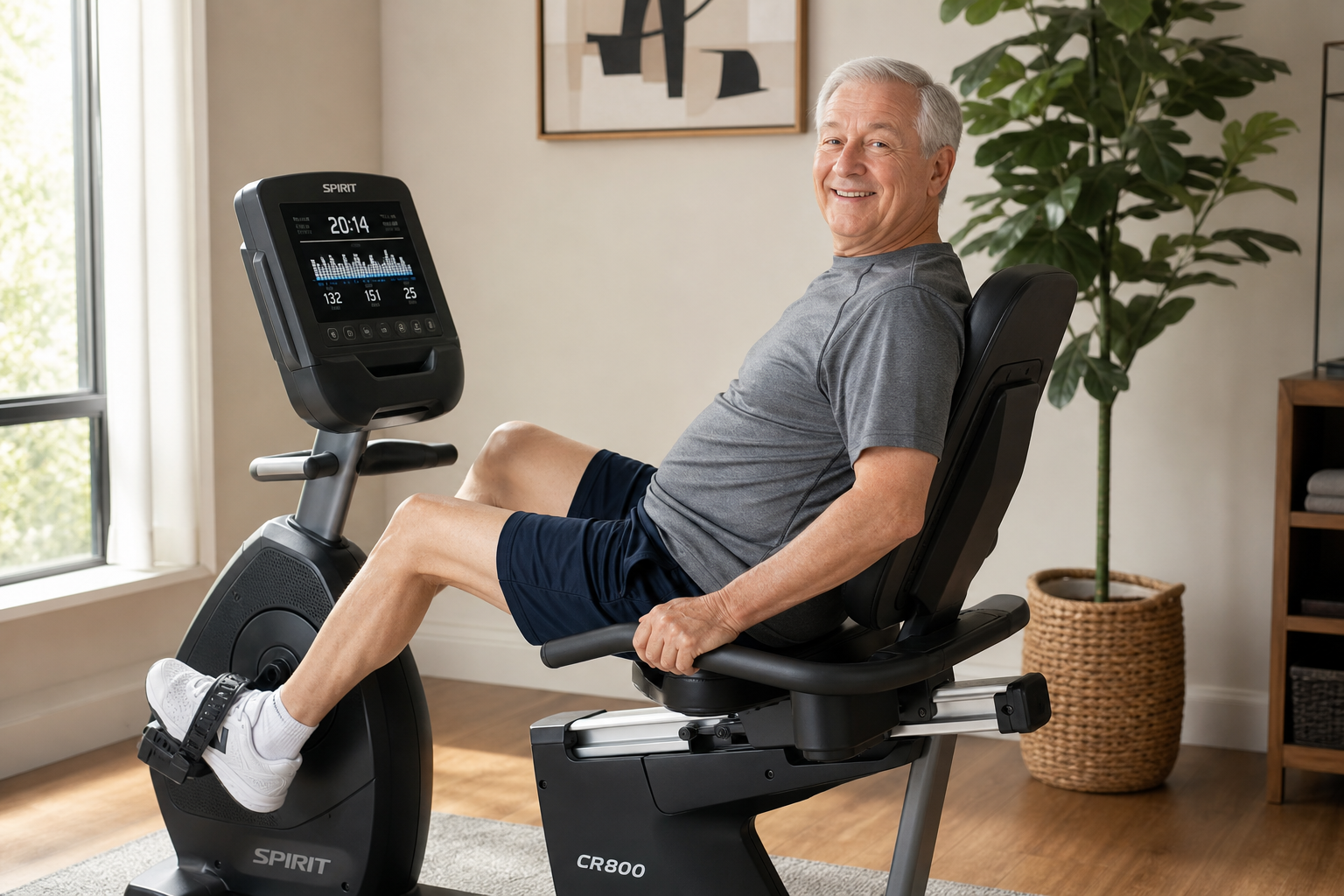
Not every recumbent bike is built with older users in mind. Plenty of them have low step-through frames on paper but still require awkward maneuvering to get seated. Here’s what you actually need to look for before spending a dime.
Step-Through Frame Height
A low step-through frame means you don’t have to swing your leg over anything to get on the bike. Look for machines where the opening between the seat and the ground is no more than 8 to 10 inches. This is especially critical if you have hip stiffness, a history of knee replacement, or any balance concerns. If you’ve already been through joint surgery, take a look at our post-hip replacement exercise guide to understand how much range of motion you’ll need for comfortable mounting and dismounting.
Back Support and Seat Quality
A padded, contoured seat back with lumbar support is non-negotiable. Cheap models often use a rigid mesh or flat foam pad that becomes uncomfortable within 15 minutes. You want a seat that reclines slightly and supports the natural curve of your lower spine. If you deal with chronic pain or sciatica, a well-supported recumbent position can make the difference between a workout you actually complete and one you quit early. Our article on managing sciatica through exercise has more detail on why posture during cardio matters so much for nerve pain relief.
Resistance Controls
Large, clearly labeled resistance knobs or buttons are a must. If you need reading glasses to see the console controls, the bike will frustrate you quickly. Look for tactile dials with numbered settings or large console buttons with high-contrast displays. Magnetic resistance is generally quieter and smoother than friction-based systems, which is a real quality-of-life difference during longer sessions.
Weight Capacity
Most entry-level recumbent bikes are rated for 250 to 300 lbs. If you’re above 250 lbs, you’ll want to look at bikes specifically rated for 300 lbs or more, since operating a machine near its limit accelerates wear and can affect stability. Heavier-duty frames also tend to feel more solid underfoot even for lighter users, so a higher weight capacity is often a sign of better overall construction.
Budget Tier 1: Affordable Entry-Level Options
Entry-level recumbent bikes are widely available online and work well for seniors who need low-impact cardio without a lot of tech features. They typically come with magnetic resistance, a basic LCD display showing time, distance, speed, and calories, and a step-through design. Assembly is usually manageable with basic tools in under an hour.
The Marcy ME-709 is one of the most popular entry-level picks and has been for years. It has eight resistance levels, a step-through frame, and a reasonably supportive seat back for the price. It’s not fancy, but it’s reliable for 20 to 30 minute daily sessions, and it has a weight capacity of 300 lbs. The one drawback is that the seat padding is on the thinner side, so some users add a gel seat cushion.
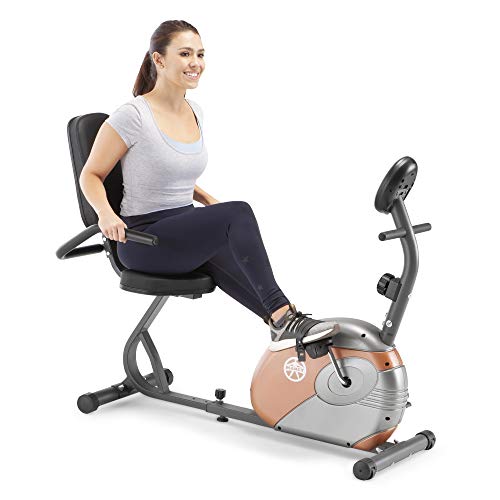
Marcy ME-709 Recumbent Exercise Bike
A dependable entry-level pick with a 300 lb weight capacity, eight resistance levels, and a step-through frame that works well for daily low-impact cardio.
Another solid affordable option is the Schwinn 130 Recumbent Bike, which offers 22 resistance levels and a ventilated seat back, making it a noticeable step up in comfort from basic models. If you’re on a tight budget but plan to use the bike consistently, spending a little more at this tier for better seat support is usually worth it.
Keep in mind that pedaling consistently is only half of the recovery equation. Fueling well before and after exercise matters too. Check out our guide to pre-workout nutrition for senior athletes for practical tips on what to eat before your morning ride.
Budget Tier 2: Mid-Range Bikes With More Features
Mid-range recumbent bikes are where you start seeing genuinely meaningful upgrades: better back support, more resistance levels, Bluetooth connectivity, heart rate monitoring, and more durable frames. These are the bikes most seniors should be looking at if they plan to ride regularly.
The Schwinn 270 Recumbent Bike is the standout at this tier. It has 29 preset workout programs, 25 resistance levels, Bluetooth compatibility with popular fitness apps, a dual-track LCD display, and a ventilated seat with lumbar support. The step-through height is low enough for most seniors, and the adjustable seat rail has a wide enough range for both short and tall users. This is probably the most complete package you’ll find without moving into premium territory.
If heart rate monitoring is a priority for you because you’re managing blood pressure or taking cardiac medications, you’ll want to review our guide on blood pressure medication and exercise precautions before starting a new cardio routine. Many recumbent bikes at this tier have grip heart rate sensors on the handlebars, which are convenient for quick checks during your ride.
The NordicTrack R35 is another strong mid-range contender. It has a 10-inch interactive touchscreen, 26 resistance levels, and an iFIT subscription option that lets you follow instructor-led rides. For seniors who find routine workouts boring, interactive content can be a real motivator. The seat on the R35 is among the most comfortable in this category, with a large cushioned seat bottom and an adjustable backrest.

Schwinn 270 Recumbent Bike
The most complete mid-range option for seniors, with 25 resistance levels, Bluetooth app connectivity, a ventilated lumbar-support seat, and 29 workout programs.
Budget Tier 3: Premium Options for Serious Users
Premium recumbent bikes are built to last, often with commercial-grade frames, smoother magnetic resistance systems, larger displays, and significantly better seat ergonomics. If you plan to ride daily for years, investing at this level often makes financial sense over replacing a worn-out budget bike every few years.
The Life Fitness R3 Recumbent Bike is what you’ll find in physical therapy clinics and high-end gyms. It’s built for daily use under demanding conditions, has an extremely low step-through height, an exceptionally well-padded seat, and a simple console that seniors find intuitive to use. The resistance is whisper quiet. For seniors with neurological conditions like Parkinson’s, where balance and ease of use are critical, this bike is one of the most consistently recommended options. Our Parkinson’s disease exercise program discusses why consistent, structured cycling can be especially beneficial for people managing this condition.
The Precor RBK 885 is another premium machine worth mentioning. It has an adjustable stride length (unique among recumbent bikes), a large backlit display, and a weight capacity of 350 lbs. If you have longer legs or a larger frame, the adjustability here is genuinely useful.
Life Fitness R3 Recumbent Bike
Clinic-grade build quality with an ultra-low step-through, whisper-quiet magnetic resistance, and exceptional seat support, ideal for seniors with mobility limitations or neurological conditions.
Space and Storage Considerations
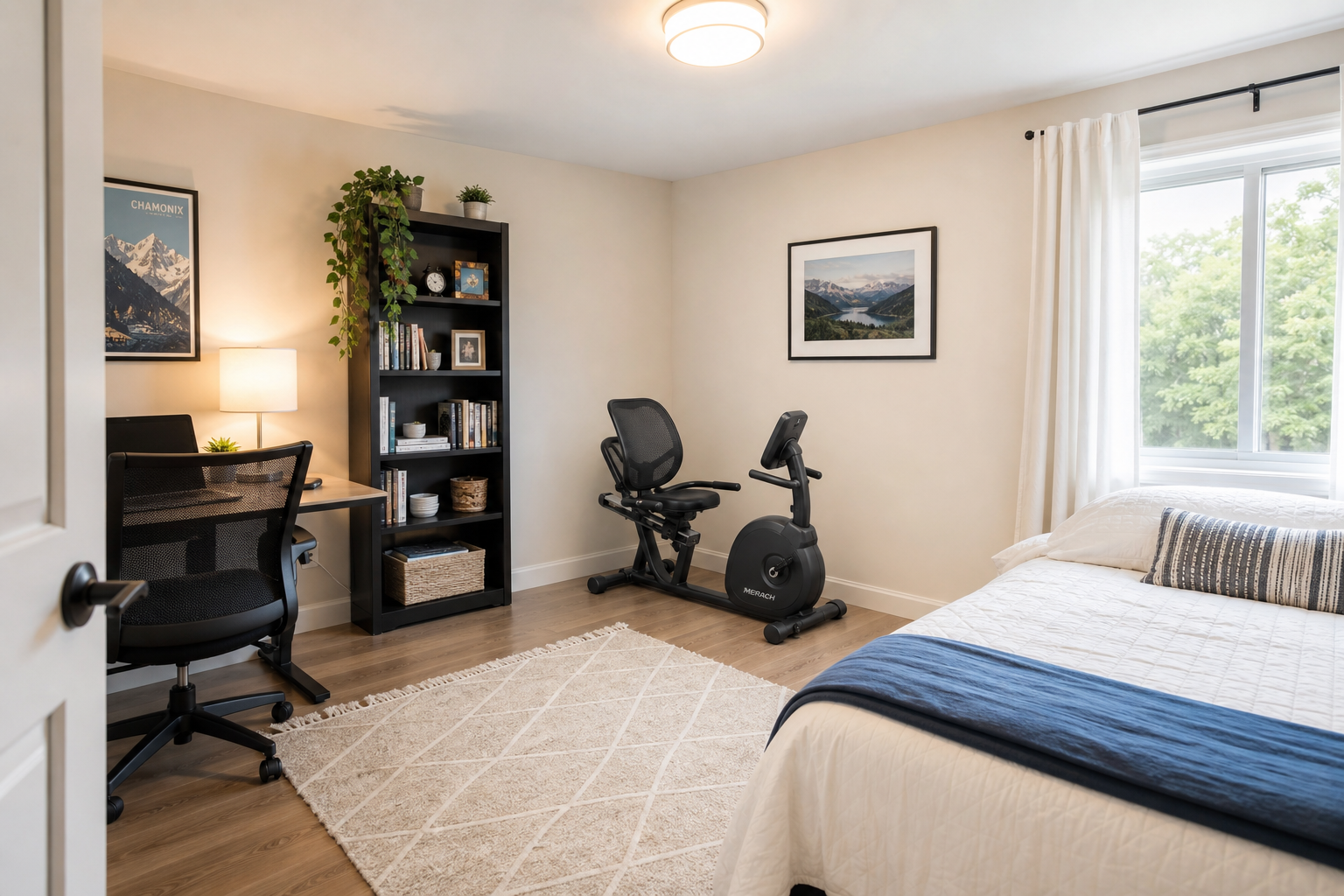
Recumbent bikes take up more floor space than upright bikes because of the extended footprint. Most models are roughly 55 to 65 inches long and 24 to 27 inches wide. Before buying, tape out those dimensions on your floor to make sure you have enough room, including space to get on and off from the side.
If space is genuinely limited, look for models that include transport wheels so you can slide the bike against a wall when not in use. Very few recumbent bikes fold completely, so if folding is a hard requirement, an upright folding bike or a pedal exerciser might be a better fit for your situation. Our article comparing exercise bikes vs ellipticals for seniors can help if you’re weighing footprint against workout variety.
For a broader look at setting up a home workout space on a budget, including what to prioritize and what to skip, our budget-friendly home gym setup for seniors guide is a great starting point.
How to Get the Most Out of Your Recumbent Bike
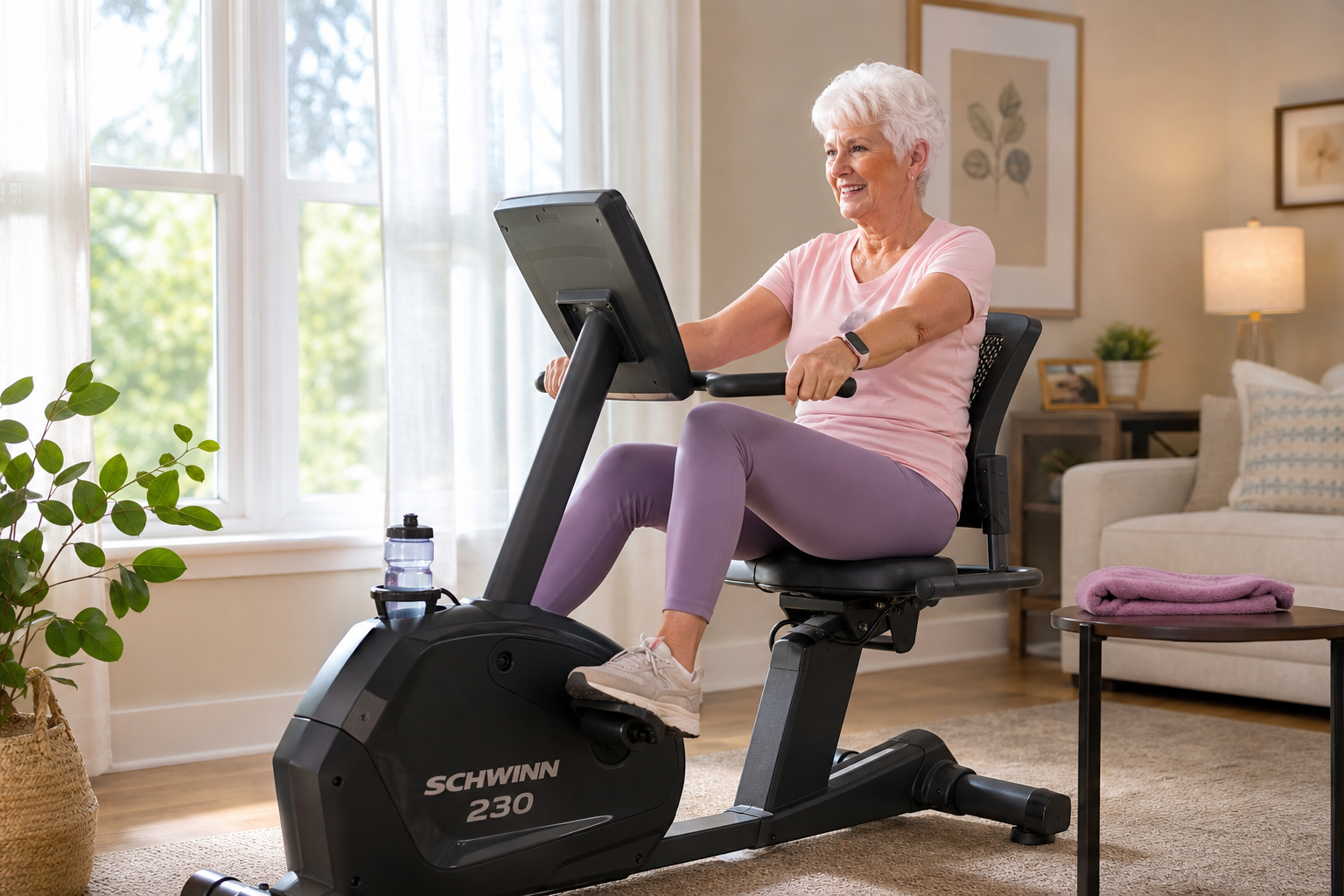
Owning a recumbent bike is only useful if you actually use it consistently. The biggest mistake seniors make is setting resistance too high too soon and turning every session into a grinding effort. Start with low resistance for 15 to 20 minutes at a comfortable pace where you can hold a conversation. Build from there over several weeks.
Aim for at least three sessions per week. Research consistently shows that 150 minutes of moderate aerobic activity per week reduces cardiovascular risk, supports healthy blood pressure, and helps maintain muscle mass in older adults. Pairing your cycling with good nutrition amplifies those benefits significantly. Our guide on post-workout recovery meals for seniors gives you practical meal ideas for after your rides.
If you’re dealing with joint pain that makes even low-resistance cycling uncomfortable, it may be worth looking at whether inflammation is a contributing factor. An anti-inflammatory diet for active seniors can support joint health and help you stay consistent with exercise over the long term.
Frequently Asked Questions
How is a recumbent bike different from an upright exercise bike for seniors?
The main difference is posture and joint load. On a recumbent bike, you sit in a reclined position with your legs extended forward, which significantly reduces stress on the lower back, hips, and knees compared to an upright bike. For seniors with back pain, arthritis, or post-surgical restrictions, the recumbent position is almost always more comfortable for sustained cardio. Upright bikes provide a slightly more intense cardiovascular workout but require more core engagement and balance, which can be challenging for older adults.
What resistance level should a senior start with on a recumbent bike?
Start at the lowest available resistance setting for your first few sessions, regardless of your current fitness level. Your goal initially is to get your joints moving through a comfortable range of motion and let your body adapt to the movement pattern. Most physical therapists recommend building up gradually over two to four weeks before increasing resistance. If you feel any sharp joint pain (not general muscle fatigue), stop and consult your doctor before continuing.
Are recumbent bikes safe for seniors with balance problems?
Yes, recumbent bikes are generally considered one of the safest cardio options for seniors with balance issues precisely because you’re fully seated and supported throughout the workout. There’s no risk of toppling sideways like there might be on a treadmill or upright bike. For seniors managing vertigo or neurological conditions that affect balance, this is a significant advantage. You can find more information on balance-related exercise considerations in our vertigo and balance exercises for seniors article.
How do I know if a recumbent bike has enough weight capacity for me?
Check the manufacturer’s stated weight limit and aim to stay at least 20 to 30 lbs below it for comfortable, safe use. Most budget bikes are rated for 250 to 300 lbs. Mid-range and premium models typically handle 300 to 350 lbs. If you’re close to the maximum rated weight, look for bikes that specifically advertise heavy-duty frames or commercial-grade construction. Using a bike right at its weight limit leads to faster mechanical wear and can affect the feel and stability of the machine during use.
Our Top Pick Across All Tiers
If you’re looking for one clear recommendation, the Schwinn 270 is the best overall value for most seniors. It hits the sweet spot between comfort, features, and durability without requiring a premium budget. The seat support is genuinely good, the resistance range covers both easy recovery rides and more challenging workouts, and the console is large enough to read comfortably without squinting.
If budget is the primary concern, the Marcy ME-709 gets you on the bike reliably and safely. If you want a machine that will hold up to daily use for many years and money isn’t a limiting factor, the Life Fitness R3 is worth every penny.
Whatever you choose, the most important thing is that you actually use it. A mid-range bike you ride every day will do far more for your health than a premium bike sitting in the corner. Start simple, ride consistently, and build from there.
This article contains affiliate links. We may earn a small commission at no extra cost to you.