Your grip strength says a lot more about your overall health than most people realize. Research has consistently linked hand grip strength to longevity, cognitive function, and fall risk in older adults. In fact, a study published in The Lancet found that grip strength was a stronger predictor of cardiovascular mortality than blood pressure. If you’ve noticed that opening jars, holding a pen, or gripping a handrail has gotten harder, it’s worth paying attention. The good news is that grip strength responds well to targeted training, even in your 70s and 80s.
This article breaks down the three most practical tools for improving grip strength in seniors: adjustable hand grippers, therapy putty, and squeeze balls. We’ll look at what each one does well, which situations each suits best, and give you a clear recommendation so you’re not left guessing. If you want to go deeper on the underlying exercises themselves, check out our guide to grip strength exercises for improving hand function and independence.
Why Grip Strength Matters More As You Age
Grip strength peaks in your 30s and naturally declines after that. By age 75, many people have lost 25 to 40 percent of their peak hand strength. This isn’t just about being able to open pickle jars. Reduced grip strength is associated with increased risk of falls, difficulty with activities of daily living, and even higher rates of disability and hospitalization.
For people managing arthritis, neuropathy, or recovering from a stroke, the stakes are even higher. Weak hands can make it harder to use a walker, hold a coffee cup, or button a shirt. These aren’t small inconveniences. They directly affect independence. For those dealing with nerve-related limitations, our article on neuropathy-safe exercises for seniors covers important considerations before you start any hand training program.
The practical takeaway: training your grip even a few minutes a day can genuinely make a difference in your quality of life, and the tools to do it are inexpensive and easy to use at home.
Adjustable Hand Grippers: Best for Building Strength
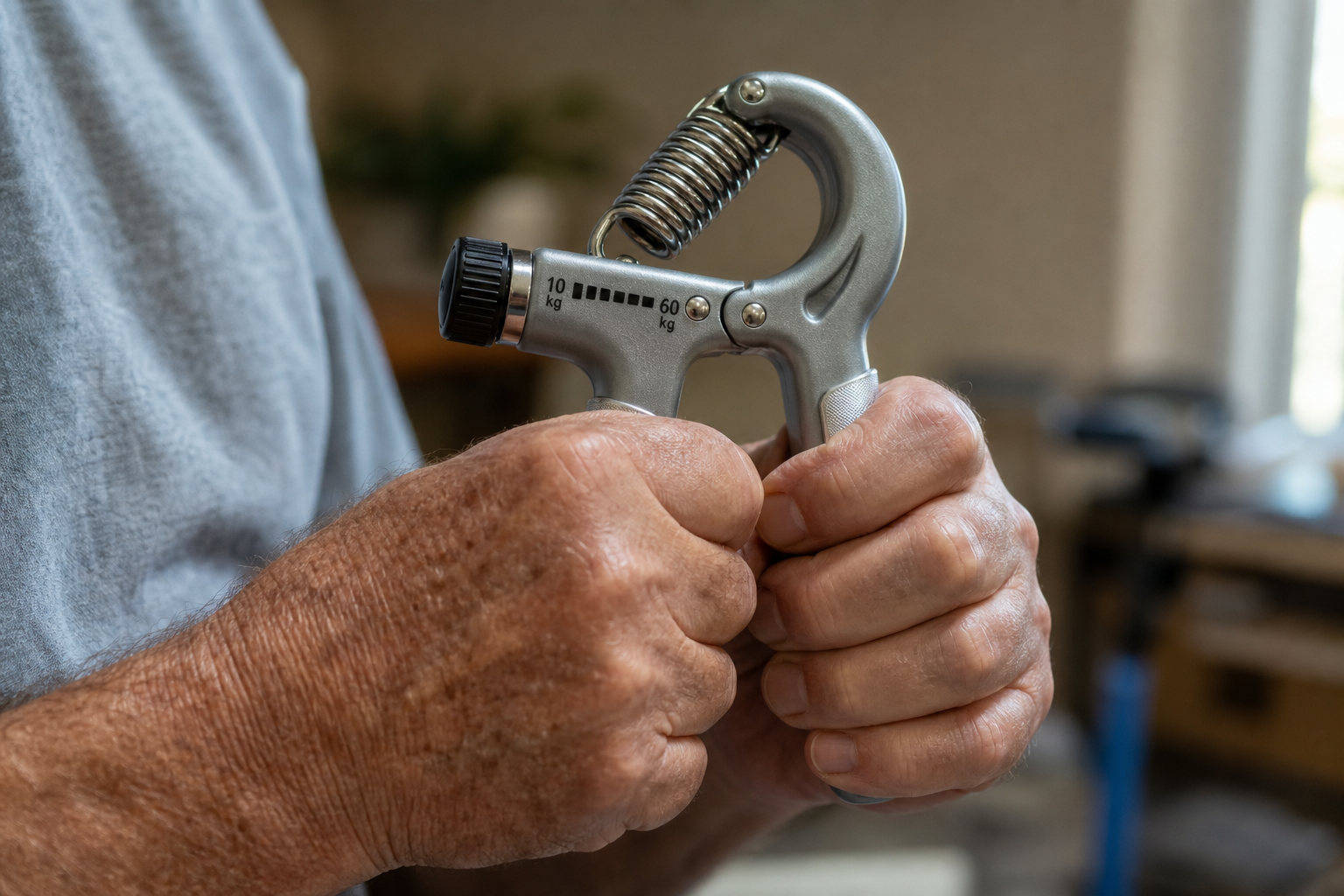
Adjustable hand grippers are spring-loaded devices that you squeeze to work your finger flexors and forearm muscles. Unlike fixed-resistance grippers, adjustable models let you dial up the resistance as you get stronger. This makes them far more practical for long-term use.
Look for models with a wide resistance range, ideally starting around 10 to 20 lbs for beginners and going up to 60 or 70 lbs for those who progress. Grippers like the Gripmaster and various adjustable grip strengtheners are popular options that work individual fingers independently, which is useful for targeting weakness in specific digits.

Adjustable Hand Grip Strengthener
The most effective tool for progressively building grip and forearm strength, with adjustable resistance to grow with you over time.
One thing to keep in mind: grippers work best for people who can already close their hand reasonably well. If arthritis or stiffness makes that difficult, start with a very low resistance setting or consider therapy putty first. Overloading inflamed joints can make things worse, not better. Pairing your training with an anti-inflammatory diet can help manage joint discomfort around your training sessions.
Therapy Putty: Best for Arthritic Hands
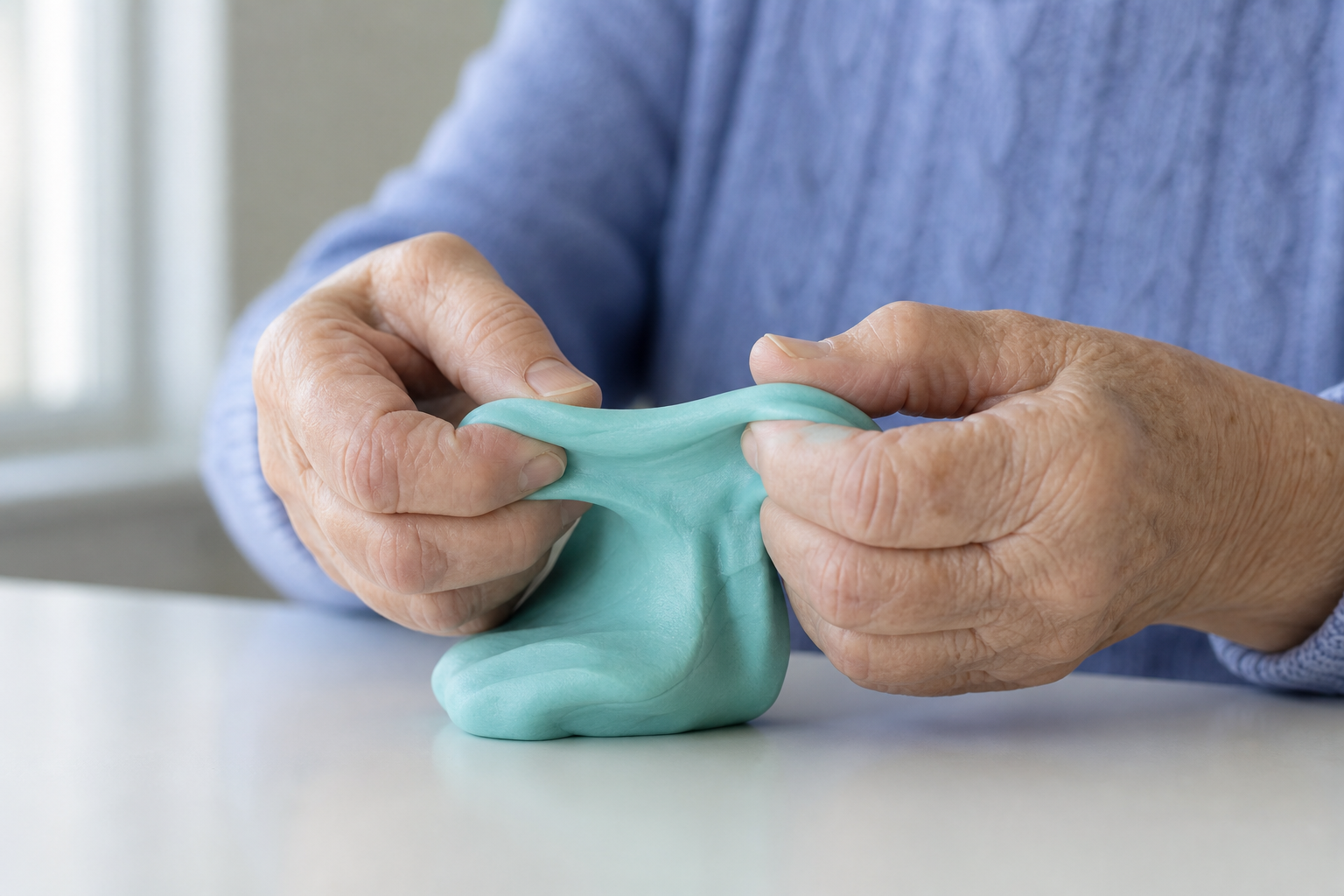
Therapy putty is the tool most physical therapists reach for when working with seniors who have arthritis, post-stroke weakness, or significant stiffness. It’s a silicone-based, moldable putty that comes in different resistance levels, typically color-coded from extra-soft to firm.
What makes putty special is its versatility. You can squeeze it, roll it, pinch it, flatten it, or twist it. This variety lets you work different muscle groups in the hand and wrist without putting repetitive stress on a single joint. It’s also gentler than spring-loaded grippers, which makes it ideal for flare days when hands are swollen or painful.
TheraPutty is the most widely used brand in clinical settings and is available in multi-level packs so you can progress over time. The standard TheraPutty sets include a range of resistance levels and are a staple in occupational therapy.

TheraPutty Hand Exercise Putty
A clinical-grade therapy staple that’s gentle enough for arthritic hands while still offering meaningful resistance to build hand strength and dexterity.
If your primary concern is arthritis, therapy putty is where you should start. For a broader look at exercises that don’t aggravate arthritis, visit our guide on arthritis-friendly exercises for seniors.
Squeeze Balls: Best for Circulation and Light Daily Use
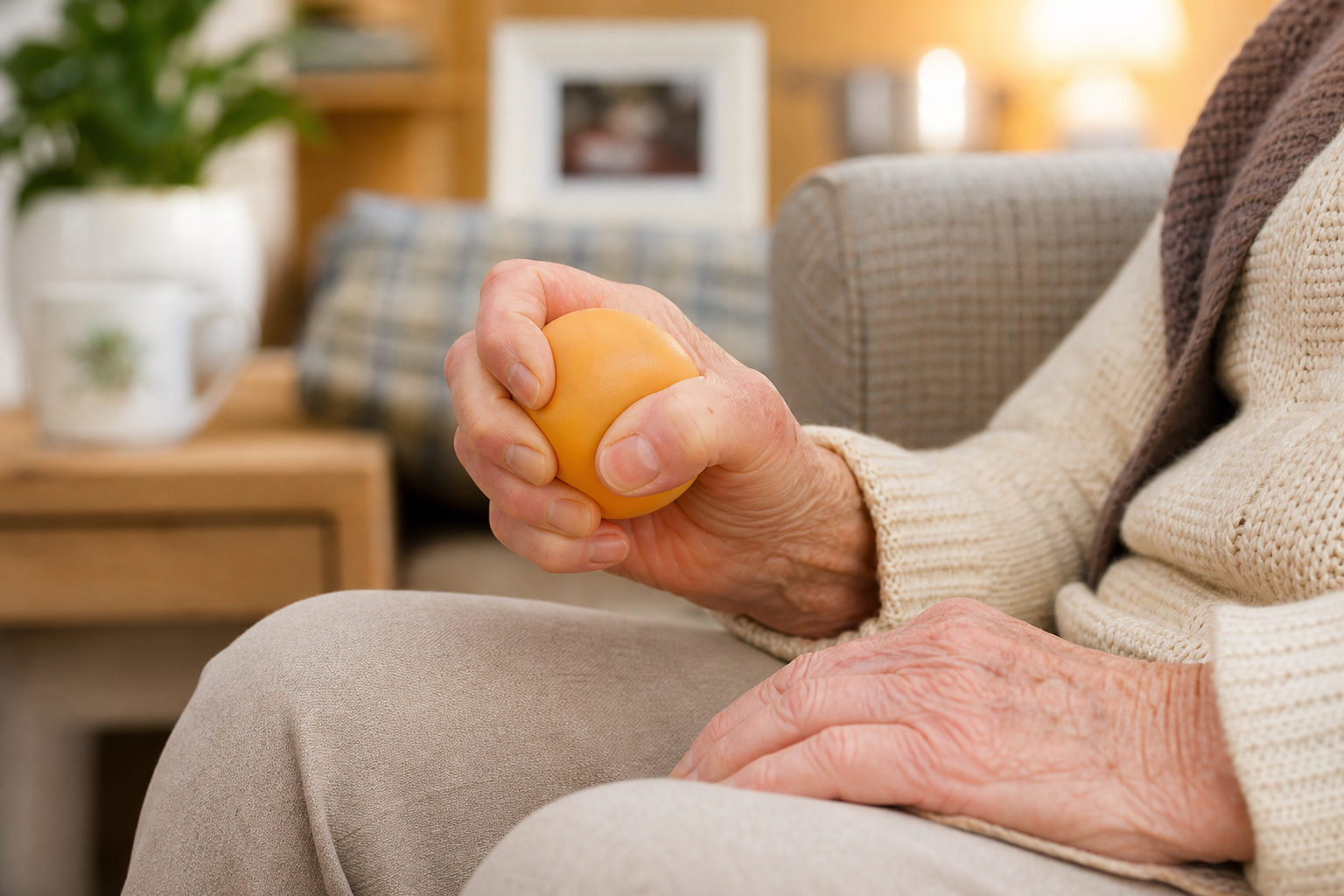
Squeeze balls are the simplest option and, in some ways, the most underrated. They’re not going to build significant strength on their own, but they’re excellent for improving circulation, maintaining flexibility, and keeping hands active during sedentary time like watching TV or riding in a car.
Standard stress squeeze balls and hand therapy ball sets come in multiple densities. For seniors using them therapeutically, a set with three or four resistance levels gives you room to progress gradually. Some people also find the repetitive squeezing motion soothing, which makes it easier to stick with a daily habit.
Squeeze balls work well as a complement to grippers or putty rather than a replacement. Use them for warm-up, cool-down, or just keeping hands moving throughout the day. They’re also a smart option if you’re traveling and want something portable. Our travel workout routines for active seniors article has more ideas for staying active on the road.
Which Tool Should You Choose?
If you have moderate to severe arthritis or significant stiffness, start with therapy putty. It’s forgiving, versatile, and what the professionals use. Once you’ve built some baseline hand endurance, you can layer in an adjustable gripper for more progressive resistance.
If your hands are relatively healthy and your main goal is building strength, go straight to an adjustable gripper. Start at the lowest resistance setting and progress slowly. Add squeeze balls for daily low-intensity use in between sessions.
For most seniors, the best setup is a combination: putty for warm-up and gentle work, a gripper for your main training, and a squeeze ball for passive use during the day. None of these tools require a gym or a trainer. You can fit all three into a five-minute routine that you do while watching the morning news.

Hand Therapy Squeeze Ball Set
An accessible and portable option for daily hand circulation and light strengthening, especially useful as a warm-up tool or for high-frequency low-intensity use.
Frequently Asked Questions
How often should seniors use grip strengtheners?
Most physical therapists recommend 3 to 5 sessions per week for grip training. Each session can be as short as 5 to 10 minutes. Rest days matter because your hand muscles, like any muscle, need time to recover. If you’re using therapy putty for gentle mobility work, daily use is generally fine since the resistance is low enough not to overtax the joints.
Can grip strengtheners help with arthritis pain?
Yes, with some important caveats. Strengthening the muscles around arthritic joints can reduce pain and improve function over time, but training during a flare can make inflammation worse. During flares, stick with the softest putty or no resistance at all. On better days, gentle progressive exercise is beneficial and widely recommended by rheumatologists and occupational therapists. Supporting your joints nutritionally also helps, and omega-3 supplements have solid evidence behind them for joint health.
Is there a risk of injuring your hands with these tools?
The risk is low if you start with appropriate resistance and don’t push through sharp pain. The most common mistake is starting with resistance that’s too high, especially with spring-loaded grippers. If you feel a sharp or burning sensation in your finger joints, back off the resistance immediately. Dull muscle fatigue in your forearm is normal. Joint pain in your fingers or wrist is a signal to reduce the load or switch to a softer option like putty.
This article contains affiliate links. We may earn a small commission at no extra cost to you.