Somewhere around 70, a lot of people start wondering if they can push their walks a little further. Maybe you used to do a mile without thinking about it, and now you want to build back up, or maybe you’re just curious how much more your body can handle. The tricky part is figuring out how to add distance without tipping into overtraining, joint pain, or that wiped-out feeling that keeps you on the couch the next day.
The good approach isn’t about hitting some magic number of steps or miles. It’s about paying attention to effort, pace, and recovery, then letting your distance grow naturally from there. Here’s how to do that safely.
Why Distance Isn’t the Only Number That Matters
It’s tempting to focus on miles or step counts because they’re easy to track. But two people walking the same distance can be doing completely different things to their bodies depending on pace, terrain, and how they feel afterward.
A better way to think about progress is through effort. Rate how hard a walk feels on a scale of 1 to 10, with 10 being all-out exertion. Most of your regular walks should sit around a 4 or 5, meaning you can talk in full sentences but you’re breathing a bit harder than at rest. If you’re consistently pushing into 7 or 8 territory just to finish your usual route, that’s a sign to back off before adding more distance.
The 10 Percent Rule, Adjusted for Real Life
You’ve probably heard runners talk about not increasing weekly mileage by more than 10 percent at a time. The same idea works for walking, though at 70 and beyond, even that can be too aggressive if you’re coming back from illness, surgery, or a long stretch of inactivity.
A gentler version: add distance only once a week, and only by a small amount, like an extra block or five extra minutes. Keep that new distance steady for a few days before adding more. This gives your joints, tendons, and cardiovascular system time to catch up, rather than asking them to adapt every single day.
If you’re not sure how to track these small increases without relying on a smartwatch or app, a simple log works just as well. Our guide on low-tech exercise tracking methods for seniors without apps covers a few easy ways to do this with just a notebook or calendar.
Watch Your Pace, Not Just Your Steps

Distance and pace are connected, but they’re not the same thing, and mixing them up is where a lot of people run into trouble. Walking a longer distance at a slower pace is usually safer than walking the same distance faster.
Instead of pushing your speed, focus on lengthening your walk while keeping your pace steady or even slightly slower than usual. Once that longer distance feels comfortable for a week or two, you can experiment with picking up the pace on part of the route, not the whole thing.
Good footwear matters more here than people expect. If your feet or knees ache after longer walks, it might not be your fitness level at all. It could be your shoes. Take a look at our breakdown of the best walking shoes for seniors with arthritis if joint discomfort is holding you back from going farther.
Building Recovery Into the Plan
Longer walks put more cumulative stress on your body, even if each individual walk feels manageable. That means recovery becomes just as important as the walk itself.
A simple pattern that works well: after any walk that’s noticeably longer than your usual routine, follow it with a day of shorter, easier walking or complete rest. This isn’t so different from the rest principles used in strength training. Our article on how many rest days seniors need between strength workouts explains the same recovery logic, and it applies just as well to cardio.
Stretching after longer walks also helps keep your calves, hips, and lower back from tightening up. A short routine like the one in our post-walk stretching routine for seniors takes about seven minutes and can make a real difference in how you feel the next day.
Gear That Supports Longer Walks
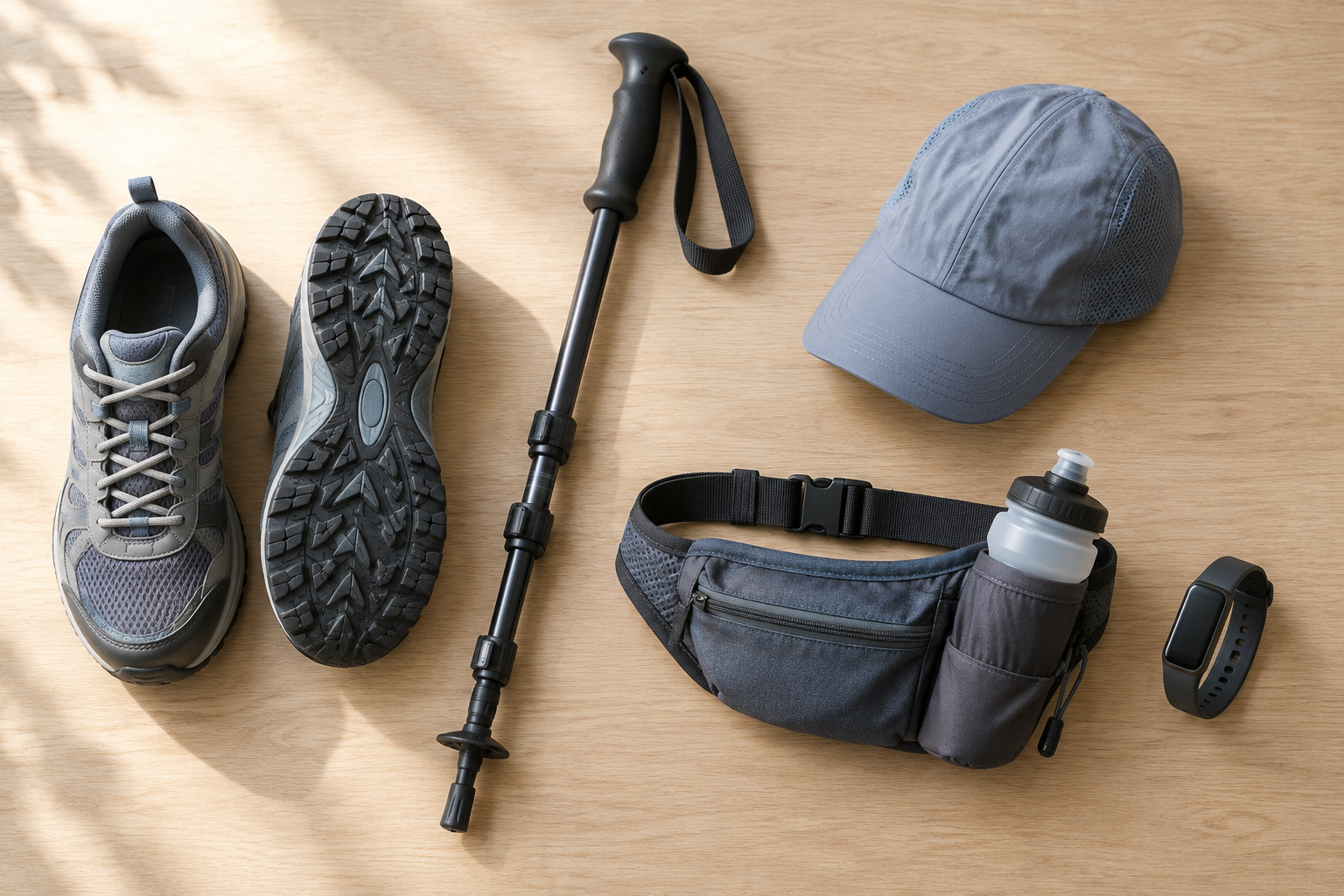
As your distance grows, small annoyances become bigger problems. A loose shoe, an unstable ankle, or dehydration that wouldn’t matter on a 10 minute walk can turn a 40 minute walk miserable.
If balance is a concern on longer or uneven routes, walking poles can add real stability without slowing you down much. We cover the pros and cons in walking poles for seniors: do they improve stability?, which is worth a read if you’ve had any near-falls on walks before.
Hydration matters more on longer walks too, especially in warm weather. Cramping is often a hydration issue rather than a fitness issue, and our piece on hydration and muscle cramps in seniors explains what to watch for. Carrying a bottle that’s easy to open one-handed helps you actually drink on the move instead of skipping it.
Stop Signs You Shouldn’t Walk Through

Pushing your distance is fine when it’s done gradually, but certain symptoms mean you stop the walk immediately, not “finish the block first.”
- Chest pain or pressure, especially if it spreads to your arm, jaw, or back
- Fainting or feeling like you’re about to pass out
- Severe shortness of breath that doesn’t ease up when you slow down or stop
- Sudden dizziness or loss of balance that isn’t your normal fatigue
- Irregular or racing heartbeat that feels different from your usual response to exercise
If any of these happen, stop walking, sit down if you can, and call for help or contact your doctor depending on severity. Chest pain or fainting always warrants immediate medical attention, not a “wait and see” approach.
If dizziness has been a recurring issue even on short walks, it’s worth addressing before you try to add distance. Our guide on dizziness and balance exercises that may help seniors is a good place to start, and pairing it with a quick check from our balance self-test can help you figure out whether the issue is something a doctor should look at first.
Frequently Asked Questions
How often should I try to increase my walking distance?
Once a week is a reasonable pace for most people. This gives your body several days to adapt to the new distance before you ask it to handle even more. Increasing daily or every other day usually leads to soreness or fatigue that undermines your progress.
Should I focus on time or distance when building up?
Time is often easier to control and safer to progress with, especially on days when hills, wind, or heat slow you down. Aim to add a few extra minutes rather than a fixed number of blocks, since that naturally adjusts for how your body feels that day.
Is it normal to feel more tired the day after a longer walk?
Some mild fatigue or muscle soreness is normal, especially when you’ve just increased your distance. What’s not normal is exhaustion that lasts more than a day or two, joint pain that lingers, or feeling worse each time you try to repeat the distance. Those are signs to scale back and progress more slowly.