Staying active doesn’t require jumping around your living room or pounding the pavement. Low-impact cardio gets your heart rate up, burns calories, improves circulation, and boosts your mood, all without putting extra stress on your joints. Whether you’re managing arthritis, recovering from a procedure, or simply looking for a gentler way to stay fit, these workouts deliver real benefits from the comfort of home.
This guide walks you through the most effective seated and standing low-impact cardio moves, what equipment actually helps, and how to adjust intensity so you’re working at the right level for your fitness and health.
Why Low-Impact Cardio Works So Well for Seniors
Low-impact means at least one foot stays on the ground at all times. That small detail makes a huge difference if you have knee pain, hip issues, balance concerns, or osteoporosis. You still get cardiovascular benefit, you just protect your joints and reduce fall risk in the process.
Research consistently shows that regular moderate aerobic activity lowers blood pressure, improves insulin sensitivity, supports bone density, and reduces inflammation. If you’re curious about how movement and nutrition work together for long-term joint health, our article on anti-inflammatory eating for active seniors is worth reading alongside this one.
For people managing conditions like arthritis, COPD, or neuropathy, low-impact cardio is often the best place to start. It’s accessible, adaptable, and scalable.
Standing Low-Impact Cardio Moves
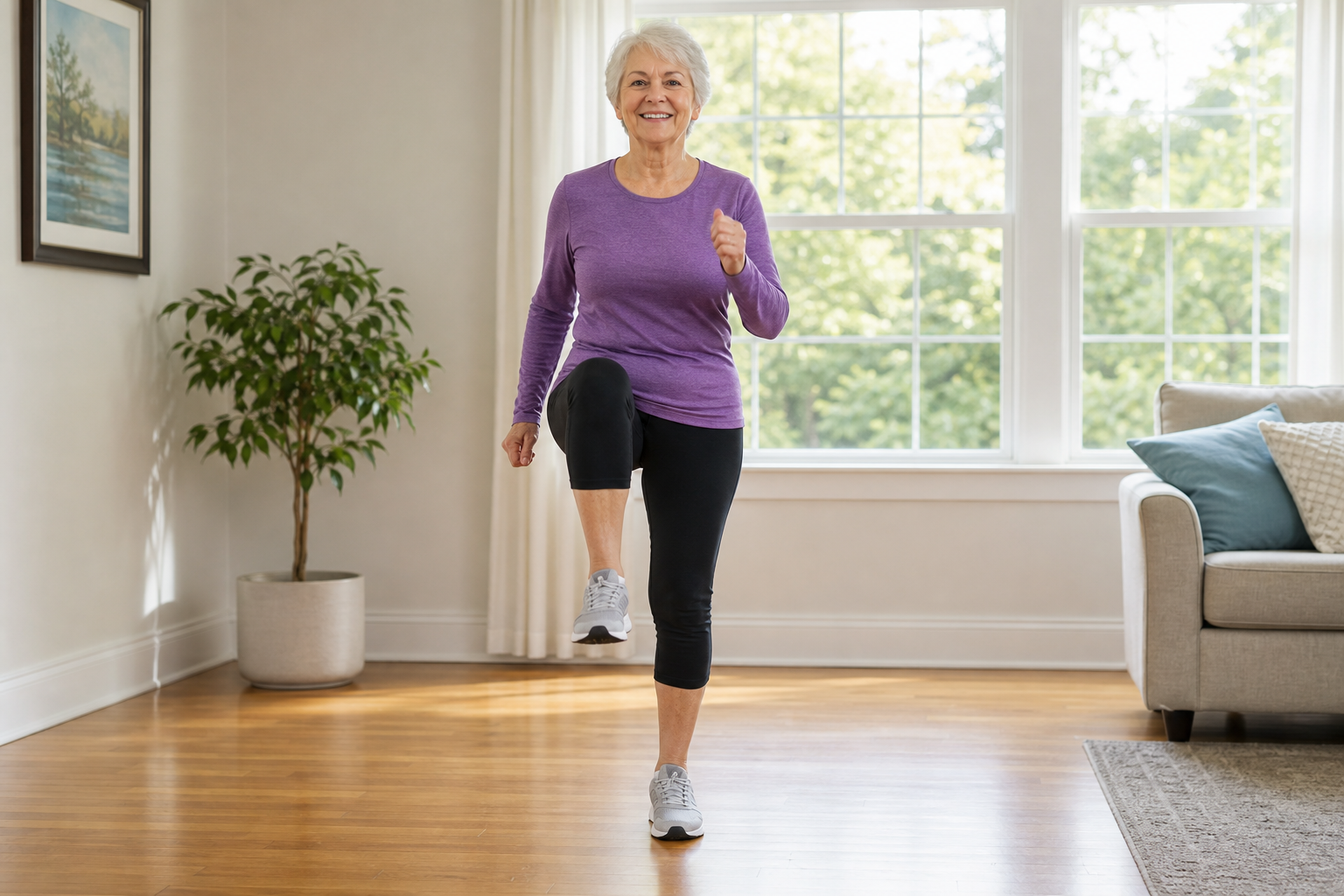
These exercises are done on your feet but keep the impact gentle. Wear supportive shoes and stand near a wall or chair if you need a stability reference point.
Marching in Place
This is the foundation of low-impact cardio. Lift your knees to hip height (or as high as comfortable), swing your arms naturally, and keep a steady rhythm. Aim for 2 to 3 minutes at a time. To increase intensity, raise your knees higher or speed up your pace slightly.
Step Touches
Step your right foot out to the side, then bring your left foot to meet it. Alternate sides in a smooth side-to-side motion. Add arm movements, like sweeping your arms up as you step out, to bring your heart rate up further. This move is easy on the knees and great for warming up your hips.
Heel Digs and Toe Taps
Alternate tapping your heel forward, then your toe, keeping a light but consistent pace. These moves look simple but they improve foot-to-brain coordination and keep blood moving in your lower legs, which is especially helpful if you deal with swelling or poor circulation.
Side Steps with Arm Raises
Take two steps to the right while raising both arms to shoulder height, then two steps left as you lower them. This keeps your upper and lower body engaged and is a good move for improving posture over time.
Seated Low-Impact Cardio
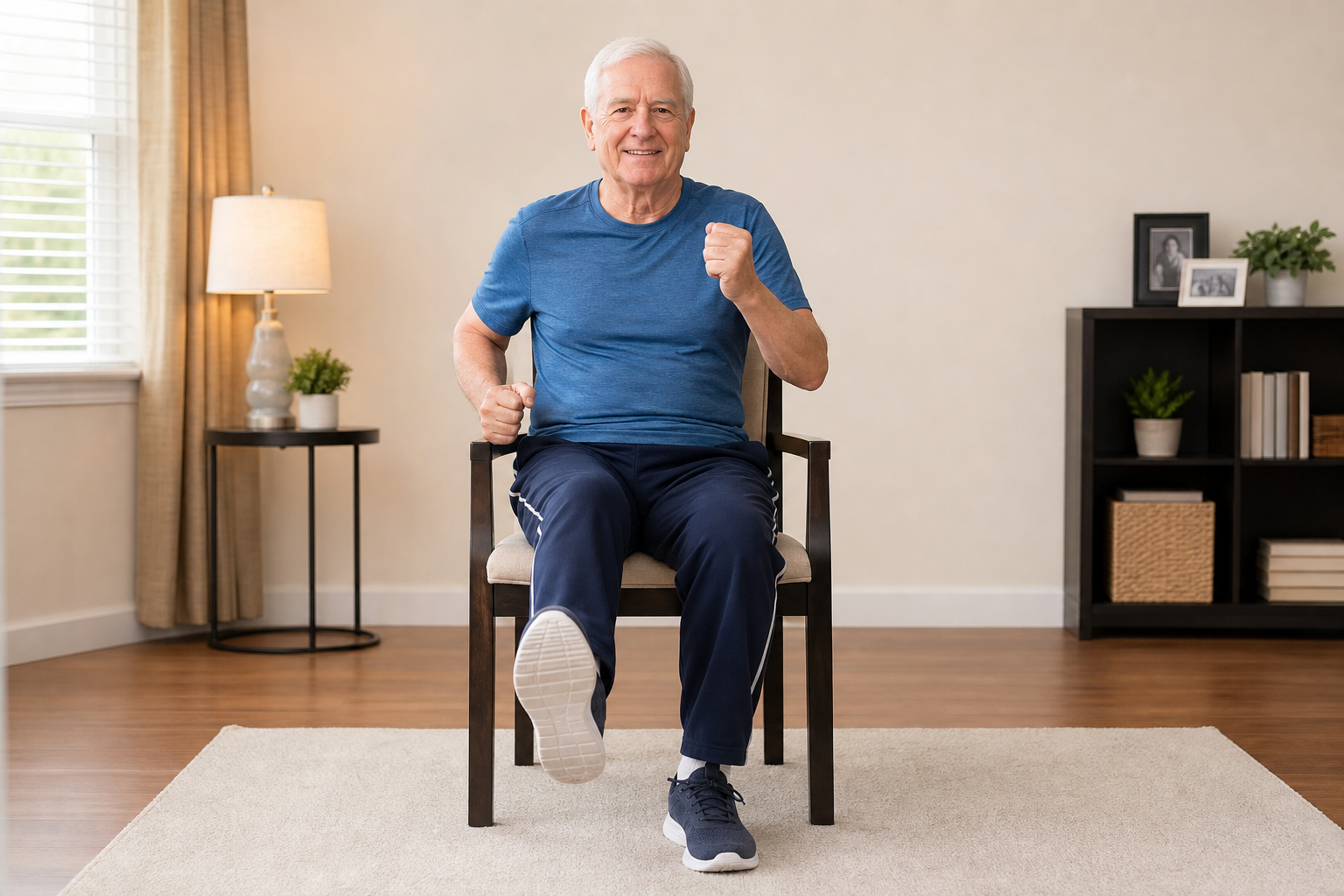
Seated cardio is not a lesser option. It’s a legitimate, effective way to get your heart rate up while taking pressure completely off your hips, knees, and feet. It’s ideal on high-pain days or for anyone working through recovery after joint surgery.
If you’re in post-surgical recovery, check with your care team first, and consider our guides on post-hip replacement exercise or post-knee replacement movement for appropriate progressions.
Seated Marching
Sit toward the front edge of a sturdy chair. Lift one knee, lower it, then lift the other. Pump your arms at the same time to raise your heart rate. Keep your back straight and your core gently engaged. You can do this for 5 to 10 minutes without stopping.
Seated Jumping Jacks
From a seated position, open your legs wide while raising your arms overhead, then bring both back to center. It mimics the rhythm of a jumping jack without any impact. This is surprisingly effective for raising your heart rate and improving shoulder mobility.
Seated Punches and Arm Circles
Alternate punching forward with each arm at shoulder height, keeping your core tight. Follow that up with wide arm circles to keep blood flowing through your shoulders and upper back. These moves complement seated marching well for a full upper-lower cardio blend.
Using a Pedal Machine for Consistent Cardio
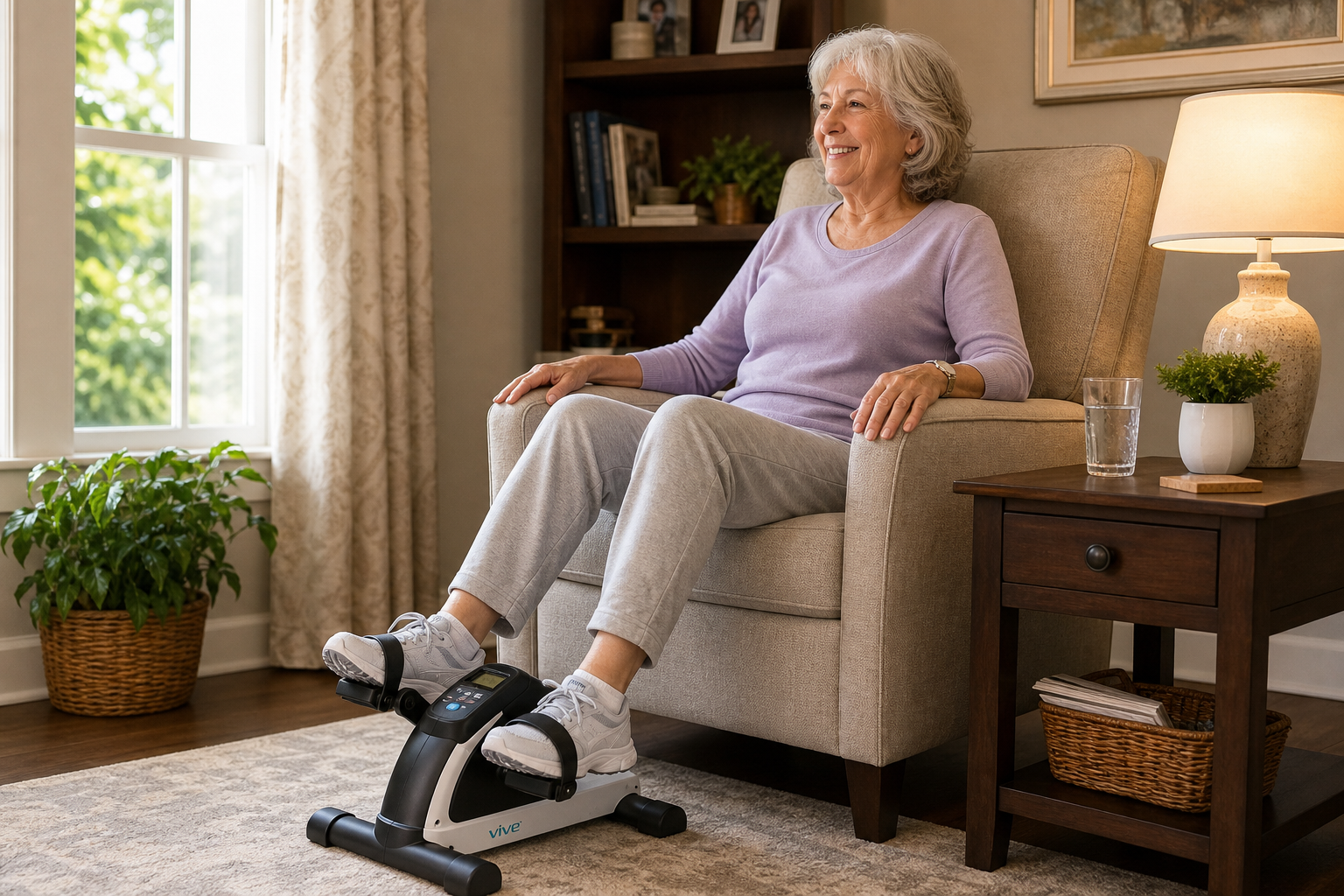
An under-desk pedal exerciser is one of the most practical tools you can add to your home. You can pedal while watching TV, reading, or even working at a desk. It keeps your legs moving without any joint impact and builds cardiovascular endurance gradually.
Most pedal machines let you adjust resistance, which matters more than people realize. Starting at low resistance and increasing it over a few weeks is exactly the kind of progressive approach that builds real aerobic fitness safely.

Under Desk Pedal Exerciser
A simple, affordable way to add consistent low-impact cardio to your day without leaving your chair.
Look for a model with a digital display that tracks time, RPM, and estimated calories. That feedback helps you stay consistent and gives you something to benchmark against each week. You can also find models with arm pedals if you want upper-body cardio while seated.
For a deeper look at seated cycling equipment and how it compares to other options, our article on the exercise bike vs. elliptical for seniors covers the tradeoffs well.

Recumbent Exercise Bike for Seniors
Recumbent bikes offer full back support and a smooth pedaling motion, making them ideal for longer cardio sessions at home.
How to Gauge Intensity Without Overdoing It
You don’t need a heart rate monitor to know you’re working hard enough. Use the talk test: you should be able to speak in short sentences but not carry on a full conversation easily. If you can sing, push a little harder. If you can’t finish a sentence, slow down.
For most seniors, moderate intensity is the sweet spot. A simple perceived exertion scale of 1 to 10 is useful here. Aim for a 5 to 6 during steady-state cardio. A 3 to 4 is good for warmup or on recovery days.
If you’re on blood pressure medication, it’s important to know that some medications affect your resting and exercise heart rate. Our article on blood pressure medication and exercise precautions has specific guidance on this.
Build up gradually. Start with 10 minutes of low-impact cardio three days a week and add 5 minutes per session every two weeks. Most people find they can comfortably reach 30 minutes within 6 to 8 weeks.
Supporting Your Cardio Routine
What you eat before and after your sessions matters more than most people think. A small carbohydrate-rich snack 30 to 60 minutes before exercise gives you energy without weighing you down. After your workout, getting some protein within an hour supports muscle recovery. Our guides on pre-workout nutrition and post-workout recovery meals for seniors cover this in practical detail.
Comfortable footwear makes a real difference for standing cardio. If you tend to wear socks around the house, consider adding non-slip grip socks to reduce slip risk during step touches or side steps.
Frequently Asked Questions
How long should a low-impact cardio session be for seniors?
Start with 10 to 15 minutes if you’re new to regular exercise. Over several weeks, gradually work up to 20 to 30 minutes per session. Three to five sessions per week is a solid target for maintaining cardiovascular health. Consistency over time matters far more than any single session length.
Can I do low-impact cardio every day?
Yes, in most cases. Because these workouts don’t put heavy stress on your joints or muscles, daily low-intensity sessions are generally fine. Listen to your body. If you feel fatigued, unusually sore, or notice joint discomfort, take a rest day or reduce the duration. One or two lighter days per week is a smart habit regardless.
Is seated cardio actually effective, or do I need to stand?
Seated cardio is genuinely effective for cardiovascular health. Studies on chair-based exercise programs have shown meaningful improvements in heart rate, blood pressure, and endurance in older adults. If standing cardio is uncomfortable or unsafe for you right now, seated options are not a compromise. They’re a legitimate and well-supported choice.
This article contains affiliate links. We may earn a small commission at no extra cost to you.