Cold weather makes arthritic joints feel like rusty hinges. The stiffness, aching, and reduced range of motion that accompany dropping temperatures aren’t imagined. Cold increases the viscosity of synovial fluid (making it thicker and less lubricating), stiffens tendons and ligaments, reduces blood flow to joint tissues, and may increase the sensitivity of pain receptors in joint capsules.
Exercising cold, stiff joints without proper preparation increases injury risk and makes the session miserable. A targeted pre-exercise warm-up protocol for cold weather prepares your joints for safe, comfortable movement.
Before starting any new exercise routine or making changes to your warm-up protocol, talk to your doctor. This is especially important if you have arthritis, cardiovascular conditions, or balance concerns that cold weather might affect.
Why Cold Weather Affects Joints
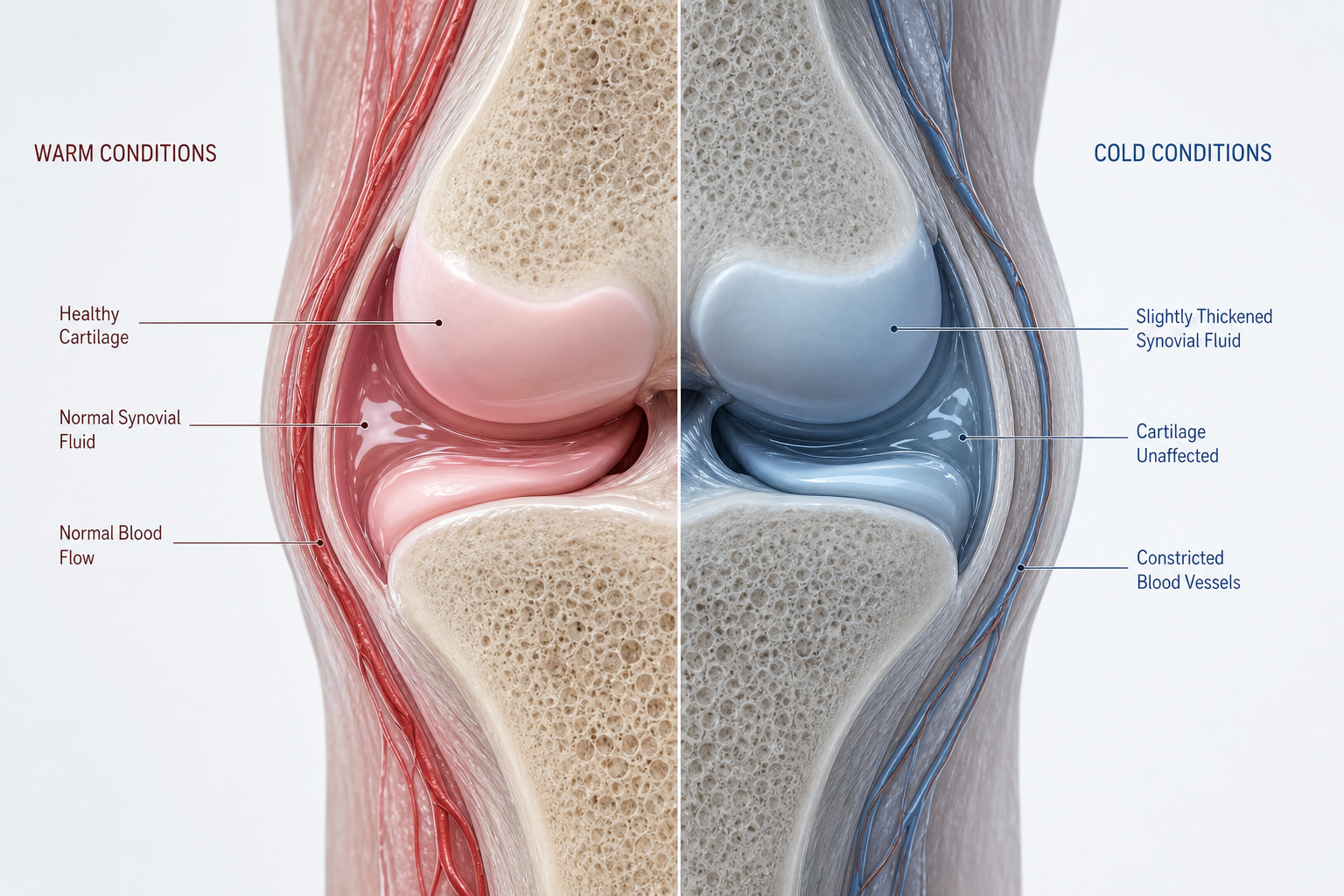
Synovial Fluid Thickening
Synovial fluid behaves like oil in an engine: it flows freely when warm and thickens when cold. Thicker fluid provides less lubrication between joint surfaces, increasing friction during movement. This is why the first few minutes of movement on a cold day feel gritty, stiff, and uncomfortable until the fluid warms and thins.
The thickening effect is measurable. Studies show synovial fluid viscosity can increase by 20-30% when joint temperature drops just a few degrees. Your body produces the same amount of fluid, but its consistency changes enough to reduce the smooth glide between cartilage surfaces.
This friction translates directly to that catching, grinding sensation many people experience when they first stand up on a cold morning.
Movement reverses this quickly. The mechanical action of joint movement generates heat through friction, which warms the fluid back to its normal consistency within 5-10 minutes of gentle activity.
Barometric Pressure Changes
Dropping barometric pressure (common before cold fronts and storms) allows joint tissues to expand slightly, which can increase pressure on nerve endings within an already inflamed joint capsule. This is the mechanism behind the common claim that “I can feel the weather in my joints.”
The pressure differential is small but real. When atmospheric pressure drops, the gases dissolved in joint fluid can expand, creating more internal pressure against the joint capsule. For a healthy joint, this pressure change is negligible.
For an arthritic joint where the capsule is already inflamed and sensitized, even minor pressure increases can trigger pain signals.
Some people are more sensitive to these pressure changes than others. If you notice your joints flare consistently 12-24 hours before a storm front arrives, you’re likely among the more pressure-sensitive group. This isn’t something you can prevent, but knowing it’s coming lets you adjust your warm-up time and modify your exercise intensity accordingly.
Reduced Blood Flow
Cold temperatures trigger vasoconstriction (narrowing of blood vessels) in the extremities and joint tissues. Reduced blood flow means less oxygen and nutrient delivery to the muscles and tendons surrounding the joint, making them stiffer and more prone to strain.
Your body prioritizes keeping your core organs warm, which means blood gets shunted away from your hands, feet, and peripheral joints when you’re cold. The muscles and tendons around these joints become less pliable with reduced blood flow, similar to how a cold rubber band snaps more easily than a warm one.
This vasoconstriction also slows the removal of metabolic waste products from tissues. Lactic acid and other byproducts that normally clear quickly can accumulate, contributing to that heavy, achy feeling in cold joints.
The Cold-Weather Joint Warm-Up Protocol
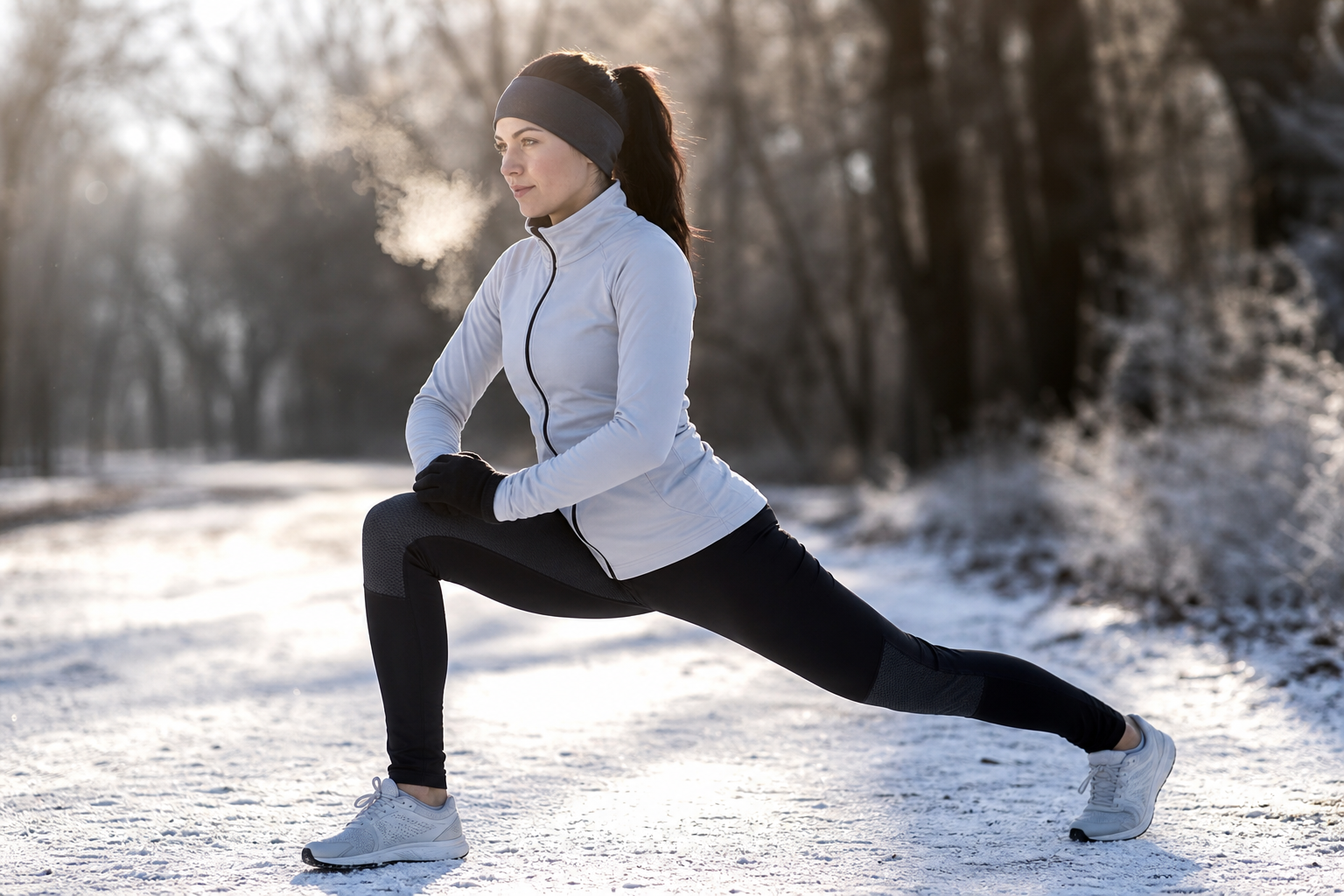
Step 1: Indoor Pre-Warm (5-10 Minutes Before Going Outside)
Start your warm-up indoors where it’s warm. Your goal is to raise your core temperature, warm your synovial fluid, and increase blood flow before exposing your joints to cold air.
- March in place: 2 minutes (raises core temperature)
- Joint circles: shoulders, hips, wrists, ankles (1 minute each joint area)
- Gentle bodyweight squats: 10 reps (warms knee and hip joints)
- Arm swings: 20 cross-body swings (warms shoulders)
- Standing trunk rotations: 10 per side (warms spinal joints)
Think of this indoor warm-up as a buffer between rest and cold exposure. If you walk straight from a warm house into 25°F air, your joints experience an immediate temperature shock that triggers aggressive vasoconstriction. Starting the warm-up indoors gives your cardiovascular system time to adjust gradually.
For those with significant arthritis in multiple joints, you might need the full 10 minutes. If your joints are less affected or the outdoor temperature is mild (above 40°F), 5 minutes may be enough.
By the end of the indoor warm-up, you should feel slightly warm and notice your joints moving more smoothly than when you started. For more guidance on arthritis-friendly exercise approaches, check out our detailed guide.
Step 2: Apply External Heat (Optional, 5-10 Minutes)
For joints that are particularly stiff (knees, hands, shoulders), apply external heat before exercise:
- A microwavable heat wrap applied to stiff knees or shoulders for 5-10 minutes raises the local tissue temperature, improving synovial fluid viscosity and tendon pliability before you start moving.
- Warm water soaks for hands (3-5 minutes in comfortably warm water) loosen finger and wrist joints rapidly.
- A warm shower for 5 minutes before exercise provides whole-body warming that benefits every joint.
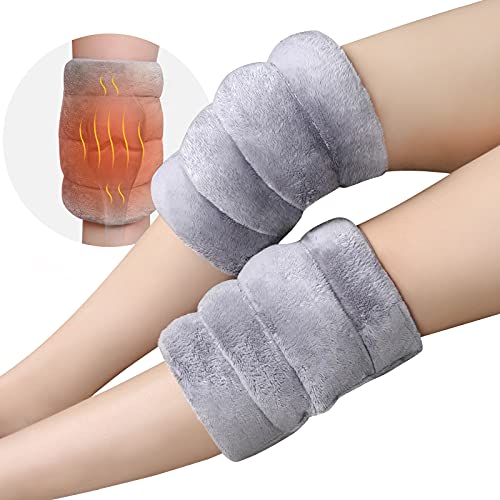
Microwavable Joint Heat Wraps
Provides targeted warmth to stiff joints before cold-weather exercise, accelerating your warm-up process
External heat doesn’t replace movement-based warm-up, but it accelerates the process by starting the temperature increase before you take your first step. This is especially useful for joints that tend to be your problem areas. If your knees are always the last joints to loosen up, 10 minutes with a heat wrap before you start can cut your warm-up time outdoors and make the entire session more comfortable.
The heat should feel pleasant, not burning. Skin temperature around 100-110°F is ideal. You’re looking to warm the tissues, not cook them. Remove the heat source before you head outside so you’re not creating a sudden temperature contrast between wrapped and unwrapped areas.
Step 3: Extended Dynamic Warm-Up Outdoors (5-7 Minutes)
Once outside, extend your warm-up by 3-5 minutes beyond your normal routine. Cold air re-stiffens the tissues quickly, so a longer warm-up is necessary to maintain the flexibility you built indoors.
- Walk very slowly for 2-3 minutes before picking up your pace
- Exaggerate arm swings to keep upper body blood flowing
- Perform leg swings (holding a bench or railing) to dynamically warm the hips
- Gradually increase your walking speed over the first 5 minutes rather than starting at your brisk pace
The outdoor portion of your warm-up needs to be continuous movement. Standing still to adjust your clothing or chat with a neighbor allows your body temperature to drop quickly. If you need to stop, keep marching in place or doing gentle joint circles to maintain circulation.
Pay attention to wind chill, not just temperature. A 35°F day with 15 mph wind feels like 25°F on exposed skin and joints. On windy days, you might need to add another 2-3 minutes to your outdoor warm-up, or consider shortening your outdoor time and finishing your workout indoors.
For additional strategies on staying active during winter, our cold weather exercise tips offer complementary guidance.
Dressing for Joint Protection
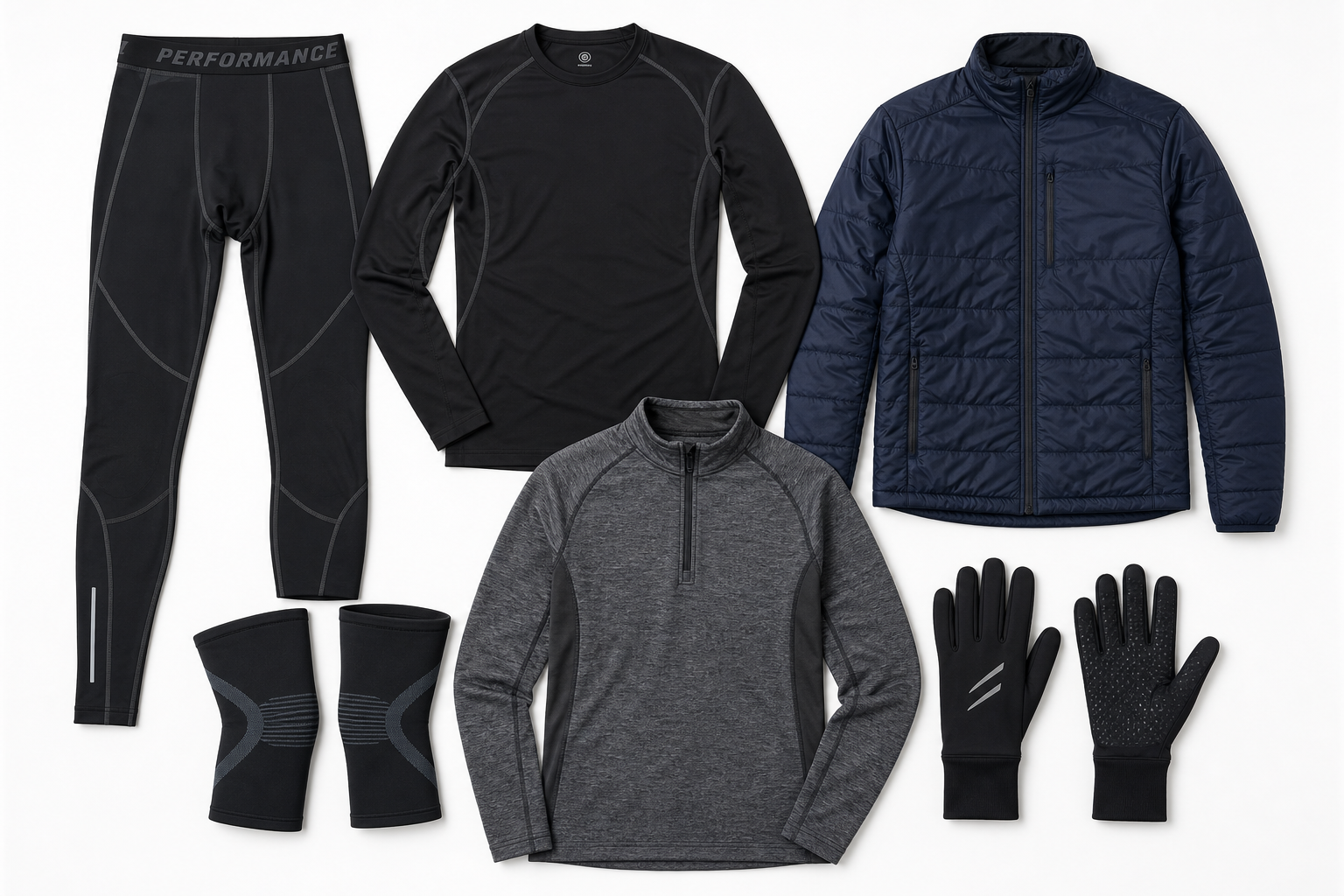
Layer over vulnerable joints. A thermal knee sleeve or compression sleeve over arthritic knees traps body heat around the joint during outdoor exercise. Similar sleeves exist for elbows, wrists, and ankles.

Thermal Knee Compression Sleeves
Traps body heat around vulnerable joints while providing light compression to reduce inflammation during cold-weather activity
Wear moisture-wicking base layers. Cotton absorbs sweat and holds it against your skin, dropping your body temperature. Synthetic or merino wool base layers wick moisture away, keeping you warm.
Protect your hands. Arthritic hands stiffen rapidly in cold air. Thin glove liners under insulated gloves provide warmth without sacrificing the dexterity needed for walking poles or band exercises. For more on maintaining hand function, our grip strength exercises guide provides helpful techniques.
Cover your head and neck. You lose significant body heat through your head. A warm hat and neck gaiter maintain core temperature, which indirectly keeps your joints warmer.
Proper layering is a balance. Too many layers and you overheat, start sweating, and then get cold when sweat-soaked clothing chills against your skin. Too few layers and you never warm up enough for your joints to move comfortably.
A good rule: dress so you feel slightly cool for the first 5 minutes of your walk. If you’re comfortable standing still before you start, you’ll be too warm once you’re moving. You should warm up to comfortable within the first 10 minutes of exercise.
If you’re still cold after 10 minutes, you’re underdressed. If you’re sweating heavily after 10 minutes, you’re overdressed.
Compression sleeves serve double duty. They provide light compression that may help reduce swelling in arthritic joints while also trapping a thin layer of warm air around the joint. They’re thin enough to fit under pants or long sleeves without bulk, which matters if you dislike the feeling of thick padding around your joints.
For hands, mittens are warmer than gloves because your fingers share heat, but gloves offer better dexterity. If you use walking poles, gloves are usually necessary. Consider convertible mittens that flip back to expose your fingers when you need to adjust zippers or check your phone, then cover them again quickly.
Indoor Alternatives for Extreme Cold
When temperatures drop below 20°F (or whenever cold conditions make outdoor exercise uncomfortable despite warm-up efforts), move your workout indoors entirely:
- Indoor walking (home loops, mall walking, treadmill)
- Chair exercises
- Resistance band training
- Pedal exerciser
- Exercise videos
Your joints don’t know the difference between indoor and outdoor exercise. The cardiovascular and strengthening benefits are identical. The only thing you miss is the outdoor exposure, which can be partially compensated with a brief outdoor walk on milder days.
Mall walking is an underrated winter option. Most malls open early for walkers (often 7-8 AM), the temperature is controlled, the surface is smooth and even, and there are benches available if you need to rest. The main downside is that mall walking routes can be crowded and offer limited distance, but for maintaining a winter walking routine without cold-weather joint stress, it’s practical.
Home walking loops work if you have enough space. Walking laps around your house or apartment might feel repetitive, but it keeps you active. Put on music or a podcast to reduce the monotony. Count laps or set a timer rather than focusing on the sameness of the route.
Chair exercises become especially useful in winter because they allow you to work every major muscle group in a warm environment without the balance challenges that ice and snow create outdoors. A 20-minute chair routine can provide equivalent strength work to a 30-minute outdoor walk, and you can do it in your living room in comfortable clothing without worrying about wind chill.
Our seated resistance training guide offers a complete workout you can do entirely from a chair.
Recognizing When to Modify or Stop
Cold weather exercise requires more self-monitoring than warm-weather exercise. Watch for these signs that you need to modify your activity or head indoors:
Pain that worsens during warm-up: Some initial stiffness that eases within 5-10 minutes is normal. Pain that gets sharper or more intense as you continue moving suggests the cold is overwhelming your warm-up efforts. Shorten your outdoor time or move the workout indoors.
Numbness or tingling in extremities: This signals reduced blood flow to dangerous levels. Get indoors and warm up gradually. Don’t rub numb skin aggressively, as that can damage tissue. Let it warm naturally.
Shivering: If you’re shivering during exercise, you’re losing core heat faster than you’re generating it. This is dangerous and also makes your joints stiffer, not looser. Add layers or move indoors immediately.
Balance problems: Cold can affect proprioception (your sense of where your body is in space), especially in your feet and ankles. If you feel unsteady or notice you’re shuffling rather than lifting your feet normally, cold exposure is affecting your neuromuscular control. This increases fall risk significantly.
Post-Exercise Joint Care
What you do after cold-weather exercise matters as much as your warm-up:
Cool down gradually indoors. Don’t stop moving abruptly when you come inside. Walk slowly around your house for 3-5 minutes to allow your heart rate and body temperature to decrease gradually. This prevents blood from pooling in your legs and reduces post-exercise joint stiffness.
Stretch while still warm. Your joints and muscles are most pliable in the 10-15 minutes immediately after exercise. This is the ideal window for static stretching of tight areas (hip flexors, calves, shoulders). Hold each stretch for 20-30 seconds without bouncing.
Our morning stretching routine can easily be adapted for post-exercise use.
Rehydrate even though you’re not thirsty. Cold air is dry air. You lose moisture through respiration during cold-weather exercise, even if you don’t feel like you’re sweating. Drink water within 30 minutes of finishing.
Apply heat to joints that stiffen quickly. If your knees or hands tend to seize up within an hour of finishing exercise, a heat wrap or warm bath right after your cool-down can prevent that post-exercise stiffness. This is preventive care, not treatment for damage. You’re keeping tissues supple rather than letting them cool and stiffen completely before you address it.
Frequently Asked Questions
Does cold weather actually cause arthritis to worsen?
Cold weather doesn’t cause new joint damage or accelerate arthritis progression. It increases symptoms (pain, stiffness, reduced range