You finish your workout and your hands are trembling, your legs feel wobbly, and your whole body has a subtle vibration that makes holding a water bottle feel uncertain. Post-exercise shakiness is alarming, but in most cases it’s your body telling you something specific and fixable went wrong during or before the workout.
Understanding why shakiness happens matters because the fix depends on the cause. A blood sugar issue needs different intervention than dehydration or medication timing. Once you identify your pattern, post-workout tremors are usually preventable with simple adjustments to timing, nutrition, or intensity.
5 Common Causes of Post-Workout Shakiness

1. Low Blood Sugar (Hypoglycemia)
Your muscles burn glucose during exercise. If you haven’t eaten enough before your workout, or if you exercise longer than your fuel stores support, your blood sugar drops below the level your brain and nervous system need to function smoothly. The result is shakiness, lightheadedness, difficulty concentrating, and sometimes irritability or anxiety.
Your brain relies almost exclusively on glucose for fuel. When blood sugar drops below about 70 mg/dL, neurological symptoms appear first because your brain is rationing what little glucose remains. The tremor you feel is your nervous system struggling to coordinate muscle firing patterns without adequate fuel.
More likely if: You exercised on an empty stomach, it’s been more than 3 hours since your last meal, you take diabetes medication (especially insulin or sulfonylureas), or the workout was longer or harder than usual. Morning exercisers who skip breakfast are particularly prone to this. People who take metformin or other diabetes medications that affect how the body processes glucose are also at higher risk.
The fix: Eat a balanced snack 30-60 minutes before exercise containing carbohydrates and protein. A slice of whole grain toast with peanut butter, a small Greek yogurt with berries, or half a turkey sandwich all provide the mix of quick and sustained energy your muscles need. The carbohydrates fuel the workout, the protein slows digestion and extends how long that fuel lasts.
Keep glucose tablets or a small juice box in your gym bag for emergencies. If shakiness hits, eat 15 grams of fast-acting carbohydrate (4 glucose tablets, half a banana, or 4 ounces of juice) and rest for 15 minutes. Recheck how you feel. If symptoms persist, eat another 15 grams and continue resting.

Glucose Tablets
Fast-acting glucose source perfect for gym bags to quickly address low blood sugar during or after workouts
If you take diabetes medication, track your blood sugar before and after exercise to identify patterns. Many diabetes medications make exercise-induced hypoglycemia more likely. You may need to adjust medication timing, reduce dosage on workout days, or time your exercise differently relative to meals. Work with your doctor on this; don’t adjust diabetes medications on your own.
For non-diabetics, recurring low blood sugar after exercise may indicate you’re not eating enough overall, particularly if you’re also trying to lose weight. Aggressive calorie restriction combined with regular exercise sets up a situation where your body simply doesn’t have enough stored glucose to support the workout and normal brain function afterward. Check out safe weight loss strategies that maintain adequate energy for exercise.
2. Muscle Fatigue and Micro-Tremors
When you work a muscle hard, the individual muscle fibers fire in a coordinated pattern to produce smooth movement. As fibers fatigue and drop out, the remaining fibers compensate by firing faster and less coordinately. This produces visible trembling in the affected muscles. It’s the same reason your legs shake during a long wall sit or your arms tremble holding a plank.
This isn’t a sign of weakness or poor conditioning. Everyone experiences this at the point of genuine muscle fatigue, regardless of fitness level. Elite athletes shake during their last reps just like beginners do. The difference is where that fatigue point occurs, not whether it happens.
More likely if: The shakiness is localized to the muscles you worked (arms shake after upper body day, legs shake after squats), it resolves within 30-60 minutes of stopping, and it happens consistently when you push to the last few reps of a set. You might also notice the shaking is more pronounced in your non-dominant side or in muscles you haven’t trained recently.
The fix: This type of shakiness is normal and not dangerous. It means you worked the muscle to a productive level of fatigue. If the trembling makes it unsafe to control the weight or maintain balance, stop the set. Dropping a weight or falling because muscles gave out isn’t worth the extra rep.
Ensure you’re eating adequate protein (25-30 grams within an hour after exercise) to support recovery. As we age, muscle protein synthesis becomes less efficient, so timing matters more. Post-workout is when your muscles are most receptive to using dietary protein for repair and rebuilding. Learn more about maintaining muscle mass through proper protein intake.
If the shaking persists for hours, you pushed too hard; reduce intensity next session. Muscle fatigue tremors should resolve once you rest and your muscle fibers recover. Extended shaking suggests you exceeded what your current conditioning level can handle and recover from promptly. Scale back and build up more gradually with a progressive resistance training program.
When you’re new to an exercise or returning after time off, expect more pronounced shaking even at lower intensities. Your nervous system is still learning or relearning the movement pattern. The coordination improves quickly with consistent practice.
3. Dehydration and Electrolyte Imbalance
Sweating depletes water, sodium, potassium, and magnesium. All of these are essential for muscle contraction and nerve signaling. An imbalance causes shakiness, cramping, and weakness that can persist for hours after exercise if you don’t replenish.
Magnesium is particularly important because it regulates how calcium moves in and out of muscle cells during contraction and relaxation. Low magnesium means muscles don’t relax completely between contractions, producing cramping and tremor. Potassium affects nerve signaling; depletion makes the electrical signals that trigger muscle movement less reliable, resulting in weakness and shaking.
Many seniors take diuretics for blood pressure or heart conditions. These medications increase urination, which depletes sodium and potassium faster than sweating alone. If you’re on a diuretic and exercising regularly, you’re at higher risk for electrolyte imbalance even if you’re drinking plenty of water.
More likely if: You exercised in heat, didn’t drink during the workout, take diuretics, or notice the shakiness is accompanied by cramping, headache, or dark urine. Also more likely if you’re watching sodium intake for blood pressure reasons and have cut salt very low. While reducing excess sodium is smart, you still need some sodium, especially on days you exercise and sweat. This is particularly important during hot weather workouts.
The fix: Drink 16-24 ounces of water with an electrolyte supplement after exercise. Look for products that contain sodium, potassium, and magnesium, not just sodium. Many sports drinks are mostly sugar with minimal electrolytes beyond sodium. Read labels.

Electrolyte Powder Packets
Low-sugar formulas with balanced sodium, potassium, and magnesium for proper hydration without excess calories
During the workout itself, sip water every 15-20 minutes if you’re exercising for more than 30 minutes or in warm conditions. Waiting until you feel thirsty means you’re already mildly dehydrated. Your thirst mechanism also becomes less sensitive with age, so you can’t rely on it as your only hydration signal.
Eat potassium-rich foods (banana, yogurt, orange, sweet potato, spinach) as part of your post-workout meal or snack. Consider a magnesium supplement (200-400 mg of magnesium glycinate) if cramping and shaking are recurring problems. Magnesium glycinate is better absorbed and causes fewer digestive side effects than other forms like magnesium oxide.
If you take a diuretic, ask your doctor whether you should have periodic blood tests to check your electrolyte levels. Chronic low potassium or magnesium can cause more serious problems than post-workout shaking, including irregular heart rhythms.
4. Caffeine or Stimulant Effects
Pre-workout caffeine (from coffee, tea, or supplements) combined with the adrenaline surge of exercise can produce jittery shakiness that persists well after the workout ends. After 60, caffeine is metabolized more slowly, meaning its stimulant effects last longer and overlap more with post-exercise recovery.
Caffeine blocks adenosine receptors in your brain. Adenosine is the chemical that builds up during the day and makes you feel tired. By blocking it, caffeine keeps you feeling alert, but it also amplifies your body’s stress response. Add exercise, which naturally releases adrenaline and cortisol, and you get a compounding stimulant effect that can manifest as tremor, rapid heartbeat, and jitteriness.
The half-life of caffeine increases with age. Where it might take 4-5 hours to clear half the caffeine from a younger person’s system, it can take 6-8 hours in someone over 60. That morning coffee can still be affecting you at lunchtime.
More likely if: You drank coffee or took a supplement containing caffeine within 2 hours of exercising, you’re sensitive to stimulants, or you’ve noticed sleep problems on workout days even when you exercise in the morning. Some people develop increased caffeine sensitivity as they age, finding that amounts they tolerated fine when younger now make them jittery.
The fix: Limit caffeine to one small cup of coffee 2+ hours before exercise, or skip it on workout days. Give your body time to metabolize the caffeine before adding the adrenaline surge of exercise.
Read supplement labels carefully; many “energy” and “pre-workout” products contain significant caffeine, green tea extract, or guarana. Green tea extract and guarana are just different sources of caffeine with different marketing names. A supplement labeled “natural energy blend” can contain as much caffeine as two cups of strong coffee.
If you take any medications, check whether they interact with caffeine. Some antibiotics, heart medications, and bronchodilators slow caffeine metabolism, making the jittery effects worse and longer-lasting. Review your medications with your doctor as part of reducing medication through exercise.
Consider switching to decaf coffee or herbal tea on workout days. You might find you don’t actually need the caffeine for energy once your body adjusts. Exercise itself is a powerful energy booster.
5. Blood Pressure Medication Effects
Blood pressure medications (especially if combined with exercise-induced blood pressure drops) can cause post-exercise shakiness, weakness, and dizziness. The medication lowers your blood pressure, exercise lowers it further, and the result is insufficient blood flow to maintain normal muscle and nerve function.
During exercise, blood vessels in your working muscles dilate to deliver more oxygen. Your heart rate increases to maintain blood pressure despite this dilation. When you stop exercising suddenly, those blood vessels remain dilated for a period while your heart rate drops back down. Blood can pool in your legs instead of returning efficiently to your heart and brain. If you’re on blood pressure medication, this normal post-exercise drop is exaggerated.
Beta-blockers, ACE inhibitors, calcium channel blockers, and diuretics all affect this process differently, but all can contribute to post-exercise shakiness and lightheadedness. Beta-blockers, in particular, prevent your heart rate from increasing as much during exercise, which means your body has less cardiovascular reserve to maintain blood pressure during the recovery period.
More likely if: Shakiness is accompanied by lightheadedness or near-fainting, it occurs mainly after standing up from floor exercises, it started after a medication change, or you take multiple blood pressure medications. Also more likely if your blood pressure tends to run low even on medication, or if you’re on a higher dose.
The fix: Cool down gradually (never stop suddenly). Spend 5-10 minutes doing progressively lighter activity before stopping completely. Walk slowly, march in place, do gentle arm circles. This keeps muscles contracting and helps pump blood back to your heart and brain instead of pooling in your legs.
Sit or lie down if shakiness is accompanied by lightheadedness. Elevate your legs if possible. This uses gravity to help return blood to your heart. Don’t try to push through post-exercise dizziness by continuing to stand and move. Falls happen when people ignore these warning signs.
Discuss exercise timing relative to your medication schedule with your doctor. You might do better exercising before taking your morning blood pressure medication rather than after. Or your doctor might adjust your dosage if exercise-related symptoms are recurring. Don’t stop or adjust blood pressure medication on your own; changes need medical supervision.
Monitor your blood pressure before and after exercise for a week to establish your pattern. If you’re dropping more than 20 points systolic post-exercise, bring those numbers to your doctor. This is useful information for determining whether medication adjustment is needed, especially if you’re following a heart-healthy cardio program.
When Post-Workout Shakiness Is Serious
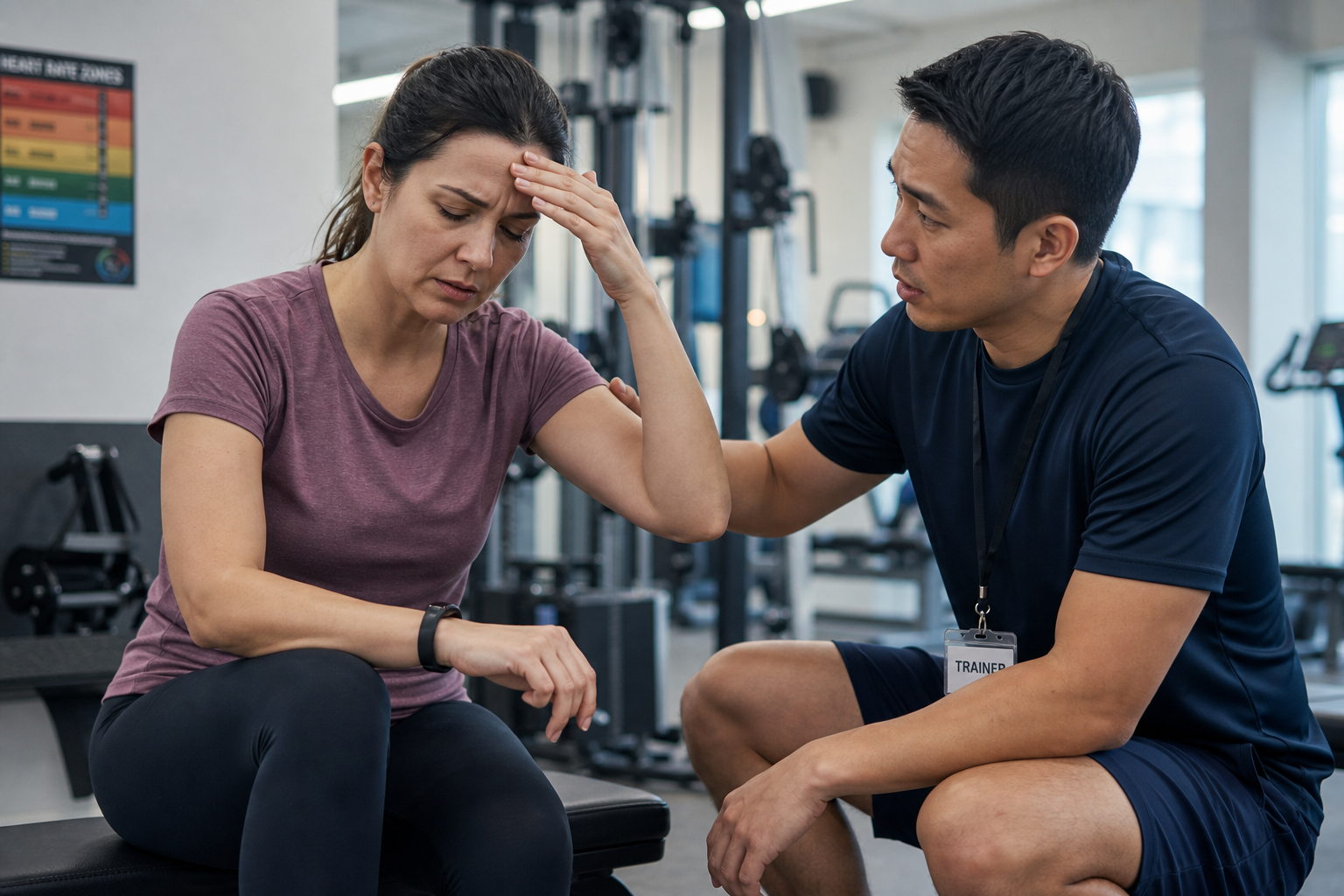
Seek medical attention if shakiness is accompanied by chest pain or pressure, confusion or difficulty speaking, vision changes, numbness on one side of the body, or loss of consciousness. These symptoms could indicate a cardiac event or stroke and require immediate evaluation.
Call 911 if shakiness comes with severe chest pain, sudden severe headache, one-sided weakness, or difficulty breathing. Don’t drive yourself. Don’t wait to see if it passes.
See your doctor soon (within a day or two) if post-workout shakiness is new and recurring, doesn’t resolve within an hour of stopping exercise, progressively worsens over multiple workouts, or is accompanied by unexplained weight loss or persistent fatigue. These patterns can indicate underlying issues ranging from thyroid problems to heart conditions to medication side effects that need investigation.
Also talk to your doctor if you develop shakiness present even at rest or that worsens with stress or certain movements. This differs from exercise-induced tremor and may indicate a neurological condition like essential tremor or early Parkinson’s disease. Exercise-induced shakiness should resolve with rest. Constant tremor should be evaluated. For condition-specific exercise guidance, see programs for Parkinson’s or COPD.
Frequently Asked Questions
Is it normal to shake during exercise?
Localized shaking in the muscles you’re working (arms shaking during the last few push-ups, legs trembling during squats) is normal muscle fatigue. It means the muscle is working at or near its capacity. This type of shaking happens to everyone at their individual fatigue point.
Whole-body