Most Pilates exercises ask you to work on a mat or reformer, relying on your body awareness to maintain proper form. But what if you’re recovering from an injury, dealing with balance issues, or just starting out and need extra support? Wall Pilates gives you a stable surface to work against, providing instant feedback on your alignment and support when you need it most.
This isn’t just about doing wall pushups and calling it a day. Wall Pilates adapts the full range of Pilates movements to use your wall as a training partner. You’ll work on core strength, leg conditioning, and postural alignment while getting tactile feedback that helps you understand where your body is in space. For seniors especially, this can be the difference between avoiding exercise altogether and building real functional strength.
Why the Wall Makes Pilates More Accessible
Traditional Pilates requires strong body awareness. You need to know if your spine is neutral, if your pelvis is tucked, if your shoulders are properly positioned. Many seniors struggle with this proprioception, especially if they’ve been inactive or dealing with joint issues.
The wall solves this problem by giving you something to press against. When you place your back against the wall, you immediately feel if your lower back is arching too much or if your shoulders are rounding forward. This feedback is instant and unmistakable.
Beyond feedback, the wall provides stability. You can focus on engaging the right muscles without worrying about falling or losing your balance. This mental confidence translates into better form and more effective workouts. Similar principles apply when using specialized balance equipment that provides stability while challenging your coordination.
Having a visual reference for wall exercises helps tremendously. A Pilates wall chart keeps you on track with proper positioning and progression.

Pilates Wall Exercise Poster
Keeps your routine organized and ensures proper form at a glance
Essential Wall Pilates Exercises for Seniors
Wall Roll Down for Spinal Articulation
Stand with your back against the wall, feet about six inches away from the baseboard. Your entire spine should touch the wall from tailbone to head. Slowly peel your spine away from the wall one vertebra at a time, starting with your head and neck.
Roll down as far as you comfortably can, then reverse the movement to roll back up. This exercise teaches you to move each segment of your spine independently, which is critical for preventing back pain and maintaining mobility. Building strength in this area works well alongside targeted lower back strengthening exercises.
Most seniors will only make it halfway down at first. That’s perfectly fine. The goal is control and awareness, not how low you can go.
Wall Sits for Leg Strength
This classic exercise gets a Pilates twist when you focus on maintaining neutral pelvis and engaging your deep abdominals. Position your back against the wall and walk your feet forward until your thighs are parallel to the floor (or as close as you can manage).
Hold this position while breathing deeply. Don’t let your lower back arch away from the wall. You should feel this in your quadriceps, glutes, and core.
Start with 10-second holds and gradually work up to 30 seconds or more. This builds the leg strength you need for everyday activities like getting up from chairs or climbing stairs.
Standing Leg Circles
Stand sideways to the wall, placing one hand against it for light support. Keep your supporting leg slightly bent and your spine neutral. Lift your outside leg a few inches off the floor and draw small circles in the air.
Complete 5-10 circles in each direction, then switch sides. This exercise strengthens your hip stabilizers and improves balance while the wall prevents you from compensating with your upper body. For additional stability during daily activities, many seniors find using walking poles helpful when outdoors.
The key is keeping your pelvis still. Many people let their hips rock back and forth, which defeats the purpose. The wall helps you notice this tendency immediately.
Wall Push Aways for Upper Body
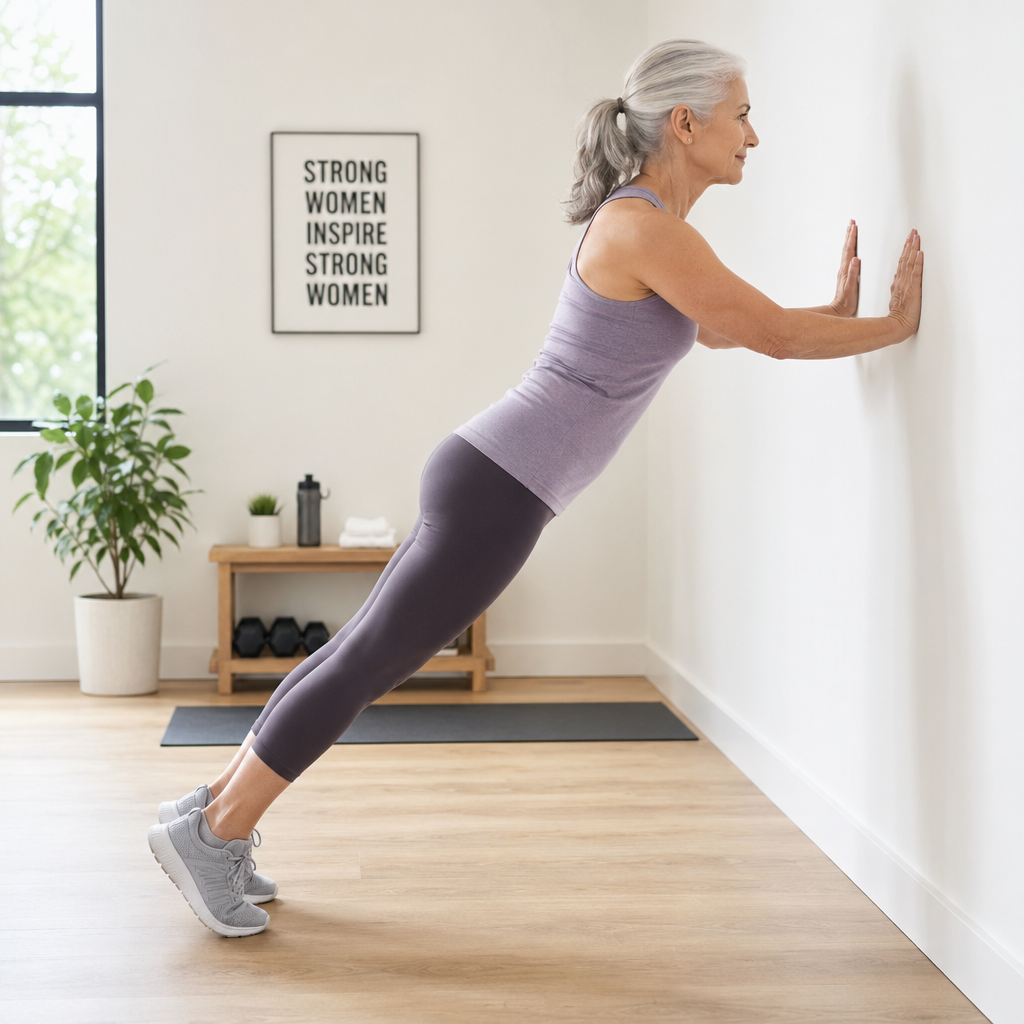
Face the wall and place your palms flat against it at shoulder height. Walk your feet back until your body forms a diagonal line. Bend your elbows to bring your chest toward the wall, then push away.
This is safer than floor pushups because you control the difficulty by adjusting how far your feet are from the wall. Closer means easier, farther means harder.
Focus on keeping your core engaged throughout the movement. Your body should move as one unit, not with your hips sagging or your shoulders shrugging up toward your ears.
Core Work Against the Wall
Core strength is essential for everything from walking to preventing falls. Wall Pilates offers unique ways to challenge your deep abdominals without lying on the floor.
Try the wall plank: stand facing away from the wall and place your forearms against it, walking your feet back until your body is at a diagonal. Hold this position while maintaining a neutral spine. You’ll feel your entire core working to keep you stable.
Another powerful core exercise is the pelvic tilt against the wall. Stand with your back against the wall and gently tilt your pelvis to press your lower back flat against the surface. Hold for a few seconds, then release. This teaches you to engage your deep abdominals and can help reduce lower back pain.
Wall-supported dead bugs work well too. Lie on your back with your feet up against the wall, knees bent at 90 degrees. Press your lower back into the floor while slowly extending one leg down the wall, then alternate sides.
Postural Alignment Benefits
Poor posture is epidemic among seniors. Years of sitting, working at computers, and natural aging all contribute to rounded shoulders and forward head position. Wall Pilates directly addresses these issues.
The wall angels exercise is particularly effective. Stand with your back against the wall, feet slightly forward. Press your lower back, upper back, and head against the wall. Raise your arms into a goal post position with elbows bent at 90 degrees.
Slowly slide your arms up the wall while keeping everything in contact with the surface. Most people can’t do this without their lower back arching or their arms coming away from the wall. This reveals exactly where your posture needs work.
Regular practice improves thoracic spine extension, which counteracts the rounded upper back posture. You’ll notice you stand taller and breathe more easily.
Wearing comfortable, supportive clothing makes a real difference during wall exercises. Look for Pilates pants for seniors that won’t restrict your movement or slip down during exercise.
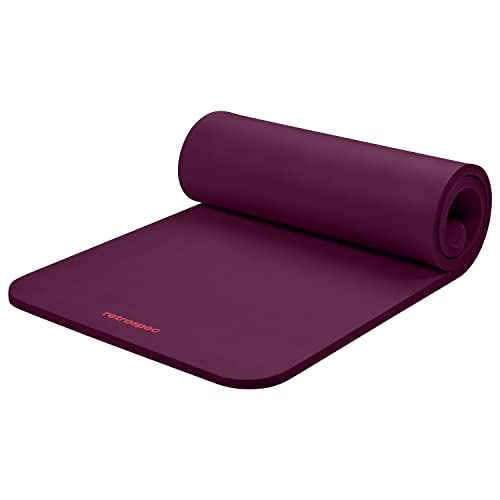
Non-Slip Yoga Mat for Wall Exercises
Provides cushioning for exercises that transition from wall to floor
Creating Your Wall Pilates Routine
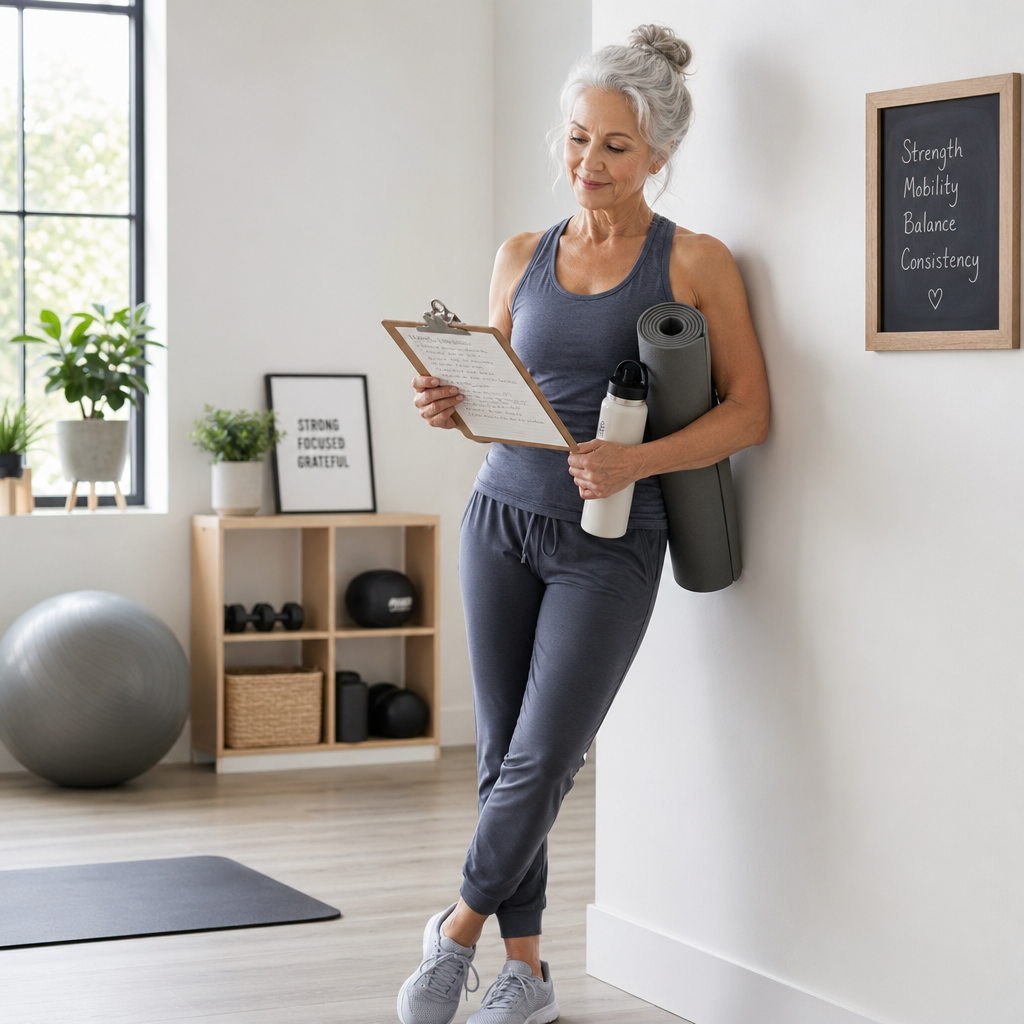
Start with just 10-15 minutes three times per week. Choose three or four exercises that target different areas: one for legs, one for core, one for upper body, and one for posture.
A simple beginner routine might look like this: wall roll downs (5 repetitions), wall sits (3 sets of 10-15 seconds), wall push aways (10 repetitions), and wall angels (8-10 repetitions). Rest for 30-60 seconds between exercises.
As you get stronger, increase the duration or add more challenging variations. You might hold wall sits longer, move your feet farther from the wall during push aways, or add leg lifts to your wall planks.
Pay attention to your breathing throughout. Pilates emphasizes coordinated breath with movement. Generally, you’ll exhale during the effort phase and inhale during the release. Never hold your breath.
Consistency matters more than intensity. Three short sessions per week will deliver better results than one marathon session followed by days off.
Some people find it helpful to use resistance bands to add variety once basic wall exercises become comfortable.
Safety Considerations and Modifications
Wall Pilates is generally safe, but you should still take precautions. Always warm up with gentle movements like shoulder rolls, neck stretches, and marching in place before starting your routine.
Listen to your body. Some muscle fatigue is normal, but sharp pain means stop immediately. Joint pain, dizziness, or chest discomfort requires medical attention.
Modify any exercise that doesn’t feel right. Wall sits can be done at a higher position if going to 90 degrees bothers your knees. Wall push aways can be performed with your hands higher on the wall to reduce the load.
Work on a surface that won’t slip. Hardwood floors can be slippery in socks, so consider wearing shoes with good traction or using a yoga mat at the base of the wall.
Check with your doctor before starting any new exercise program, especially if you have existing health conditions, balance problems, or have been inactive for a long period.
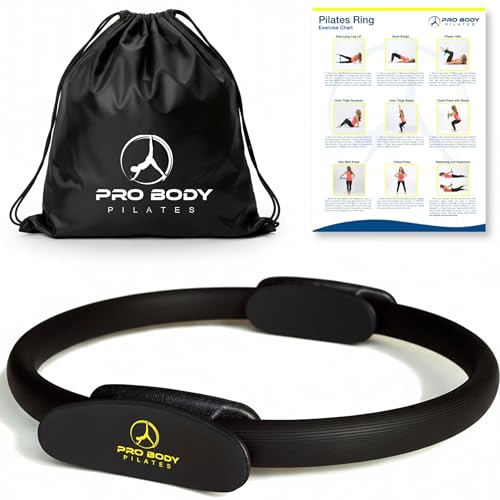
Pilates Ring for Wall Exercise Enhancement
Adds resistance and variety to wall-based movements once you’ve mastered the basics
Tracking Progress and Staying Motivated
Keep a simple exercise journal. Note which exercises you did, how many repetitions, and how you felt. You’ll be amazed looking back after a few weeks to see how much stronger you’ve become.
Take before photos of your posture from the side. Stand naturally