Falls are the leading cause of injury-related hospital visits for adults over 65, and most of them happen during completely ordinary moments: stepping off a curb, reaching for something on a shelf, or just turning around too quickly. The scary part is that balance doesn’t decline all at once. It slips away gradually, and most people don’t notice until a close call happens. The better news is that balance responds well to training, even in your 70s and 80s. You don’t need a gym or a trainer to start. You just need ten minutes and something sturdy to hold onto.
This routine is built around three proven movements: single-leg stands, heel-to-toe walking, and lateral weight shifts. Each one targets the neuromuscular systems that keep you upright when the ground shifts beneath you or your body moves faster than expected. Done consistently, these exercises can make a real difference in how steady and confident you feel on your feet.
Watch Before You Start
If you’re a visual learner, this video walks through several balance fundamentals that complement the routine below. It’s a helpful primer before you dive into the step-by-step instructions.
After watching, come back and follow along with the written routine. Having both a visual and written reference makes it easier to remember proper form when you’re doing it on your own.
Safety First: Setting Up Your Space
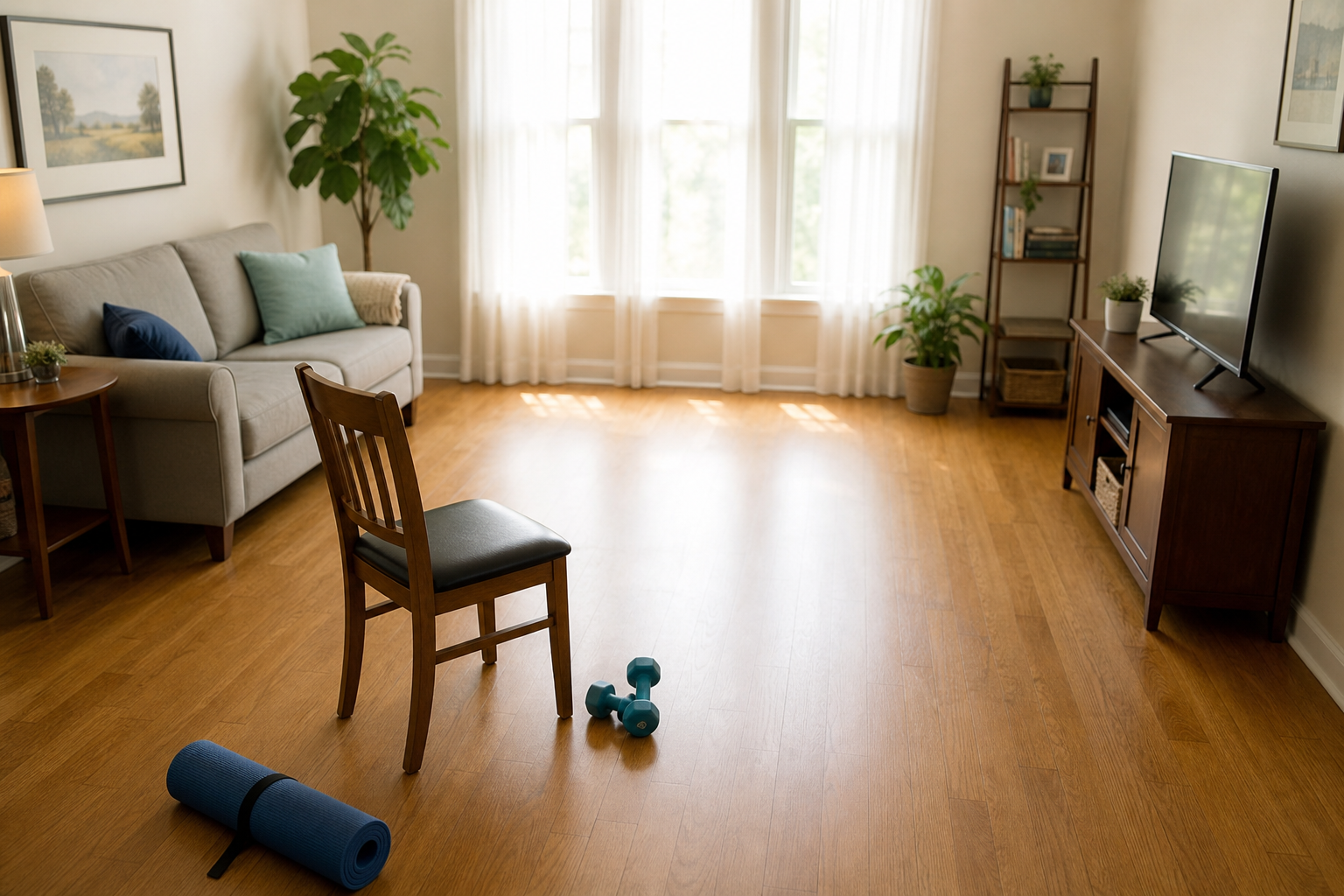
Before you start any of these exercises, set yourself up for success. Stand next to a sturdy kitchen counter, a heavy dresser, or a solid chair with no wheels. You want something that won’t tip if you put your full weight on it.
Clear the area around you. Move rugs, pets, or any clutter out of the way. Wear shoes with non-slip soles, or exercise in bare feet if you have good sensation in your feet. If you have neuropathy and reduced foot sensation, shoes are the safer choice. You can read more about exercise modifications for that condition in our guide to neuropathy-safe exercises for seniors.
The goal is to touch your support surface lightly, fingertips only, just enough to catch yourself if needed. Over time, you’ll rely on it less and less. That progression is the whole point.
The 10-Minute Balance Routine
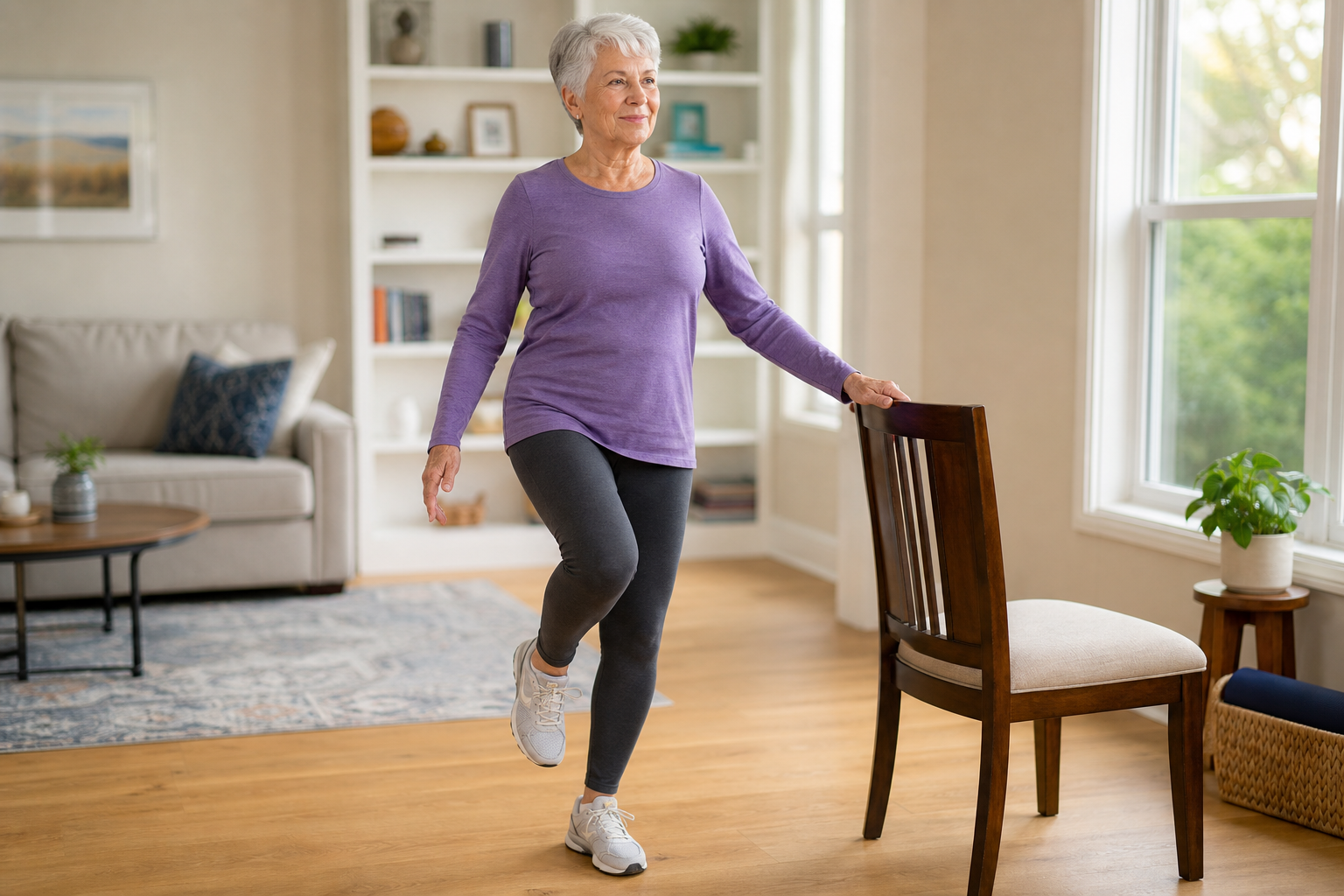
1. Weight Shifts (2 Minutes)
Stand behind your counter or chair with both hands resting lightly on the surface. Feet are hip-width apart. Slowly shift your weight to your right foot, lifting your left foot just slightly off the ground. Hold for 5 seconds, then shift back to center and repeat on the left side.
This is your warm-up and your foundation. It trains the small stabilizing muscles in your ankles and hips before asking them to do harder work. Do 8 to 10 repetitions on each side.
As this gets easier, try shifting your weight without gripping the counter. Just hover your fingertips above the surface so you have it for emergencies but aren’t actually using it for balance.
2. Single-Leg Stands (4 Minutes)
With one hand resting on your support surface, lift your right foot a few inches off the ground. Keep your standing knee soft, not locked. Hold for 10 to 30 seconds depending on your current ability. Lower your foot, rest for 5 seconds, then repeat on the left side.
Aim for 3 to 5 holds per leg. If 10 seconds feels impossible right now, that’s completely normal. Start there and add 2 to 3 seconds each week. Progress is more important than where you start.
Once you can hold for 30 seconds with light fingertip support, try closing your eyes for a few seconds during the hold. Removing visual input is one of the most effective ways to challenge your balance system further. If you experience dizziness during balance work, check out our article on vertigo and balance exercises for seniors for guidance specific to that situation.
3. Heel-to-Toe Walking (4 Minutes)
Find a straight line on your floor, or imagine one. Walk forward placing the heel of your front foot directly in front of the toes of your back foot with each step, like you’re walking a tightrope. Keep your arms out to your sides for added stability. Walk 10 steps forward, turn carefully, and walk 10 steps back.
Do 3 to 4 laps. If your floor space is limited, you can do this alongside a counter so you have support within reach. This exercise directly mimics the coordination demands of walking on uneven ground, stepping over objects, or navigating narrow spaces.
Keep your gaze forward, not down at your feet. Looking down shifts your center of gravity and actually makes balance harder.
Equipment That Can Help
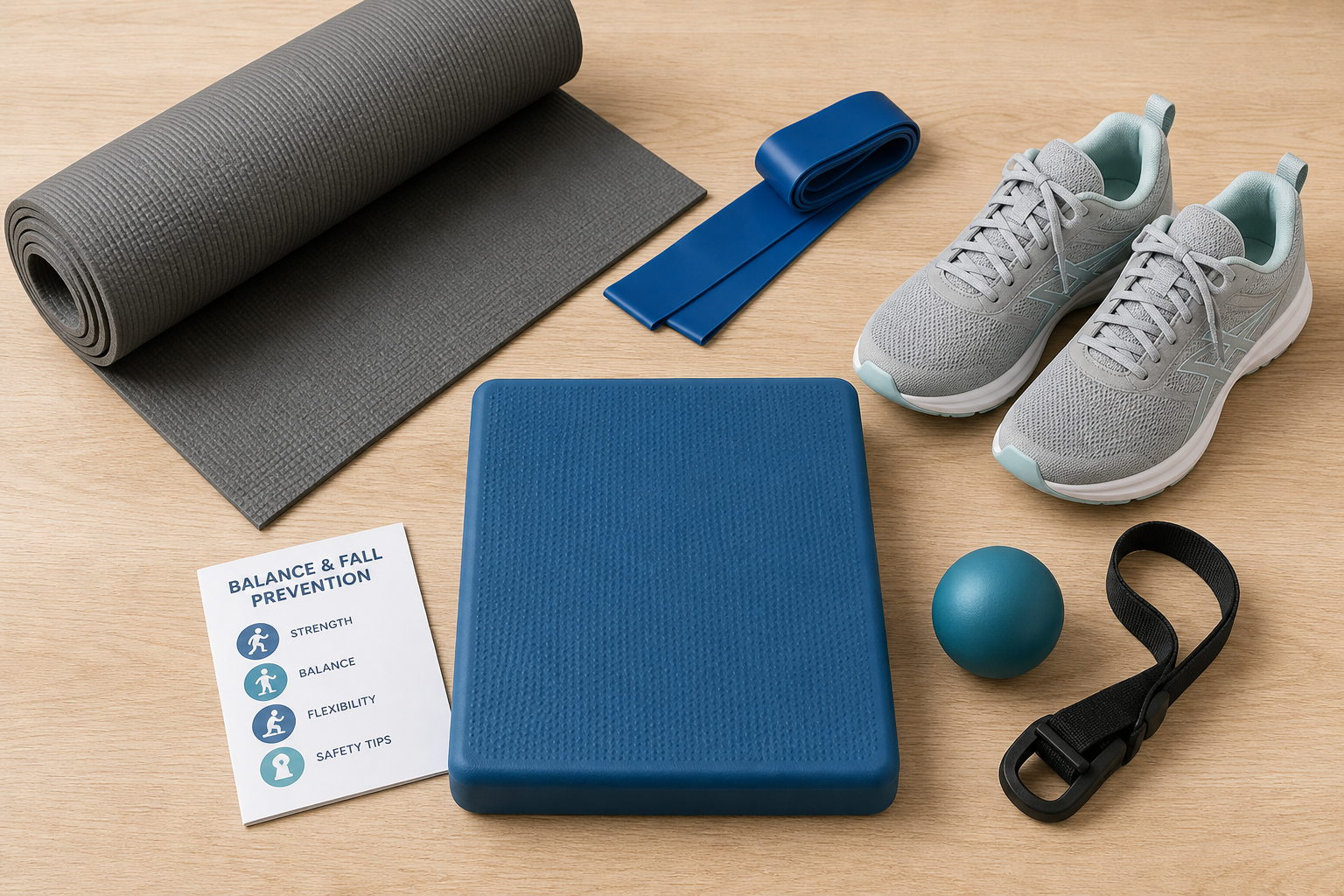
You don’t need any equipment to start this routine. But as you progress, a balance pad can add a meaningful challenge by creating an unstable surface under your feet during single-leg stands and weight shifts.
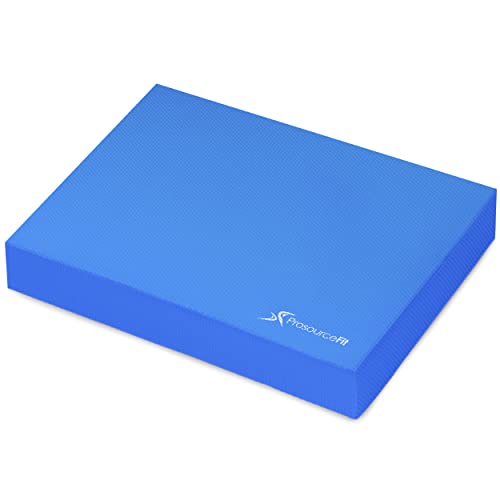
Balance Pad for Seniors
A foam balance pad adds gentle instability to standing exercises, which progressively trains the ankle and hip stabilizers that matter most for fall prevention.
Another useful tool is a set of non-slip grip socks if you prefer not to wear shoes indoors. They give you traction on hardwood or tile without the bulk of sneakers.
If you’re building out a small home workout space, our article on budget-friendly home gym setups for seniors has practical ideas for doing more with less.

Adjustable Balance Board for Seniors
An adjustable balance board lets you increase difficulty gradually as your stability improves, making it a practical long-term investment for ongoing balance training.
How Often Should You Do This?
Most physical therapists recommend balance training at least 3 days per week for meaningful improvement. Daily practice is even better because the neuromuscular adaptations from balance work happen quickly but also fade faster than strength gains.
This routine pairs naturally with a short strength or walking session. If you’re also working on bone strength through exercise, combining that program with this balance routine on alternating days is a smart approach. Strong bones and steady balance work together to reduce fracture risk.
Supporting your training with good nutrition matters too. Vitamin D plays a direct role in muscle function and balance, and many older adults are deficient without knowing it. A quick conversation with your doctor about your levels is worth having.
Frequently Asked Questions
How long does it take to see improvement in balance?
Most people notice a difference within 3 to 4 weeks of consistent practice. You might feel more confident on stairs, less shaky when standing on one foot to put on pants, or more stable when walking on uneven ground. Formal research on balance training in older adults shows measurable improvements in 6 to 8 weeks, but the subjective feeling of steadiness often comes sooner.
Is this routine safe if I have a history of falls?
Yes, with appropriate precautions. If you’ve had a recent fall or have significant balance impairment, check with your doctor or physical therapist before starting. The routine as written is designed to be done with a support surface within arm’s reach at all times. Many people who do this kind of exercise program have a history of falls, which is exactly why they started in the first place.
Can I do these exercises if I have hip or knee pain?
Most of these movements are low-impact and gentle enough for people managing joint pain, but there are some caveats. Single-leg stands require good load-bearing capacity in both hips and knees. If you’ve recently had surgery, check our post-hip replacement exercise guide or post-knee replacement exercises guide first to make sure you’re cleared for this type of activity.
This article contains affiliate links. We may earn a small commission at no extra cost to you.