Ankle weights add resistance to leg exercises without requiring you to hold anything in your hands, making them ideal for seniors who have grip issues, balance concerns, or simply want to intensify seated and standing leg workouts. They’re inexpensive, easy to use, and effective for strengthening the hip flexors, quadriceps, glutes, and calves.
But the wrong weight or the wrong usage can cause joint stress that defeats the purpose.
This guide covers safe weight ranges, specific product recommendations, and how to use ankle weights without aggravating joints. If you have existing knee or hip arthritis, or if you’re starting resistance training for the first time, talk to your doctor or physical therapist before adding ankle weights to your routine.
How Heavy Should Ankle Weights Be for Seniors?
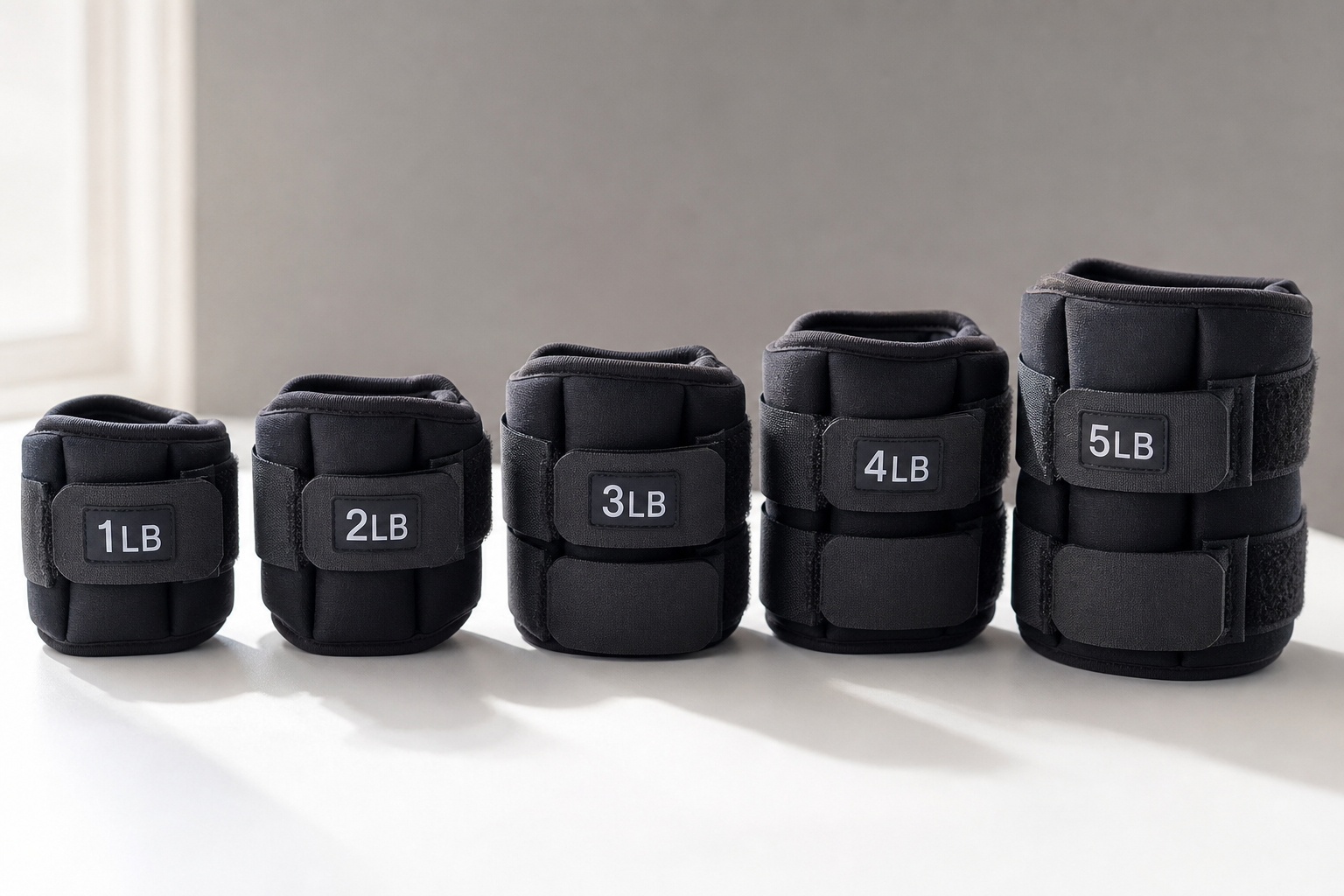
The right weight depends on your current strength level, exercise history, and which muscle groups you’re targeting. What feels light during a hip exercise may be too heavy for a knee-focused movement.
0.5-1 Pound (Starting Weight)
This is the right starting point for seniors who are new to resistance training, recovering from a lower body injury, or have significant knee or hip arthritis. Half a pound sounds trivial, but when you’re lifting it 30-50 times during a leg exercise set, the cumulative work is meaningful.
Progression from 0.5 to 1 pound is a 100% increase in resistance, which is significant for small muscles like the hip flexors.
Many physical therapists recommend starting with half-pound weights for seated leg extensions, where the weight hangs from the shin and creates a long lever arm that multiplies the force on the knee joint. Even this minimal weight provides stimulus for muscle strengthening without excessive joint loading.
One-pound weights are also the standard recommendation for walking with ankle weights. Heavier weights worn during walking change your gait mechanics and increase ground reaction forces with each step, which can stress the knees and hips over time.
2-3 Pounds (Moderate)
Appropriate for seniors who have been doing bodyweight leg exercises for at least 4-6 weeks and are ready for more challenge. This range is effective for seated leg extensions, standing hip abduction, and lying leg lifts. Most senior fitness programs use weights in this range.
Two to three pounds provides enough resistance to fatigue the muscles within 10-15 repetitions while remaining gentle on joints. This weight range works well for building muscular endurance, which translates to better performance in daily activities like climbing stairs, getting out of chairs, and maintaining balance.
If you can complete three sets of 15 reps with a 2-pound weight and the last few reps still feel easy, you’re ready to move up. But if the last few reps of each set require real effort, stay at that weight for another two weeks before progressing.
5 Pounds (Advanced)
Only for seniors with established lower body strength who have progressed through lighter weights. Five-pound ankle weights place significant stress on the knee joint during leg extensions and should be used cautiously.
Many physical therapists recommend capping ankle weight at 3 pounds for knee exercises and reserving 5 pounds for hip exercises only (where the knee isn’t the fulcrum).
The moment arm created by a 5-pound weight at the end of your shin generates substantial torque on the knee. During a seated leg extension, this can exceed the force your quadriceps tendon experiences during normal walking. For someone with healthy knees and good quadriceps strength, this provides an effective training stimulus. For someone with arthritis or prior knee injury, it may cause inflammation.
Hip exercises like side leg lifts, hip flexion, and prone leg lifts place the load primarily on hip muscles, with the knee acting as a rigid link rather than a stress point. Five-pound weights can be appropriate for these movements if you’ve built up to them gradually.
When Not to Increase Weight
Even if you can complete the sets and reps, don’t increase weight if you experience joint pain during or after exercise, if your form deteriorates during the last few reps, or if the weight causes compensatory movement patterns (like leaning your torso to swing the leg up). In these cases, either stay at your current weight or drop back down.
Top Ankle Weights for Seniors
Sportneer Adjustable Ankle Weights (1-5 lbs)

Sportneer Adjustable Ankle Weights
Most versatile option with removable inserts for exercise-specific loading
The Sportneer adjustable set uses removable sandbag inserts that let you customize the weight from 1 to 5 pounds in small increments. This is the most versatile option because you can use different weights for different exercises (lighter for knee extensions, heavier for hip exercises) without buying multiple sets.
The neoprene wrap is comfortable against the skin and the Velcro closure is easy to adjust.
Each weight comes with five individual sandbag pouches. You insert the number of pouches needed for your target weight, then wrap the neoprene sleeve around your ankle and secure it with a wide Velcro strap. The pouches distribute weight evenly around the ankle rather than concentrating it in one spot.
The main advantage here is exercise-specific loading. Use two pouches (2 pounds) for seated leg extensions, then add pouches for hip exercises where your joints can handle more resistance. This saves money compared to buying separate fixed-weight sets and reduces clutter.
The neoprene material wicks moisture reasonably well, though it will get damp during longer workout sessions. The interior is smooth, not rough or scratchy. The Velcro strap is 2 inches wide and holds securely even during vigorous leg lifts.
Best for: Seniors who want one set that covers multiple weight options and don’t mind the 30 seconds it takes to add or remove pouches.
Bala Bangles (1 lb)

Bala Bangles 1 Pound
Sleek, low-profile design perfect for walking and light exercises
The Bala Bangles are sleek, low-profile 1-pound weights with a clasp closure (not Velcro). They’re comfortable enough to wear during walking, which adds light resistance to every step. The modern design is more appealing than traditional sand-filled weights.
At 1 pound, they’re safe for daily walking use without stressing the knees.
The Bangles use a steel clasp that snaps shut, eliminating the bulk and potential loosening of Velcro straps. The weight material is silicone-coated stainless steel pellets, not sand, which creates a firmer feel and prevents the lumpy shifting that happens with sand-filled weights.
These work well for walking because they stay put. The clasp doesn’t loosen during movement, and the low profile means they don’t rub against the opposite ankle or catch on pant legs. The 1-pound limit means you won’t outgrow them for walking, but you will need heavier weights for seated or lying exercises as you build strength.
They’re also fine for water aerobics. The silicone and steel construction handles submersion without degrading.
Best for: Seniors who want a lightweight, stylish option for walking and light exercises.
All Pro Adjustable Ankle Weights (0-5 lbs)
The All Pro weights use individual metal bar inserts (each weighing a fraction of a pound) for the most precise weight adjustment of any ankle weight. You can increase by as little as a quarter pound, which is ideal for the gradual progression that’s critical for seniors.
The wrap-around design distributes weight evenly.
Each weight contains a series of pockets that hold thin metal bars. The bars weigh either a quarter pound or half pound each, depending on the model. You slide bars into the pockets until you reach your target weight, then wrap the padded sleeve around your ankle and secure it with a hook-and-loop closure.
This system allows micro-progressions that other adjustable weights can’t match. When a full one-pound jump feels too aggressive, you can add a quarter or half pound instead. This is particularly useful for knee exercises, where small weight increases are safer for joint health.
The metal bars don’t shift during exercise the way sand or pellet fills can. The weight stays balanced around your ankle, which keeps the resistance consistent throughout the range of motion. The downside is that the bars make these weights slightly stiffer and less flexible than fabric or neoprene models.
Best for: Seniors who want the most precise progressive resistance training capability.
CAP Barbell Adjustable Ankle Weights (5-20 lbs)
These are NOT appropriate for most seniors. Weights above 5 pounds are designed for younger athletes doing explosive training or heavy resistance work. Including them here as a caution: if you see ankle weights in the 10-20 pound range marketed for general fitness, they’re not suitable for the exercises and populations covered in this guide.
Exercises That Work Well with Ankle Weights
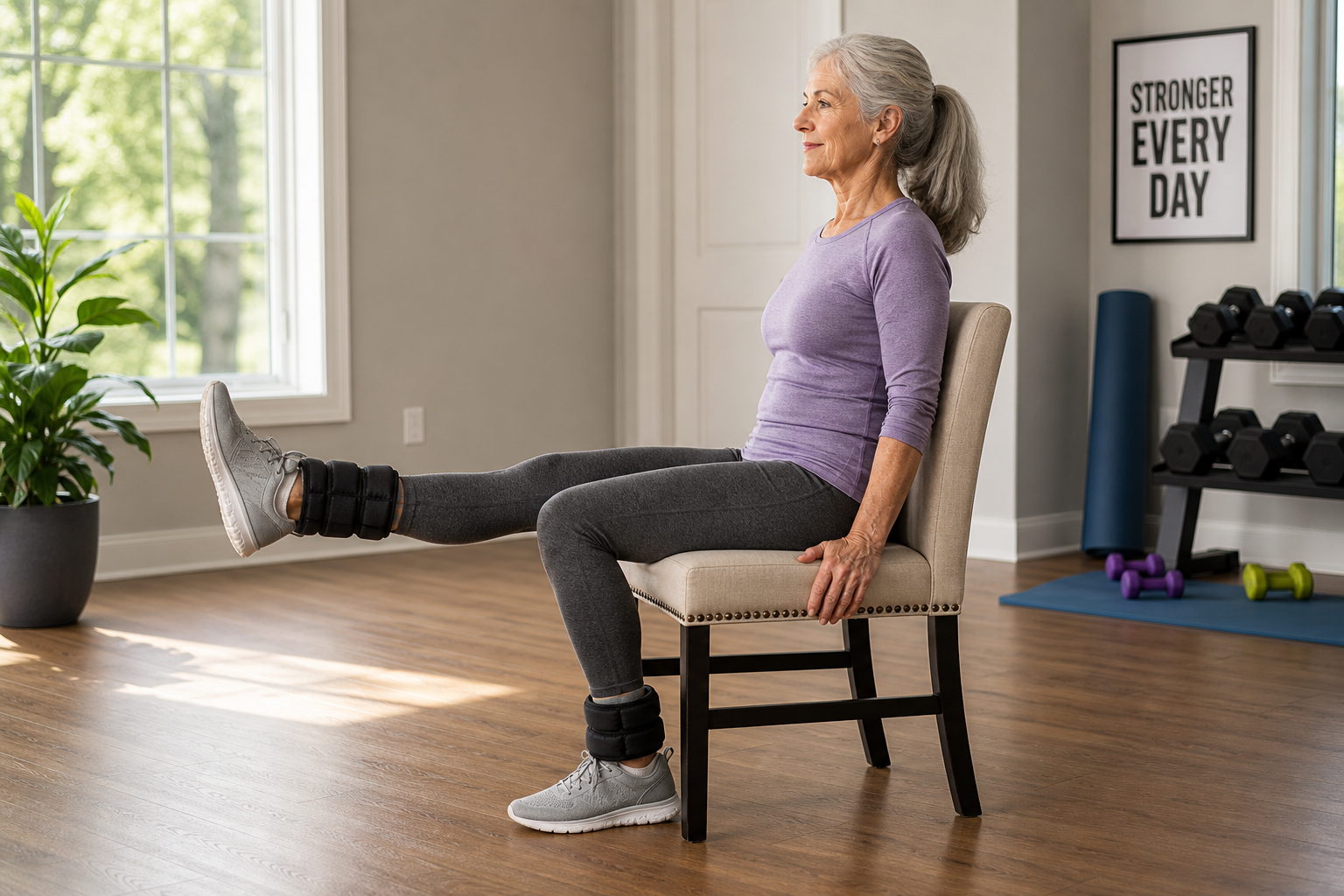
Start with bodyweight versions of these exercises. Once you can complete three sets of 15 reps with good form, add the lightest ankle weight available to you. Increase weight only when the current weight no longer fatigues your muscles by the end of each set.
Seated Leg Extension
Sit in a sturdy chair with your back supported, feet flat on the floor. Extend one leg until straight (or as close as comfortable), hold for 2 seconds, then lower slowly. Don’t lock your knee hard at the top. Three sets of 10-12 per leg.
The weight makes your quadriceps work harder during the extension. This exercise directly strengthens the muscles you use to stand up from a chair, walk up stairs, and stabilize your knee during standing activities.
If you have knee arthritis, keep the weight at 2 pounds or less for this movement. The extended lever arm from ankle to knee multiplies the force on your knee joint. Even light weights create significant strengthening stimulus. For additional guidance on protecting your knees during lower body exercises, see our article on safe squatting techniques for those with knee pain.
Standing Hip Abduction
Stand next to a counter or sturdy chair, holding it for balance. Keep your torso upright and lift one leg straight out to the side, moving only at the hip. Pause at the top, then lower with control. Three sets of 12 per leg.
This exercise strengthens the gluteus medius, a critical muscle for lateral balance. Weak hip abductors contribute to sideways sway during walking and increase fall risk during side-to-side movements.
The weight challenges the muscle more than bodyweight alone, building strength that transfers to real-world balance situations.
Don’t lean away from the lifted leg to gain height. Keep your torso vertical and accept whatever range of motion you have. If you can only lift your leg 6 inches to the side, that’s your starting point. The weight will make those 6 inches productive.