If you’ve been feeling weaker during your workouts or noticing that recovery takes longer than it used to, your vitamin D levels might be part of the problem. Many seniors don’t realize that this essential nutrient plays a critical role in muscle function, bone strength, and overall exercise performance. Low vitamin D can quietly undermine your fitness goals, making it harder to build strength and easier to experience falls or injuries.
Understanding the connection between vitamin D and physical performance can help you make better decisions about supplementation, sun exposure, and diet. Let’s explore how this vitamin affects your body and what you can do to optimize your levels.
How Vitamin D Affects Muscle Strength and Performance

Vitamin D isn’t just about bone health. Your muscle cells have vitamin D receptors, which means this nutrient directly influences muscle function. When you’re deficient, your muscles can’t contract as efficiently, leading to weakness and reduced power output during exercise.
Research shows that seniors with adequate vitamin D levels perform better on strength tests, walking speed assessments, and balance challenges. One study found that older adults with sufficient vitamin D could perform sit-to-stand exercises 20% faster than those who were deficient. That’s a significant difference when you’re trying to maintain independence and stay active.
Your body also needs vitamin D to synthesize new muscle proteins after exercise. Without enough of it, your post-workout recovery slows down, and you won’t see the same strength gains from your training efforts. This creates a frustrating cycle where you’re putting in the work but not getting the results. Just as proper hydration supports your exercise performance, maintaining adequate vitamin D levels is essential for maximizing your training outcomes.
The Link Between Vitamin D Deficiency and Fall Risk

Falls are one of the biggest health risks for seniors, and vitamin D deficiency makes them more likely. Low levels affect both muscle strength and neuromuscular coordination, which means your reaction time and balance suffer.
Multiple studies have demonstrated that seniors with vitamin D levels below 20 ng/mL have nearly double the fall risk compared to those with optimal levels. The mechanism is clear: vitamin D helps maintain the fast-twitch muscle fibers that you need for quick corrective movements when you start to lose balance.
Supplementation can make a measurable difference. Research published in the Journal of the American Geriatrics Society found that vitamin D supplementation reduced fall risk by 17-22% in seniors over 65. This isn’t a magic solution, but it’s a simple intervention that can complement your balance and strength training.
Testing Your Vitamin D Levels
You can’t know if you’re deficient without testing. The blood test you need is called 25-hydroxyvitamin D, or 25(OH)D. Most doctors consider levels below 20 ng/mL to be deficient, 20-30 ng/mL insufficient, and 30-50 ng/mL adequate.
Many experts who specialize in sports performance and aging recommend aiming for the higher end of the range, around 40-50 ng/mL, for optimal muscle function. You’ll want to test at least once to establish your baseline, and then retest after 3-4 months of supplementation to see if your approach is working.
Some home testing kits allow you to check your levels without visiting a doctor’s office. These typically involve a finger-prick blood sample that you mail to a lab. While a physician’s test is ideal, home testing is better than not testing at all.
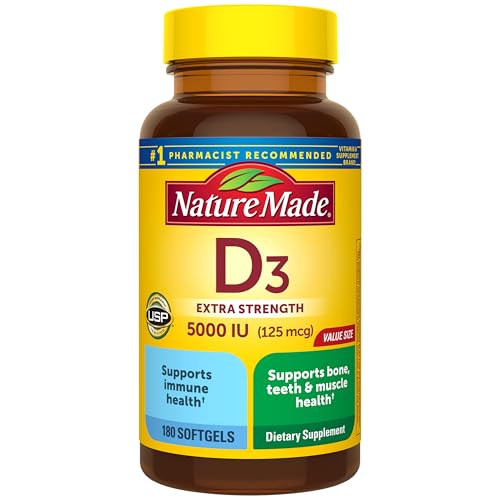
Vitamin D3 5000 IU Supplement
A higher-dose option for seniors with confirmed deficiency who need to raise levels quickly
Supplementation Guidelines for Seniors
The standard recommendation for seniors is 800-1000 IU of vitamin D3 daily, but this amount often isn’t enough if you’re already deficient. Many people need 2000-5000 IU per day to reach optimal levels, especially during winter months or if you live in northern latitudes.
Vitamin D3 (cholecalciferol) is the form you want, not D2 (ergocalciferol). D3 is more effective at raising blood levels and keeping them stable. You’ll find it available as softgels, tablets, or liquid drops. The liquid forms can be easier to take if you have trouble swallowing pills.
Take your vitamin D supplement with a meal that contains some fat, since it’s a fat-soluble vitamin. This improves absorption significantly compared to taking it on an empty stomach. Morning or lunchtime dosing works well for most people.
Work with your doctor to determine your ideal dose, especially if your blood test shows significant deficiency. Some people need a loading dose of 50,000 IU weekly for 8-12 weeks before switching to a maintenance dose. Don’t guess on this; the right amount depends on your starting level and individual factors. Similar to understanding what happens when you stop taking certain supplements, it’s important to maintain consistent vitamin D supplementation once you’ve corrected a deficiency.
Sun Exposure and Natural Vitamin D Production

Your skin produces vitamin D when exposed to UVB radiation from sunlight. About 10-30 minutes of midday sun exposure several times per week can generate substantial amounts, but this becomes less efficient as you age. Seniors produce about 75% less vitamin D from sun exposure compared to younger adults.
Geography matters significantly. If you live above the 37th parallel (roughly the latitude of San Francisco or Richmond, Virginia), your skin can’t produce vitamin D from sunlight during winter months, no matter how much time you spend outside. The sun’s angle is too low, and UVB rays don’t penetrate the atmosphere effectively.
Sunscreen blocks vitamin D production, which creates a dilemma. You need sun protection to prevent skin cancer, but you also need some unprotected exposure for vitamin D synthesis. A practical approach is to get 10-15 minutes of sun on your arms and legs before applying sunscreen, then protect yourself for extended outdoor time.
Dietary Sources of Vitamin D
Few foods naturally contain significant amounts of vitamin D. Fatty fish like salmon, mackerel, and sardines are your best options. A 3-ounce serving of wild-caught salmon provides about 570 IU, while the same amount of canned sardines gives you around 165 IU.
Fortified foods can help you reach your daily target. Most milk is fortified with 100 IU per cup. Some orange juice, yogurt, and cereal products are also fortified, though you need to check labels since not all brands add vitamin D. Cod liver oil is another option that provides both vitamin D and omega-3 fatty acids.
Egg yolks contain small amounts of vitamin D, about 40 IU per yolk. Mushrooms exposed to UV light during growing can provide decent amounts, though most grocery store mushrooms have minimal vitamin D unless specifically labeled as UV-treated.
Realistically, diet alone won’t get most seniors to optimal levels. You’d need to eat fatty fish almost daily to reach 2000 IU from food, which isn’t practical or affordable for most people. Think of dietary sources as supplementary to either sun exposure or supplements, not as your primary strategy. Combining vitamin D-rich foods with an anti-inflammatory diet can provide comprehensive nutritional support for your active lifestyle.

Vitamin D Test Kit
Home testing makes it easy to check your levels without scheduling a doctor’s appointment
How Deficiency Impacts Your Fitness Goals
When you’re deficient in vitamin D, every aspect of your fitness routine becomes harder. Your muscles fatigue more quickly during resistance training. Your endurance suffers during cardiovascular exercise. Your recovery between workouts takes longer, which means you can’t train as frequently or as intensely.
The impact on strength training is particularly noticeable. Studies show that seniors with low vitamin D levels experience smaller increases in muscle mass and strength from resistance training programs compared to those with adequate levels. You’re essentially leaving gains on the table if you’re trying to build strength while deficient.
Balance and coordination exercises become riskier when your neuromuscular function is impaired. Activities like yoga, tai chi, or single-leg exercises require precise muscle control that vitamin D helps regulate. Deficiency makes these movements more challenging and increases injury risk.
The psychological effects matter too. Vitamin D deficiency is associated with reduced motivation and increased fatigue, which can make it harder to stick with your exercise routine. Some research suggests that low levels contribute to seasonal affective disorder and general low mood during winter months.
Frequently Asked Questions
Can you take too much vitamin D?
Yes, though toxicity is rare and usually only occurs with very high doses over extended periods. Blood levels above 100 ng/mL can cause calcium buildup in tissues and lead to nausea, weakness, and kidney problems. Staying under 4000 IU daily is considered safe for most people, but regular testing helps you avoid going too high. Don’t take megadoses without medical supervision.
How long does it take to correct a vitamin D deficiency?
This depends on your starting level and supplementation dose. With daily doses of 2000-5000 IU, most people see significant improvements in 6-12 weeks. Severe deficiency might require 3-4 months to fully correct. Testing at the 3-month mark helps you know if your current approach is working or if you need to adjust your dose.
Should I take vitamin K2 along with vitamin D?
Many experts recommend taking vitamin K2 with vitamin D, especially at higher doses. Vitamin K2 helps direct calcium to your bones rather than soft tissues, which may reduce the risk of arterial calcification. Look for supplements that combine D3 with K2 (specifically the MK-7 form), or take them separately. This combination appears to be particularly beneficial for bone health in seniors. When evaluating supplements, you’ll want to research quality brands just as you would when considering whether store-brand supplements meet your needs.
This article contains affiliate links. We may earn a small commission at no extra cost to you.