Staying active and independent as you age depends on more than just exercise and diet. Your bones need to stay strong, your muscles need to function properly, and your risk of falling needs to stay as low as possible. Vitamin D plays a huge role in all three of these areas, yet studies show that roughly 40% of older adults have insufficient levels.
The challenge isn’t just getting enough vitamin D. It’s choosing the right form, understanding how absorption changes with age, and knowing whether you need additional nutrients like calcium. This guide breaks down everything you need to know about selecting the best vitamin D supplement for your specific needs in 2026.
Why Seniors Need More Vitamin D Than Younger Adults
Your body’s ability to produce and use vitamin D declines with age. When you’re younger, your skin efficiently converts sunlight into vitamin D. After age 65, this process becomes about 75% less efficient.
Your kidneys also become less effective at converting vitamin D into its active form. This means you need higher amounts just to maintain the same blood levels you had when you were younger.
Add in the fact that many seniors spend less time outdoors, use sunscreen more consistently, or live in regions with limited winter sunlight, and deficiency becomes almost inevitable without supplementation. The National Institutes of Health recommends 800 IU daily for adults over 70, but many doctors now suggest higher doses based on individual testing.
Vitamin D2 vs. D3: Which Form Works Better for Older Adults
You’ll find two types of vitamin D supplements on store shelves: D2 (ergocalciferol) and D3 (cholecalciferol). For seniors, D3 is the clear winner.
Vitamin D3 is the same form your body produces naturally from sunlight. Multiple studies have shown that D3 raises blood levels of vitamin D more effectively and maintains those levels longer than D2. One study published in the American Journal of Clinical Nutrition found that D3 was nearly twice as effective at raising vitamin D levels compared to D2.
D2 is typically derived from plant sources and used to be the most common form in prescriptions. D3 comes from animal sources like lanolin (sheep’s wool) or fish oil, though vegan D3 options from lichen are now available.
When you’re shopping, look specifically for “vitamin D3” or “cholecalciferol” on the label. Most high-quality supplements designed for seniors will use this form exclusively.
Understanding Proper Dosing and Blood Level Testing
The standard recommendation of 800 IU daily prevents deficiency for most people, but it may not optimize your levels. Many geriatric specialists now recommend doses between 1,000 and 4,000 IU daily for seniors, depending on individual circumstances.
Before starting any supplement regimen, you should get your blood levels tested. The 25-hydroxyvitamin D test measures the storage form of vitamin D in your blood. Most experts agree that levels should be at least 30 ng/mL, though some functional medicine practitioners target 40-60 ng/mL for optimal health.
Your doctor can help determine the right dose based on your current levels, weight, health conditions, and medications. People with darker skin, higher body weight, or digestive conditions that affect fat absorption often need higher doses.
After three months of supplementation, retest your levels to ensure you’re in the target range. Vitamin D is fat-soluble, which means it’s stored in your body and can accumulate to toxic levels if you take too much. Levels above 100 ng/mL can cause problems like kidney stones and calcium deposits. Just as taking too much of certain supplements can cause adverse effects, exceeding safe vitamin D levels requires careful monitoring.
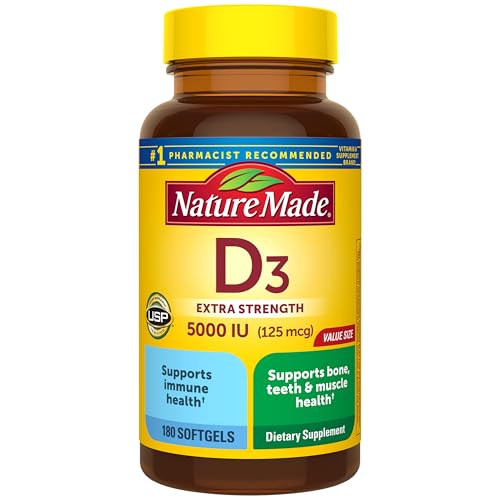
Vitamin D3 5000 IU Softgels
High-potency option ideal for those with confirmed deficiency working with their doctor to raise levels quickly
The Bone Health Connection: Should You Take Calcium Too?
Vitamin D and calcium work together to maintain bone density. Vitamin D increases calcium absorption in your intestines, while calcium provides the building blocks your bones need. Taking one without adequate amounts of the other limits the benefits of both.
Many seniors benefit from combination supplements that include both nutrients. These products save you from taking multiple pills and ensure you’re getting complementary amounts of each nutrient.
The recommended daily intake of calcium for women over 50 and men over 70 is 1,200 mg. Most people get 300-500 mg from diet, so a supplement providing 500-800 mg of calcium along with vitamin D makes sense for many seniors.
Pay attention to the form of calcium in your supplement. Calcium citrate absorbs well even on an empty stomach and works for people taking acid-reducing medications. Calcium carbonate requires stomach acid for absorption but provides more elemental calcium per pill. Both forms work well, but citrate is often the better choice for seniors.
Don’t forget about vitamin K2, which helps direct calcium to your bones rather than your arteries. Some advanced formulations include D3, calcium, and K2 together for complete bone support.

Calcium Citrate with Vitamin D3
Combines easily absorbed calcium citrate with D3 for comprehensive bone support in a convenient formula
Recognizing Deficiency Symptoms in Older Adults
Vitamin D deficiency often develops slowly, with symptoms that are easy to dismiss as normal aging. Fatigue is one of the earliest signs, along with general weakness that makes daily activities more difficult.
Bone pain and muscle aches, particularly in your back, hips, or legs, can indicate low vitamin D levels. You might notice that you’re more unsteady on your feet or that your balance isn’t what it used to be.
Mood changes deserve attention too. Research links vitamin D deficiency with depression in older adults. If you’ve been feeling down, irritable, or less interested in activities you used to enjoy, low vitamin D could be a contributing factor. Maintaining proper nutrition alongside cognitive activities that support mental sharpness creates a comprehensive approach to healthy aging.
Frequent infections might also point to deficiency. Vitamin D plays a crucial role in immune function, and low levels make you more susceptible to respiratory infections and other illnesses.
Getting sick more often than usual, wounds that heal slowly, or recurring UTIs all warrant checking your vitamin D status. These symptoms overlap with many other conditions, which is why testing is so important for accurate diagnosis.
Absorption Factors That Change With Age
Taking vitamin D isn’t enough. Your body needs to actually absorb it. Since vitamin D is fat-soluble, you absorb it best when you take it with food that contains some fat.
A meal doesn’t need to be large or particularly fatty. A handful of nuts, a serving of yogurt, an avocado slice, or eggs with your morning supplement will do the job. Studies show that taking vitamin D with the largest meal of the day can increase absorption by up to 50%.
Several medications commonly prescribed to seniors can interfere with vitamin D absorption or metabolism. Corticosteroids, some cholesterol medications, weight-loss drugs that block fat absorption, and seizure medications all affect vitamin D levels. Tell your doctor about all medications and supplements you take.
Digestive conditions become more common with age. Crohn’s disease, celiac disease, ulcerative colitis, and chronic pancreatitis all reduce your ability to absorb fat-soluble vitamins. People with these conditions typically need higher doses and more frequent monitoring.
Your liver and kidneys convert vitamin D into its active form. Age-related decline in these organs, along with conditions like chronic kidney disease, can impair this conversion process. This is another reason why individual testing and medical guidance matter more than following general recommendations. Supporting kidney health through proper nutrition can help optimize vitamin D metabolism.
Top Features to Look for When Shopping
Quality varies significantly among vitamin D supplements. Third-party testing from organizations like USP, NSF International, or ConsumerLab ensures that the product contains what the label claims and is free from contaminants.
Check for the specific form on the label. It should say “vitamin D3” or “cholecalciferol,” not just “vitamin D.” The dose per serving should match your needs based on testing and medical advice.
Softgel capsules typically contain vitamin D suspended in oil, which can enhance absorption. Tablets work fine too, but you’ll want to take them with food to ensure proper absorption. Liquid drops offer flexibility for people who have trouble swallowing pills or need very specific doses.
Avoid supplements with unnecessary additives, artificial colors, or common allergens unless you have no other options. Simple formulations with minimal ingredients reduce the risk of reactions and interactions.
For combination products, verify that the calcium dose isn’t excessive. You don’t want more than 500-600 mg of calcium per dose because your body can’t absorb more than that at once anyway. Products that suggest taking multiple doses throughout the day work better than mega-dose single servings.
Look for supplements that include vitamin K2 alongside D3 and calcium. This combination supports proper calcium metabolism and reduces the risk of arterial calcification.

Vitamin D3 Liquid Drops
Easy-to-dose liquid format perfect for those who have difficulty swallowing pills or need precise dosing adjustments
Fall Prevention and Muscle Function Benefits
Beyond bone health, vitamin D directly affects your muscles. Low levels are associated with decreased muscle strength, slower walking speed, and difficulty with balance. All of these factors increase your fall risk.
Falls are the leading cause of injury-related death in adults over 65. Even non-fatal falls can result in fractures, hospitalization, loss of independence, and a downward spiral in overall health.
Multiple studies have shown that vitamin D supplementation reduces fall risk in older adults. A meta-analysis published in the Journal of the American Geriatrics Society found that vitamin D reduced falls by about 17% compared to placebo.
The muscle benefits appear strongest when blood levels reach at least 30-40 ng/mL. This often requires higher doses than the minimum recommended to prevent deficiency. Combining vitamin D with regular strength and balance exercises provides even better protection against falls.
Vitamin D receptors exist throughout your muscle tissue. Adequate levels support muscle protein synthesis, muscle fiber function, and the neuromuscular connections that control movement and balance. This isn’t just about preventing fractures after a fall. It’s about preventing the fall in the first place.
Frequently Asked Questions
Can you get enough vitamin D from sun exposure alone as a senior?
It’s unlikely. Your skin becomes much less efficient at producing vitamin D after age 65. You would need significant sun exposure on large areas of skin without sunscreen, which increases skin cancer risk. Most seniors need supplementation to maintain optimal levels, especially during winter months or if you live in northern climates.
What time of day should you take vitamin D supplements?
Take vitamin D with your largest meal that contains some fat. This maximizes absorption. Many