Balance concerns don’t have to keep you off your feet. For many seniors, the right pair of walking shoes can make the difference between feeling steady and confident on a walk versus feeling anxious with every step. But not all “comfortable” shoes are built to support stability, and the wrong pair can actually increase your fall risk without you realizing it.
This guide breaks down exactly what to look for in a walking shoe if balance is a concern, plus specific recommendations for both narrow and wide feet. If you’re also working on balance through exercise, our article on vertigo and balance exercises for seniors pairs well with the right footwear.
What Makes a Shoe Actually Good for Balance?
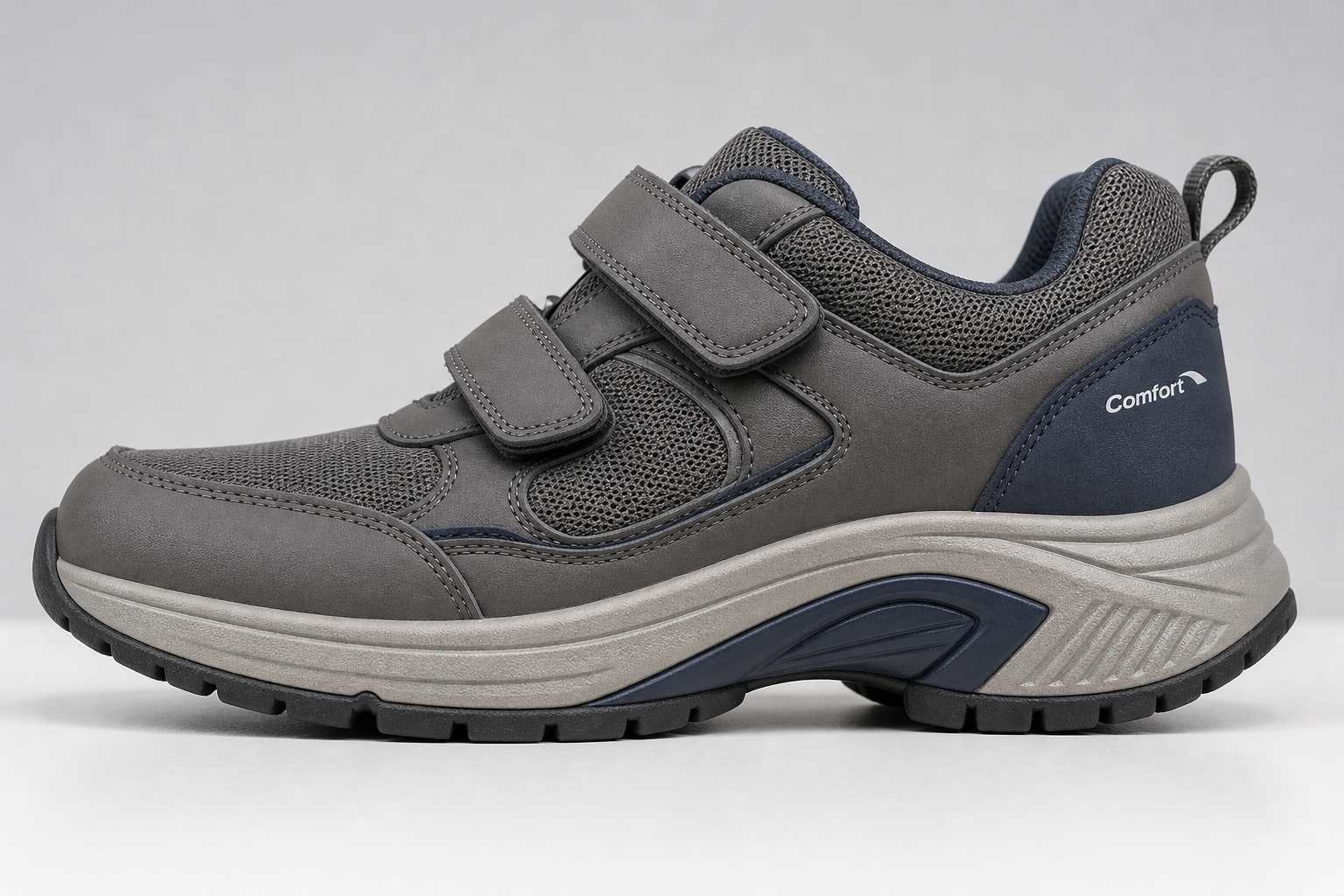
There’s a lot of marketing noise around “stability shoes,” but when it comes to balance specifically, four features matter most. Understanding them will help you cut through the noise when shopping.
Wide Base and Low Heel Drop
A wider base under the foot creates a larger contact area with the ground, which improves stability the same way a wider stance does when you’re standing still. Look for shoes with a flared or extended outsole rather than a narrow, tapered sole.
Heel drop refers to the height difference between the heel and the toe of the shoe. A high heel drop (8mm or more) shifts your weight forward and can throw off your natural gait. For balance-focused walking, a low heel drop of 4mm or less keeps your foot closer to a natural, flat position. Zero-drop shoes exist too, but they take getting used to and aren’t ideal for everyone starting out.
Non-Slip Outsoles
The outsole is the bottom of the shoe that contacts the ground. For seniors with balance concerns, you want a rubber outsole with a multi-directional tread pattern, not a smooth or minimally textured sole. Brands like Vibram and Continental rubber (used by some New Balance and adidas models) offer excellent grip on both dry and slightly wet surfaces.
Look for deep lugs or a herringbone pattern on the outsole. These channel away water and grip uneven surfaces much better than flat rubber.
Secure Closures
Slip-on shoes are convenient, but they don’t hold the foot in place firmly enough for someone managing balance issues. A shoe that shifts around inside is a real hazard. Velcro closures (also called hook-and-loop) are often the best option for seniors because they provide a snug, adjustable fit without requiring fine motor skill for laces.
If laces are preferred, look for models with wide lace beds and tongue loops that keep the lacing system from sliding to one side.
Adequate Arch Support and Cushioning
Too much cushioning can actually reduce ground feel and make balance harder, while too little leads to fatigue and joint stress. A medium-density foam midsole with built-in arch support hits the sweet spot. Avoid ultra-plush memory foam shoes for active walking since they compress unpredictably underfoot.
Supporting your feet well also matters for joint health beyond the ankle. Our guide to arthritis-friendly exercises for seniors covers how foot mechanics connect to knee and hip comfort during movement.
Top Picks for Seniors With Balance Concerns

Here are some of the best options available, organized by fit type. Every shoe listed includes the stability features described above.
Best Overall: New Balance 928v3
The New Balance 928v3 is one of the most recommended stability walking shoes by podiatrists and physical therapists. It features a wide rollbar technology that helps guide the foot through a natural gait cycle, a textured outsole with excellent traction, and comes in widths from narrow (2A) to extra-wide (6E). The Velcro version is especially popular with seniors who want a quick, secure fit.
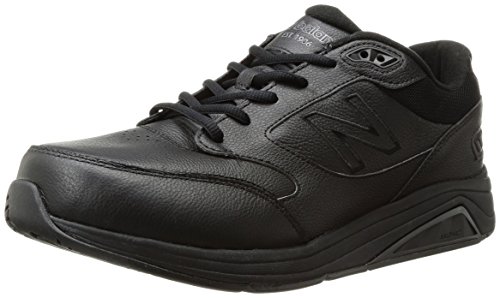
New Balance 928v3 Walking Shoe
A podiatrist-recommended stability walker with a rollbar design, multi-width options, and a Velcro closure version ideal for seniors.
The 928v3 has a heel drop around 10mm, which is higher than ideal for balance purists, but the rollbar and wide base more than compensate for this. It’s one of the best choices if you’re coming off a foot surgery or managing conditions like neuropathy. You might also find our article on neuropathy-safe exercises for seniors helpful if nerve sensitivity is part of your picture.
Best for Wide Feet: Saucony Echelon 9
Saucony’s Echelon line is specifically designed for wide and extra-wide feet, and the Echelon 9 delivers excellent medial post support along with a wide outsole base. It comes in widths up to 2E for men and 2E for women, with a roomy toe box that doesn’t compress the forefoot. The outsole uses a durable blown rubber compound with a solid traction pattern.
The Echelon 9 runs slightly heavier than fashion-forward sneakers, but that weight is in the right places: a stable midsole and grippy outsole rather than unnecessary upper padding.
Best for Narrow Feet: Brooks Addiction Walker 2
Finding a stable walking shoe in a narrow width is genuinely harder than finding one in wide. The Brooks Addiction Walker 2 comes in B width for women and 2A for men, which is rare in stability footwear. It features a full-length BioMoGo DNA midsole, extended crash pad outsole for smooth heel-to-toe transitions, and a leather upper that molds gently to the foot over time.
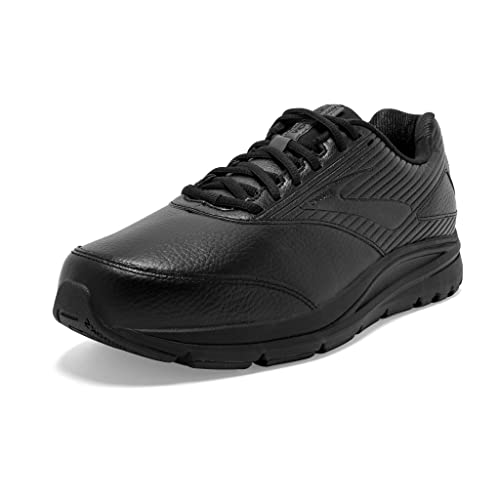
Brooks Addiction Walker 2
A stability walking shoe available in narrow widths, with a full-length cushioned midsole and leather upper that suits seniors needing a snug, secure fit.
The leather upper does require a short break-in period, but once it softens, it’s extremely comfortable for all-day walking. Pair these with quality compression socks for added circulation support. Our roundup of the best compression socks for active seniors has solid options to consider alongside your new shoes.
Budget-Friendly Pick: Skechers Go Walk Stability
Skechers gets a bad reputation in some podiatry circles, but their Go Walk Stability line is a legitimate exception. It features a wide base, non-slip rubber outsole, and a Velcro closure option. It’s more flexible than the New Balance or Brooks options above, which makes it better for shorter, flatter walks than for uneven terrain.
Check current pricing on Amazon for the Skechers Go Walk Stability since it’s frequently discounted and a good entry point if you’re not sure how much you’ll use a stability shoe.
Velcro vs. Laces: Which Closure Is Better?
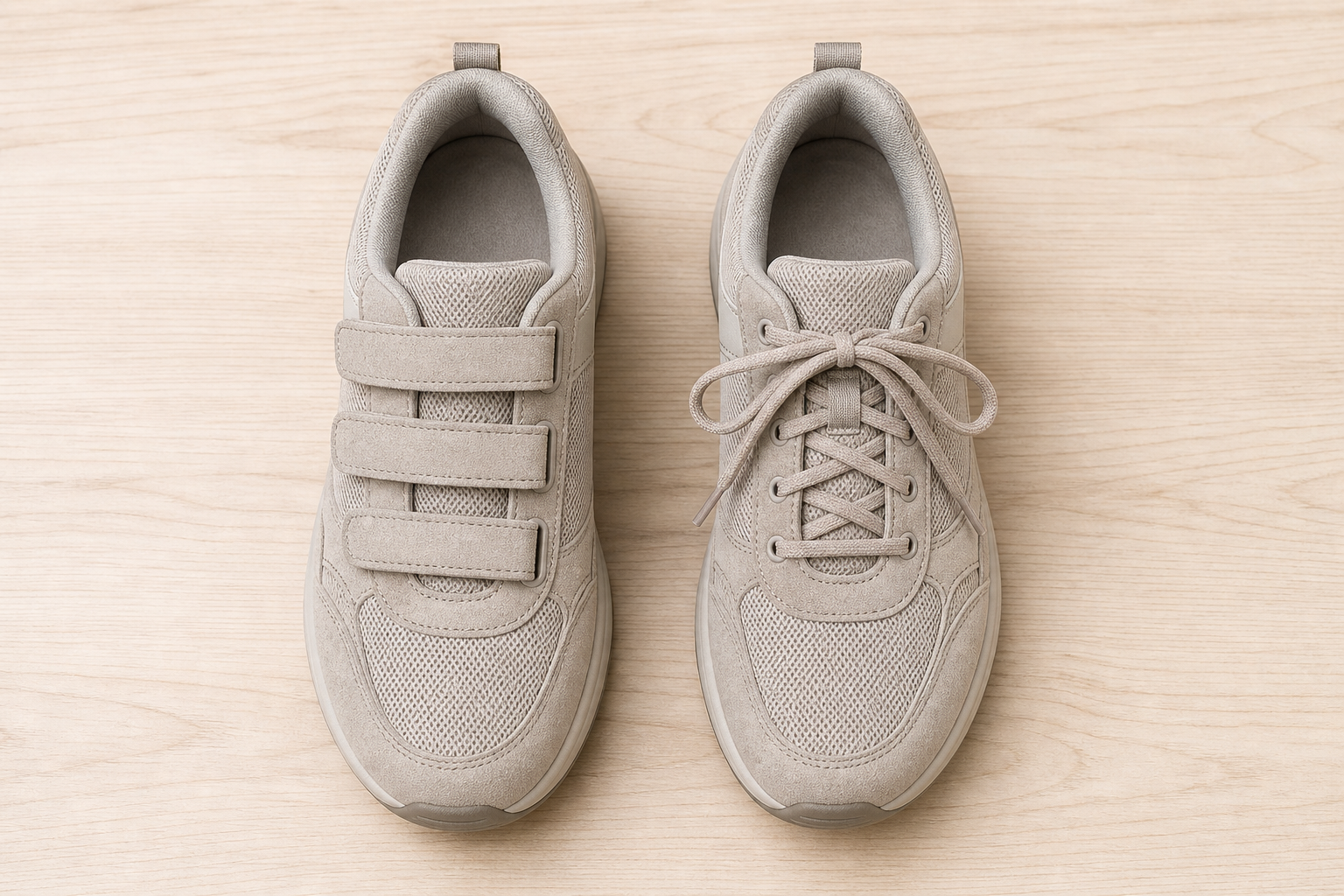
For most seniors with balance concerns, Velcro wins. It’s easier to tighten correctly every time you put the shoe on, and it reduces the risk of a loose shoe shifting mid-step. Several of the models above offer both Velcro and lace versions, so you’re not forced to choose a different shoe entirely.
If you prefer laces, elastic laces like no-tie elastic lace systems can convert almost any lace shoe into a slip-on with a snug fit. These are inexpensive, widely available, and work well for seniors managing arthritis or reduced grip strength. For more on hand function and independence, see our guide to grip strength exercises.
Frequently Asked Questions
Are rocker sole shoes good for seniors with balance problems?
Rocker sole shoes (like Hoka and some MBT models) can reduce joint stress and improve forward momentum, but they require an adjustment period. For seniors with significant balance concerns, a traditional stable sole is safer until you’ve built up strength and confidence. Talk to a physical therapist before committing to a rocker sole design.
How often should seniors replace walking shoes?
Most walking shoes lose meaningful cushioning and outsole grip after 300 to 500 miles of use. If you walk 30 minutes a day, that’s roughly every 9 to 12 months. A good rule of thumb: if you can easily bend the midsole in half with your hands, it’s time for a new pair. Worn-down treads are another clear sign to replace them.
Do orthotics work with stability walking shoes?
Yes, but you’ll want to choose a shoe with a removable insole so you can swap in your custom orthotic. Most of the models listed in this article include removable footbeds. If your orthotic is thick, go up half a size to maintain a proper fit without cramping your toes.
Final Thoughts
The best walking shoe for your balance concerns is the one that fits your specific foot shape and gives you a stable, grippy platform for every walk. Start with the New Balance 928v3 if you want the most proven all-around option, or the Brooks Addiction Walker 2 if you’re in a narrow width. The Saucony Echelon 9 is the clear pick for wide feet.
Good shoes are one piece of the puzzle. Combining the right footwear with regular balance and posture work gives you the best results. Our article on posture correction exercises for seniors is a great complement to everything covered here.
This article contains affiliate links. We may earn a small commission at no extra cost to you.