If you’re the type of person who realizes at 4 p.m. that you haven’t had a sip of water since breakfast, you’re not alone. Thirst signals weaken with age, and when you add in busy mornings, medications, or just being distracted, water quietly falls off the priority list. The fix isn’t a complicated tracking app or a giant jug with hourly markings you feel obligated to chug through. It’s building a few simple, memorable checkpoints into the day you already have.
This article is specifically about building that kind of memory-friendly schedule. It won’t repeat general hydration guidelines or exercise-specific fluid advice you may have already seen elsewhere on this site, including our piece on hydration and muscle cramps in seniors. Instead, it’s focused on the practical question: how do you remember to drink water when your brain simply doesn’t send the “I’m thirsty” reminder anymore?
Why There’s No Universal Number to Aim For
You’ve probably seen the “drink eight glasses a day” advice floating around for decades. It’s easy to remember, which is exactly why it stuck, but it was never based on individual needs. Your actual fluid needs shift based on several things happening in your life right now, not some fixed formula.
Activity level matters a lot. A morning walk or a session of chair-based strength exercises increases what your body loses through sweat and breathing, even if you don’t feel like you’re sweating much. Weather plays a role too. Hot, humid days or dry indoor heating in winter both pull more moisture from your body than a mild spring afternoon.
Diet is another piece people overlook. Soups, fruits, and vegetables contribute meaningful fluid, while salty or high-protein meals can increase your body’s fluid needs. Medications change things as well. Diuretics, some blood pressure drugs, and certain other prescriptions affect how much fluid your body holds onto or flushes out.
Because of all these variables, a rigid target like “64 ounces every day, no matter what” doesn’t actually serve most people well. It’s more useful to think in terms of consistent habits than a strict number you’re chasing.
A Schedule Built Around What You Already Do
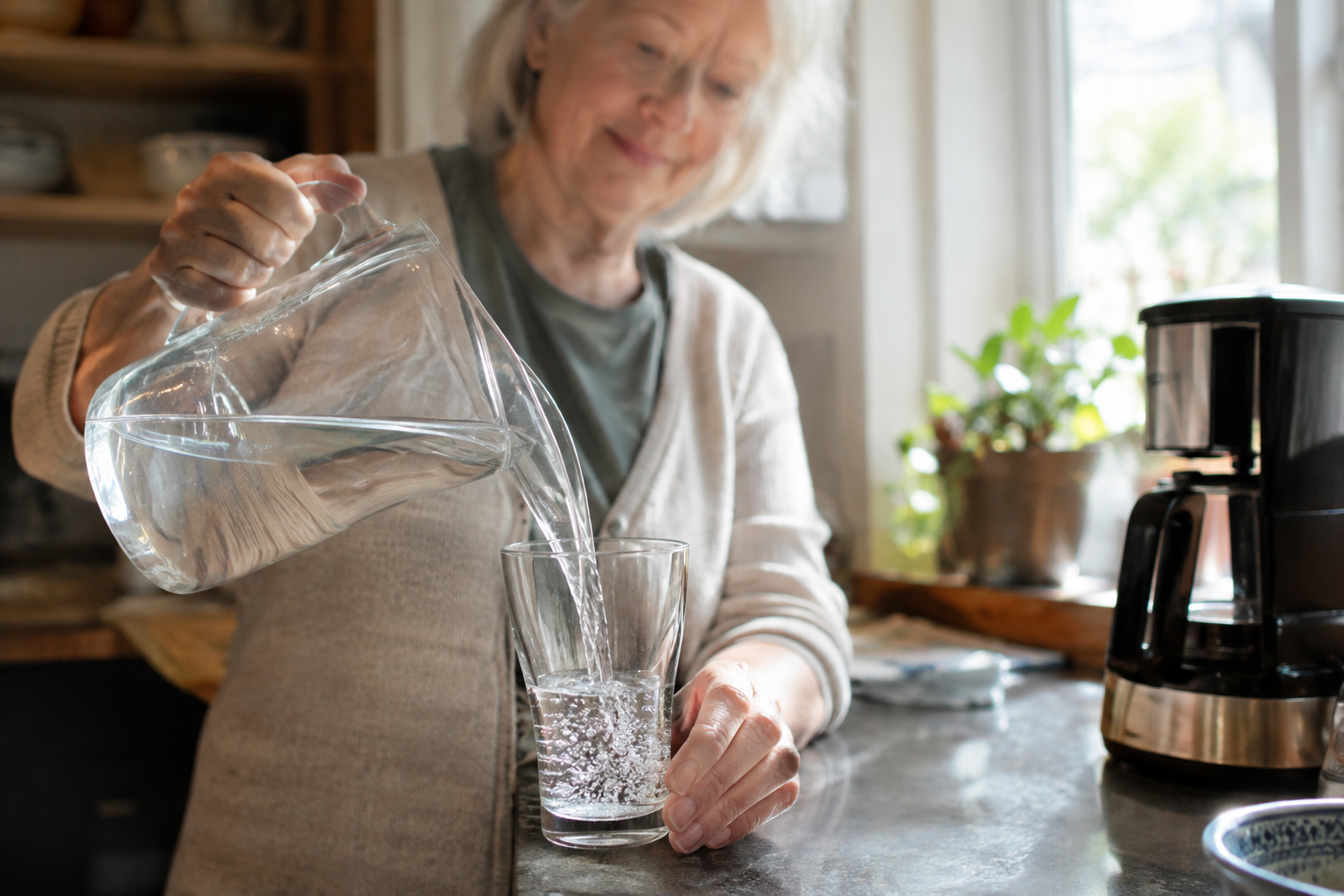
The easiest way to remember to drink water isn’t to remember “drink water.” It’s to attach drinking water to things you’re already doing automatically throughout the day. Habit stacking works far better for memory than trying to recall an abstract goal.
Morning Anchor Points
Keep a glass or bottle of water on your nightstand or bathroom counter and drink some as soon as you wake up, before coffee or tea. Pair a glass of water with taking your morning medications, since you’re already reaching for a glass at that moment anyway. If you eat breakfast at a consistent time, that’s a third natural checkpoint.
Midday Anchor Points
Lunch is an obvious one, but the real gap for most people is the stretch between lunch and dinner. Try linking a drink of water to any regular midday activity, whether that’s a short walk, a TV show you watch at the same time each day, or a call with a family member. If you use a simple workout timer for exercise sessions, that same timer can double as a hydration reminder set for a couple of points during the afternoon.
Evening Anchor Points
Dinner covers one checkpoint automatically. After that, many people intentionally cut back on fluids in the evening to avoid nighttime bathroom trips, which is a reasonable personal choice as long as you’re not restricting fluids overall, just shifting the timing earlier in the day.
None of these anchor points require you to calculate ounces or set alarms every hour. They just take advantage of routines your memory already handles well.
Tools That Make Remembering Easier
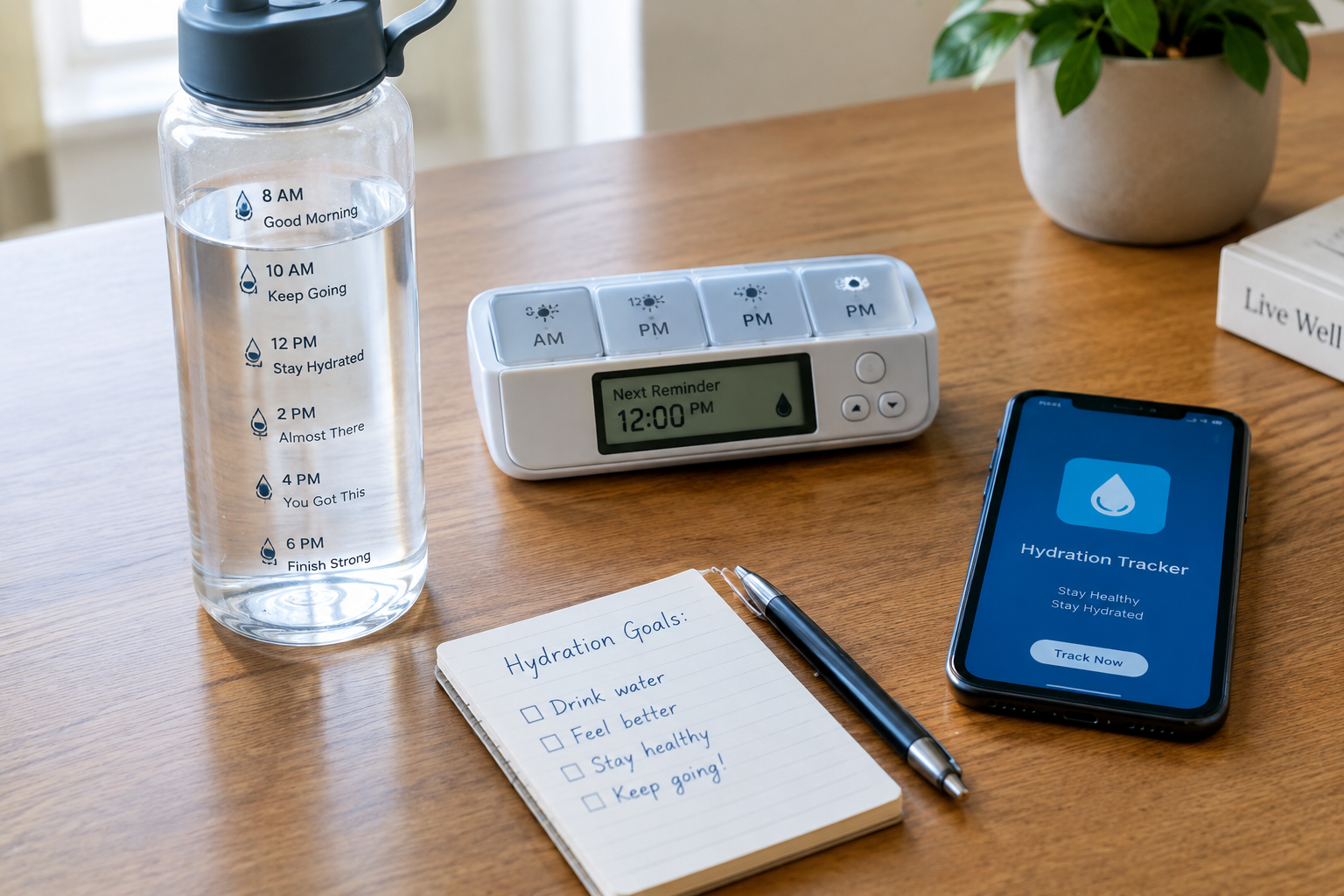
Some people do better with a visual or physical cue rather than relying purely on habit. A bottle that’s always visible on the kitchen counter or beside your favorite chair works as a passive reminder simply by being in your line of sight.
Look for a bottle with an easy-open lid if arthritis or hand strength is a concern. Our guide to the best water bottles for seniors with easy-open, arthritis-friendly designs covers this in more depth, but a few options stand out for building a daily habit.
Owala FreeSip Water Bottle
A wide handle and flip-straw lid make it easy to grip and sip one-handed, even with limited hand strength.
If you tend to forget your bottle exists once it’s out of sight, a second one kept in the car or by the front door removes the excuse of “I didn’t have it with me.” Having a bottle in more than one regular spot in your home is a small trick that works surprisingly well for people who move between rooms and lose track of where they left things.
Contigo Autoseal Water Bottle
A leak-proof, one-touch lid that’s simple to operate and easy to toss in a bag for errands or appointments.
You can browse the full range of options through this reusable water bottle search on Amazon if you want to compare sizes, handle styles, and insulation features side by side.
If you’re active during the day, pairing your hydration habit with your movement habit makes both easier to stick with. Check out our low-tech tracking methods for seniors without apps for ideas that combine simple paper checklists for both exercise and water intake, which some people find easier to stick with than phone apps.
When Fluid Needs Require Medical Guidance

Everything above assumes you’re generally healthy and just need help remembering to drink water throughout the day. That’s not the case for everyone, and it’s important to say clearly: some people should not simply “drink more.”
If you have congestive heart failure, kidney disease, or certain liver conditions, your doctor may have already given you a specific daily fluid limit. In these cases, more water isn’t a safety net, it can actually be harmful and lead to swelling, shortness of breath, or other complications. Following a generic hydration schedule instead of your clinician’s specific instructions could work against your treatment plan.
The same caution applies if you’re on medications that affect fluid balance, such as certain diuretics or heart medications. Always follow the specific guidance your doctor or pharmacist has given you over any general advice you read online, including this article. If you’re unsure whether you have a fluid restriction or a hydration goal to aim for, that’s worth asking about at your next appointment rather than guessing.
Frequently Asked Questions
How do I know if I’m drinking enough water without counting ounces?
Urine color is a simple, practical check for most healthy adults. Pale yellow generally suggests adequate hydration, while dark yellow suggests you need more fluids. This isn’t a perfect measure for everyone, particularly if you take certain vitamins or medications that affect urine color, but it’s a reasonable everyday gauge that doesn’t require any tracking.
What if I never feel thirsty, even when I probably need water?
This is common as people age, since the thirst response becomes less reliable over time. That’s exactly why anchor points tied to daily routines work better than waiting for a thirst cue that may not show up. If this is a persistent issue, mention it to your doctor, since it can sometimes be related to medications or other health factors worth reviewing.
Does coffee or tea count toward my fluid intake, or does it dehydrate me?
For most people, coffee and tea contribute to overall fluid intake despite their mild diuretic effect. The old idea that caffeinated drinks cause net dehydration has largely been walked back by more recent research for people who drink them regularly. That said, if you’re managing a specific medical condition, ask your doctor whether caffeine should be limited for reasons unrelated to hydration.
Building a hydration habit that actually sticks comes down to attaching small, repeatable cues to your existing daily rhythm rather than chasing a number that may not even apply to your situation. Keep a bottle where you’ll see it, tie a few sips to things you already do each day, and check with your doctor if you have a heart, kidney, or other condition that affects how much fluid is safe for you. That’s a schedule simple enough to actually remember.
This article contains affiliate links. We may earn a small commission at no extra cost to you.