You’ve probably heard a hundred times that you need to drink more water. But can you actually overdo it? The answer is yes, and for older adults, drinking too much water can cause real problems, sometimes serious ones. Understanding when fluid intake becomes excessive matters just as much as understanding when it’s too low.
Yes, Seniors Can Drink Too Much Water

Drinking more water than your body can process is called overhydration, and in severe cases it leads to a condition called hyponatremia. This happens when excess water dilutes the sodium in your blood to dangerously low levels. It’s not common from casual daily drinking, but it becomes a real risk when someone drinks large volumes quickly, has kidney or heart issues that affect fluid processing, or takes medications that change how the body handles water and sodium.
Symptoms of overhydration can look surprisingly similar to dehydration, which is part of what makes this confusing. Nausea, headache, confusion, muscle weakness, and swelling in the hands or feet are all signs your body is struggling with too much fluid rather than too little.
Older adults are more vulnerable to this because kidney function naturally declines with age, making it harder to clear excess fluid efficiently. Add in certain heart medications, and the margin for error gets even smaller.
Why There’s No Single “Right Amount” of Water
You’ll see plenty of generic advice online telling you to drink eight glasses a day or a specific number of ounces based on your body weight. The problem is that fluid needs shift based on so many factors that a fixed number rarely fits anyone perfectly, let alone every senior reading it.
Your activity level plays a huge role. A morning spent gardening or doing a session from a chair workout routine requires more fluid replacement than a quiet day at home. Weather matters too. Hot, humid days increase fluid loss through sweat, even if you don’t feel like you’re sweating much.
Diet is another piece people overlook. Soups, fruits like watermelon and oranges, and vegetables with high water content all contribute to your daily fluid intake without a single sip from a glass. If you eat a lot of fresh produce, you may need less plain water than someone eating mostly dry, processed foods.
Medications change the equation significantly. Diuretics increase fluid loss, while some blood pressure medications and antidepressants can affect thirst signals or sodium balance. And medical conditions, particularly involving the heart, kidneys, or liver, can mean your body handles fluid very differently than a healthy adult’s does.
Who Needs to Be Careful About Fluid Restriction

Some seniors are specifically told by their doctor to limit fluids, and this isn’t a suggestion to take lightly. If you have congestive heart failure, chronic kidney disease, cirrhosis of the liver, or certain thyroid or hormone disorders, your clinician may have set a daily fluid limit for you based on lab work and your specific condition.
These restrictions exist because a compromised heart or kidneys can’t move fluid through your system the way a healthy one does. Extra fluid backs up, leading to swelling, shortness of breath, or dangerous strain on the heart. In these cases, more water isn’t healthier. It’s the opposite.
If you’ve ever been told to track your fluid intake or stick to a specific daily limit, that instruction should come directly from your doctor, not from a general wellness article, including this one.
If you’re on this kind of restriction and struggling with thirst, talk to your care team about strategies like sucking on ice chips, using smaller cups, or rinsing your mouth without swallowing. These small tricks can make a real difference without breaking your fluid limit.
Signs You Might Be Drinking More Than You Need
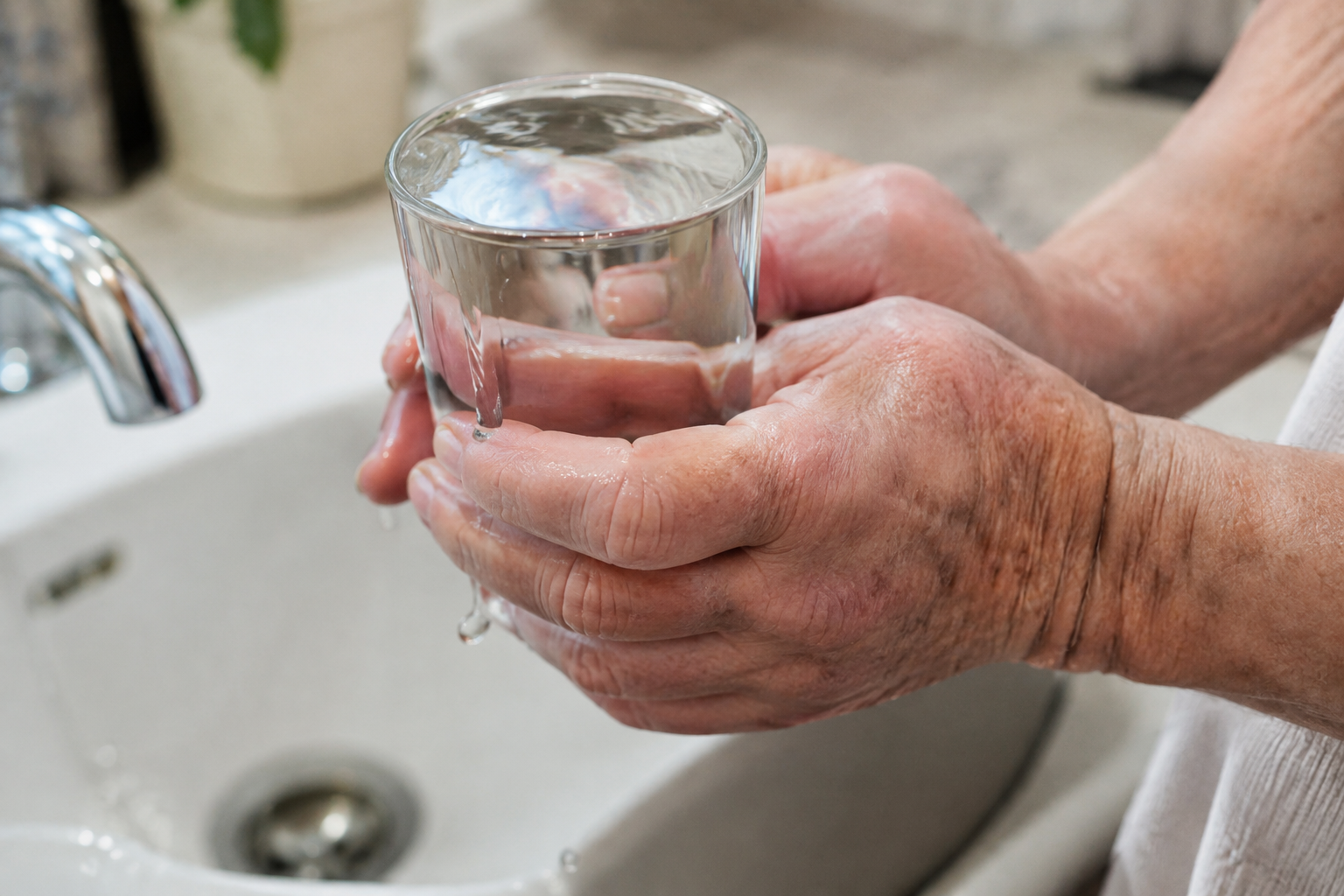
Clear urine that’s completely colorless, needing to urinate frequently through the night, and persistent bloating or nausea after drinking water can all point to overhydration rather than good hydration. Pale yellow, not clear, is generally the target color to aim for.
Swelling in your ankles, hands, or face that wasn’t there before is another signal worth mentioning to your doctor, especially if it develops alongside heavier water intake. This is particularly important if you’ve recently increased your fluid intake because of advice about exercise or hot weather without adjusting for your own health conditions.
If you’re using a large water bottle to track intake throughout the day, it’s easy to lose track of how much you’ve actually consumed by evening. Some of the best water bottles for seniors come with volume markers, which can actually help you stay aware of totals rather than guessing.
How to Approach Hydration Sensibly
Instead of chasing a specific number, pay attention to your body’s actual signals and adjust based on your day. Thirst is a reasonably reliable guide for most healthy older adults, despite the common claim that thirst signals fade too much to trust with age. They do dull somewhat, but checking your urine color and energy levels alongside thirst gives you a better overall picture.
On days when you’re more active, like doing seated cardio workouts or a longer walk, you’ll naturally need more fluid than on a sedentary day. The same goes for hot weather or if you’re fighting off a cold with a fever.
If you take a diuretic or a medication that affects fluid balance, ask your pharmacist or doctor how it should factor into your daily intake. This is a conversation worth having directly rather than guessing based on general articles, since the right amount can vary widely from person to person even with the same prescription.
For anyone dealing with muscle cramps, the cause isn’t always simple dehydration either. Electrolyte balance plays a role too, which is covered in more detail in this guide on hydration and muscle cramps in seniors.
Frequently Asked Questions
How much water is too much for a senior in one sitting?
There’s no universal cutoff, but drinking large amounts very quickly, such as more than a liter within an hour, can overwhelm your kidneys’ ability to process it, especially if you have existing heart or kidney issues. Spreading fluid intake throughout the day is generally safer than drinking large amounts all at once.
Can drinking too much water cause confusion in older adults?
Yes. Severe overhydration can lower sodium levels in the blood, and low sodium is a known cause of confusion, disorientation, and even seizures in serious cases. If confusion appears alongside heavy fluid intake, it needs prompt medical attention rather than a wait-and-see approach.
Should seniors on blood pressure medication limit water intake?
Not necessarily, but it depends entirely on the specific medication and your individual health picture. Some blood pressure medications, particularly diuretics, directly affect fluid and sodium balance, so it’s worth asking your prescribing doctor whether your fluid habits need any adjustment.