You’ve probably seen the headlines telling seniors to eat more protein, and maybe you’ve started paying closer attention to how much you’re actually getting. Then you add it up one day and realize you hit 100 grams, and a little voice asks whether that’s actually too much for someone your age. It’s a fair question, and the answer depends on more factors than a single number can capture.
Why There’s No Single Right Answer
A 100 pound woman with osteoporosis and a sedentary lifestyle has very different protein needs than a 190 pound man who lifts weights three times a week. Both could be considered “seniors,” yet the amount of protein that makes sense for one might be excessive or insufficient for the other.
Protein needs are usually calculated relative to body weight, not as a flat number that applies to everyone over 60 or 65. Someone weighing 130 pounds (about 59 kg) working with a target of 1.0 to 1.2 grams per kilogram would land somewhere around 59 to 71 grams a day. That same math for someone weighing 200 pounds (about 91 kg) puts the range closer to 91 to 109 grams. So 100 grams isn’t inherently high or low. It depends entirely on who’s eating it.
Factors That Change the Math
Several things push protein needs up or down, and they matter more than most general guidelines let on.
Body Size and Composition
Bigger bodies generally need more total protein, but muscle mass matters more than total weight. Someone carrying more fat mass doesn’t need protein scaled to that fat tissue the same way they would for lean muscle. This is one reason a smart scale that tracks body composition can be more useful than a bathroom scale that only shows total weight. If you’re curious how your own numbers break down, this guide to smart scales for seniors walks through what to look for.
Activity Level
Someone doing strength training two or three times a week is breaking down and rebuilding muscle tissue at a higher rate than someone who is mostly sedentary. That repair process requires more protein. If you’ve recently started lifting heavier or increased your training volume, your protein needs likely went up along with it. Seniors following advice on how many sets and reps to do for strength training or working through a program to increase weights safely after 60 often need more protein than someone doing gentle stretching a couple times a week.
Total Calorie Intake
Protein doesn’t exist in isolation. If you’re eating fewer total calories, perhaps because your appetite has decreased or you’re intentionally managing your weight, that 100 grams makes up a bigger share of your daily intake. Someone eating 1,400 calories a day getting 100 grams of protein is getting close to 30 percent of calories from protein, which is a notably different picture than someone eating 2,200 calories getting the same 100 grams.
Kidney Function
This is the factor that matters most for anyone asking whether 100 grams is too much. Healthy kidneys generally handle higher protein intakes without issue. But if you have chronic kidney disease, your kidneys may struggle to filter out the byproducts of protein metabolism, and your doctor may have already given you a specific gram target well below 100. If you have any kidney condition or have been told to watch your protein for any medical reason, follow your clinician’s specific numbers rather than a general range like this one.
Illness and Recovery
Recovering from surgery, a hospital stay, or an illness actually increases protein needs in many cases, since your body needs extra material to repair tissue. This is the opposite of what many people assume. A senior recovering from a hip fracture, for example, often needs more protein than usual, not less, unless a doctor has specific concerns about kidney function or other complications.
What 100 Grams Actually Looks Like in Food
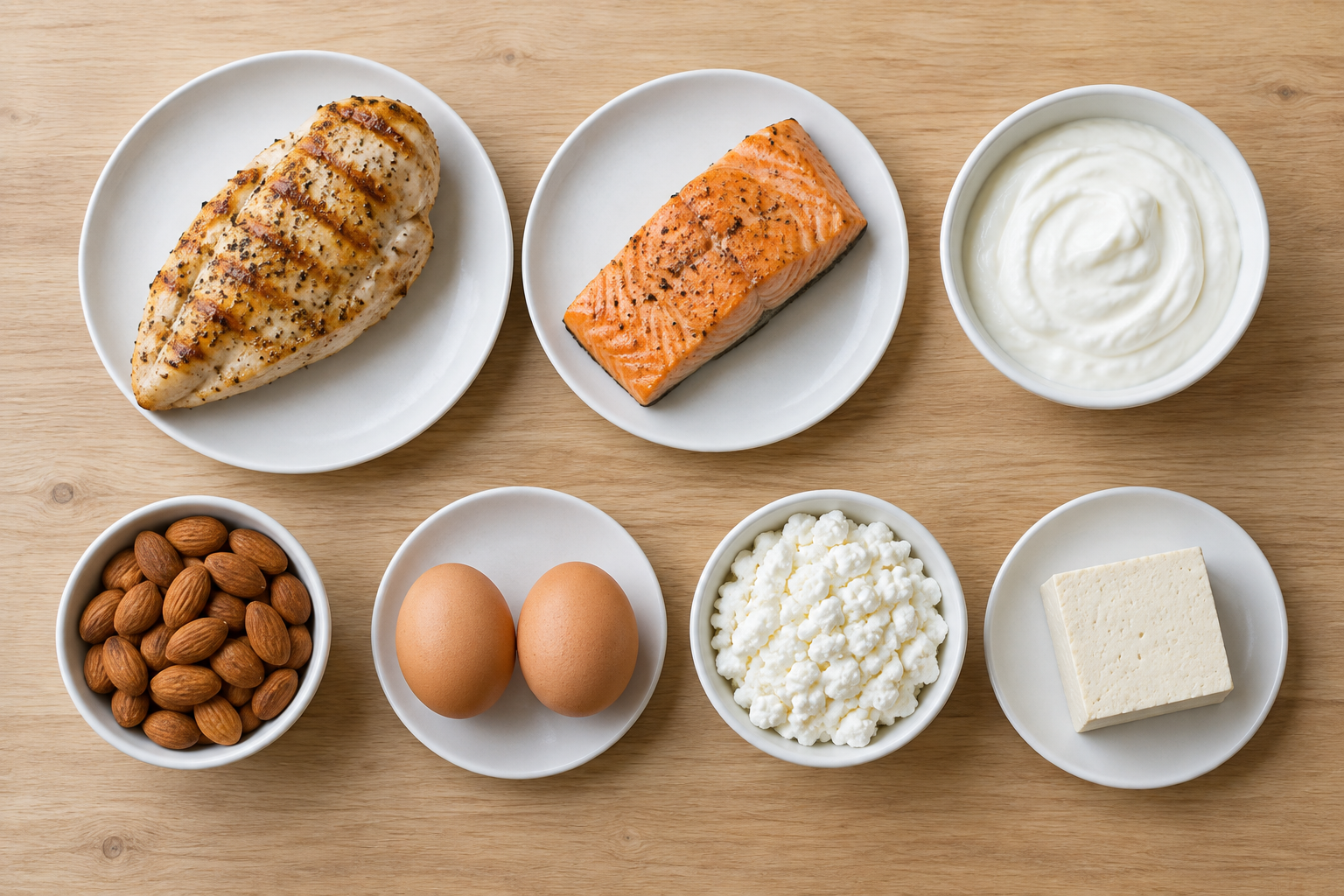
Numbers on a page don’t mean much until you see them next to real meals. Here’s roughly what it takes to reach 100 grams across a day:
- 3 eggs at breakfast (about 18 grams)
- A cup of Greek yogurt as a mid-morning snack (about 20 grams)
- 4 ounces of grilled chicken at lunch (about 35 grams)
- A small handful of almonds (about 6 grams)
- 4 ounces of salmon or a cup of lentils at dinner (about 25 to 28 grams)
Spread across three meals and a snack or two, 100 grams isn’t an extreme amount of food. It’s roughly what a moderately active adult of average size would eat if they made an effort to include a protein source at each meal. For many seniors working on maintaining muscle mass, that’s a reasonable and often recommended target, not an excessive one.
If you’re leaning on protein powder to help close the gap between food and your target, it’s worth reading through what actually matters when choosing one in this protein supplements buying guide for seniors, since not all products are created equal.
Signs You Might Be Overdoing It

For most healthy seniors, going over a protein target by a modest amount isn’t dangerous. But there are a few signs worth paying attention to.
If protein is crowding out other food groups to the point where you’re barely eating vegetables, fruit, or whole grains, that’s a balance problem worth fixing, even if the total protein number looks fine on paper. Digestive discomfort, like persistent bloating or constipation, can also show up when protein intake climbs quickly without enough fiber or water alongside it. Speaking of water, staying properly hydrated becomes even more important on higher protein days, and this piece on hydration and muscle cramps in seniors explains why fluid intake and protein metabolism are connected.
And if you have any known kidney issues, elevated blood pressure that isn’t well controlled, or you’ve been told by a doctor to monitor your protein for another reason, these general signs don’t apply to you the same way. Your clinician’s guidance should override any range discussed here.
When to Check In With Your Doctor

A conversation with your doctor or a registered dietitian is the most reliable way to know if 100 grams fits your specific situation. This is especially true if you have diabetes, kidney disease, liver conditions, or you’re on medications that affect how your body processes protein.
It’s also worth bringing up if you’ve recently changed your activity level significantly, whether that’s starting a new strength routine or dealing with an injury that’s kept you less active than usual. A quick blood panel that checks kidney markers like creatinine and eGFR can offer clarity that a general guideline never will.
Frequently Asked Questions
Is 100 grams of protein dangerous for a healthy senior with normal kidney function?
For most seniors without kidney disease, 100 grams a day generally falls within a reasonable range, particularly for those who weigh more or who do regular strength training. It’s not considered a dangerous or extreme amount for someone with healthy kidney function, though your individual needs may be higher or lower.
Can too much protein hurt your kidneys even if they’re currently healthy?
Current research doesn’t show that higher protein intake damages healthy kidneys in people without pre-existing kidney disease. The concern applies specifically to people who already have reduced kidney function, where the kidneys have a harder time processing protein byproducts. If you’re unsure about your kidney function, ask your doctor for a simple blood test rather than guessing.
Should protein intake change on days I don’t exercise?
Your muscles are still repairing and your body is still using protein for functions beyond exercise recovery, so dramatic swings aren’t usually necessary. Some people choose to slightly reduce protein on rest days and increase it on training days, but keeping a fairly consistent daily intake tends to be simpler and works just as well for most people.