Most cool-down advice for seniors is vague: “take it easy” or “walk it off.” But if you’re standing there after a workout wondering whether you need two minutes or twenty, you need an actual number. So here it is: most seniors should spend between 5 and 10 minutes cooling down after moderate exercise, and up to 15 minutes after a harder strength or cardio session. That’s the short answer. The right number for you depends on a handful of specific factors, and that’s what actually matters.
The Baseline Range and Why It Exists

Your heart rate, blood pressure, and breathing rate all spike during exercise, and they need time to come back down gradually. Stopping suddenly after a brisk walk or a set of squats can cause blood to pool in your legs instead of circulating back to your heart and brain. That’s part of why some people feel lightheaded or dizzy right after a workout if they stop cold.
A cool-down of 5 to 10 minutes gives your cardiovascular system time to transition back to a resting state. This usually means a few minutes of slower movement (an easy walk, gentle marching in place) followed by light stretching of the muscles you just worked. If you’ve been doing a seated or low-impact session, like the moves in a 15-minute chair workout, you can lean toward the shorter end of that range since the cardiovascular demand was lower to begin with.
What Actually Changes the Number
The 5 to 10 minute range is a starting point, not a rule. Several things push your ideal cool-down longer or shorter.
Training Experience
If you’ve been strength training consistently for a year or more, your body recovers from exertion faster than someone just starting out. Beginners, especially those in the first few months of a program, often benefit from a slightly longer cool-down, closer to 10 minutes, because their bodies haven’t yet adapted to the stress of regular exercise.
Exercise Selection
A walk on a cushioned treadmill at a steady pace doesn’t tax your system the way a kettlebell circuit or a heavier dumbbell session does. Cardio-heavy workouts usually need a longer walk-down period to bring your heart rate back to normal gradually. Strength sessions, especially ones where you’re following guidance from an article like how many sets and reps seniors should do, benefit more from static stretching of the muscles you just loaded.
Effort Level
How hard you pushed matters more than how long you exercised. A gentle 30-minute walk might need only 5 minutes to wind down. A tough session where you increased your weights, following the pacing in how to increase weights safely after 60, deserves the full 10 to 15 minutes, since your heart rate and muscle temperature climbed higher.
Recovery Speed
Some people’s heart rates drop back to normal within a few minutes. Others take noticeably longer, and that’s not necessarily a bad sign, it’s just individual physiology. If you use a heart rate monitor or even just check your pulse, aim to see it within 20 to 30 beats of your resting rate before you consider the cool-down finished.
Health Status
If you manage a heart condition, high blood pressure, diabetes, or a balance disorder, lean toward the longer end of every range mentioned here. Seniors who experience dizziness during position changes should pay particular attention to standing up slowly and cooling down fully. The exercises in Dizziness and Balance: Exercises That May Help Seniors are worth reviewing if lightheadedness after activity is a recurring issue for you.
Safety Signs That Mean Stop Immediately

A cool-down is about gradual recovery, not pushing through symptoms. Certain warning signs mean you should stop moving altogether and get help, not simply extend your cool-down time.
- Chest pain, pressure, or tightness that feels different from normal muscle fatigue
- Fainting or a sensation that you’re about to pass out
- Severe shortness of breath that doesn’t ease up within a minute or two of rest
- Sudden, sharp joint or muscle pain suggesting an acute injury rather than general soreness
If you experience any of these, sit or lie down immediately, and call for medical help if symptoms don’t resolve quickly or if chest pain is involved. Don’t try to walk it off or finish your stretching routine first. If you do end up on the floor for any reason, review how to get up from the floor safely after a fall so you know the safest way back to standing.
A Simple Way to Structure It
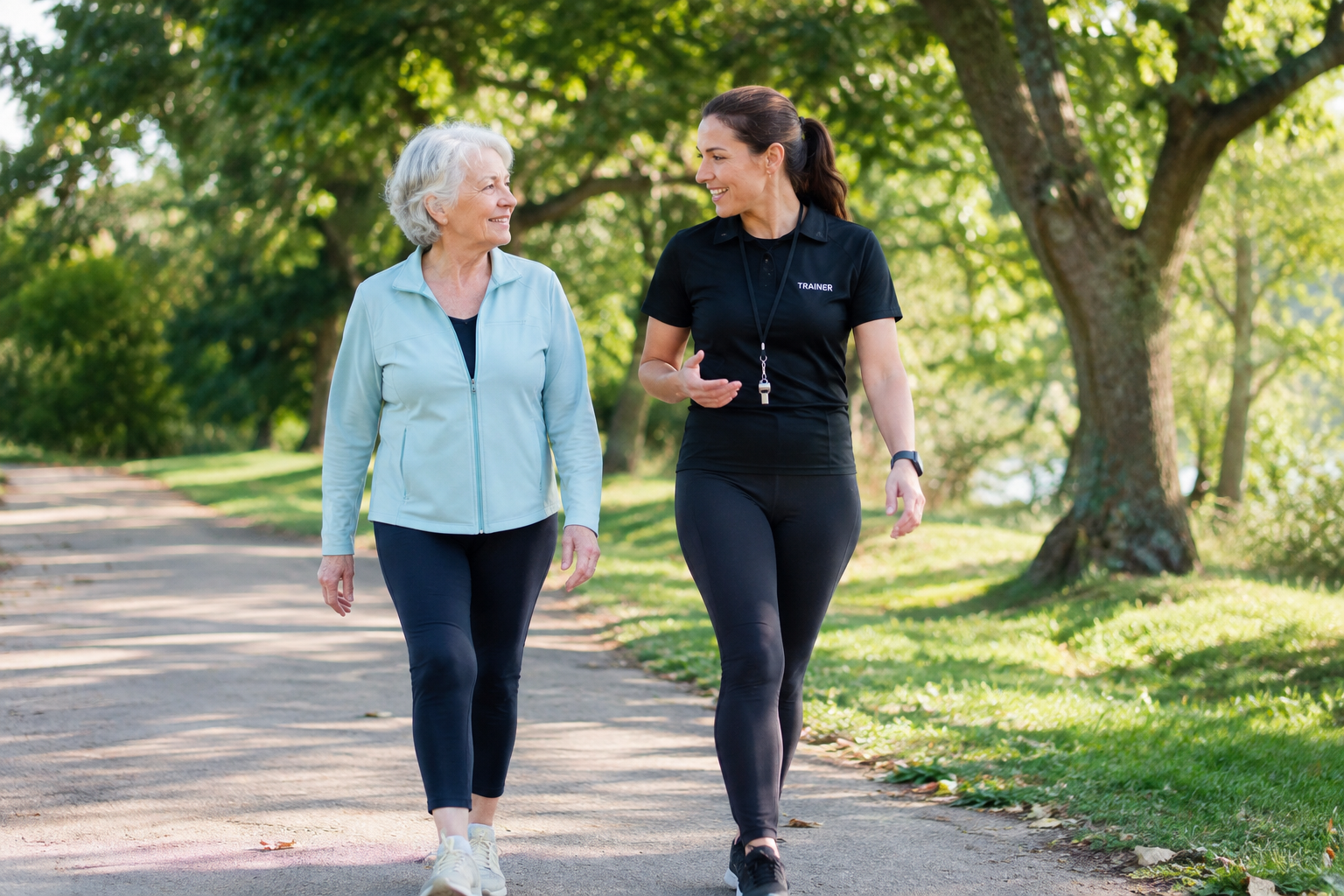
For most seniors, a practical cool-down looks like this: 3 to 5 minutes of slow, easy movement to bring your heart rate down, followed by 3 to 5 minutes of gentle stretching for the muscles you used. If you walked, add the moves from the post-walk stretching routine. If you strength trained, hold static stretches for 20 to 30 seconds per muscle group rather than bouncing or forcing a stretch.
Frequently Asked Questions
Is it bad to skip cooling down entirely?
Skipping it occasionally after a light session probably won’t hurt you, but making it a habit isn’t a good idea. Stopping abruptly after moderate or vigorous exercise increases your risk of dizziness, blood pressure drops, and muscle stiffness the next day. Even a rushed 3-minute version is better than nothing.
Should stretching or strength training come first in a cool-down?
Cool-down stretching should always come after your slower movement phase, not before, since your muscles are warmer and more pliable at that point. If you’re unsure how stretching fits into your overall routine versus your strength work, Stretching vs Strength Training: What Seniors Need Most breaks down when each one matters most.