Stiff, achy fingers in the morning are one of the most common complaints among people with arthritis, and they can make simple tasks like buttoning a shirt or opening a jar feel genuinely difficult. The good news is that gentle, consistent hand exercises can make a real difference in keeping your joints mobile and your grip functional. This isn’t about pushing through pain. It’s about working with your hands in a smart, targeted way so they keep doing what you need them to do.
Before starting any new exercise routine for arthritis, check with your doctor or a hand therapist, especially if you have rheumatoid arthritis or have recently had a flare-up. For broader context on staying active with joint conditions, our guide on best arthritis-friendly exercises for seniors is a great starting point alongside this article.
Gentle Finger and Thumb Exercises to Start With
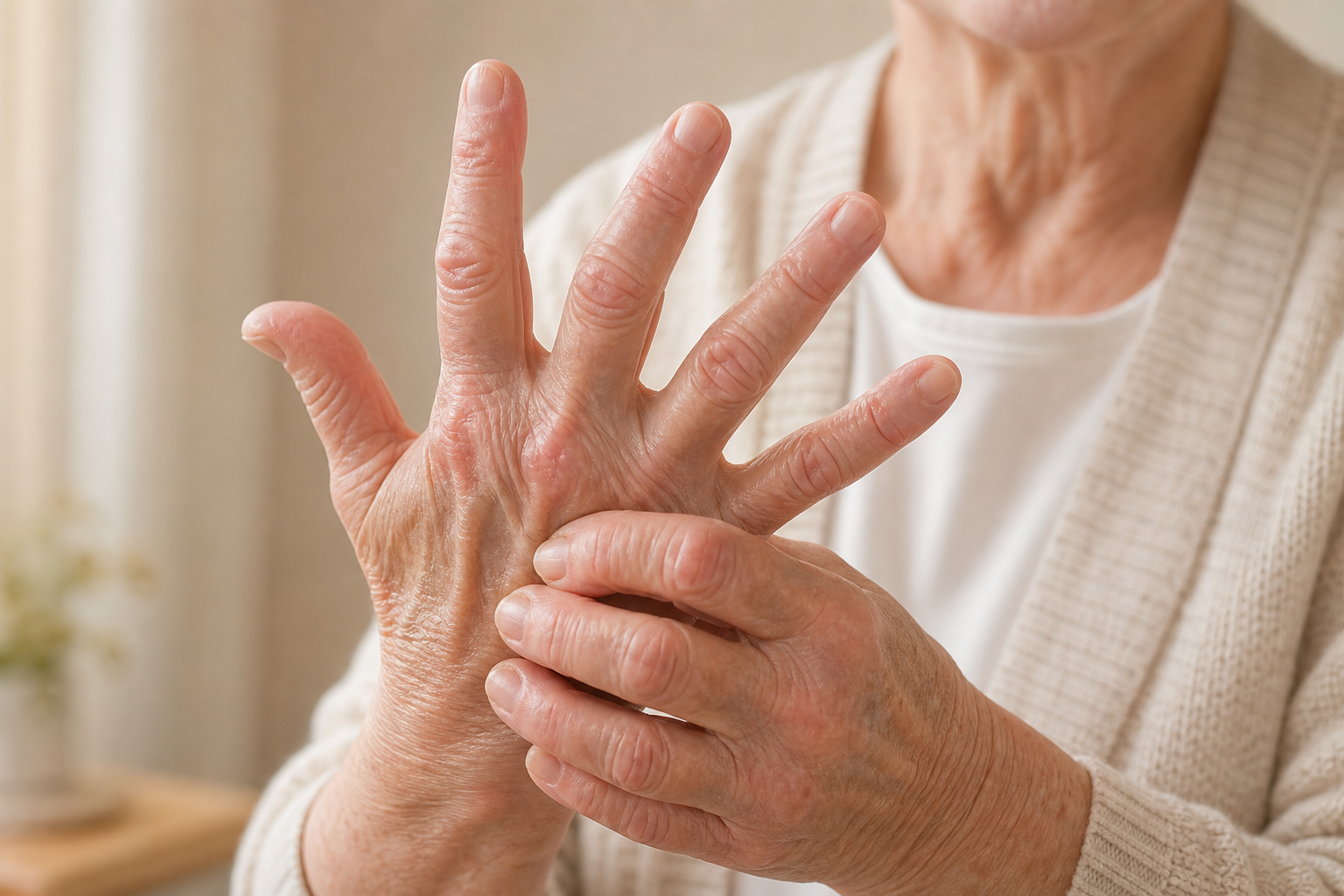
Start with your hands warmed up. A warm washcloth, a bowl of warm water, or even just holding a warm mug for a few minutes before exercising can loosen stiff joints significantly. Never exercise cold hands if you can avoid it.
Here are the foundational moves to work through each day:
- Finger bends: Place your hand flat on a table, palm down. Slowly curl your fingers into a loose fist, then straighten them back out. Do this 10 times per hand. Don’t squeeze tightly, just move gently through the range of motion.
- Knuckle bends: Hold your hand out with fingers straight, then bend just the top two knuckles of each finger while keeping the base knuckles straight. This targets a commonly stiff area for people with osteoarthritis.
- Thumb stretch: Touch your thumb tip to the base of your pinky finger, then spread the thumb back out wide. Repeat 10 times. If the full stretch is too much, go as far as comfortable and stop there.
- Finger spreads: Lay your hand flat and spread your fingers as wide as you can, hold for 3 seconds, then bring them back together. This works the small muscles between the fingers that often get neglected.
- Wrist circles: These aren’t just for your wrist. Gentle rotation keeps the entire hand and forearm connected and mobile.
Work through these exercises once or twice a day. Morning sessions help you shake off that classic arthritis stiffness, and a short session in the evening can reduce aching before bed.
Using Therapy Putty to Build Dexterity
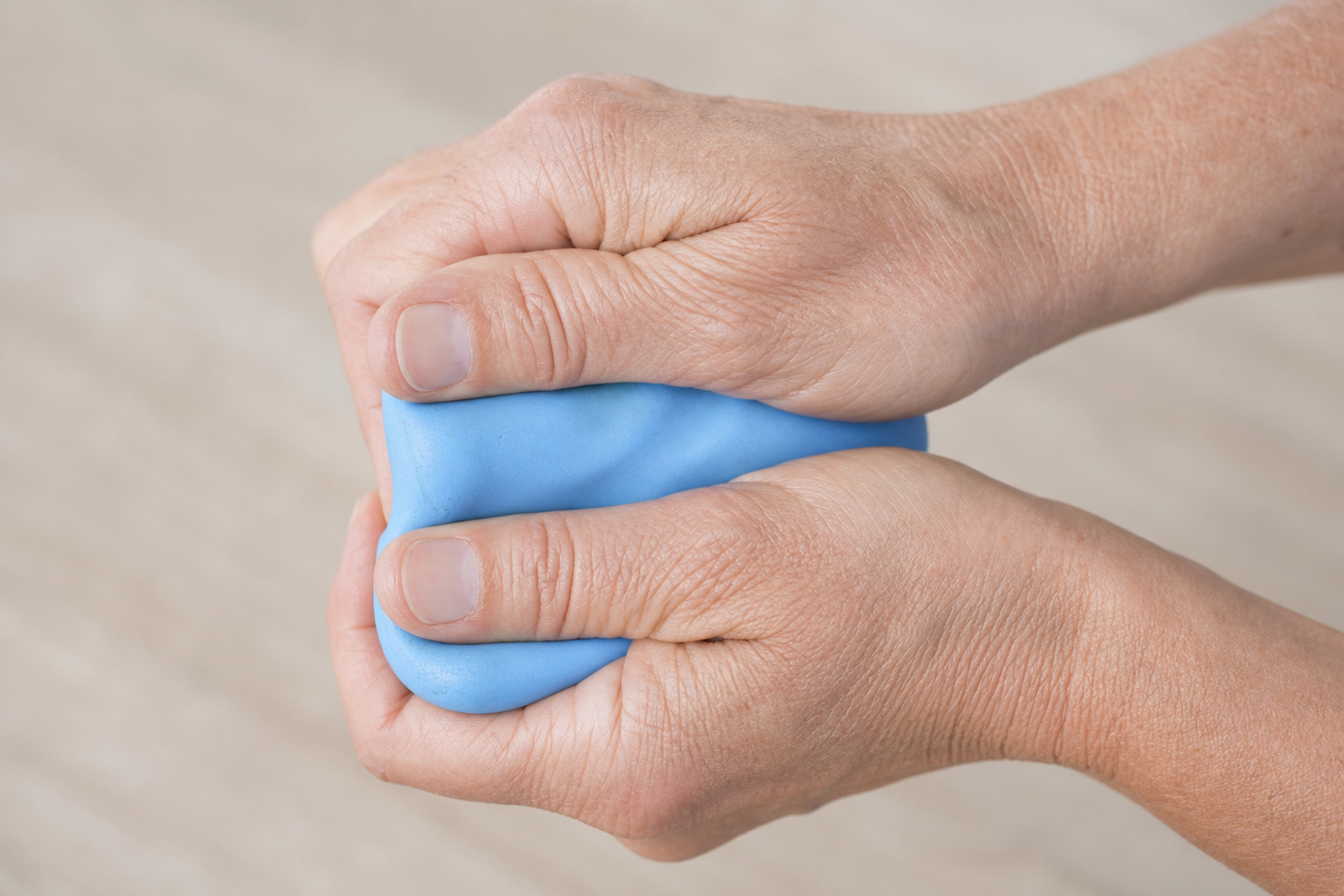
Therapy putty is one of the most practical tools for arthritis hand care because it lets you control the resistance level. It comes in different firmness ratings, usually color-coded from extra-soft to firm, so you can start where your hands actually are and progress gradually.

Therapy Putty for Hands
Color-coded resistance levels make it easy to progress at your own pace for arthritic hands.
With putty, a few basic exercises go a long way. Roll it into a ball and squeeze it gently. Pinch small pieces off with your thumb and index finger. Press all five fingertips into the putty simultaneously and slowly spread your fingers apart. These moves target the exact muscles and joints that arthritis tends to weaken first.
Start with the softest putty available, especially if you’re in a flare. You’re not trying to build a crushing grip right away. The goal is to maintain movement and slow down stiffness. For more work specifically on grip, our article on grip strength exercises for hand function and independence pairs well with putty work.
If you don’t have putty yet, a soft stress ball or a folded washcloth can serve as a starting point. But dedicated therapy putty gives you much more control over resistance.

Stress Ball Hand Exerciser
A softer alternative to putty that works well for very sensitive or inflamed hands.
Supporting Your Hands Beyond Exercise
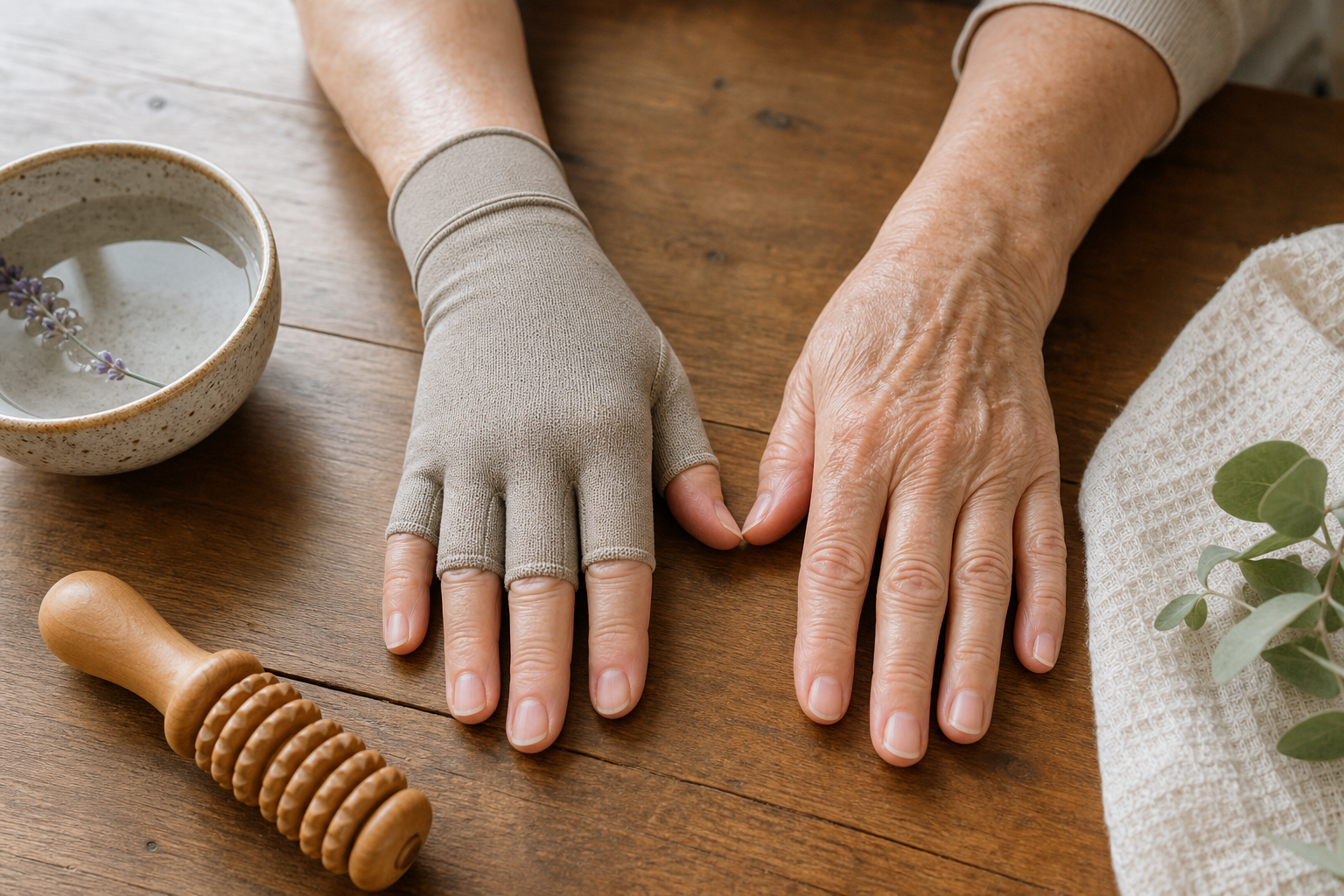
Exercise is only part of the picture. Nutrition plays a meaningful role in how your joints feel day to day. Omega-3 fatty acids, in particular, have solid research behind them for reducing joint inflammation. Our overview of omega-3 supplements for senior joint health breaks down what to look for and how to use them effectively.
Collagen is another supplement worth discussing with your doctor, particularly for people with osteoarthritis. We cover it in depth in our piece on collagen supplements for joint and skin health.
If you’re managing other chronic conditions alongside arthritis, movement-based approaches are often complementary. Our chronic pain management through movement guide offers a broader framework that applies directly to arthritis care.
Frequently Asked Questions
How often should I do hand exercises for arthritis?
Most hand therapists recommend once or twice daily for 10 to 15 minutes. Consistency matters more than duration. If you only have five minutes in the morning, that’s still better than skipping it. On days when your joints are inflamed or very painful, gentle range-of-motion moves are still okay, but skip the putty resistance work until the flare settles down.
Should I exercise through the pain, or rest when my hands hurt?
Mild discomfort during stretching is normal, but sharp or worsening pain is a signal to stop. A general rule: if pain is above a 3 or 4 out of 10, ease up or choose gentler movements. Resting inflamed joints during a flare is appropriate, but complete inactivity for long stretches tends to make stiffness worse. Keep moving gently, and loop in your doctor if pain spikes unexpectedly.
This article contains affiliate links. We may earn a small commission at no extra cost to you.